Terror Plot Foiled? Five Arrested Outside Strategic UK Base Housing US Bombers Engaged in Iran Conflict
LONDON — In a major security incident that has sent shockwaves through Western defense establishments, British counter-terrorism police have arrested five men near RAF Fairford, a highly sensitive military airfield in Gloucestershire currently serving as a primary launchpad for U.S. heavy bombers executing operations in the Middle East.
The arrests, executed under Section 41 of the Terrorism Act 2000, come at a time of extreme geopolitical volatility. As the United States and its allies remain locked in active military confrontations involving Iranian assets and regional proxies, the securing of allied military infrastructure has become a top priority for intelligence agencies. The suspects remain in custody at a high-security police station, with detectives granted additional time to interrogate them regarding the suspected preparation or instigation of a terrorist act.
High-Stakes Arrests Near the Edge of a Closed Military Zone
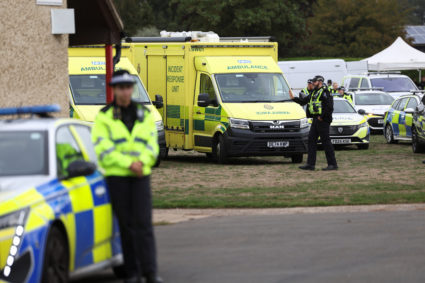
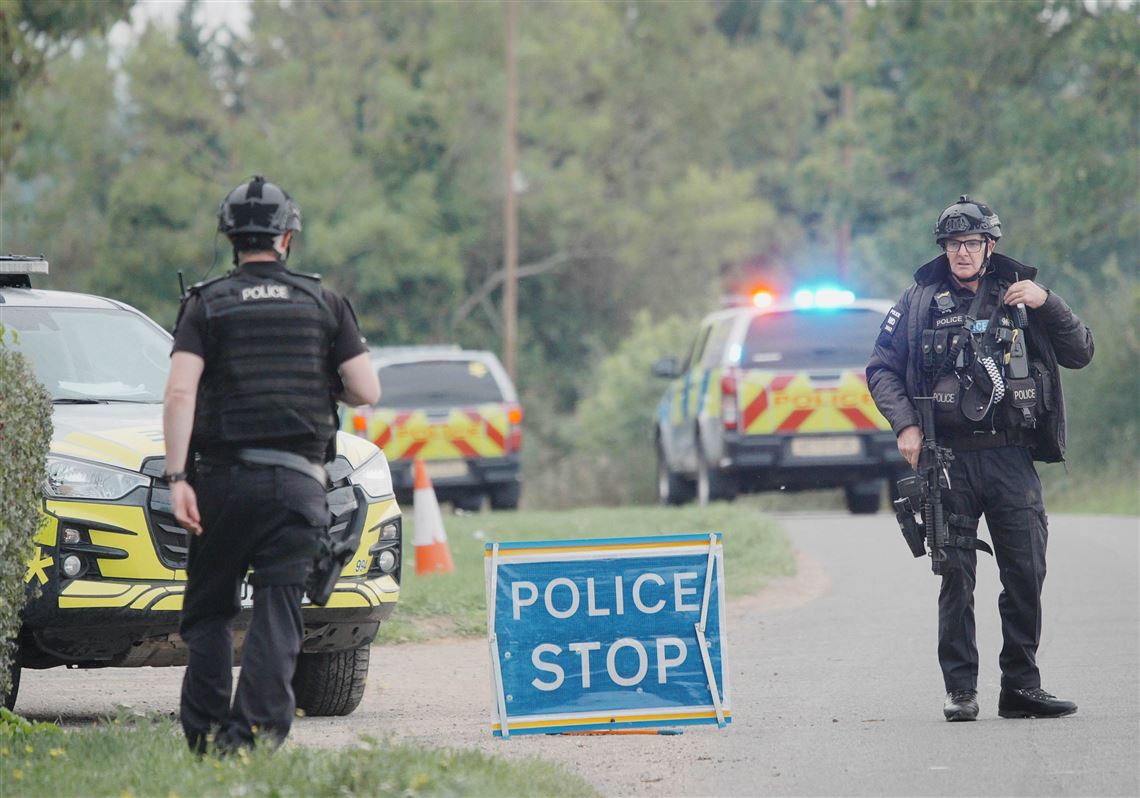
According to statements released by the police, the five individuals—all male—were intercepted by armed officers in close proximity to the perimeter of the Royal Air Force base. Specialized counter-terrorism units, acting on what sources describe as "actionable intelligence," moved swiftly to neutralize what they perceived as an immediate surveillance or reconnaissance threat to the installation.
While the Metropolitan Police and local Gloucestershire Constabulary have remained tight-lipped about the nationalities and specific backgrounds of the detainees, security officials confirmed that search warrants are currently being executed at multiple residential addresses linked to the suspects. Intelligence analysts suggest that the proximity of the arrests to RAF Fairford points to a coordinated attempt to monitor, disrupt, or target the highly sensitive assets housed within the base.
Executive Summary: Key Takeaways of the Incident
- The Detainees: Five men arrested under suspicion of preparing, commissioning, or instigating acts of terrorism.
- The Location: Immediately outside the perimeter of RAF Fairford, Gloucestershire, United Kingdom.
- The Assets at Risk: U.S. Air Force B-52H Stratofortress and B-1B Lancer heavy bombers currently deployed for active strike missions.
- The Geopolitical Context: Occurring amidst ongoing, high-intensity aerial campaigns conducted by U.S. forces against Iranian-aligned targets.
- The Security Response: Perimeter patrols have been doubled, and airspace restrictions over Gloucestershire have been tightened.
Why RAF Fairford is a High-Value Target in the Iran Conflict
RAF Fairford holds a unique and irreplaceable position in Anglo-American defense agreements. It is the U.S. Air Force’s (USAF) only dedicated European standby airfield capable of hosting, maintaining, and fueling heavy strategic bombers, including the nuclear-capable B-52H and the stealth B-2 Spirit.
In recent months, as hostilities between Washington and Tehran escalated into direct military exchanges, Fairford was activated as a forward deployment hub. Heavy bombers stationed at the base have been flying grueling long-range missions over the Mediterranean and the Red Sea to strike command-and-control centers, drone manufacturing facilities, and ballistic missile depots linked to Iran's Islamic Revolutionary Guard Corps (IRGC) and its proxy networks.
"Fairford is not just a runway; it is the western hemisphere's heavy-fist projection capability," noted Sir Reginald Vance, a retired Royal Air Force Air Commodore. "If an adversary or an extremist cell wanted to deal a symbolic and operational blow to the U.S.-led coalition, disabling or even merely disrupting operations at Fairford would be their gold standard."
Chronology of Events and Security Escalation
| Timeframe / Date | Event / Security Development | Strategic Implications |
|---|---|---|
| 05:30 GMT | Suspicious vehicle spotted near the eastern perimeter fence of RAF Fairford. | Immediate deployment of local armed response units. |
| 06:15 GMT | Counter-terrorism officers intercept and arrest five male suspects. | Sought under Section 41 of the Terrorism Act. Target search initiated. |
| 08:00 GMT | Gloucestershire Constabulary requests federal counter-terror reinforcement. | Investigation escalates to a national security priority. |
| 11:00 GMT | U.S. European Command (EUCOM) issues heightened force protection measures. | Base personnel restricted to quarters; bomber sorties placed on alert. |
Geopolitical Fallouts and Market Reactions
The news of the arrests instantly reverberated through global energy and financial markets. Brent crude futures ticked up by 1.4% within an hour of the announcement, reflecting investor anxiety over a potential widening of the conflict to European soil. Analysts at major London and New York firms warn that any domestic terrorism threat tied directly to the Middle East conflict could increase shipping premiums and raise the cost of capital for defense-adjacent enterprises.
In Washington, National Security Council officials confirmed they are in "constant communication" with their British counterparts. The incident underscores a growing concern among Western intelligence agencies: that the kinetic war in the Middle East is increasingly spilling over into domestic sabotage and asymmetric terror threats targeting Western military infrastructure.
What Lies Ahead for Allied Security
The immediate focus of the investigation is to determine if the suspects acted as "lone wolves" inspired by regional propaganda, or if they represent a sophisticated, state-sponsored reconnaissance cell directed by external intelligence agencies. The sophistication of the equipment recovered during the initial arrests—including high-end optics and encrypted communication devices—strongly suggests the latter.
In the coming days, the British Home Office is expected to face intense questioning in Parliament regarding the vulnerability of joint-use military bases. Security around other key installations, such as RAF Lakenheath and RAF Mildenhall, has already been elevated to "critical," indicating that the threat of coordinated domestic disruption remains highly active.
Frequently Asked Questions (FAQ)
1. Why are U.S. bombers operating from a British Royal Air Force base?
Under long-standing bilateral defense agreements dating back to the Cold War, the UK permits the U.S. Air Force to utilize specific bases, such as RAF Fairford, for strategic bomber deployments. This allows the U.S. to project heavy aerial power into the Middle East, Europe, and Africa without relying solely on aircraft carriers or bases located directly within volatile regional conflict zones.
2. Does this incident change the UK’s national terror threat level?
Currently, the UK’s national threat level remains at "Substantial," meaning an attack is likely. However, the Joint Terrorism Analysis Centre (JTAC) is actively reviewing the details of this specific plot. If evidence emerges of a wider network targeting military personnel or installations across the country, the threat level could be raised to "Severe" or "Critical."