Inside the Department of Energy’s Vault: 75 Scientific Breakthroughs That Are Rewriting America’s Economic Future
WASHINGTON — For decades, the engine room of American economic dominance has hummed quietly behind the secure gates of the Department of Energy’s National Laboratories. Operating largely out of the public eye, these elite research facilities have served as the silent architects of modern industry, national security, and daily life. Now, federal officials are pulling back the curtain on a monumental milestone: a curated compendium of 75 Breakthroughs by America’s National Laboratories that charts how government-backed science has systematically transformed global markets.
Released by the U.S. Department of Energy (DOE), this landmark dossier captures the profound journey of innovation born within the federal lab complex—spanning foundational advancements in fusion energy, quantum computing, aerospace materials, and medical isotopes. For investors, policymakers, and industry titans alike, the message is unmistakable: the next wave of trillion-dollar commercial markets is being engineered inside these exact taxpayer-funded corridors right now.
The Genesis of Modern Innovation: Why the Labs Matter Now
The U.S. National Laboratory system—comprising 17 world-class institutions including Lawrence Livermore, Oak Ridge, Los Alamos, and Argonne—was originally forged in the crucible of the Manhattan Project. However, in the decades following World War II, their mission radically expanded. They evolved from wartime defense installations into the world's premier multidisciplinary research engines, tackling complex grand challenges that private sector venture capital deemed too risky or capital-intensive.
According to senior Department of Energy officials speaking on the heels of the 75-breakthroughs rollout, the catalog is not merely a historical archive; it is a strategic roadmap for America's industrial competitiveness in the 21st century. As geopolitical rivalries intensify over critical technologies like artificial intelligence, advanced batteries, and clean energy, the National Labs remain America’s ultimate asymmetric advantage.
- De-Risking Capital-Intensive Science: By shouldering the early-stage R&D burden, the labs bridge the notorious "valley of death" between academic theory and commercial deployment.
- Commercial Spin-Offs: Decades of federal research have directly spawned thousands of private-sector patents, publicly traded biotech firms, and clean-tech startups.
- Global Talent Magnet: The labs continuously draw the brightest physicists, data scientists, and engineers from across the globe, cementing U.S. leadership in STEM fields.
From Fusion Energy to Space: The Crown Jewels of Federal R&D
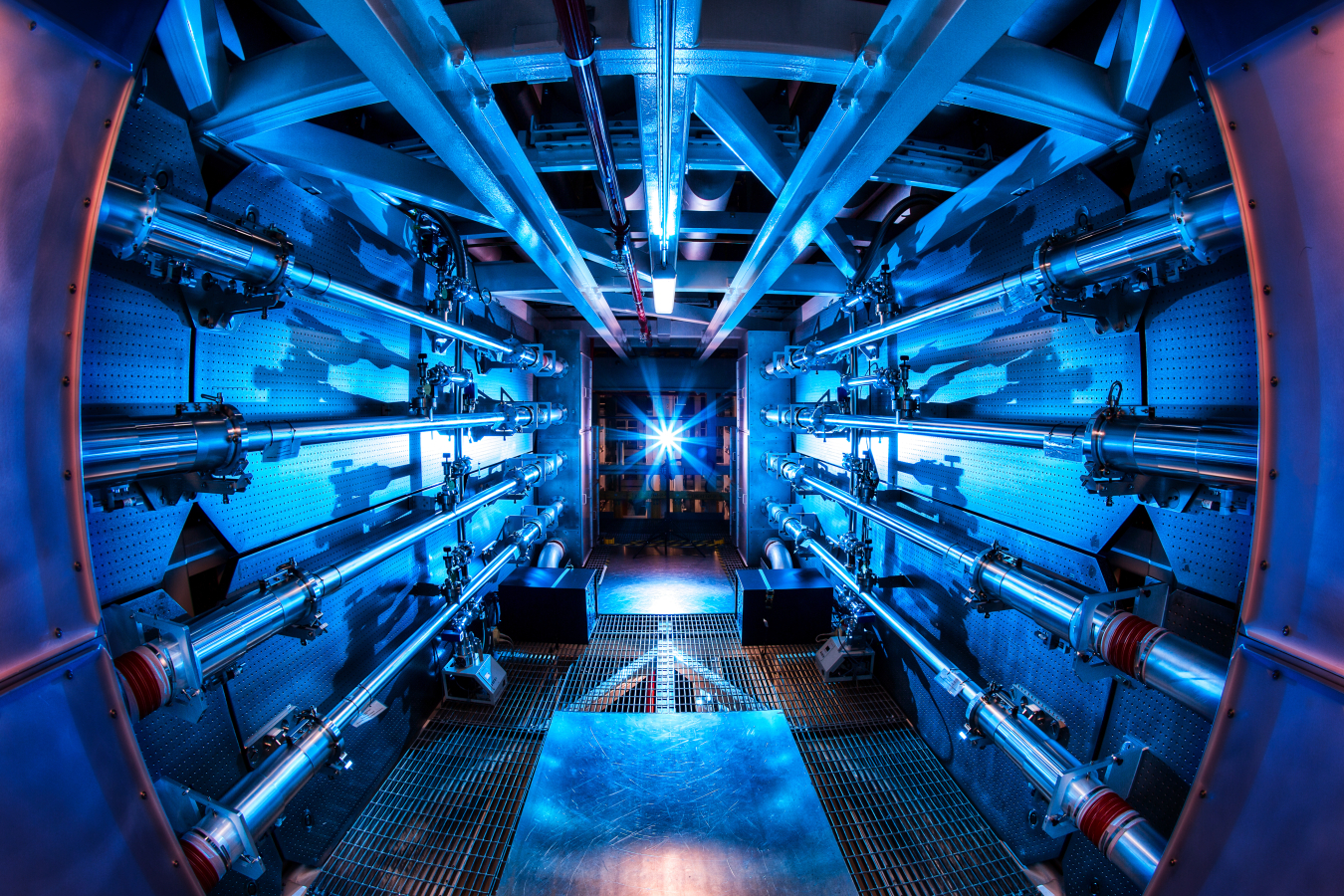
At the center of the newly highlighted breakthroughs is the seismic acceleration in fusion energy research. Long dismissed as a perpetual physicist's dream always thirty years away, inertial confinement fusion—most notably spearheaded by Lawrence Livermore National Laboratory’s National Ignition Facility (NIF)—achieved historic net energy gain. This milestone has triggered a massive wave of private capital flowing into commercial fusion ventures, promising a virtually limitless, zero-carbon baseload power source for energy-hungry industrial economies.
Beyond clean energy, the 75-breakthrough review highlights critical advancements in extreme environments, including space exploration and solar dynamics. National Lab scientists have mapped solar energy fluctuations with unprecedented precision, providing vital data to protect satellite infrastructure and global power grids from catastrophic solar flares. Furthermore, materials science breakthroughs pioneered within the complex have yielded ultra-lightweight, heat-resistant alloys now standard in modern aerospace engineering and electric vehicle manufacturing.
| Technology Sector | Primary Lab Contribution | Commercial & Economic Impact |
|---|---|---|
| Fusion Energy | Inertial Confinement & Magnetic Confinement | Laying the groundwork for limitless, clean baseload power generation. |
| Advanced Supercomputing | Exascale Computing Architectures | Accelerating drug discovery, financial modeling, and AI model training. |
| Materials Science | Radiation-Resistant Alloys & Composites | Extending the operational lifespan of aerospace craft and deep-sea infrastructure. |
| Nuclear Medicine | Medical Isotope Production | Enabling advanced cancer diagnostics and targeted radiotherapy worldwide. |
The Economic Stakes: Translating Science into Wall Street Value
For financial markets, the commercialization pipeline connecting National Lab research to Wall Street is more active than ever. Technology Transfer Offices (TTOs) embedded within each lab facilitate collaborative research and development agreements (CRADAs) and patent licensing deals, allowing private enterprises to commercialize federally funded IP.
Industry analysts note that foundational technologies in lithium-ion battery chemistry, supercomputing, and genetic sequencing all trace their roots back to DOE lab investments. As the U.S. races to nearshore supply chains and secure domestic manufacturing dominance under legislation like the CHIPS Act and the Inflation Reduction Act, the technological output of these 17 laboratories will serve as the raw material for tomorrow's blue-chip equities.
Future Outlook: Navigating the Next Horizon
Looking ahead, the Department of Energy is pivoting its laboratory complex toward the convergence of artificial intelligence and quantum information science. By pairing the world's most powerful supercomputers with unprecedented data-processing capabilities, researchers are aiming to simulate molecular interactions and material properties in real time, drastically shortening the timeline from laboratory discovery to commercial marketplace.
Ultimately, the compilation of these 75 breakthroughs serves as both a celebration of past ingenuity and a stark reminder of what sustained, long-term public investment in science can achieve. As private markets increasingly demand high-impact, sustainable growth sectors, America's National Laboratories remain the ultimate incubator for the next industrial revolution.
Frequently Asked Questions
What are America's National Laboratories?
The National Laboratories are a system of facilities and laboratories overseen by the United States Department of Energy (DOE) dedicated to scientific research and technology development in support of national security, energy independence, and scientific leadership.
How do private companies access breakthroughs made by National Labs?
Private enterprises can collaborate with the labs through Technology Transfer Offices, Cooperative Research and Development Agreements (CRADAs), and patent licensing programs designed to accelerate the commercialization of federally funded discoveries.