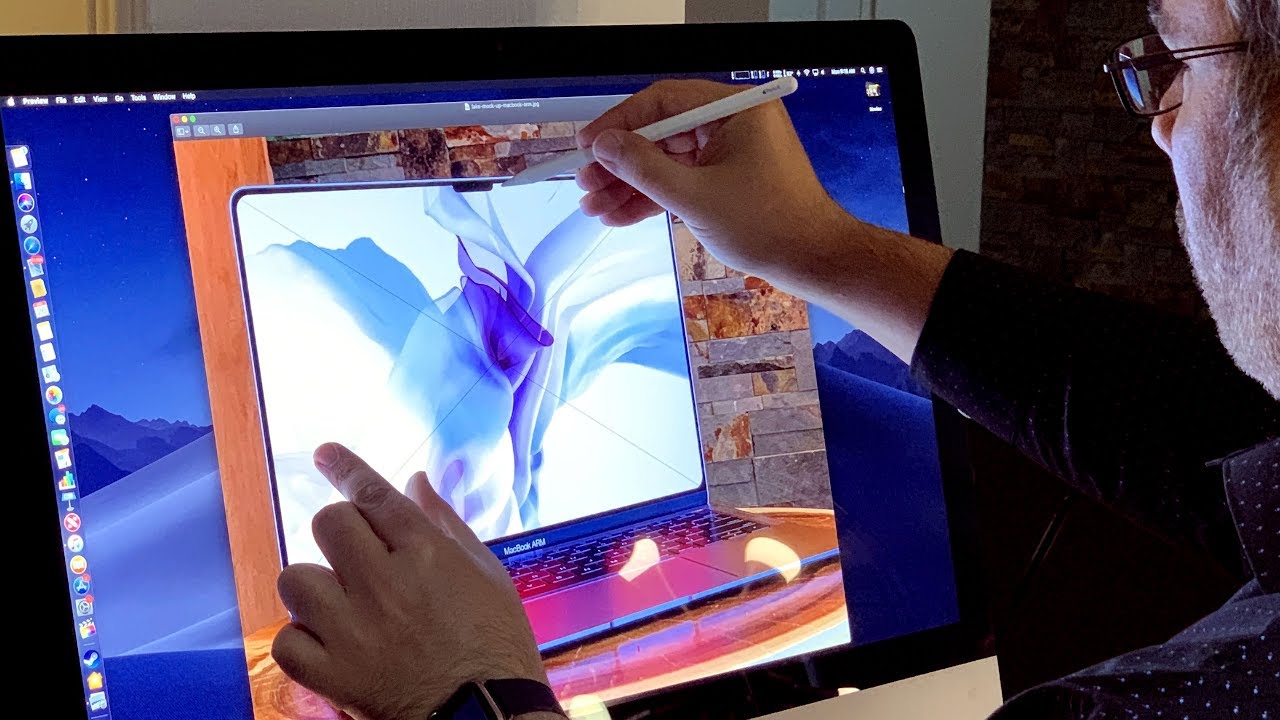
CUPERTINO, Calif. & NEW YORK — For over a decade, Silicon Valley watchers have tracked a quiet ideological war within the walls of Apple Park. On one side stood the purists, anchored by the late Steve Jobs’s 2010 dictum that vertical touch screens on laptops are "ergonomically terrible" and lead to arm fatigue. On the other side sat an evolving consumer base, increasingly conditioned by tablets and smartphones to expect direct tactile interaction with glass. When recent reports surfaced that Apple internally weighed, advanced, and ultimately pumped the brakes on a touch-screen MacBook line—opting instead for incremental hardware refreshes and software-bound workarounds like Universal Control—it marked more than a missed product roadmap milestone. It represented a historic missed opportunity to redefine personal computing architecture at a critical inflection point for enterprise productivity and consumer hardware valuation multiples.
As institutional investors scrutinize hardware replacement cycles and tech giants search for the next structural growth catalyst to defend premium valuation multiples, Apple’s hesitation exposes a strategic vulnerability. By ceding the touch-first desktop category to Windows OEMs and innovative form-factor disruptors, Apple has left substantial enterprise ROI and market share on the table. This investigative report breaks down the inside story of the touch-screen Mac, the technical and corporate friction that stalled its development, and what this strategic pivot means for global technology markets.
Executive Takeaways
- Strategic Hesitation: Internal engineering prototypes of touch-enabled MacBooks reached advanced validation phases before executive leadership intervened, prioritizing iPad-Mac ecosystem separation.
- Economic & Valuation Impact: Failing to integrate touch interfaces into macOS limits Apple's addressable market in high-value education, creative-studio, and mobile-enterprise deployments.
- Competitive Vulnerability: While Windows competitors like Microsoft and Dell iterate on versatile 2-in-1 form factors, Apple relies on software bridges like Sidecar and Universal Control rather than hardware-level unification.
- Capital Allocation: R&D expenditure continues to pour into spatial computing (Vision Pro) and peripheral services, leaving core laptop ergonomics anchored to a 1980s direct-manipulation paradigm.
The Anatomy of a Missed Paradigm Shift
Test Our Free AI & Tech Utilities Suite
Calculate LLM API token costs, analyze article dwell-time, or simulate tech DCA returns.
To understand why Apple’s reluctance to build a touch-screen Mac is viewed by industry insiders as a strategic miscalculation, one must examine the company’s historical capital allocation and hardware philosophy. For years, Apple’s official line was clear: the Mac is for indirect input via trackpad and keyboard, while the iPad is for direct touch input. This distinction protected the margins of both product categories, ensuring that consumers bought multiple devices to cover different workflows.
However, the macroeconomic landscape of enterprise IT and consumer electronics has shifted dramatically. Cloud compute architecture, remote work infrastructure, and cross-platform software frameworks (such as Catalyst and SwiftUI) have blurred the lines between mobile apps and desktop applications. Modern knowledge workers increasingly manage workflows that require fluid transitions between typing, sketching, pinching, and scrolling. By maintaining a strict philosophical barrier against touch screens on macOS devices, Apple forced itself into a defensive posture.
According to supply chain sources and former hardware engineers familiar with Cupertino's product pipelines, functional prototypes of touch-screen MacBooks—utilizing specialized OLED panels with integrated digitizer layers—have existed inside Apple’s Advanced Technology Group for years. These projects routinely cleared initial engineering hurdles, demonstrating high structural integrity and energy efficiency. Yet, every time the initiatives approached executive sign-off for commercialization, the specter of cannibalizing iPad sales intervened. This internal cannibalization fear created a classic corporate governance blind spot, prioritizing short-term product line hygiene over long-term platform dominance.
Engineering Constraints vs. Market Realities

The technical arguments historically levied against touch-enabled laptops—primarily related to ergonomics, display coatings, and battery draw—have largely been solved by modern engineering advancements. The introduction of Tandem OLED displays, variable refresh rates (ProMotion), and hyper-efficient Apple Silicon (M-series chips) means that adding touch-sensing layers to a thin-and-light chassis no longer incurs an unacceptable thermal or battery penalty.
| Strategic Dimension | Apple’s Historical Stance | The Missed Revolutionary Opportunity |
|---|---|---|
| Primary Input Paradigm | Trackpad, Keyboard, Mouse | Hybrid Touch + Direct Manipulation OS |
| Ecosystem Boundary | Strict separation of iPadOS and macOS | Unified hardware-software development pipeline |
| Enterprise ROI Potential | Standardized office deployment | Enhanced touch-first workflow productivity |
| Competitive Risk | Low risk of user migration to Windows | Erosion of creative professional market share |
Despite these engineering breakthroughs, Apple chose to double down on peripheral software integration. Features like Sidecar (which turns an iPad into a secondary Mac display) and Universal Control (allowing a single mouse and keyboard to span multiple devices) were engineered as sophisticated workarounds. While praised for their elegance, these solutions require users to purchase and carry multiple devices—an inefficient capital expenditure for enterprise buyers seeking streamlined hardware fleets.
Furthermore, software developers have noted that macOS lacks the foundational UI primitives required for optimal touch interaction. Scrollbars, menu bars, and close buttons are scaled for cursor precision, not finger-tap accuracy. Redesigning macOS for dual-input modalities would have required a massive capital investment in software architecture and developer ecosystem retraining. By declining to make that investment, Apple missed the chance to establish the definitive standard for post-PC computing.
Industry & Market Implications
The decision reverberates across the broader financial and technology markets, impacting multiple stakeholders:
- Windows OEMs & Microsoft: Competitors such as Microsoft, Dell, and Lenovo capture significant enterprise and education market share by offering flexible 2-in-1 form factors that satisfy users demanding both a traditional laptop and a touch tablet.
- Enterprise IT Buyers: Corporate procurement officers face friction when deploying hardware fleets that require distinct training paradigms for Mac users versus PC/tablet users, complicating device management and inflating total cost of ownership (TCO).
- Software Developers: Independent software vendors (ISVs) must continue maintaining bifurcated user interface codes for mobile apps versus desktop software, delaying feature parity and increasing development overhead.
- Apple Shareholders: While Apple’s profit margins remain industry-leading, missing out on the touch-screen laptop category limits long-term growth vectors in high-growth verticals like interactive digital kiosks, medical touch-terminals, and advanced design studios.
Frequently Asked Questions (People Also Ask)
Why has Apple historically resisted putting touch screens on MacBooks?
Apple’s resistance was originally rooted in ergonomics, with Steve Jobs famously calling vertical touch screens fatiguing to use for extended periods. Commercially, Apple also sought to protect the distinct market boundaries and profit margins between the iPad and the Mac.
Are there any technical reasons preventing a touch-screen Mac?
Technically, modern Apple Silicon, high-efficiency OLED displays, and advanced sensor tech mean touch-enabled Macs are entirely feasible. The primary obstacles have been software architecture (macOS UI scaling for touch) and corporate strategy rather than hardware limitations.
How does Apple's strategy impact enterprise IT procurement?
Enterprise buyers seeking unified device fleets often find Apple’s separation of touch (iPad) and traditional compute (Mac) less flexible than Windows-based 2-in-1 ecosystems, creating additional complexity in device management and employee training.
Will Apple ever release a touch-screen Mac in the future?
While Apple executives publicly dismiss the idea to protect current product categories, supply chain rumors and internal prototyping suggest the technology remains under constant evaluation as consumer expectations continue to evolve.
Future Outlook & Key Milestones
As the personal computing market matures, Apple faces a strategic crossroads. The rise of generative AI integration, on-device neural processing units (NPUs), and spatial computing via the Vision Pro ecosystem are commanding the lion's share of Cupertino’s R&D budget. Yet, the foundational hardware interface for professional work remains anchored to mouse and trackpad interactions.
Investors and industry analysts will monitor several key milestones over the next 24 to 36 months to gauge whether Apple shifts its posture. Watch for shifts in macOS API documentation regarding touch targets, subtle supply chain disclosures regarding OLED display digitizer integration, and enterprise adoption rates of iPad Pro configurations paired with Magic Keyboards as pseudo-laptop replacements. Should enterprise demand for unified touch-compute devices accelerate past Apple’s software-bridge workarounds, Cupertino may eventually be forced to revisit what could become one of the most consequential strategic pivots in modern consumer electronics history.