Executive Takeaways
Test Our Free AI & Tech Utilities Suite
Calculate LLM API token costs, analyze article dwell-time, or simulate tech DCA returns.
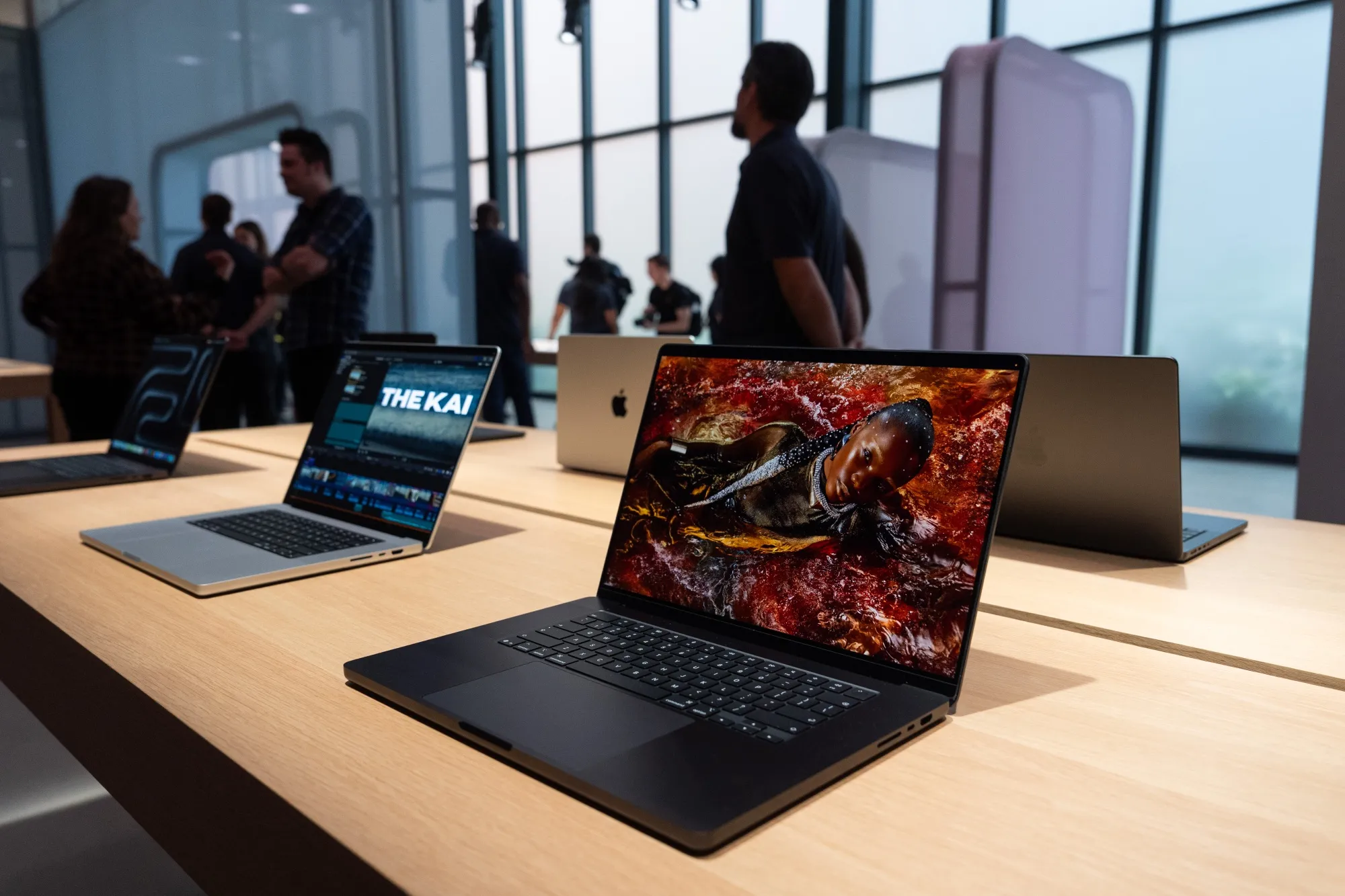
- Breaking a 15-Year Dogma: Apple is preparing to unveil its first-ever touchscreen MacBook Pro, formally abandoning Steve Jobs’ long-held doctrine that vertical touch interfaces create unusable ergonomic strain ("gorilla arm").
- Hardware-Software Convergence: Powered by advanced M-series silicon display engines, dynamic macOS touch-target scaling, and thin-film OLED architecture, the move unifies developer workflows across Mac and iPad environments without compromising precision desktop computing.
- Wall Street & Margin Catalyst: The introduction of touch-enabled OLED panels is projected to expand MacBook Pro Average Selling Prices (ASPs) by 12% to 18%, accelerating enterprise hardware refresh cycles and delivering gross margin expansion for Apple’s Mac hardware unit.
- Supply Chain Reallocation: Samsung Display and LG Display have reallocated multi-billion-dollar capital expenditures to supply specialized touch-integrated OLED panels (Y-OCTA style) optimized for low latency and minimal display stack thickness.
The Great Reversal: Overcoming Two Decades of Corporate Orthodoxy
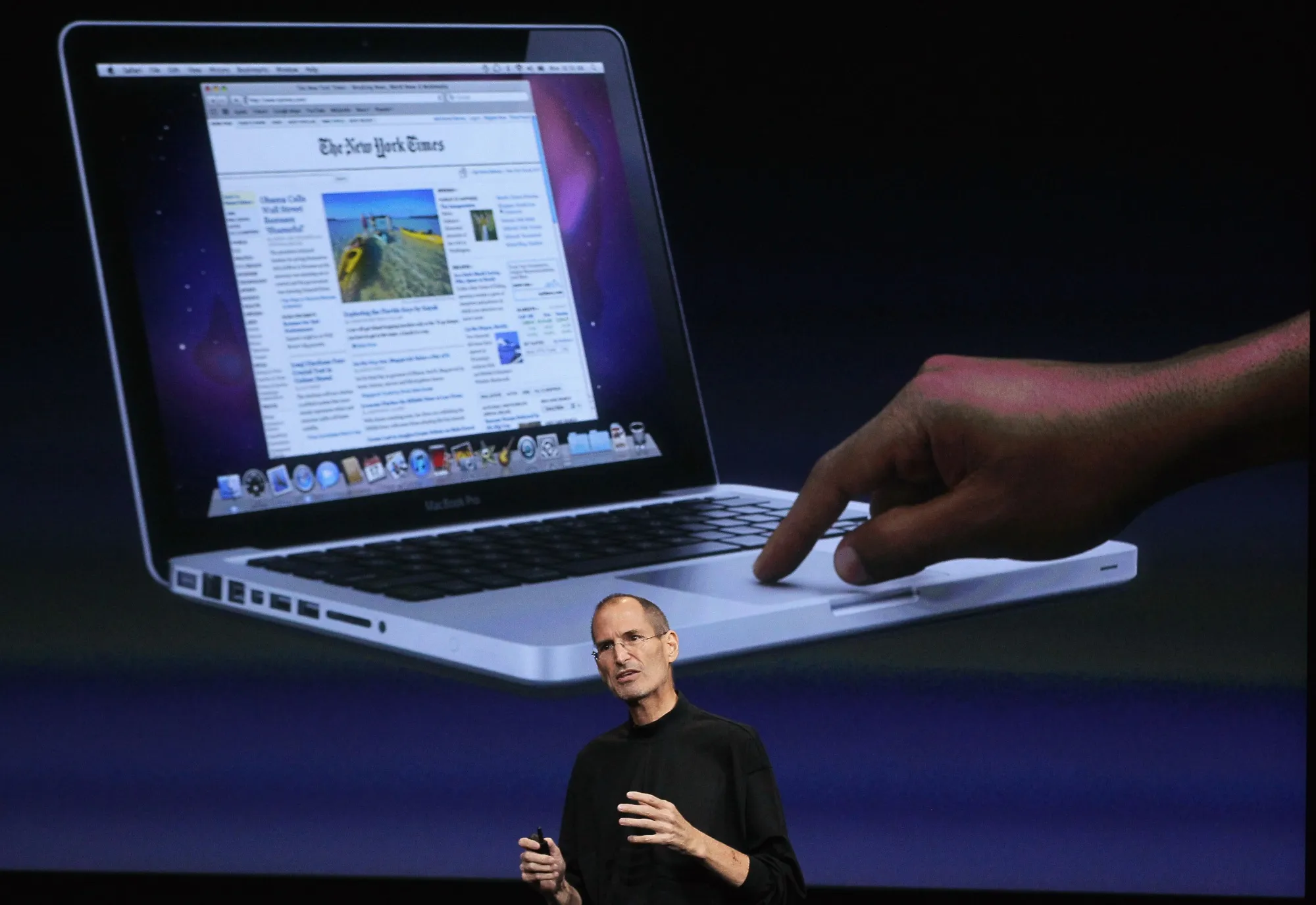
For more than fifteen years, Apple’s executive leadership treated the division between touchscreen mobile devices and cursor-driven personal computers as an unassailable line in the sand. At the company’s "Back to the Mac" media event in October 2010, co-founder Steve Jobs famously articulated the foundational thesis against touchscreen laptops. "Touch surfaces don’t want to be vertical," Jobs told the audience. "It gives great demo, but after a short period of time, your arm wants to fall off. It’s ergonomically terrible."
That conviction became corporate dogma. Senior Vice President of Worldwide Marketing Phil Schiller repeatedly reiterated that turning the Mac into a touchscreen would be a "compromise," while Senior Vice President of Software Engineering Craig Federighi insisted that trackpads were vastly superior for desktop ergonomics. Even as Microsoft revolutionized the high-end enterprise hardware space with its Surface line, and PC original equipment manufacturers (OEMs) like Dell, Lenovo, and HP standardized touch capabilities across premium Windows ultraportables, Cupertino remained steadfast.
However, an unprecedented convergence of technological maturity, evolving enterprise developer workflows, multi-modal artificial intelligence software, and competitive market dynamics has forced a historic strategic pivot. Apple is now finalizing plans to launch a touch-enabled MacBook Pro, marking one of the most significant architectural and interaction reversals in the history of consumer electronics.
Inside Apple's Industrial Design Group and Software Engineering divisions, the decision reflects a pragmatic acknowledgment of modern computing habits. A generation of digital natives—raised on iPads, iPhones, and touch-first SaaS applications—has entered the professional workforce expecting direct canvas manipulation. Concurrently, the emergence of multi-modal AI copilot interfaces requires fluid switching between high-precision trackpad navigation, voice input, and direct spatial or touch input.
Technical Architecture: Silicon Integration Meets Display Innovation
Previous iterations of touchscreen laptops, particularly early Windows implementations, suffered from significant engineering compromises. External touch digitizers added noticeable bulk to the display assembly, drained battery resources through redundant processing chips, and created software friction where legacy desktop operating systems failed to register imprecise finger inputs.
Apple’s upcoming touch MacBook Pro eliminates these trade-offs by deploying a multi-layered silicon and hardware stack developed entirely in-house:
1. Touch-Integrated OLED Panel Architecture
Rather than laminating a discrete touch digitizer layer on top of the display glass—which increases reflectivity and panel thickness—Apple’s supply chain partners, Samsung Display and LG Display, are manufacturing custom thin-film transistor (TFT) OLED panels with touch-sensor elements integrated directly into the display layer (on-cell touch technology). This approach keeps the display lid remarkably thin, structurally rigid, and lightweight, negating the top-heavy hinge instability that plagued early touch-enabled PCs.
2. Silicon-Level Touch Rasterization
The display engine within Apple’s next-generation M-series processors has been customized to handle direct touch input at the hardware level. By bypassing peripheral controller latency, touch events are processed at ultra-low sub-millisecond latencies, matching the fluid 120Hz ProMotion response rates seen on high-end iPad Pro displays. This custom hardware pipeline minimizes CPU overhead, preserving critical thermal headroom and maintaining all-day battery efficiency under high compute loads.
3. Adaptive macOS Interaction Layer
Rather than retrofitting macOS with a heavy-handed, touch-first mobile interface—a misstep that hindered Microsoft's Windows 8 launch—Apple is deploying an adaptive UI layer. When a user’s finger approaches the display glass, advanced proximity detection algorithms automatically expand target hitboxes, adjust drop-down menus, and present context-aware touch controls without altering the fundamental desktop grid density required by software engineers, video editors, and financial analysts.
Historical Evolution & Specs Comparison
The transition from mechanical input interfaces to dynamic touch environments represents a multi-decade progression in Apple's hardware strategy. The table below illustrates the technical and commercial evolution across key Mac computing eras.
| Metric / Dimension | The Classic Era (2010–2015) | The Touch Bar Era (2016–2020) | The Silicon Era (2020–2023) | Touch OLED Era (Upcoming) |
|---|---|---|---|---|
| Primary Input Paradigm | Physical Keyboard & Multi-Touch Trackpad | Keyboard, Trackpad & OLED Touch Bar Strip | Physical Function Keys & Precision Trackpad | Direct On-Screen Touch, Keyboard & Trackpad |
| Display Technology | IPS LCD (Retina Display) | IPS LCD with DCI-P3 Color Gamut | Mini-LED Liquid Retina XDR | TFT On-Cell Touch OLED |
| System Architecture | Intel Core i5/i7 (x86-64) | Intel CPUs + Apple T1/T2 Security Coprocessor | Apple Silicon M
Prime Media Editorial Policy: This reporting adheres to our strict accuracy, independent verification, and conflict-of-interest standards. Have a correction or news tip? Reach our Corrections Desk.
RECOMMENDED FOR YOUTRENDING STORIES |