Beyond the Horizon: Artemis II, Martian Breakthroughs, and the New Era of Commercial Rocketry
CAPE CANAVERAL, Fla. — Humanity’s push deeper into the cosmos has hit an unprecedented inflection point. From the final technical milestones preceding NASA’s historic Artemis II crewed lunar flyby to groundbreaking scientific revelations on the Red Planet, the aerospace sector is experiencing a renaissance of discovery and economic investment. According to the latest comprehensive briefings from Florida Today’s premier aerospace intelligence digest, 321 Launch, the global space economy is accelerating at a breakneck pace, driven by a convergence of government ambition and private-sector agility.
For investors, policymakers, and space enthusiasts alike, the current cadence of rocket launches and deep-space breakthroughs signals more than just scientific triumph—it represents the foundational infrastructure of a multi-trillion-dollar off-world economy. As teams at Kennedy Space Center and rival commercial spaceports prep for upcoming launch windows, the stakes for international prestige and commercial dominance have never been higher.
The Countdown to Artemis II: Returning Humans to Deep Space
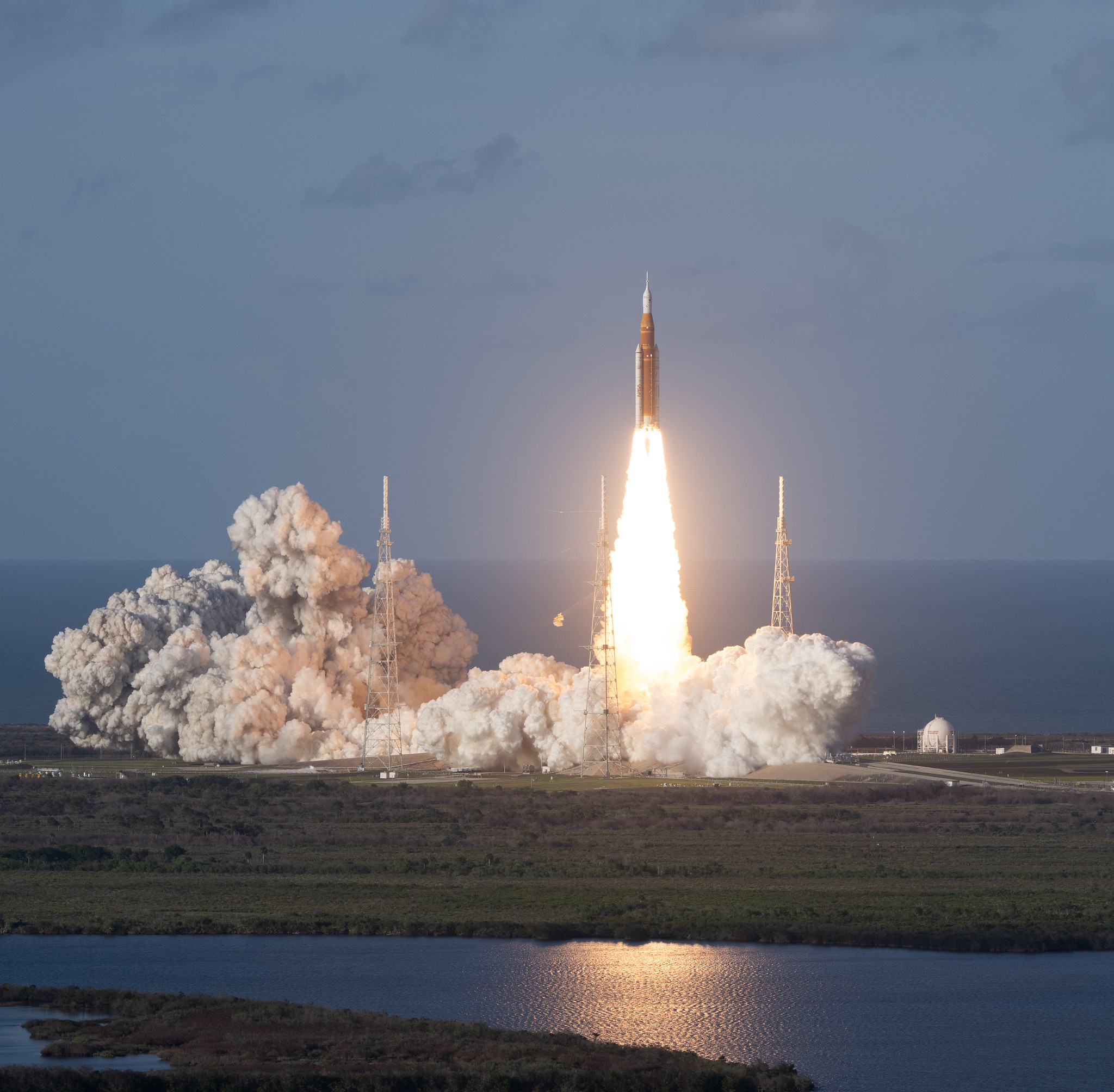
At the center of the global aerospace narrative is NASA’s Artemis II mission, the first crewed flight test under the agency's Artemis campaign. Set to carry a four-person crew around the Moon and back, the mission serves as the critical human-rated bridge between Earth orbit and sustainable lunar habitation.
Engineering teams have been systematically working through final integrated testing of the Space Launch System (SLS) rocket and the Orion spacecraft. Following the flawless uncrewed Artemis I flight, mission architects are focusing heavily on life-support systems, optical navigation, and emergency abort scenarios.
- The Crew: Comprising NASA astronauts Reid Wiseman, Victor Glover, and Christina Koch, alongside Canadian Space Agency astronaut Jeremy Hansen.
- Mission Profile: A roughly 10-day hybrid free-return trajectory that will test Orion's critical systems with a human crew onboard in the harsh environment of deep space.
- Strategic Significance: Validating life support is the final hurdle before Artemis III attempts to land the first woman and the next man on the lunar south pole later this decade.
Industry analysts note that the success of Artemis II will directly influence public-private partnerships, particularly the development of human landing systems by SpaceX and Blue Origin. The lunar economy is no longer theoretical; supply chains are being forged in real-time across Florida's Space Coast and manufacturing hubs nationwide.
Martian Revelations: New Discoveries Redefining Our Planetary Neighbor
While the Moon serves as the immediate stepping stone for human spaceflight, robotic explorers on Mars continue to rewrite textbooks. Recent data packages analyzed by planetary scientists and highlighted in the 321 Launch weekly brief reveal intriguing new insights into Mars' geological history and potential past habitability.
Advanced subsurface radar and high-resolution imaging have uncovered previously undetected sedimentary structures, pointing to a more complex, long-standing hydrological cycle in ancient Martian epochs. These discoveries are not merely academic; they are vital for mission planners mapping out future human exploration zones where in-situ resource utilization (ISRU)—specifically extracting subsurface water ice—will be mandatory for survival.
Key Developments in Space Exploration
| Sector / Mission | Primary Objective | Current Status | Strategic Outlook |
|---|---|---|---|
| Artemis II | First crewed lunar flyby | Final testing & integration | Paves way for lunar South Pole landing |
| Mars Robotic Fleet | Geological mapping & ISRU prospecting | Active data transmission | Identifying future human landing sites |
| Commercial Launch Cadence | Rapid cadence satellite & cargo delivery | Record-setting operational tempo | Driving down cost-per-pound to orbit |
The Commercial Launch Boom: A Record-Breaking Tempo
Beyond deep-space exploration, Earth’s orbital neighborhood is busier than at any point in human history. The sheer volume of rocket launches echoing across the Space Coast highlights a booming commercial infrastructure. From heavy-lift national security payloads to proliferated low-Earth orbit (LEO) constellations, launch providers are setting new operational benchmarks.
This unprecedented cadence is reshaping telecommunications, Earth observation, and defense architectures. However, it is also sparking intense debate among environmental regulators, local municipalities, and aerospace executives regarding airspace management, sonic boom mitigation, and sustainable spaceport operations.
As detailed in Florida Today’s reporting, maintaining this launch tempo requires unprecedented synchronization between the U.S. Space Force’s Eastern Range, commercial operators, and federal aviation authorities. The ability to turn around launch pads in days rather than months has become the ultimate competitive advantage in the modern space race.
What Lies Ahead for the Global Space Sector
The convergence of Artemis II preparations, continuous Martian discoveries, and relentless commercial launch activity paints a clear picture: humanity is firmly entering a permanent spacefaring era. For stakeholders across finance, technology, and government, staying informed on these rapid developments is no longer optional—it is essential for navigating the next great economic frontier.
As the countdowns continue and new data streams down from interplanetary probes, the eyes of the world remain fixed on the horizon, waiting to see what humanity achieves next among the stars.
Frequently Asked Questions
What is the primary objective of the Artemis II mission?
Artemis II is NASA's first crewed flight test of the Space Launch System (SLS) and Orion spacecraft. Its primary objective is to carry a four-person crew on a lunar flyby to thoroughly test life-support systems, navigation, and human endurance in deep space, laying the groundwork for future lunar landings.
Where can I find regular updates on rocket launches and space discoveries?
Comprehensive weekly updates, deep-dives, and launch schedules can be followed through specialized aerospace newsletters like FLORIDA TODAY's 321 Launch, which covers regional and global developments across the entire space industry.