

Executive Takeaways
- Atmospheric Disruption: The propulsion mechanics of the Artemis II Space Launch System (SLS) generated a temporary, localized ionospheric hole, confirming decades-old theoretical physics models regarding mega-scale chemical and acoustic rocketry impacts.
- Capital Expenditure & Infrastructure: The multi-billion-dollar aerospace supply chain faces renewed risk mitigation strategies as regulatory compliance and environmental impact assessments tighten around recurring heavy-lift launch cadence.
- Data-Driven Telemetry: Global atmospheric monitoring networks captured unprecedented real-time datasets, providing enterprise aerospace stakeholders with critical benchmarks for future propulsion scalability and valuation multiples.
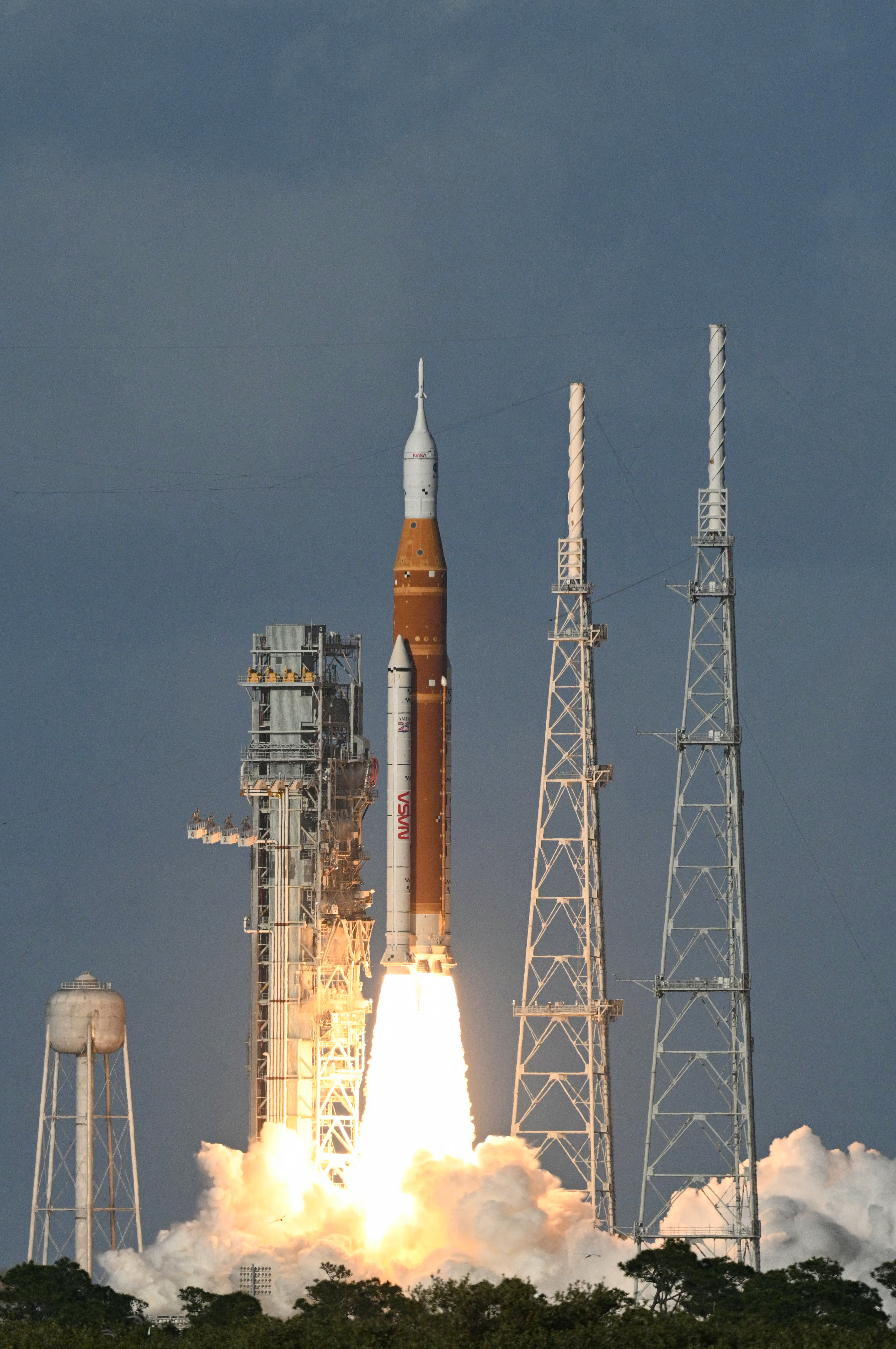
WASHINGTON — In the rarefied upper strata of Earth’s atmosphere, where the mesosphere gives way to the thermo-ionosphere, the boundary separating our planet from the vacuum of space is remarkably resilient—yet fundamentally vulnerable to extreme anthropogenic force. When the Orion spacecraft lifted off atop the Space Launch System (SLS) during the historic Artemis II mission, the sheer volumetric thrust did not merely propel humanity back toward lunar orbit; it structurally displaced and ionized the surrounding atmosphere on a scale that has sent ripples through both the aerospace engineering community and global regulatory bodies.
For financial markets, enterprise prime contractors, and government stakeholders managing capital allocation across the burgeoning deep-space economy, the incident forces a hard recalibration. As institutional investors evaluate the valuation multiples of aerospace and defense equities against environmental, social, and governance (ESG) benchmarks, understanding the atmospheric footprint of heavy-lift rocketry is no longer an academic exercise. It is a critical factor in long-term infrastructure scalability, market liquidity, and risk mitigation.
The Physics of an Ionospheric Rupture
Test Our Free AI & Tech Utilities Suite
Calculate LLM API token costs, analyze article dwell-time, or simulate tech DCA returns.
To comprehend how a rocket launch can "punch a hole" in the atmosphere, one must examine the thermodynamic and chemical violence of multi-million-pound thrust systems. The SLS, standing 322 feet tall and generating an astonishing 8.8 million pounds of maximum thrust at liftoff, relies on a combination of solid rocket boosters (SRBs) and liquid hydrogen/liquid oxygen core stages.
As this colossal mass accelerated through the stratosphere and into the ionosphere—roughly 50 to 600 miles above the Earth's surface—the exhaust plume injected massive quantities of water vapor, carbon dioxide, and aluminum oxide particulates directly into the F-layer of the ionosphere. This region is densely populated with free electrons and ions. The sudden introduction of exhaust molecules triggered a rapid chemical recombination process, effectively neutralizing the ions and creating a temporary plasma depletion zone, colloquially referred to as an "ionospheric hole."
While similar phenomena have been documented on a smaller scale during historic Saturn V and Space Shuttle flights, the unique trajectory and sheer mass flow rate of the Artemis II configuration produced a localized disruption of unprecedented measurable depth. Atmospheric physicists utilizing ground-based GPS receivers, radar arrays, and satellite telemetry recorded a transient drop in total electron content (TEC) exceeding 50% across a footprint spanning hundreds of square miles.
Market Liquidity, Regulatory Compliance, and Capital Allocation
The operational reality of punching holes in the upper atmosphere carries profound implications for the commercial aerospace sector, which is increasingly reliant on predictable regulatory frameworks to attract private capital. As institutional funds deploy capital into space-faring enterprises, portfolio risk assessment must now account for heightened environmental scrutiny.
| Launch System | Thrust at Liftoff (lbs) | Primary Propellant Type | Documented Ionospheric Impact |
|---|---|---|---|
| NASA SLS (Artemis II) | 8.8 Million | Solid (APCP) & Liquid H2/O2 | Severe plasma depletion / TEC drop >50% |
| SpaceX Starship | 16.7 Million | Liquid Methane & Liquid O2 | Significant acoustic/shockwave & plume chemistry |
| Saturn V (Apollo Era) | 7.5 Million | Kerosene (RP-1) & Liquid O2 / Liquid H2 | Moderate-to-high ionospheric wave generation |
For prime contractors and tier-1 suppliers, compliance mandates enforced by agencies such as the Federal Aviation Administration (FAA) and international counterparts are expected to tighten. Environmental impact statements (EIS) for future Artemis flight manifests—specifically Artemis III and subsequent lunar landing architecture—will likely require enhanced cloud compute architecture and predictive modeling to simulate atmospheric recovery rates before flight clearances are granted.
Furthermore, enterprise ROI calculations for telecommunications and Earth-observation satellite constellations operating in low Earth orbit (LEO) must factor in potential short-term disruptions to high-frequency radio communications and GPS signal propagation during heavy-lift launch windows. While the ionospheric holes typically heal within a few hours via solar radiation re-ionization, the temporal interference window demands sophisticated risk mitigation protocols across global logistics networks.
Industry Implications: Winners, Losers, and Economic Shifts
The validation of extreme atmospheric disruption models creates distinct market dynamics across the aerospace and defense value chain:
- Advanced Propulsion Innovators (Potential Gainers): Companies investing in green propellants, non-toxic monopropellants, and advanced electric propulsion architectures stand to capture significant R&D grants as legacy solid-fuel systems face heightened environmental scrutiny.
- Legacy Aerospace Prime Contractors (Navigating Headwinds): Prime contractors entrenched in heavy-lift government procurement must allocate additional capital toward environmental telemetry, real-time atmospheric monitoring payloads, and regulatory compliance litigation defense.
- Telemetry & Atmospheric Sensor Providers (High Growth): Firms specializing in upper-atmosphere monitoring, cloud-based data analytics, and real-time atmospheric modeling are experiencing a surge in enterprise contracts as government agencies demand empirical validation of launch impacts.
People Also Ask (FAQ)
Frequently Asked Questions
Did the Artemis II launch cause permanent damage to the atmosphere?
No. The ionospheric hole created by the SLS launch was entirely temporary. Solar ultraviolet radiation continuously re-ionizes the upper atmosphere, and normal electron density levels were fully restored within a few hours following the vehicle's transit through the thermosphere.
How does rocket propellant chemistry affect the ionosphere?
Solid rocket boosters and hydrocarbon fuels release water vapor, carbon dioxide, and chlorine/aluminum compounds. When injected into the F-layer of the ionosphere, these molecules accelerate the recombination of ions and free electrons, temporarily depleting the plasma concentration in the rocket's immediate wake.
What are the financial implications for commercial space companies?
As launch cadences increase globally, regulatory bodies are tightening environmental oversight. Aerospace firms must invest heavily in advanced predictive modeling, regulatory compliance, and risk mitigation strategies, which directly impacts capital allocation and short-term operating margins.
Future Outlook and Strategic Milestones
As NASA and its international partners prepare for the cadence of upcoming Artemis missions, the intersection of rocketry and atmospheric science will remain under intense scrutiny from both regulators and financial markets. The empirical datasets gathered during Artemis II provide an invaluable baseline for calibrating climate models and ensuring that humanity’s return to the Moon does not compromise the delicate equilibrium of Earth's upper envelope.
For executive leadership teams across the defense and aerospace sectors, the mandate is clear: technological ambition in deep-space exploration must be matched by rigorous environmental governance. Markets will reward enterprises that proactively integrate ecological risk mitigation into their infrastructure scalability plans, transforming regulatory compliance from a friction point into a sustainable competitive advantage.



