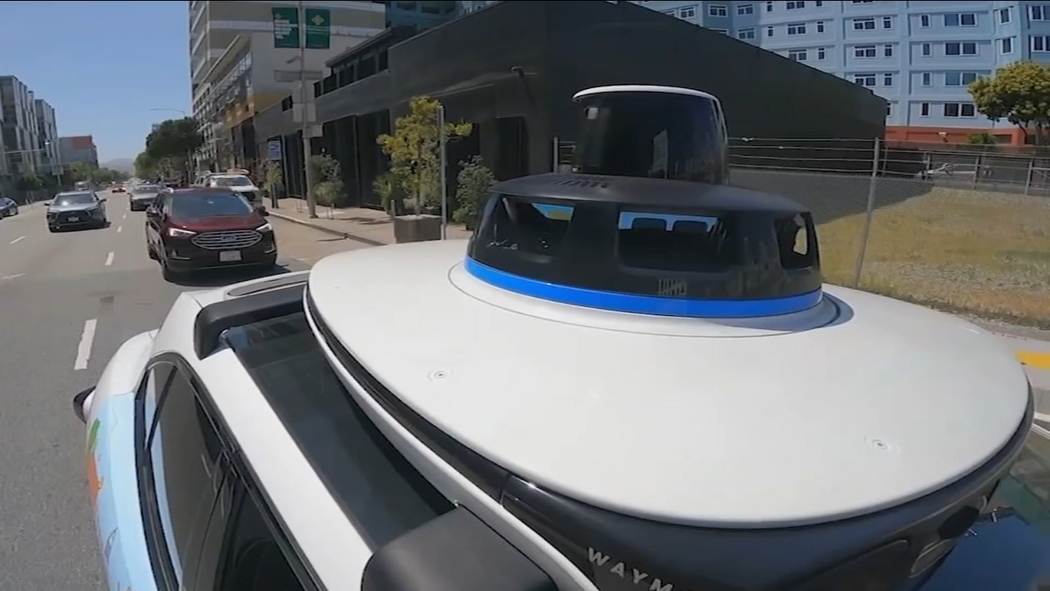
The Autonomy Arms Race: Inside Tesla, Waymo, and WeRide’s High-Stakes Battle to Command the Driverless Future
DETROIT, MI / SAN FRANCISCO, CA — The global autonomous vehicle (AV) industry has officially crossed its technological Rubicon. What was once characterized as a speculative, capital-intensive science project has matured into a fiercely contested, multi-trillion-dollar market. Driven by breakthrough generative AI models, shifting regulatory landscapes, and critical commercial rollouts, the race to eliminate the human driver has intensified.
According to industry intelligence from AUTO Connected Car News and primary regulatory filings, the final week of May 2026 has marked a historic inflection point. From Tesla’s aggressive global push for its Full Self-Driving (FSD) licensing to Waymo’s massive metropolitan expansion, and WeRide’s aggressive international market capture, the battle lines are drawn. At the same time, specialized players like Helm.ai, Torc Robotics, and defense-focused American Rheinmetall are proving that the future of autonomy extends far beyond consumer robotaxis into freight, defense, and industrial automation.
Executive Summary: The State of Play in Q2 2026
- Tesla’s Global Push: Tesla is aggressively pursuing FSD regulatory approvals in China and Europe while positioning its dedicated "Cybercab" platform to capture low-cost commercial transport.
- Waymo’s Scaling Moat: Google-parent Alphabet’s Waymo continues to dominate high-density urban ride-hailing, logging millions of fully autonomous miles and expanding its service areas across the US Sunbelt.
- Global Disruptors: Guangzhou-headquartered WeRide is rapidly globalizing, bypassing geopolitical headwinds by securing commercial permits in Europe and the Middle East, alongside its US testing expansion.
- B2B & Industrial Autonomy: Torc Robotics is moving closer to driverless freight commercialization by 2027, while Helm.ai’s vision-first AI and American Rheinmetall’s defense-grade vehicle platforms redefine military and logistical operations.
The Robotaxi Triopoly: Tesla, Waymo, and WeRide Clash for Scale

Tesla's Vision-Only Gamble and Global Expansion
Tesla continues to dominate financial and media headlines as Elon Musk bets the company's long-term valuation on pure-vision AI. Rejecting costly LiDAR (Light Detection and Ranging) systems, Tesla’s FSD v12 and v13 neural network architectures rely entirely on cameras and end-to-end deep learning. Reuters reports that Tesla is actively negotiating FSD pilot programs with Chinese municipal authorities, aiming to establish a localized data center in Shanghai to train its algorithms on China's complex urban terrain.
While skeptics point to ongoing regulatory scrutiny from the National Highway Traffic Safety Administration (NHTSA) in the United States, Tesla's strategy remains clear: build a massive fleet of consumer-owned vehicles acting as a distributed robotaxi network, undercutting rivals on operational and capital expenditures.
Waymo Solidifies its Urban Dominance
In stark contrast to Tesla's consumer-led approach, Alphabet's Waymo has quietly built a fortress of operational reliability. Operating high-density commercial services in San Francisco, Phoenix, Los Angeles, and Austin, Waymo is currently the undisputed leader in paid driverless rides. By integrating a multi-sensor suite consisting of advanced LiDAR, radar, and high-resolution cameras, Waymo has prioritized safety and predictability. Financial analysts note that Waymo’s focus is now shifting from "can it work?" to "can it scale profitably?", with the company optimizing its hardware stack to reduce manufacturing costs per vehicle by over 30%.
WeRide’s Smart Geopolitical Pivot
As the first autonomous driving company to secure a national-level autonomous driving license in the Middle East (specifically in the UAE), WeRide is executing a masterclass in global scaling. Despite tense US-China trade relations, WeRide has successfully initiated testing of its Level 4 autonomous vans and robobuses in selected US test beds, while simultaneously expanding its footprint across Europe and Southeast Asia. Their diversified product line—ranging from robotaxis and robobuses to autonomous street sweepers—gives WeRide a unique resilience against localized market downturns.
The Heavyweights: Freight, Defense, and Infrastructure
Torc Robotics and the Future of Logistics
In the long-haul freight sector, Daimler Truck subsidiary Torc Robotics is steadily executing its hub-to-hub autonomous trucking strategy. Torc is testing Class 8 autonomous trucks on critical freight corridors in the US Southwest, targeting a fully commercialized, driverless hub-to-hub launch by 2027. Recognizing that highway driving is highly predictable compared to dense city streets, Torc's platform is poised to address chronic driver shortages in the logistics sector while offering shippers massive gains in fuel efficiency and continuous operation.
Helm.ai and Mapless AI: Redefining Software & Remote Operations
Behind the hardware sits the critical software layer. Helm.ai has emerged as a major player, championing "unsupervised learning" to train autonomous driving systems without the need for expensive, manually annotated data. This software-centric approach allows OEMs to deploy advanced Level 2+ and Level 3 driver-assist features on low-cost compute platforms.
Concurrently, firms like Mapless AI are addressing the "edge cases" of autonomy. By developing highly secure, ultra-low-latency remote teleoperation systems, Mapless AI allows human operators sitting miles away to safely pilot vehicles through construction zones or unexpected obstacles, bridging the gap between autonomy and human overwatch.
Safety Controls and Defense: FORT Robotics & American Rheinmetall
Autonomy is also transforming the tactical and defense landscapes. American Rheinmetall, in partnership with safety-critical control leaders like FORT Robotics, is developing highly secure, ruggedized autonomous systems for military logistics and heavy industrial use. In tactical environments, failure is not an option. FORT Robotics’ proprietary safety-critical wireless communications platforms ensure that even if an autonomous military supply vehicle experiences a software crash, a secure, physical "stop" command can be executed remotely, preventing catastrophic accidents on and off the battlefield.
Comparative Analysis: Key Players in the Autonomous Landscape
| Company | Primary Sensor Suite | Target Market | Key Geographic Focus | Commercial Status (as of May 2026) |
|---|---|---|---|---|
| Tesla | Pure Vision (Cameras Only) | Consumer AV & RoboTaxi | North America, China, Europe | L2/L3 FSD deployed; Robotaxi platform in testing |
| Waymo | LiDAR, Radar, Cameras | Urban RoboTaxi & Delivery | United States (Multi-city) | Fully commercial L4 driverless operations |
| WeRide | Multi-Sensor Fusion (LiDAR/Camera) | RoboTaxi, RoboBus, Sweepers | Middle East, China, USA, Europe | L4 operations active; expanding global commercial fleets |
| Torc Robotics | LiDAR, Radar, Cameras | Class 8 Heavy Freight | United States (Southwest Corridors) | Commercial testing phase; launch targeted for 2027 |
| Helm.ai | Sensor-Agnostic Software | OEM Software Licensing | Global (Automotive Partner Network) | Active integration with Tier-1 automotive suppliers |
Future Outlook: The Road Ahead to 2027
As we head into the latter half of 2026, the autonomous vehicle sector is undergoing a rapid consolidation of hardware, with software capabilities now serving as the ultimate differentiator. The regulatory paradigm is also shifting; governments worldwide are realizing that to remain competitive, they must transition from rigid regulatory barriers to collaborative, safety-validated frameworks.
The next twelve months will likely determine which business model triumphs: Tesla's mass-market, vision-only neural networks, or Waymo's localized, sensor-rich, capital-intensive urban network. One thing is certain: the driverless future is no longer a distant horizon—it is unfolding in real-time on public streets today.
Frequently Asked Questions (FAQ)
1. What is the difference between Tesla’s autonomous technology and Waymo’s?
The primary difference lies in sensor suites and computational philosophy. Tesla relies solely on optical cameras and end-to-end neural networks (often called "pure vision"), aiming for a system that navigates like a human driver using sight alone. Waymo uses a highly redundant "sensor fusion" approach combining cameras, radar, and costly LiDAR units to create high-definition 3D maps of its operational areas, ensuring highly predictable and localized safety performance.
2. Why are companies like WeRide focusing so heavily on the Middle East?
The Middle East, particularly the UAE and Saudi Arabia, offers highly supportive regulatory frameworks, massive capital backing, and modern, predictable city planning that is ideal for Level 4 autonomous vehicle deployment. By securing early national licenses in these regions, global companies like WeRide can quickly achieve commercial scale and gather invaluable real-world driving data, bypassing the fragmented regulatory hurdles present in the United States and Europe.