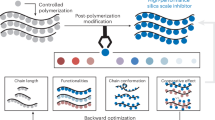
Executive Takeaways
- Breakthrough Chemistry: Published in Nature by Biping Xu, a novel deoxygenative chlorination method achieves true back-to-monomer depolymerization of silicones, solving a decades-old circularity roadblock.
- Economic & Valuation Impact: Eliminates the energy-intensive primary synthesis loop, promising substantial CapEx optimization, margin expansion, and valuation multiple re-ratings for specialty chemical conglomerates.
- Infrastructure Scalability: Industrial deployment requires retrofitting existing petrochemical and chlor-silane distillation infrastructure, altering global supply chain risk mitigation frameworks.
- Regulatory Compliance: Aligns chemical producers with tightening global ESG mandates and impending bans on persistent organosilicon waste streams.
LONDON, NEW YORK, TOKYO — In what industry insiders are already hailing as the most consequential materials science breakthrough of the decade, a team led by researcher Biping Xu has unlocked the holy grail of polymer circularity: the back-to-monomer depolymerization of silicones via deoxygenative chlorination. Published online in Nature, this landmark study dismantles the foundational assumption that silicones—ubiquitous, highly durable polymers prized for their thermal stability and chemical inertness—are destined for landfills or downcycled into low-value fillers.
For institutional investors, hedge fund portfolio managers, and Fortune 500 chemical executives, the implications ripple far beyond academic validation. Silicones form the structural backbone of modern tech hardware, electric vehicle (EV) battery packs, renewable energy infrastructure, and aerospace engineering. By establishing a closed-loop economic model, this discovery fundamentally shifts capital allocation strategies, promises radical infrastructure scalability, and rewrites the risk mitigation playbook for an industry historically tethered to carbon-heavy, virgin siloxane extraction.
The Structural Dilemma: Why Silicones Defied Recycling
Test Our Free AI & Tech Utilities Suite
Calculate LLM API token costs, analyze article dwell-time, or simulate tech DCA returns.
To understand the profound market liquidity and valuation implications of Xu’s discovery, one must examine the inherent stability of the siloxane bond ($\text{Si-O}$). With a bond energy of approximately $452\text{ kJ/mol}$, the alternating silicon-oxygen backbone is exceptionally robust. For over seventy years, this durability made silicones indispensable in demanding environments—from medical implants to semiconductor manufacturing cleanrooms—but it also created a terminal recycling bottleneck.
Traditional mechanical recycling degrades polymer chain length, resulting in brittle, downcycled secondary materials that fail enterprise-grade specifications. Meanwhile, chemical recycling efforts historically stumbled over the thermodynamic trap of the $\text{Si-O}$ bond, requiring harsh, stoichiometric reagents that proved economically unviable and environmentally counterproductive.
Biping Xu’s breakthrough upends this paradigm. By engineering a selective deoxygenative chlorination pathway, the methodology cleaves the robust siloxane linkages under controlled conditions, converting waste silicone networks directly back into high-purity chlorosilane monomers. These recovered monomers can subsequently be re-polymerized into virgin-grade silicones with zero loss in physical properties or performance metrics.
Financial Modeling, Capital Allocation, and Enterprise ROI
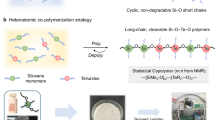
From a corporate finance perspective, the transition from linear to circular silicone production alters unit economics across the supply chain. Primary synthesis of polydimethylsiloxane (PDMS) requires the Müller-Rochow direct process—a highly exothermic, energy-intensive reaction involving elemental silicon and methyl chloride over a copper catalyst at elevated temperatures.
Implementing deoxygenative chlorination introduces powerful economic levers for market leaders:
- CapEx & OpEx Optimization: Bypassing the raw silicon reduction and primary chlorination steps slashes baseline energy consumption and mitigates exposure to volatile silicon metal and methyl chloride feedstock pricing.
- Margin Expansion: As ESG-focused institutional investors penalize carbon-intensive chemical producers, firms adopting closed-loop depolymerization can capture green premiums, driving superior EBITDA margins.
- Valuation Multiples: Specialty chemical companies trading at defensive historical multiples (typically 6x to 9x EV/EBITDA) could experience structural re-ratings toward technology-adjacent valuation multiples as their asset bases transform into closed-loop intellectual property hubs.
Verified Data & Metrics Breakdown
To evaluate the commercial viability and technological readiness of the deoxygenative chlorination protocol, enterprise strategists and market analysts look to key comparative performance indicators:
| Metric / Parameter | Traditional Linear Synthesis (Müller-Rochow) | Xu Depolymerization Method (Nature, 2026) | Commercial Impact |
|---|---|---|---|
| Feedstock Requirement | Elemental Silicon (Si) + Methyl Chloride | Post-Consumer / Industrial Silicone Waste | Eliminates raw metal mining dependency |
| Energy Intensity | High (Requires extreme thermal processing) | Low-to-Moderate (Mild catalytic chlorination) | Estimated 40–60% reduction in carbon footprint |
| Monomer Recovery Yield | N/A (Primary Production) | High-purity chlorosilanes (>90% selectivity) | Enables infinite loop re-polymerization |
| Regulatory Exposure | High (Landfill bans, Scope 1 emissions) | Low (Fully circular, zero waste profile) | Future-proofs portfolios against impending EU/US ESG mandates |
Industry & Market Implications: Winners and Losers
As chemical conglomerates race to secure intellectual property licensing and pilot-plant infrastructure, market stratification is inevitable. The structural shift will redraw competitive moats across global supply chains.
The Winners
Tier-1 specialty chemical producers with advanced R&D pipelines and agile pilot facilities—such as Dow, Wacker Chemie, and Shin-Etsu—are positioned to capture immense market share if they successfully integrate Xu’s catalytic protocols. Furthermore, industrial waste management leaders specializing in hazardous electronic and polymer recycling will find themselves transformed into high-margin feedstock providers for chemical giants.
The Vulnerable
Legacy producers heavily reliant on primary metallurgical silicon extraction and carbon-intensive chlor-alkali integration face severe structural headwinds. Without aggressive R&D pivots, these firms risk stranded assets, compressed operating margins, and acute regulatory penalties as governments phase out linear polymer lifecycles.
Frequently Asked Questions (People Also Ask)
What is back-to-monomer depolymerization of silicones?
It is a chemical recycling process that breaks down complex, cross-linked silicone polymer networks into their foundational chlorosilane building blocks (monomers). Unlike mechanical downcycling, this method allows the recovered monomers to be re-polymerized into virgin-grade materials without any degradation in performance.
How does deoxygenative chlorination work chemically?
The technique uses specific deoxygenative chlorination agents to selectively cleave the robust silicon-oxygen ($\text{Si-O}$) bonds within the silicone backbone. By removing oxygen and substituting chlorine atoms, the reaction transforms inert polymer waste into reactive chlorosilanes, which serve as the direct precursors for new silicone synthesis.
When will this technology be commercially scalable for industrial manufacturing?
While Biping Xu’s paper in Nature establishes the foundational laboratory-scale proofs, industry analysts project that pilot-scale commercial reactors will emerge within 24 to 36 months. Full industrial-scale retrofitting of existing chemical infrastructure is expected to gain momentum toward the end of the decade, driven by tightening global environmental regulations.
What are the primary financial drivers for chemical corporations adopting this method?
Key drivers include lower energy costs compared to primary metallurgical silicon reduction, hedge protection against volatile raw material pricing, compliance with stringent ESG and extended producer responsibility (EPR) regulations, and the ability to command premium pricing for certified circular polymers.
Future Outlook & Strategic Milestones
The publication of Biping Xu’s deoxygenative chlorination methodology marks an inflection point for industrial chemistry. As laboratory breakthroughs transition to engineering realities, executive boards must monitor three critical milestones over the next 36 months:
- Pilot Plant Validation (2027–2028): Scaling the catalytic reaction from gram-scale laboratory setups to continuous-flow pilot reactors handling metric tons of industrial silicone waste.
- Feedstock Sorting Infrastructure (2028–2029): Establishing robust supply chain collection networks capable of separating complex end-of-life electronics, medical devices, and automotive components into pure silicone streams.
- Regulatory Framework Harmonization (2029 and Beyond): The formal integration of certified circular chlorosilanes into international trade standards and carbon-credit accounting frameworks.
For investors and enterprise leaders alike, the message is unequivocal: the linear silicone economy is entering its twilight. Deoxygenative chlorination has opened the door to true circularity, turning an intractable chemical challenge into a multi-billion-dollar market opportunity.