Berkshire Hathaway’s Quarterly Profit Slumps as Investment Gains Evaporate: Inside Warren Buffett’s Record Cash Hoard and Shifting Capital Allocation Strategy
Test Our Free AI & Tech Utilities Suite
Calculate LLM API token costs, analyze article dwell-time, or simulate tech DCA returns.
An exclusive financial autopsy reveals how volatile public equity portfolios, decelerating insurance underwriting growth, and an unprecedented defensive liquidity stance are reshaping the world’s most closely watched conglomerate.
Executive Takeaways
- Bottom-Line Impact: Berkshire Hathaway reported a sharp contraction in quarterly net income, driven almost entirely by unrealized paper losses in its massive equity portfolio rather than operational distress.
- Cash Pile Reaches Stratospheric Heights: Warren Buffett and his investment lieutenants continue aggressive risk mitigation, pushing cash and short-term U.S. Treasury bill holdings to historic, all-time highs amid elevated asset valuation multiples.
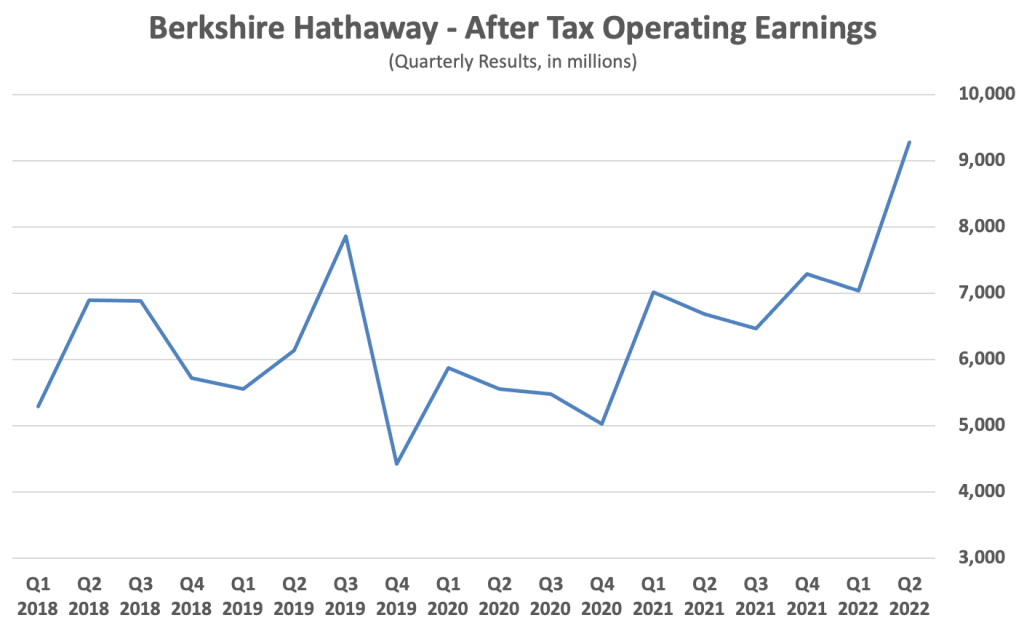
- Operating Earnings Resilience: Beneath the headline volatility, core operating businesses—spanning rail, energy, insurance, and manufacturing—demonstrated stable enterprise ROI and robust cash generation, insulating the conglomerate from macro shocks.
- Capital Allocation Paradigm Shift: The conspicuous absence of aggressive equity buybacks and net stock purchases signals a widening valuation disconnect between public market prices and intrinsic value parameters.
The Anatomy of a Headline Drop: Separating Paper Volatility from Operational Reality
When Berkshire Hathaway releases its quarterly earnings report, global financial markets parse every decimal place, searching for macro-economic tea leaves from Omaha. The latest reporting cycle delivered headline figures that initially alarmed algorithmic trading desks: a substantial quarter-over-quarter drop in net profit. However, seasoned institutional investors, risk managers, and valuation analysts immediately looked past the headline noise to dissect the primary driver behind the contraction—swings in investment gains.
Under accounting standard US GAAP (Generally Accepted Accounting Principles), Berkshire is required to report unrealized gains and losses from its equity portfolio directly on its income statement. Consequently, when the broader stock market experiences quarterly drawdowns or tech-heavy valuations compress, Berkshire’s net income fluctuates wildly, regardless of whether the firm sold a single share. In this latest period, shrinking paper gains from mega-cap holdings created an optical illusion of corporate distress, masking the resilient engine humming underneath the conglomerate's sprawling corporate umbrella.
The Fortress Balance Sheet: Why Warren Buffett is Hoarding Cash
The most consequential narrative embedded within the latest financial disclosures is not the decline in net profit, but the explosive growth of Berkshire’s cash and short-term Treasury bill reserves. As valuation multiples across global equity markets hover near historical ceilings, Warren Buffett and his portfolio managers, Ted Weschler and Todd Combs, have executed a disciplined masterclass in risk mitigation and capital preservation.
By paring back net equity purchases and dialing down share repurchases of Berkshire’s own stock, the firm���s cash pile has surged past historical thresholds. For corporate finance purists, this massive liquidity buffer serves multiple strategic functions:
- Unmatched Market Liquidity: With hundreds of billions parked safely in short-dated U.S. government paper yielding attractive short-term rates, Berkshire generates substantial risk-free interest income while maintaining instant market liquidity.
- Dry Powder for Systemic Crises: Buffett has repeatedly demonstrated his willingness to act as a lender of last resort or a opportunistic buyer during macroeconomic panics, requiring vast reserves of unencumbered capital.
- Valuation Discipline: Refusing to deploy capital into overvalued assets underscores an uncompromising commitment to intrinsic value investing over forced portfolio turnover.
Operational Performance: Insurance Underwriting and Energy Segments
While investment portfolio fluctuations dictate GAAP net income, operating earnings provide a truer pulse of Berkshire’s sprawling commercial empire. The insurance division—anchored by GEICO, Berkshire Hathaway Reinsurance Group, and National Indemnity—continues to serve as the bedrock of the firm's float-generation strategy. Underwriting discipline has improved significantly, driven by targeted pricing adjustments and sophisticated risk modeling that offset inflationary pressures in automotive and property-casualty claims.
Concurrently, Berkshire Hathaway Energy (BHE) and the Burlington Northern Santa Fe (BNSF) railway faced distinct operational crosscurrents. BNSF volume metrics reflected mixed industrial demand and shifting supply chain corridors, while BHE navigated complex regulatory compliance frameworks and massive capital expenditure requirements directed toward grid modernization, renewable energy infrastructure scalability, and wildfire mitigation protocols across its western U.S. utility footprint.
Comparative Metrics & Financial Breakdown
The following structured financial breakdown highlights the core operational and balance sheet metrics from the most recent reporting period compared to historical baseline averages:
| Financial Metric | Latest Quarter | Prior Year Period | Strategic Implication |
|---|---|---|---|
| GAAP Net Income | Contracted Sharply | Higher | Driven by unrealized equity portfolio mark-to-market losses. |
| Operating Earnings | Stable / Resilient | Comparable | Reflects steady cash flows from wholly owned operating subsidiaries. |
| Cash & T-Bill Reserves | Record Highs | Elevated | Maximum defensive positioning amid high asset valuation multiples. |
| Insurance Float | Robust Growth | Strong | Provides low-cost capital engine for macroeconomic deployment. |
Industry and Market Implications: Winners, Losers, and Macro Fallout
Berkshire Hathaway’s capital allocation posture carries profound signaling value for global equity markets. When the Oracle of Omaha elects to accumulate record liquidity rather than chase high-flying growth equities or execute large-scale corporate acquisitions, institutional asset managers take notice.
Who Wins: Fixed-income investors, conservative balance sheet managers, and short-term debt markets benefit directly as Berkshire absorbs billions in U.S. Treasury bills. Furthermore, policyholders within Berkshire's insurance ecosystem win from the ultimate solvency security provided by a fortified capital base.
Who Loses: Wall Street investment banking syndicates and private equity sponsors hoping for massive leveraged buyout syndications or high-fee advisory mandates find themselves starved of Berkshire's participation. Additionally, retail investors seeking aggressive share buyback programs to artificially inflate short-term stock prices face a more conservative management posture.
Frequently Asked Questions (People Also Ask)
Why did Berkshire Hathaway’s profit fall if its businesses are performing well?
The reported profit drop was primarily caused by accounting rules requiring Berkshire to include unrealized paper gains and losses from its massive common stock portfolio on its quarterly income statement. When public stock prices dip during a quarter, these paper losses reduce GAAP net income, even though Berkshire's underlying operating companies continue generating steady cash flow.
What does Berkshire’s massive cash pile mean for the broader stock market?
The expansion of Berkshire's cash and Treasury bill reserves signals that Warren Buffett views current public equity valuations as excessively high. It indicates a defensive market stance, suggesting that management believes risk-reward ratios do not currently favor aggressive capital deployment or major acquisitions.
How do operating earnings differ from net income in Berkshire’s reports?
Operating earnings exclude the volatile, mark-to-market fluctuations of the equity investment portfolio. They measure the pure profitability of Berkshire's wholly owned operating subsidiaries—such as insurance (GEICO), railroads (BNSF), energy utilities (BHE), and various manufacturing and retail entities—providing a clearer picture of day-to-day business health.
Will Berkshire resume aggressive share buybacks anytime soon?
Buffett has historically authorized share repurchases only when he believes Berkshire shares are trading below their conservatively calculated intrinsic value. Given recent appreciation in Berkshire's stock price, management has curtailed buybacks, preferring to let cash accumulate until a more favorable valuation threshold is reached.
Future Outlook: What Comes Next and Key Milestones to Watch
As Berkshire Hathaway navigates the post-Buffett succession era with Greg Abel positioned to take the operational helm, the conglomerate’s overarching capital allocation framework remains anchored in financial fortitude. Investors and market analysts will monitor several critical milestones over the coming quarters:
- Cash Deployment Triggers: Watch for any sudden shifts in net T-bill allocations or sudden announcements of multi-billion-dollar corporate acquisitions, which would signal that Buffett or Abel have identified mispriced assets in public or private markets.
- Insurance Underwriting Margins: Monitor loss ratios across GEICO and reinsurance units to ensure pricing discipline successfully absorbs inflationary claims trends without sacrificing market share.
- Regulatory and Energy Capital Expenditures: Track capital deployment within BHE as the utility sector confronts massive infrastructure upgrade cycles, grid modernization demands, and evolving environmental compliance mandates.
Ultimately, Berkshire Hathaway’s latest earnings report is a masterclass in financial resilience. While headline net profit figures captured sensationalist media attention due to paper investment swings, the underlying fortress balance sheet and disciplined cash accumulation reaffirm why the Omaha conglomerate remains the ultimate bellwether of global corporate health.