Executive Takeaways
- Policy Shift Risk: A potential Democratic sweep of Congress introduces immediate regulatory headwinds, threatening corporate tax structures and capital allocation models across the financial, healthcare, and energy sectors.
- 圧縮 Valuation Multiples: Equity markets face severe pressure on forward P/E ratios as higher statutory corporate tax rates compress net margins and force a recalibration of projected enterprise ROI.
- Infrastructure and Clean Energy Upside: While traditional fossil fuels and pharmaceutical pricing face stringent legislative scrutiny, renewable energy, grid infrastructure scalability, and domestic manufacturing stand to capture substantial federal subsidies.
- Strategic Risk Mitigation: Institutional portfolio managers are aggressively rebalancing asset allocation, hedging against regulatory compliance costs, and prioritizing liquidity over speculative growth.
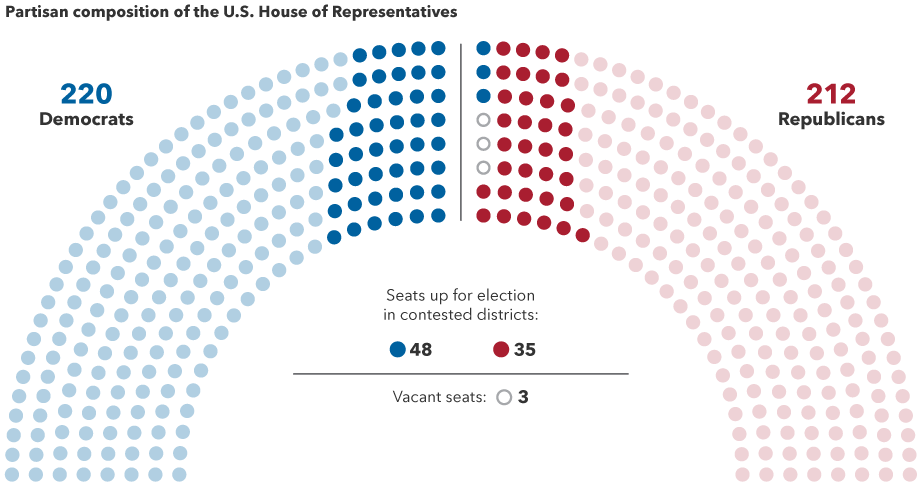
As the political landscape shifts ahead of the upcoming midterm elections, institutional trading desks across Wall Street, the City of London, and Frankfurt are rapidly updating their quantitative models. The prospect of a Democratic sweep—retaining the Senate and capturing the House of Representatives—has evolved from a tail-risk scenario into a central planning variable for major asset managers. While macroeconomic indicators such as inflation prints and Federal Reserve rate trajectories have dominated equity chatter, legislative control in Washington represents a direct catalyst capable of compressing valuation multiples, shifting capital allocation strategies, and triggering a systemic repricing of risk across core industry verticals.
For months, consensus on trading floors assumed a split Congress, a political gridlock scenario historically favored by equity markets for its predictability and the near-impossibility of sweeping legislative overhauls. However, recent polling shifts and shifting voter sentiment in key suburban districts have forced risk committees to model the uncharted waters of single-party Democratic control. The immediate implications for corporate tax policy, antitrust enforcement, and federal spending initiatives mean that portfolio managers can no longer rely on status-quo assumptions. In this special investigative report, we examine the mechanics of how a Democratic congressional sweep could jolt global equities, analyze sector-specific winners and losers, and outline the strategic portfolio adjustments required to navigate this looming volatility.
The Macroeconomic Transmission Mechanism: Taxes, Spending, and Market Liquidity
Test Our Free AI & Tech Utilities Suite
Calculate LLM API token costs, analyze article dwell-time, or simulate tech DCA returns.
The primary transmission mechanism between a legislative sweep and stock market volatility lies in fiscal policy and tax reform. Under a unified Democratic government, leadership would gain the political leverage necessary to revisit key components of the 2017 Tax Cuts and Jobs Act, alongside introducing targeted levies on corporate buybacks and excess profits. Financial modeling from top-tier investment banks indicates that an increase in the statutory corporate tax rate from 21% to 25% or 28% would instantly shave approximately 4% to 8% off S&P 500 earnings per share (EPS). In an environment where equity risk premiums are already compressed due to elevated borrowing costs, this earnings contraction would force a painful recalculation of forward price-to-earnings multiples.
Beyond taxation, capital allocation models would face profound disruption through federal spending priorities. A Democratic Congress would likely prioritize expansive fiscal packages centered on social infrastructure, green energy transition, and domestic semiconductor manufacturing. While these initiatives provide robust revenue streams for specific industrial sub-sectors, they also necessitate higher federal debt issuance. This dynamic could exert upward pressure on long-term Treasury yields, crowding out private investment and increasing the cost of capital for leveraged balance sheets. Consequently, corporations with high debt-to-equity ratios and aggressive share repurchase programs face acute vulnerability, while cash-rich enterprises with resilient operating margins are poised to maintain relative stability.
Sector-Specific Vulnerabilities and Tailwinds
Market impact will not be distributed uniformly. Certain sectors face severe regulatory friction and margin compression, while others stand to capture unprecedented growth driven by federal subsidies and regulatory mandates.
Healthcare and Pharmaceuticals
The healthcare sector remains highly sensitive to legislative outcomes. A Democratic sweep increases the probability of expanded Medicare price negotiation powers, stricter enforcement of drug pricing transparency, and potential movement toward a public option framework. Biotechnology and large-cap pharmaceutical firms would face immediate headwinds regarding their pricing power, directly impacting research and development budgets and long-term enterprise ROI. Managed care organizations and hospital systems, meanwhile, would navigate a complex matrix of expanded coverage mandates offset by stringent reimbursement rate caps.
Energy and Utilities
Traditional fossil fuel producers face an adversarial regulatory environment under unified Democratic control. Expect intensified scrutiny on federal leasing permits, methane emissions fees, and rollbacks of traditional energy subsidies. Conversely, clean energy developers, electric vehicle (EV) manufacturers, and grid infrastructure scalability providers would experience a massive structural tailwind. Federal grants, tax credits for renewable energy deployment, and massive outlays for smart-grid modernization will fortify the balance sheets of green tech pioneers, driving robust revenue growth regardless of broader economic cycles.
Financial Services and Technology
Financial institutions confront the twin pressures of enhanced regulatory compliance costs and aggressive antitrust scrutiny. Mergers and acquisitions (M&A) activity, a vital revenue driver for investment banks, could slow significantly under antitrust leadership that views consolidation with deep skepticism. In the technology sector, Big Tech firms face sustained legislative threats regarding data privacy, algorithmic accountability, and platform neutrality, dampening the valuation multiples of high-flying software and cloud compute architecture providers.
Verified Data & Market Impact Matrix: Projected Sector Sensitivity Under a Democratic Sweep
| Sector / Industry | Primary Legislative Risk / Catalyst | Projected EPS Impact | Market Sentiment / Outlook |
|---|---|---|---|
| Big Pharma & Biotech | Expanded Medicare drug price negotiation & patent scrutiny | -5% to -9% | Defensive / Bearish |
| Renewable Energy & Grid Infra | Direct subsidies, tax credits, and green transition mandates | +12% to +18% | Highly Bullish |
| Traditional Energy (Oil & Gas) | Stricter leasing rules, carbon taxes, and subsidy rollbacks | -8% to -12% | Bearish / Volatile |
| Financial Services & Banks | Higher capital requirements, M&A friction, and buyback levies | -4% to -7% | Cautious / Neutral |
| Big Tech & Software | Antitrust enforcement and strict data privacy regulations | -3% to -6% | Neutral / Selective |
Frequently Asked Questions (People Also Ask)
Frequently Asked Questions
How does a Democratic congressional sweep directly impact corporate earnings?
The most direct impact stems from potential increases in the statutory corporate tax rate and the implementation of targeted surtaxes on corporate stock buybacks. Financial modeling indicates that every percentage point increase in the corporate tax rate reduces aggregate S&P 500 earnings per share by roughly 1%, creating immediate pressure on equity valuation multiples.
Which specific stock sectors benefit most from unified Democratic control?
Sectors aligned with the green energy transition—including solar, wind, electric vehicle manufacturers, and electrical grid infrastructure providers—historically and structurally benefit from federal subsidies, tax credits, and regulatory tailwinds under Democratic legislative majorities.
Why do equity markets generally favor a split Congress over a sweep?
Wall Street typically prefers a divided government because legislative gridlock acts as a stabilizing force. It prevents sweeping fiscal overhauls, major tax code disruptions, and aggressive regulatory shifts, thereby ensuring predictable operating environments for corporate leadership teams.
What risk mitigation strategies are institutional investors employing ahead of the midterms?
Institutional asset managers are actively rotating capital into defensive sectors with strong balance sheets, increasing cash liquidity, deploying options-based downside protection, and over-weighting structural growth themes insulated from legislative turbulence.
Future Outlook: Strategic Milestones and Portfolio Positioning
As election day approaches, institutional capital allocation will increasingly reflect polling probabilities rather than post-election reality. The weeks leading up to the vote are expected to feature heightened market volatility, characterized by sector rotation out of high-multiple growth stocks and into defensive havens. Portfolio managers are advised to monitor key lead indicators, including congressional district polling averages, early voter turnout data, and preliminary legislative agendas put forward by party leadership.
Ultimately, while a Democratic sweep introduces significant headline risk and forces a downward revision of consensus earnings models, sophisticated investors view these policy shifts through the lens of long-term structural realignment. By identifying companies possessing robust pricing power, resilient supply chains, and strong alignment with bipartisan industrial policies—such as domestic semiconductor fabrication and critical infrastructure modernization—investors can successfully insulate their portfolios against macro-political shocks while capturing alpha in a rapidly evolving economic landscape.