
Executive Takeaways
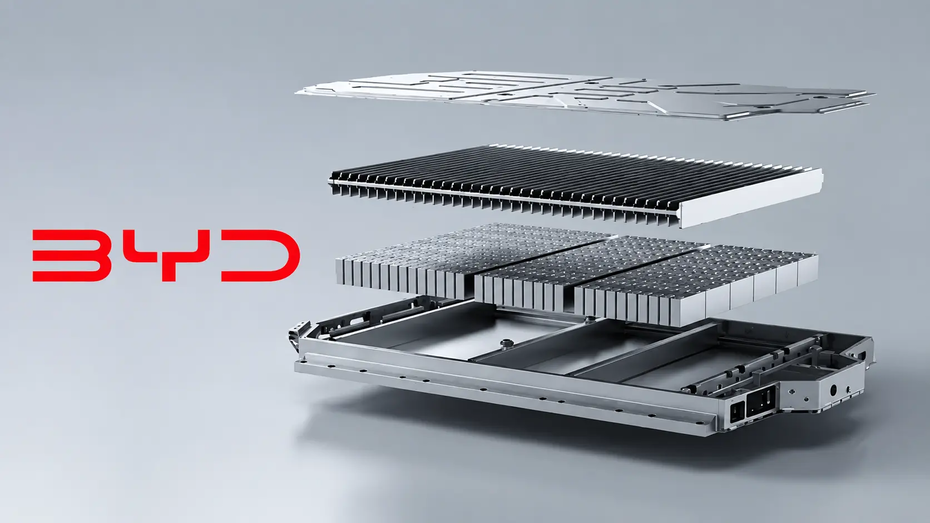
- Commercial Timeline Locked: Shenzhen-based BYD Has formally aligned its next-generation battery roadmap to introduce all-solid-state batteries (SSBs) by 2027, marking a pivotal transition from its industry-defining lithium iron phosphate (LFP) Blade platform.
- Quantum Leap in Energy Density: BYD’s target solid-state architecture aims for volumetric and gravimetric energy densities reaching 400 to 500 Wh/kg—nearly doubling the energy density of conventional LFP cells and extending zero-emission vehicle range past 1,000 kilometers on a single charge.
- Escalating Tri-Polar Industrial War: The announcement directly counters Toyota’s aggressive solid-state commercialization timeline alongside Japanese energy partner Idemitsu Kosan, while placing immense margin pressure on South Korean rivals Samsung SDI and domestic peer CATL.
- Capital Allocation & Supply Chain Shift: The transition signals a tectonic shift in enterprise CapEx, driving capital toward precursor materials like lithium sulfide ($Li_2S$) and sulfide-based solid electrolytes, while threatening legacy Western automotive OEMs with further valuation compression if scaling hurdles are solved first in China.
The 2027 Inflection Point: Inside BYD’s Solid-State Strategy

In what is shaping up to be a decisive phase of the global electric mobility revolution, BYD Company Ltd. has signaled a definitive timeline for deploying all-solid-state battery technology. According to recent disclosures surfaced on February 17, 2025, the Chinese battery and automotive giant plans to integrate solid-state power cells into its vehicle line-up by 2027. This move transitions solid-state technology from theoretical chemistry labs directly onto the commercial battlefield, accelerating a platform migration that global automakers originally projected would remain economically unviable until the decade's end.
For the past five years, BYD’s meteoric rise across global automotive markets was propelled by its proprietary FinDreams "Blade Battery"—an LFP architecture celebrated for its structural rigidity, low thermal runaway risk, and cost minimization. However, liquid-electrolyte LFP chemistry is approaching its theoretical physical ceiling at approximately 190–210 Wh/kg. To maintain its competitive moat against Western legacy brands and aggressive domestic rivals, BYD’s advanced R&D divisions are reallocating billions in capital toward inorganic, sulfide-based solid-state architectures capable of shattering existing structural energy limits.
Solid-state batteries replace the volatile organic liquid electrolyte used in conventional lithium-ion cells with a solid ionic conductor—typically a sulfide, oxide, or polymer matrix. By eliminating flammable liquid solvents, automakers can utilize high-capacity lithium metal anodes or silicon-carbon composites without the catastrophic risk of localized thermal runaway or dendrite short-circuiting. For BYD, mastering this chemical transition promises to double pack-level energy density, reduce pack volume by up to 40%, and drastically cut vehicle thermal management overhead, translating directly into superior enterprise ROI and margins per unit sold.
The Competitive Landscape: Toyota, CATL, and the Geopolitical Tech Rift
BYD’s 2027 target date is not an isolated milestone; it is a calculated direct response to a rapidly consolidating competitive landscape. Japanese automaker Toyota Motor Corporation has repeatedly anchored its future EV turnaround strategy on a 2027–2028 commercial rollout for all-solid-state batteries. Toyota’s strategic alliance with petro-chemical giant Idemitsu Kosan to build commercial-scale lithium sulfide electrolyte production facilities in Japan underscored that solid-state deployment is no longer a speculative venture, but a pilot-line manufacturing reality.
Concurrently, South Korea's Samsung SDI has begun operationalizing its "S-line" pilot facility in Suwon, targeting full commercial production of high-density solid-state cells by 2027. Domestically, Contemporary Amperex Technology Co. Ltd. (CATL)—the world’s largest battery manufacturer—has scaled its own condensed matter and all-solid-state R&D programs, targeting small-batch, high-end vehicle integration by 2027. Western OEMs, including Mercedes-Benz through its partnership with Factorial Energy, and Volkswagen Group via its heavy capital integration into QuantumScape, are accelerating road testing to prevent an existential market share loss across premium vehicle tiers.
The geopolitical ramifications are stark. Chinese battery suppliers already command over 60% of global lithium-ion manufacturing capacity. If BYD successfully operationalizes solid-state production lines at gigawatt-hour scale within China, it will create an almost insurmountable structural cost and technology advantage over transatlantic legacy manufacturers. Western regulatory compliance hurdles—such as the United States Inflation Reduction Act (IRA) and the EU Critical Raw Materials Act—were designed to incentivize localized battery supply chains. However, if domestic Western supply chains remain anchored to legacy liquid chemistries while Asian giants roll out commercially viable solid-state cells, European and American OEMs risk holding obsolete infrastructure assets.
Verified Technical & Commercial Metrics Breakdown
To contextualize BYD’s technical leap forward, the following table compares current market-dominant battery standards against incoming solid-state deployments slated for the 2027–2028 commercial window.
| Battery Architecture / Developer | Primary Chemistries | Target Energy Density (Wh/kg) | Est. Pack Cost Target ($/kWh) | Target Commercial Launch | Key Structural Advantage |
|---|---|---|---|---|---|
| BYD Blade Gen-1 (Current) | LFP / Liquid Carbonate | 140 – 160 Wh/kg | $55 – $65 | In Production (2020) | Extremely low cost, high thermal stability, structural cell-to-pack integration. |
| BYD Solid-State (FinDreams) | Sulfide-based / Li-Metal or Si-C | 400 – 500 Wh/kg | $120 – $150 (Initial) | 2027 (Pilot/Premium) | Doubled vehicle range, rapid sub-10 minute charging, high intrinsic safety. |
| Toyota / Idemitsu Kosan | Sulfide Solid Electrolyte | 450 – 500 Wh/kg | $140 – $180 (Initial) | 2027 – 2028 | Extreme volumetric efficiency, low sensitivity to ambient operational temperatures. |
| CATL Condensed / Solid-State | Biomimetic / Polymer & Sulfide | 500 Wh/kg | Undisclosed | 2027 | Ultra-high energy density targeted for civil aviation and high-end luxury EVs. |
| Samsung SDI (S-Line) | Anode-less / Sulfide SE | 900 Wh/L (~450 Wh/kg) | $150 – $200 (Initial) | 2027 | Elimination of anode processing steps, optimized battery pack footprint. |
Capital Allocation, Upstream Supply Chains, and Macroeconomic Impact
The manufacturing transition from liquid to solid-state chemistry presents massive engineering and financial hurdles. Liquid battery cell assembly relies on slurry coating, drying, calendering, and vacuum liquid electrolyte injection—processes optimized over three decades. All-solid-state cell manufacturing requires cleanroom environments with near-zero atmospheric moisture to prevent toxic hydrogen sulfide gas generation when using sulfide electrolytes. Furthermore, maintaining high solid-to-solid contact pressure across millions of charge-discharge cycles without crushing brittle solid separators requires specialized structural cell containment hardware.
These industrial realities dictate that early 2027 solid-state batteries will carry significant cost premiums over liquid LFP equivalents. Initial deployment will focus on luxury halo brands, such as BYD’s ultra-premium Yangwang division, where consumers absorb high bill-of-materials (BOM) costs in exchange for hyper-car performance, rapid charging times, and unprecedented range metrics.
From a raw materials perspective, the shift will fundamentally alter upstream commodity demand. Demand for battery-grade synthetic graphite may diminish if silicon-carbon or pure lithium metal anodes capture solid-state market share. Conversely, chemical processors scaling high-purity precursor materials—specifically phosphorus pentasulfide ($P_2S_5$) and synthesized lithium sulfide ($Li_2S$)—are set to experience dramatic valuation reratings as tier-1 battery cell manufacturers secure multi-year off-take agreements to safeguard input liquidity.
Frequently Asked Questions (People Also Ask)
Why is BYD transitioning to solid-state technology while its LFP Blade Battery remains globally competitive?
While the LFP Blade battery delivers unmatched cost efficiency and safety for mass-market vehicles, its volumetric energy density is nearing its theoretical physical limit. To capture market share in high-margin premium segments, enable long-haul commercial transport, and stay ahead of Japanese and South Korean competitors, BYD must commercialize solid-state cells capable of exceeding 400–500 Wh/kg.
How does BYD's 2027 commercial timeline impact Western automotive manufacturers?
BYD’s 2027 launch timeline pressures Western OEMs—many of which rely on legacy liquid-electrolyte suppliers or late-stage joint ventures—to accelerate their capital allocation into advanced battery R&D. If Asian battery manufacturers scale solid-state production first, Western OEMs risk losing market share in high-end vehicle tiers while suffering squeezed gross margins on lower-density EVs.
What are the primary technical bottlenecks delaying solid-state mass production?
The primary manufacturing hurdles include solid electrolyte interface (SEI) resistance, dendrite formation across lithium metal anodes, mechanical stress caused by volumetric expansion during charging, and severe humidity sensitivity during cell assembly. Overcoming these requires extreme precision in high-pressure stacking and moisture-controlled cleanroom facilities.
Will solid-state batteries immediately lower the retail price of consumer electric vehicles in 2027?
No. Early solid-state battery production yields will be limited and capital-intensive, resulting in elevated per-kWh cell costs relative to cheap LFP cells. Between 2027 and 2030, solid-state technology will be restricted to high-end, luxury, or long-range performance EVs. Mass-market price parity with conventional liquid-electrolyte EVs is not anticipated until manufacturing scales globally post-2030.
Future Outlook: Strategic Milestones to Watch (2025–2030)
The road to 2027 will serve as a crucial test for BYD’s engineering execution and capital allocation efficiency. Between 2025 and 2026, institutional investors and industry observers should watch for key structural catalysts, including BYD’s operational pilot line announcements, prototype fleet road-validation data, and strategic joint ventures with upstream sulfide chemical suppliers.
By 2027, initial commercial deployment will serve as a bellwether for the broader automotive ecosystem. If BYD proves that solid-state cells can be manufactured reliably at pilot scales without systemic yield failures, the global EV valuation model will permanently bifurcate: legacy liquid-chemistry platforms will service budget entry-level market segments, while solid-state architectures dominate the high-margin, ultra-range premium markets. Automakers that fail to master this chemistry handoff face terminal margin compression in an increasingly integrated global transportation market.


