Executive Takeaways
- Geological Enigma: The Great Unconformity—a missing geologic record spanning hundreds of millions of years—is now linked directly to massive tectonic and mantle-driven disruptions.
- Mantle Plume Activity: New geophysical models suggest that deep-seated mantle plumes and supercontinent cycles drove massive continental erosion, stripping away kilometers of surface rock.
- Economic & Resource Implications: Understanding the mechanics behind this planetary-scale scrubbing refines predictive models for rare earth elements, hydrocarbon exploration, and resource capital allocation.
- Risk Mitigation in Infrastructure: Long-term infrastructure planning and seismic risk assessment models must account for deep mantle convection anomalies operating on deep-time scales.
For over a century, field geologists and stratigraphers have stood before the stark rock faces of the Grand Canyon and equivalent continental exposures worldwide, confronting one of the most enduring mysteries in Earth science: the Great Unconformity. This geological boundary represents a baffling gap in the stratigraphic record, where rock layers aged anywhere from several hundred million to over a billion years are missing entirely, leaving ancient Precambrian basement rock directly beneath relatively younger Cambrian strata. Today, an accumulation of advanced seismic imaging, geochemical analysis, and numerical mantle convection modeling points toward an unprecedented culprit—the churning, volatile engine of Earth's deep mantle.
As institutional investors, energy conglomerates, and natural resource enterprises recalibrate long-term risk mitigation frameworks, the implications of this discovery extend far beyond academic geology. Unlocking the mechanistic drivers of the Great Unconformity offers critical insights into Earth's thermal evolution, crustal stability, and the global distribution of critical minerals vital to modern industrial infrastructure scalability and technological supply chains.
The Anatomy of a Missing Billion Years: Historical Context and Catalytic Events
Test Our Free AI & Tech Utilities Suite
Calculate LLM API token costs, analyze article dwell-time, or simulate tech DCA returns.
First identified by geologist John Wesley Powell during his pioneering expeditions down the Colorado River in the late 19th century, the Great Unconformity is not a localized anomaly but a global phenomenon. Across North America, Baltica, and other ancient cratons, vast swaths of planetary history simply vanished. For generations, the prevailing scientific consensus vacillated between two primary hypotheses: the "Snowball Earth" glaciations of the Neoproterozoic era, which supposedly scraped continents clean like gargantuan geological bulldozers, and localized tectonic uplift and subaerial erosion driven by the assembly and breakup of supercontinents like Rodinia.
However, glaciological models alone consistently failed to account for the sheer volume of missing material. To erase up to three vertical kilometers of continental crust across multiple global cratons simultaneously required an energetic driver of planetary proportions. That driver, according to recent geochemical databases and high-performance computing simulations, originates thousands of kilometers beneath the lithosphere in the Earth's churning mantle.
During the breakup of Rodinia roughly 700 to 900 million years ago, massive thermal anomalies—mantle plumes—ascended from the core-mantle boundary. These superplumes induced widespread regional doming, thermal expansion, and intense tectonic instability across continental interiors. As the crust bowed upward under immense thermal pressure, subaerial exposure accelerated weathering, while subsequent marine transgressions swept the pulverized detritus into the nascent global oceans. This dual-action stripping mechanism effectively reset the upper crustal architecture of the planet just prior to the Cambrian Explosion, the pivotal evolutionary epoch that birthed complex multicellular life.
Data and Metrics: Quantifying the Great Unconformity
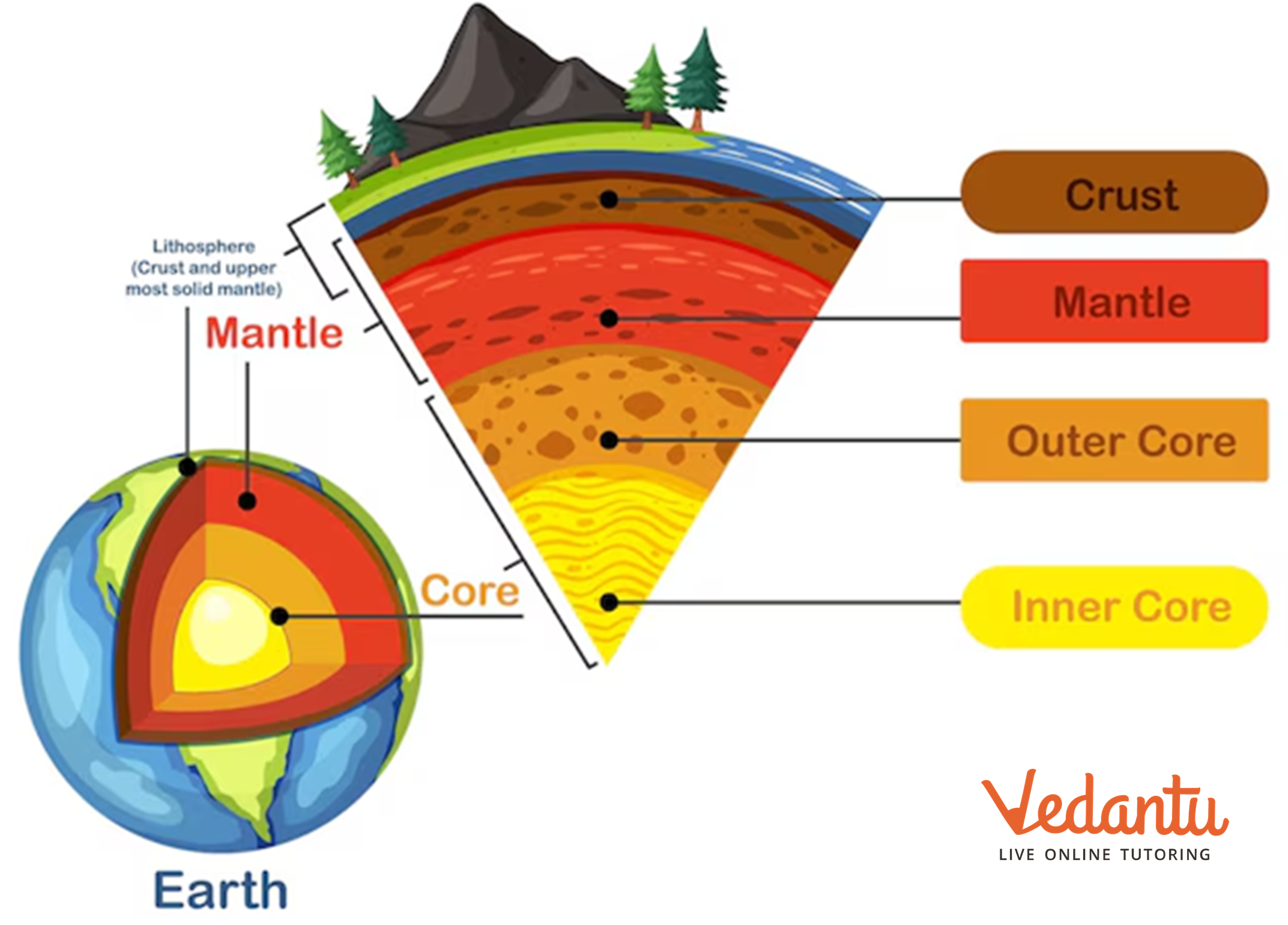
To evaluate the scale and impact of this mantle-driven paradigm shift, geophysicists and resource economists rely on multi-parameter datasets tracking crustal denudation rates, thermal chronology, and isotopic signatures.
| Geological Metric / Parameter | Traditional Consensus Model | New Mantle-Driven Paradigm | Economic & Exploration Impact |
|---|---|---|---|
| Primary Driving Force | Glacial scouring ("Snowball Earth") | Deep mantle plumes & supercontinent doming | Refined regional tectonic risk assessment |
| Average Crustal Removal | 0.5 to 1.5 kilometers | Up to 3.0+ kilometers globally | Enhanced predictive depth for basement reservoirs |
| Temporal Window | Neoproterozoic (750–540 Ma) | Mesoproterozoic to Ediacaran (1,000–540 Ma) | Broader stratigraphic calibration for capital allocation |
| Oceanic Chemistry Impact | Minimal mineral influx | Massive calcium, phosphorus, and iron dumping | Direct correlation to Cambrian evolutionary spikes |
Industry & Market Implications: Capital Allocation and Resource Exploration
While the discourse surrounding the Great Unconformity has historically remained confined to academic symposiums, modern mining conglomerates, energy majors, and institutional investment funds are taking notice. The realization that deep mantle dynamics can systematically strip or reshape continental margins has direct ramifications for commercial enterprise.
- Mineral Exploration & Valuation Multiples: The massive erosion associated with mantle plumes redistributed colossal quantities of weathered minerals into ancient marine basins. Understanding the fluid pathways and depositional mechanics of this era aids exploration companies in targeting sediment-hosted mineral deposits, including copper, lithium, and rare earth elements essential for green-energy infrastructure scalability.
- Hydrocarbon Reservoir Risk Mitigation: Energy enterprises drilling through complex basement-cover interfaces utilize advanced seismic interpretation to map pre-unconformity structures. Misinterpreting the erosional profile can lead to multi-million-dollar dry holes; integrating deep mantle evolution models enhances exploration ROI.
- Regulatory Compliance & Environmental Infrastructure: Long-term nuclear waste repository siting, carbon capture and sequestration (CCS) projects, and major civil engineering undertakings demand absolute confidence in sub-surface crustal stability. Recognizing that the continental crust is subject to deep-seated thermal reactivation informs long-horizon risk mitigation and regulatory compliance strategies.
Frequently Asked Questions (People Also Ask)
What exactly is the Great Unconformity?
The Great Unconformity is a globally recognized geological boundary where rocks aged anywhere from 500 million to over a billion years are missing from the stratigraphic record. This leaves relatively young sedimentary layers resting directly on top of intensely weathered, ancient crystalline basement rock.
How did the churning mantle create this gap in the rock record?
Recent research indicates that massive thermal plumes rising from the deep mantle caused continental crust to dome upward during supercontinent breakup cycles. This dramatic uplift exposed vast landmasses to subaerial weathering and erosion, stripping away kilometers of rock before global seas flooded the continents.
Why is this geological discovery relevant to modern industry and finance?
Understanding the mechanisms behind crustal stripping refines exploration models for critical minerals and hydrocarbons, directly impacting capital allocation decisions, valuation multiples for mining and energy firms, and long-term infrastructure risk assessment.
Does the Great Unconformity exist in only one specific region?
No. While famously exposed and studied in the Grand Canyon of the United States, equivalent unconformity surfaces have been documented across multiple ancient continental cores, including Baltica, Australia, and Antarctica, proving it is a planetary-scale phenomenon.
Future Outlook: Milestones and Strategic Horizons
As geoscientists integrate machine learning algorithms with global thermochronological databases, the precision of mantle convection models will continue to sharpen. Over the next three to five years, key technological milestones will include higher-resolution tomography of the lower mantle and refined isotopic tracking of crustal recycling events.
For corporate leadership, sovereign wealth funds, and technical directors, staying abreast of these developments is no longer optional. As global supply chains face mounting pressure and the quest for critical raw materials intensifies, decoding the deep-earth mechanisms that shaped our planet's crust provides a distinct competitive edge in long-term resource strategy and enterprise resilience.