In a watershed moment for observational astrophysics and big-data analytics, an international consortium of scientists has unveiled the sharpest, deepest, and most comprehensive view of the low-frequency radio sky ever achieved. This unprecedented survey penetrates cosmic regions previously obscured by interstellar gas and terrestrial interference, delivering a high-definition atlas that reshapes our fundamental understanding of galaxy formation, supermassive black holes, and the large-scale structure of the universe.
For institutional investors, high-performance computing architects, and aerospace contractors, this breakthrough transcends pure academic curiosity. The computational demands, cloud-scale data pipelines, and signal-processing algorithms required to filter petabytes of raw radio frequencies represent a stress test for modern distributed infrastructure. As governments and private enterprises evaluate capital allocation for deep-tech ventures, radio astronomy is rapidly emerging as a primary crucible for high-performance computing (HPC) scalability, machine-learning-driven signal classification, and sensor-array optimization.
Executive Takeaways
Test Our Free AI & Tech Utilities Suite
Calculate LLM API token costs, analyze article dwell-time, or simulate tech DCA returns.
- Unprecedented Resolution: The newly published low-frequency radio survey delivers an order-of-magnitude leap in angular resolution and sensitivity, mapping millions of previously undetected celestial objects.
- Computational Bottlenecks & Big Data: Processing petabytes of raw interferometric data required the deployment of advanced cloud compute architecture, parallelized machine learning, and sophisticated noise-mitigation algorithms.
- Commercial & Industrial Spin-offs: The advanced signal-processing techniques developed for this survey have direct applications in telecommunications infrastructure, high-frequency radar, and enterprise-grade data management.
- Geopolitical & Research Infrastructure: Backed by multinational consortia, this milestone underscores the escalating global competition for dominance in next-generation scientific instrumentation and data sovereignty.
The Catalytic Breakthrough: Unlocking the Low-Frequency Frontier
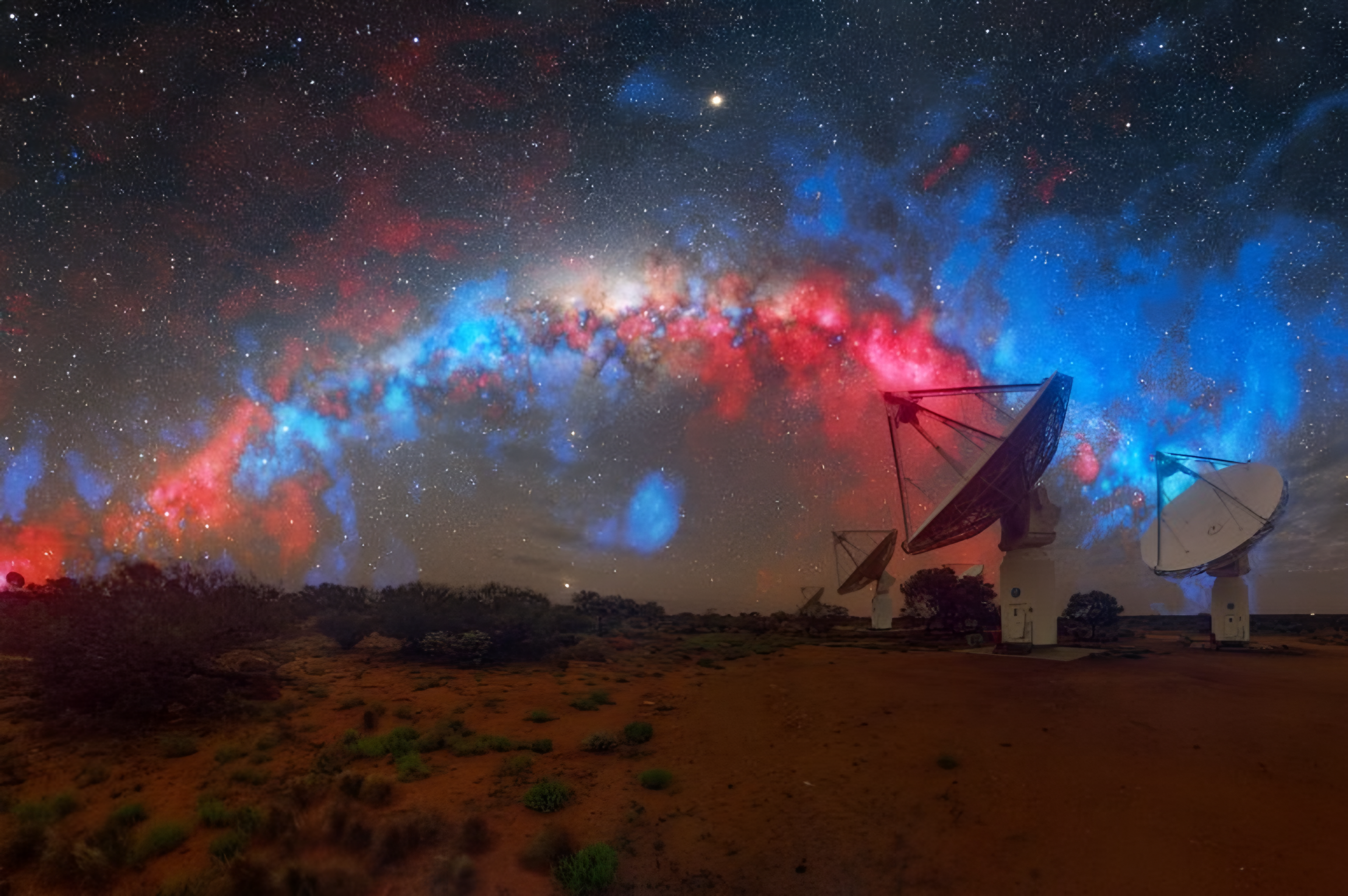
For decades, low-frequency radio astronomy—typically operating below 300 megahertz—was severely bottlenecked by Earth’s ionosphere, which distorts and absorbs incoming cosmic signals, and by relentless anthropogenic radio frequency interference (RFI) from commercial communications, aviation, and satellite constellations. To bypass these terrestrial impediments, researchers leveraged next-generation interferometric arrays, combining data from geographically distributed antenna networks using complex mathematical correlation.
The resulting map strips away decades of observational static, revealing the faint, sprawling synchrotron emissions of ancient galaxy clusters, the diffuse tendrils of the cosmic web, and the quiet accretion disks of distant supermassive black holes. Unlike optical telescopes, which capture starlight, or high-frequency radio telescopes focused on thermal emissions, low-frequency instruments capture the energetic footprints of relativistic electrons spiraling through magnetic fields. This capability provides a direct window into the most violent, high-energy phenomena in the cosmos.
Achieving this level of clarity required a radical departure from legacy data-processing models. Traditional radio astronomy relied on localized mainframes to correlate signals. The latest survey, however, demanded a distributed cloud compute architecture capable of ingesting streaming telemetry rates measured in terabits per second. This technological leap mirrors the scalability challenges faced by modern financial institutions managing global high-frequency trading ledgers or multinational enterprises processing real-time internet-of-things (IoT) streams.
Data & Metrics Breakdown: Survey Specifications
To contextualize the scale of this astronomical achievement, the following comparative breakdown outlines the parameters of the new low-frequency survey against previous historical benchmarks.
| Observational Metric | Legacy Low-Frequency Surveys | The New Deep-Sky Survey | Strategic Improvement Factor |
|---|---|---|---|
| Angular Resolution | ~20 to 60 arcseconds | Sub-6 arcseconds | 5x to 10x sharper detail |
| Frequency Band | Narrowband (50–150 MHz) | Broadband ultra-low (10–240 MHz) | Unprecedented spectral breadth |
| Data Volume Processed | Terabytes per observation run | Exabytes of raw ingest / Petabytes curated | 100x computational scaling |
| Detected Radio Sources | Hundreds of thousands | Millions of distinct cosmic objects | Exponential catalog expansion |
Industry & Market Implications
While the primary dividends of this survey are scientific, the secondary and tertiary economic ripples extend deeply into the technology, defense, and telecommunications sectors. As data-intensive scientific enterprises push the boundaries of hardware and software engineering, the commercialization pipeline accelerates.
Enterprise ROI and Cloud Compute Architecture
The algorithms engineered to filter ionospheric distortion and human-made RFI from fragile cosmic signals are structurally identical to those required in commercial telecommunications for noise reduction, signal amplification, and error correction in 5G and nascent 6G networks. Cloud infrastructure providers partnering with academic consortia are stress-testing their distributed storage and compute tiers, validating architectures that will soon be commercialized for enterprise risk mitigation, predictive modeling, and massive financial transaction analytics.
Aerospace, Defense, and Sensor Technology
The interferometric techniques used to phase arrays of thousands of individual antennas—turning them into a single, cohesive virtual telescope—have direct dual-use applications in defense. Enhanced low-frequency radar sensitivity, advanced electronic warfare (EW) counter-measures, and sophisticated spatial tracking of low-Earth-orbit (LEO) space debris rely heavily on the exact same signal-processing math pioneered by modern radio astronomers.
Capital Allocation and Research Valuation
Funding for cutting-edge scientific infrastructure is shifting from fragmented national budgets to collaborative international public-private partnerships. Institutional investors monitoring venture capital inflows into deep-tech hardware, quantum sensing, and high-performance edge computing view these mega-science projects as critical proving grounds. They serve as live-fire stress tests for enterprise-grade hardware longevity, thermal management, and ultra-low-latency networking.
Frequently Asked Questions (People Also Ask)
What makes low-frequency radio astronomy harder than optical astronomy?
Low-frequency radio astronomy is severely complicated by Earth's ionosphere, which refracts and absorbs low-frequency radio waves, and by widespread human-made radio frequency interference (RFI) from cell towers, radio broadcasts, and satellites. Furthermore, radio waves have much longer wavelengths than visible light, requiring massive antenna arrays spread over miles to achieve sharp images, which in turn generates petabytes of complex interferometric data that demand immense computational power to process.
How does this survey impact commercial technology and enterprise software?
The massive data pipelines, machine-learning noise-filtering algorithms, and distributed cloud architectures developed to process these radio surveys have direct commercial counterparts. Companies in telecommunications, cybersecurity, and high-frequency finance utilize remarkably similar signal-processing and data-ingestion models to handle real-time streaming data, manage network congestion, and isolate critical telemetry from background noise.
What is interferometry and why was it crucial for this discovery?
Interferometry is a technique where signals from multiple independent antennas spread across vast geographic distances are combined electronically. By mathematically correlating these signals, astronomers simulate a single telescope dish as wide as the distance between the outermost antennas. This provides the extreme angular resolution necessary to map faint, distant cosmic structures with pinpoint precision.
Where is the data stored and how is it analyzed?
Given the sheer volume of information—measuring in the petabytes—the data is ingested, calibrated, and archived across an international federation of high-performance computing centers and specialized cloud environments. Automated machine-learning pipelines run continuously to classify point sources, map diffuse emission structures, and flag transient cosmic anomalies.
Future Outlook: Milestones and the Road Ahead
The release of this survey marks the conclusion of a major observational phase, but it simultaneously fires the starting gun for an era of intensive data mining. Over the next 24 to 36 months, astrophysicists will cross-reference this low-frequency radio map with optical surveys from the Vera C. Rubin Observatory and X-ray data from space-based telescopes. This multi-messenger astrophysics approach promises to construct comprehensive 3D models of galaxy evolution and dark matter distribution.
For the technology sector, the immediate focus shifts toward the preparation for even larger instruments, most notably the Square Kilometre Array (SKA). As the SKA and similar global initiatives come online later this decade, the demand for hyper-scale data processing will accelerate exponentially. Executives and asset managers keeping pace with high-performance computing trends must recognize that the bleeding edge of astronomical data processing today is the enterprise infrastructure standard of tomorrow.