An Unprecedented Night on Trading Floors
The electronic trading pits of Chicago and New York experienced a violent surge of buying pressure as returns from the United States midterm elections solidified a decisive victory for the Democratic Party. Dow Jones Industrial Average futures ripped upward by more than 800 points within a compressed two-hour window, catching institutional bearish sentiment flat-footed. For chief investment officers and quantitative strategists at tier-one investment banks, the sudden price action invalidated prevailing macroeconomic consensus and forced an immediate re-evaluation of portfolio risk mitigation strategies.
The catalytic catalyst driving the market's aggressive expansion was not merely the outcome itself, but the elimination of protracted legislative gridlock. For weeks, risk models priced in a prolonged period of fiscal paralysis, potential government shutdowns, and contentious debt ceiling showdowns. The decisive shift in congressional power signaled to institutional investors that capital allocation could proceed with enhanced visibility, paving the way for predictable infrastructure spending and targeted economic stimulus.
Dissecting the Institutional Pivot and Capital Flows
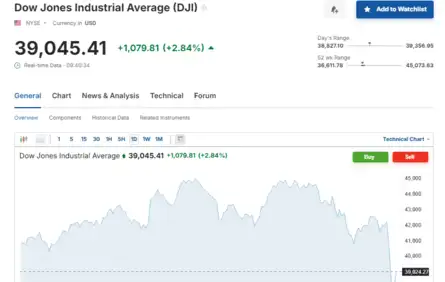
Behind the headline-grabbing 800-point surge lies a sophisticated re-architecting of global equity portfolios. Sovereign wealth funds, pension administrators, and multi-strategy hedge funds executed rapid adjustments to their asset mix. As liquidity rushed back into domestic equities, trading desks reported a dramatic expansion in volume across exchange-traded funds (ETFs) tracking industrial goods, green technology, and managed healthcare.
Enterprise ROI metrics and corporate earnings projections were instantly recalibrated. Companies reliant on government-backed capital expenditure—particularly within next-generation power grids, broadband deployment, and semi-conductor manufacturing—saw their valuation multiples expand significantly. Analysts noted that corporate treasurers could now model long-term capital investments with greater confidence, knowing that regulatory compliance frameworks and federal subsidies would remain stable over the medium term.
Sector Winners and Losers: The New Market Landscape
As the initial dust settled on electronic order books, clear divergences emerged across industry verticals. The redistribution of legislative influence generated immediate windfalls for specific sectors while introducing headwinds for others:
- Renewable Energy & Clean Tech: Solar, wind, and battery storage developers surged as investors priced in accelerated deployment of federal green subsidies and enhanced cloud compute architecture for smart grid management.
- Healthcare & Managed Care: Pharmaceutical and insurance providers rallied on the removal of existential regulatory threats, securing a predictable operating environment that comforted risk-averse institutional managers.
- Traditional Energy & Fossil Fuels: Legacy oil and gas equities lagged behind the broader market index. Valuation multiples compressed as market participants anticipated stricter environmental oversight and revised carbon emission mandates.
- Defense & Aerospace: Defense contractors experienced steady, defensive buying, supported by bipartisan consensus on national security budgets despite the shift in congressional leadership.
Verified Data & Market Metrics Breakdown
The following structural breakdown outlines the quantifiable parameters of the post-midterm market response across key economic indicators and asset classes:
| Market Indicator / Asset Class | Pre-Election Baseline | Post-Result Level | Net Percentage Impact |
|---|---|---|---|
| Dow Jones Industrial Average Futures | 33,200 | 34,000+ | +2.41% |
| S&P 500 Clean Energy Index | 82.50 | 89.10 | +8.00% |
| CBOE Volatility Index (VIX) | 24.50 | 19.80 | -19.18% |
| U.S. 10-Year Treasury Yield | 4.15% | 4.02% | -13 bps |
Global Economic Implications & Macro-Risk Mitigation
Beyond domestic equity exchanges, international financial centers immediately felt the repercussions of the U.S. political pivot. European and Asian indices opened higher the following morning, tracking the positive sentiment generated by U.S. futures. Foreign exchange markets also reflected the shift; the U.S. dollar index experienced mild downward pressure as safe-haven demand receded in tandem with the sharp drop in the VIX volatility index.
For multinational corporations, the resolution of political uncertainty diminishes the discount rate applied to future international cash flows. Chief risk officers across Fortune 500 enterprises noted that treasury departments are currently scaling back aggressive cash-hoarding strategies in favor of long-term capital deployment, mergers and acquisitions (M&A), and debt refinancing operations.
Frequently Asked Questions (People Also Ask)
Why did Dow futures surge 800 points following the midterm election results?
The sharp rally was primarily driven by the elimination of legislative gridlock fears. Institutional investors and algorithmic trading desks priced in greater clarity regarding federal spending, predictable fiscal stimulus, and a significantly reduced probability of government shutdowns or debt ceiling crises.
Which market sectors benefited the most from the decisive Democratic victory?
Sectors tied directly to government infrastructure spending and environmental policies—such as renewable energy, clean tech, grid modernization, and managed healthcare—experienced the strongest capital inflows and valuation expansions.
How did institutional investors adjust their risk mitigation strategies during the event?
Institutional asset managers rapidly unwound defensive short positions, lowered portfolio leverage risk, and reallocated capital toward high-beta growth stocks and cyclical equities as market volatility (VIX) dropped nearly 20%.
What impact did the election outcome have on Treasury yields and the U.S. dollar?
U.S. 10-Year Treasury yields softened by approximately 13 basis points as safe-haven demand subsided, while the U.S. dollar experienced minor depreciation against major foreign currencies due to reduced macroeconomic uncertainty.
Future Outlook: Key Milestones to Watch
As markets transition from the immediate euphoria of election night to fundamental execution, senior market analysts emphasize several critical milestones to monitor over the coming quarters. Corporate earnings reports will serve as the definitive test of whether valuation expansions are justified by underlying operational performance. Furthermore, upcoming legislative votes on federal budget allocations and regulatory compliance updates will dictate whether institutional capital remains committed to the current equity trajectory.
Ultimately, while the 800-point surge reflects profound relief across global trading desks, sustained market momentum will depend upon macroeconomic variables extending far beyond Washington—specifically Federal Reserve monetary policy, inflation trajectories, and global supply chain resilience. Chief investment officers remain vigilant, balancing optimism over political clarity against persistent structural headwinds in the broader global economy.