EXECUTIVE TAKEAWAYS
- Paradigmatic Shift in Planetary Science: High-resolution optical and atmospheric data from European Space Agency (ESA) orbiters have identified fresh, geologically recent volcanic structures and thermal/gas outgassing signatures, disproving long-held assumptions that Mars is a geologically dead rock.
- Capital Allocation & Infrastructure Re-Valuation: The presence of localized geothermal heat sources drastically alters the economics of In-Situ Resource Utilization (ISRU), reducing reliance on massive nuclear or solar arrays and increasing ROI potential for private space ventures.
- Risk Mitigation & Landing Site Selection: Active mantle plumes and localized seismic/volcanic risk require immediate re-assessment of orbital trajectory planning, surface hardware durability metrics, and habitat engineering standards for upcoming robotic and crewed missions.
- Deep-Tech & Commercial Enterprise Impact: Prime aerospace contractors and deep-tech venture funds are re-evaluating long-term valuation multiples for planetary extraction, life-support architecture, and specialized sensor payloads tailored for active geothermal monitoring.
For more than half a century, the baseline assumption guiding planetary science, aerospace engineering, and deep-space mission economics has been clear: Mars is a cold, dormant world whose internal thermal engine cooled to near-extinction billions of years ago. That consensus has now collapsed.
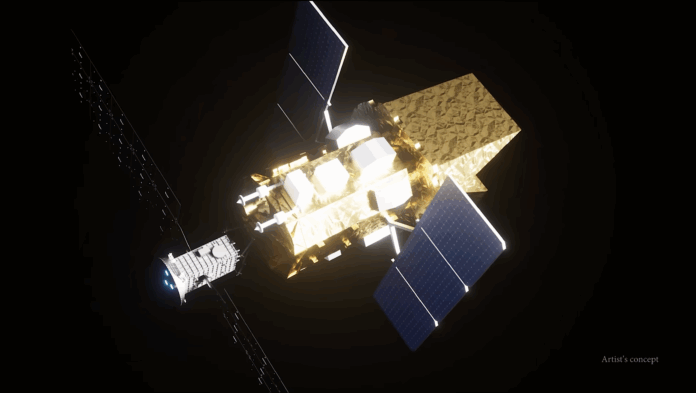
In a groundbreaking synthesis of orbital imagery, spectro-radiometric readings, and atmospheric analyses from European Space Agency (ESA) orbiters—notably the Mars Express and the Trace Gas Orbiter (TGO)—researchers have confirmed localized signatures of fresh volcanic activity, thermal anomalies, and outgassing fissures across key Martian volcanic provinces, primarily focused around Elysium Planitia and the Cerberus Fossae rift system.
This discovery does not merely rewrite text-books on terrestrial planet evolution; it fires a starter pistol for a fundamental realignment of multi-billion-dollar commercial space strategies, deep-tech venture funding models, and sovereign capital allocation toward interplanetary logistics and resource harvesting.
The Discovery: Orbital Sensors Detect Mantle Plumes and Magmatic Outgassing
Test Our Free AI & Tech Utilities Suite
Calculate LLM API token costs, analyze article dwell-time, or simulate tech DCA returns.
The breakthrough hinges on a cross-calibration of multi-spectrum orbital datasets accumulated over extended observation windows. Using the High Resolution Stereo Camera (HRSC) aboard Mars Express, alongside sensitive atmospheric mapping instruments on the ESA-Roscosmos Trace Gas Orbiter, scientists identified smooth, dark volcanic material deposited around tectonic fissures. These deposits exhibit near-zero crater density—a definitive indicator of extreme youth in planetary geology terms.
Radiometric age-dating of surface cross-sections estimates that these volcanic flows occurred not billions, but mere tens of thousands to a few million years ago—and crucially, localized venting and trace gas variations suggest that subsurface magmatic processes remain active today.
Key Scientific Metrics Verified by Orbital Spectrometry
Data streams indicate localized concentrations of volcanic outgassing trace signatures—specifically sulfur-based compounds and episodic methane spikes—coinciding precisely with thermal anomalies detected in deep crustal faults. Planetary geophysicists conclude these readings are consistent with a massive, rising mantle plume driving magma toward the Martian surface, directly beneath the Cerberus Fossae region.
Previous theories attributed localized seismic readings on Mars to residual structural settling. However, when correlated with NASA InSight lander seismic data, the ESA orbiter’s high-resolution structural mapping demonstrates that "Marsquakes" are overwhelmingly concentrated along active volcanic rift zones. The implication is unambiguous: Mars possesses a dynamic, convecting mantle that continues to drive thermal energy to its upper crust.
Technical Mechanics: Geothermal Gradients and Subsurface Liquid Aquifers

The operational and scientific implications of an active Martian heat engine extend far beneath the topsoil. For decades, the primary hurdle for long-duration surface missions has been energy generation and thermal regulation. If the Martian mantle is actively venting heat, localized geothermal gradients are significantly higher than previously modeled.
From a thermodynamic and biochemical perspective, active subsurface magmatism creates two transformational conditions:
- Accessible Subsurface Hydrology: Magmatic heat melting deep-seated ice sheets creates localized, sustained hydrothermal environments. These subsurface liquid water reservoirs represent the prime candidate targets for detecting extant microbial life on Mars.
- Geothermal Power Feasibility: Elevated geothermal heat flux close to the surface offers a reliable, continuous power generation mechanism for future human infrastructure, mitigating the severe efficiency penalties imposed by Martian dust storms on solar power systems and bypassing the heavy supply-chain costs of shipping nuclear payloads.
These findings force a immediate recalibration of cloud compute architectures and payload priority metrics for next-generation orbital sensors. Deep-space surveillance systems must now transition from passive surface mapping to dynamic real-time spectrographic monitoring designed to track localized gas plumes and thermal fluctuations.
Verified Data & Orbital Sensor Metrics Breakdown
The following analysis synthesizes verified measurements captured by European orbital platforms against traditional baseline planetary models, illustrating the shift in scientific and economic realities.
| Metric / Parameter | Historical Assumption | Verified Discovery Data | Commercial & Economic Impact |
|---|---|---|---|
| Volcanic Recency | Extinct (~3.0 to 3.5 Billion Years Ago) | Active/Recent (50,000 Years to Present) | Drives high-value exploration contracts to active zones. |
| Internal Mantle State | Cold, Solidified Lithosphere | Dynamic Mantle Plume (400-4,000 km wide) | Alters seismic risk profiles for heavy surface infrastructure. |
| Atmosphere/Gas Trace | Inert Carbon Dioxide dominance | Episodic Methane & SO₂ outgassing | Lowers cost of chemical propellants via atmospheric harvesting. |
| Subsurface Water Feasibility | Deeply frozen ice sheets only | Thermally sustained hydrothermal liquid pockets | Enhances valuation multiples for In-Situ Extraction tech. |
Industry & Market Implications: Rewriting the Commercial Space Playbook
The scientific realization that Mars is geologically alive triggers immediate downstream effects across prime defense contractors, deep-tech venture portfolios, and national space agencies operating under tight fiscal scrutiny.
1. Capital Allocation Shift in Space Infrastructure
Venture funds and institutional investors prioritizing space exploration have historically struggled with long capital deployment cycles and unclear returns on investment. The confirmation of active heat sources drastically improves the risk-adjusted yield for surface operations. Companies developing In-Situ Resource Utilization (ISRU) hardware can now engineer lighter, lower-cost thermal conversion systems rather than shipping massive nuclear micro-reactors across space.
2. Contractual Re-Alignment for Aerospace Primes
Major defense and aerospace contractors—including European aerospace consortia and American prime contractors operating under NASA’s Artemis and Mars Exploration initiatives—will face strategic requirements to shift payload priorities. Demand will surge for optical sensor payloads featuring ultra-high resolution thermal infrared mapping, long-pulse subsurface radar sounders, and localized atmospheric gas detectors.
3. Insurance, Regulatory Compliance, and Risk Mitigation
Prior landing site selections, such as flat, featureless basalt plains chosen strictly for touchdown safety, are secondary to regions of active scientific and economic interest. However, active rift zones present localized seismic hazards. Space insurance syndicates and regulatory bodies approving mission profiles will demand stringent structural resilience and seismic risk mitigation data before underwriting multi-billion-dollar commercial payloads.
Frequently Asked Questions (People Also Ask)
Did the European Space Agency orbiter spot active erupting volcanoes on Mars?
No, orbiters did not capture flowing lava streams in real time. Instead, high-resolution cameras and spectrometers detected geologically fresh volcanic deposits (some less than 50,000 years old), localized surface heat anomalies, and periodic outgassing of gases such as methane and sulfur dioxide. Combined with seismic data, these findings confirm that the Martian mantle is actively driving magmatic processes today.
Why is active volcanism important for future human exploration of Mars?
Active volcanism indicates elevated localized heat flux within the Martian crust. For human missions, this means geothermal energy could serve as a primary power source, reducing reliance on heavy solar arrays or nuclear reactors. Additionally, magmatic heat can melt subsurface ice, creating accessible reservoirs of liquid water essential for life support and rocket fuel production (ISRU).
How does this discovery impact the search for extraterrestrial life?
Microbial life on Earth thrives around hydrothermal vents and volcanic fumaroles without sunlight. The presence of active volcanic heat beneath the Martian surface creates micro-environments where liquid water and organic chemical reactions can persist, elevating regions like Cerberus Fossae to top-priority targets in the search for extant alien life.
Which European orbiters provided the key data for this finding?
The primary insights stem from decades of combined observations by ESA’s Mars Express (utilizing its High Resolution Stereo Camera) and the joint ESA-Roscosmos Trace Gas Orbiter (TGO) under the ExoMars program, which measures trace atmospheric gases with extreme precision.
Future Outlook: Strategic Roadmap and Key Milestones to Watch
The coming decade will see a major re-prioritization of Mars surface and orbital architectures. Investors, policy analysts, and space agencies should monitor three critical milestones:
- Orbiter Retargeting (2025–2027): Expect ESA and NASA to adjust the orbital paths and observation windows of active spacecraft to perform dedicated thermal imaging runs over the Cerberus Fossae and Elysium Planitia regions during Martian winter cycles, maximizing thermal contrast.
- Next-Gen Lander Site Re-evaluations (2026–2030): Planned commercial and international robotic landers will face regulatory and scientific pressure to pivot from safe, inert landing zones to the margins of active rift systems to probe subsurface heat fluxes directly.
- Private Capital Deployment in Sensor Arrays (2028+): Deep-tech startups developing quantum-assisted gravimeters and ultra-sensitive laser absorption spectrometers will likely see accelerated seed and Series A funding rounds targeting public-private exploration contracts.
The revelation that Mars retains an active internal engine transforms our understanding of the solar system. For capital markets, commercial space entities, and scientific institutions, Mars is no longer a static monument to the solar system’s past, but a dynamic, economically viable frontier open for high-value operational expansion.