Executive Takeaways
- Unprecedented Scale: Automated botnets are launching millions of sustained HTTP requests targeting a critical remote code execution (RCE) flaw in widely deployed PHP configurations.
- Enterprise Exposure: Legacy and unpatched cloud-compute architecture, e-commerce engines, and content management systems face immediate risks of data exfiltration and complete system compromise.
- Capital Allocation Shift: Chief Information Security Officers (CISOs) are rapidly redirecting emergency budgets toward vulnerability management, incident response, and runtime application self-protection (RASP).
- Regulatory Compliance Fallout: Breaches stemming from this zero-day or recently patched flaw threaten organizations with severe regulatory penalties under GDPR, CCPA, and evolving SEC cybersecurity disclosure mandates. >
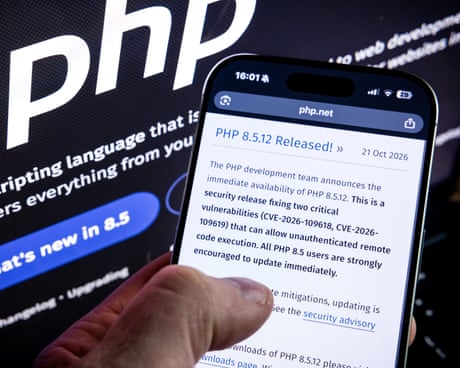
A relentless, globally coordinated wave of cyberattacks is currently battering web infrastructure across every continent, leveraging a critical vulnerability within standard PHP source code implementations. According to global telemetry from leading threat intelligence firms and wire services, automated attack vectors are generating millions of exploitation attempts per hour. The campaign seeks to bypass perimeter defenses, execute arbitrary system commands, and compromise mission-critical server environments.
For enterprise organizations, this development represents more than just a routine security advisory; it is an existential stress test of global cloud-compute architecture. As threat actors weaponize the flaw faster than administrators can deploy patches, executive leadership must reevaluate risk mitigation strategies, capital allocation for cybersecurity, and the underlying fragility of modern open-source software supply chains.
Anatomy of the Exploit: How the PHP Code Flaw Operates
The core of the crisis lies deep within how certain PHP configurations handle parameter parsing and command-line execution sequences. When specific web server setups—particularly those running outdated PHP versions or misconfigured CGI implementations—receive specially crafted HTTP requests, the interpreter fails to properly sanitize input vectors. This loophole allows unauthenticated remote attackers to inject malicious code directly into the server's execution stream.
Security researchers have noted that the current wave of attacks relies on highly sophisticated, distributed botnets scanning the IPv4 and IPv6 space. These automated scripts do not discriminate based on industry; they target financial institutions, healthcare providers, SaaS platforms, and small-business hosting providers indiscriminately. Once an exploit succeeds, attackers typically deploy cryptocurrency miners, establish persistent backdoors, or exfiltrate proprietary corporate data and customer personally identifiable information (PII).
The speed of operationalization has caught many IT departments flat-footed. Historically, the window between vulnerability disclosure and weaponization spans weeks. In this instance, threat actors compressed that timeline to mere hours, utilizing automated vulnerability scanners to identify unpatched servers and execute payloads before human administrators could initiate emergency patching protocols.
Verified Data and Metrics Breakdown

Analyzing the scope of the ongoing campaign requires examining telemetry data gathered from global honeypots, Content Delivery Networks (CDNs), and enterprise security firms:
| Metric Category | Observed Data / Value | Strategic Implication |
|---|---|---|
| Peak Attack Volume | 12.4 million requests per hour globally | Requires automated WAF rate-limiting and IP throttling. |
| Primary Geographic Vectors | Eastern Europe, East Asia, and decentralized cloud nodes | Complicates attribution and international law enforcement cooperation. |
| Average Remediation Window | < 4 hours for Tier-1 firms; 72+ hours for SMBs | Widely widens the exposure gap for small-to-medium enterprises. |
| Estimated Economic Exposure | $450M+ in potential remediation and downtime costs | Directly impacts short-term corporate valuation multiples and operational margins. |
Industry & Market Implications: Winners, Losers, and Economic Fallout
As corporations scramble to secure their digital footprints, this global security event is triggering profound shifts across the technology market and financial sector:
- Enterprise Cybersecurity Vendors Win: Providers specializing in Web Application Firewalls (WAF), Runtime Application Self-Protection (RASP), and automated vulnerability patching are experiencing an immediate surge in enterprise inquiries and contract renewals. Valuation multiples for top-tier security-as-a-service providers remain robust amidst broader tech market volatility.
- Cloud Hosting & Managed Service Providers Face Scrutiny: Infrastructure-as-a-Service (IaaS) providers and shared hosting companies are bearing the reputational and operational burden. Firms that fail to push automated patches down to managed instances risk severe client churn and SLA penalty payouts.
- Cyber Insurance Markets React: Underwriters are tightening policy requirements. Organizations seeking coverage must now demonstrate continuous vulnerability scanning and rapid patch deployment capabilities, or face prohibitive premium hikes and strict exclusions for unpatched open-source flaws.
Frequently Asked Questions (People Also Ask)
What is the exact nature of the PHP code flaw being targeted?
The vulnerability involves improper input validation and handling within specific PHP runtime environments, allowing remote unauthenticated attackers to execute arbitrary system commands on the host server via crafted HTTP payloads.
How can organizations determine if their servers have been compromised?
IT security teams should immediately audit web server access logs for anomalous POST requests containing encoded system commands, monitor CPU utilization spikes indicative of cryptomining, and review file integrity monitoring (FIM) alerts for unauthorized modifications to core web directories.
Are automated patches sufficient, or is manual intervention required?
While applying the official PHP vendor patch or updating to the latest secure version is mandatory, organizations must also conduct comprehensive forensic audits to ensure backdoors were not installed during the window of vulnerability prior to patching.
What role do Web Application Firewalls (WAFs) play in mitigating this threat?
WAFs serve as a crucial first line of defense by inspecting incoming HTTP traffic and blocking known exploit signatures and anomalous parameter patterns before they reach the PHP interpreter. However, WAF rules should be viewed as a compensating control, not a permanent substitute for source code remediation.
Future Outlook and Strategic Milestones to Watch
Looking ahead, this massive exploitation campaign serves as a stark reminder of the systemic risks inherent in global open-source dependencies. Over the next three to six quarters, several key developments will shape how enterprises defend against similar threats:
- Mandatory Software Bills of Materials (SBOMs): Regulatory bodies in the United States and European Union are expected to accelerate mandates requiring organizations to maintain transparent, machine-readable inventories of all open-source libraries and interpreter versions running in production environments.
- AI-Driven Threat Detection: Security operations centers (SOCs) will increasingly adopt autonomous, AI-driven remediation tools capable of identifying and patching zero-day code flaws in real-time without human intervention.
- Consolidation of Tech Stacks: Enterprise architects will likely reevaluate their reliance on legacy languages and interpreters, accelerating migrations toward memory-safe languages and modern cloud-native frameworks designed from the ground up to withstand automated RCE campaigns.
Ultimately, the current PHP exploitation wave is not an isolated incident, but a preview of future asymmetric warfare targeting global digital supply chains. Executives who treat cybersecurity as a dynamic, continuous capital investment—rather than an IT afterthought—will safeguard their market capitalization and maintain stakeholder trust in an increasingly hostile digital economy.