
Executive Takeaways
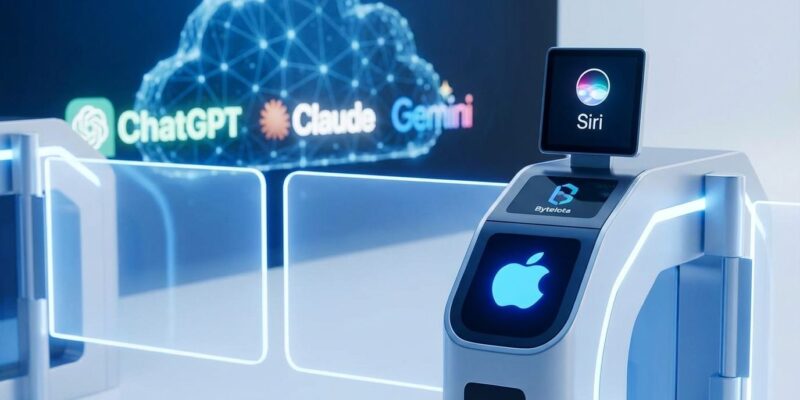
- Ecosystem Transformation: Apple is officially rolling out deep OS-level integration for third-party applications within Siri, ending years of walled-garden exclusivity for native commands.
- Enterprise & Developer Capitalization: Software developers and enterprise software suites face an immediate restructuring of their customer acquisition funnels, shifting from app-store discovery to intent-based voice routing.
- Valuation & Infrastructure Realignment: This strategic pivot demands massive cloud compute architecture scaling and rigorous risk mitigation regarding data privacy, directly influencing near-term capital allocation across the tech sector.
- Regulatory Compliance Shield: By opening the platform voluntarily, Apple aims to preempt antitrust scrutiny from global regulatory bodies while capturing high-value user telemetry.
For more than a decade, the digital economy has operated under a strict dichotomy: operating system developers built the foundational concrete, while third-party developers constructed the skyscrapers that sat upon it. But within the walled gardens of Cupertino, one foundational pillar remained stubbornly proprietary. Siri, Apple’s pioneering virtual assistant, was long relegated to executing basic system-level toggles, setting timers, and querying walled data repositories. That paradigm has shattered.
Apple’s calculated decision to grant Siri deep, contextual access to third-party applications marks one of the most significant architectural shifts in mobile computing history. Driven by the imperatives of generative artificial intelligence and shifting consumer expectations, this transition is not merely a feature update; it is a fundamental renegotiation of power between hardware gatekeepers, software developers, and enterprise giants. As capital markets evaluate the long-term enterprise ROI of consumer-facing AI, Wall Street is watching closely to see how this maneuver impacts valuation multiples, developer ecosystems, and platform dominance.
The Catalytic Shift: Moving Beyond Basic App Intents
Test Our Free AI & Tech Utilities Suite
Calculate LLM API token costs, analyze article dwell-time, or simulate tech DCA returns.
To understand the gravity of Apple’s current trajectory, one must examine the historical friction points that plagued Siri since its acquisition in 2010. While competitors like Amazon Alexa and Google Assistant experimented early with open developer ecosystems—allowing everything from ride-hailing to financial transactions via conversational syntax—Apple prioritized user privacy and system stability above extensibility. The result was a fragmented experience where users were forced to jump between siloed applications to execute complex, multi-step workflows.
The catalytic event arrived with the maturation of on-device large language models (LLMs) and advanced natural language processing. Apple Intelligence, introduced at WWDC and systematically rolled out through subsequent software iterations, provided the cognitive scaffolding required to parse ambiguous human intent and map it directly to granular app actions. By exposing advanced Application Programming Interfaces (APIs) and expanding App Intents across software development kits (SDKs), Apple has effectively transformed Siri from a simple command-line interface into a universal operating system router.
This integration allows third-party developers to expose their internal app functions—ranging from editing a photo in a specialized graphics suite to transferring funds across international borders via a fintech application—directly to Siri’s reasoning engine. The user no longer needs to open the application, navigate nested menus, or input specific syntax; conversational prompts now execute deep programmatic tasks natively within the operating system.
Infrastructure Scalability and Risk Mitigation
From an engineering standpoint, opening Siri to thousands of third-party applications introduces staggering complexity. The cloud compute architecture required to process multimodal inputs, execute semantic searches, and securely route payloads between local Apple Silicon Neural Engines and external cloud servers demands unprecedented infrastructure scalability.
Simultaneously, risk mitigation remains paramount. Apple has built its modern brand equity on the pillar of privacy-first computing. Exposing user data streams to external applications via AI-driven prompts creates significant regulatory and security vulnerabilities. To counter this, Apple has leveraged its Private Cloud Compute infrastructure, ensuring that data processed outside the device is cryptographically secured, never retained for third-party model training, and subjected to rigorous compliance audits.
Financial analysts tracking capital expenditure cycles note that while this strategy requires heavy upfront investment in proprietary silicon and data center capacity, it protects Apple’s premium hardware pricing power. By ensuring that advanced context awareness happens largely on-device or within zero-knowledge cloud environments, Apple preserves its competitive moat against rivals facing tighter regulatory scrutiny over data harvesting.
Market Implications: Who Wins and Who Loses?
The restructuring of the iOS interaction layer triggers immediate downstream effects across the global technology landscape, creating clear winners and losers among enterprise players, independent developers, and platform competitors.
- Winners: Enterprise Productivity & Workflow Apps. Enterprise software providers—such as project management suites, CRM platforms, and financial analytics tools—stand to gain immense value. Employees can now execute complex database queries and update client records via simple voice prompts, drastically reducing friction and increasing software adoption rates.
- Winners: Consumer Utility Developers. Niche application developers who previously struggled with customer acquisition inside the crowded App Store can now leverage Siri’s predictive routing to intercept high-intent user queries at the exact moment of need.
- Losers: Traditional SEO and App Store Optimization (ASO) Monopolies. As conversational AI intermediates the discovery process, the traditional paradigm of ranking via keywords and visual app store banners faces structural decline. If Siri directly fulfills a user's intent by invoking a backend service without launching the storefront interface, traditional app monetization models built on continuous engagement metrics will face severe disruption.
- Losers: Standalone Hardware Assistants. Pure-play voice assistant hardware ecosystems that lack deep operating system integration or robust enterprise software partnerships risk obsolescence as consumers migrate toward context-aware mobile assistants capable of executing end-to-end tasks.
Verified Data & Metrics Breakdown
The following metrics highlight the operational scale, technical parameters, and economic factors governing Apple’s integration of third-party applications into Siri:
| Metric / Parameter | Pre-Integration Era | Current AI-Driven Architecture | Strategic Impact |
|---|---|---|---|
| App Intention Scope | Restricted to basic system toggles and native Apple apps. | Granular, cross-app execution via expanded App Intents APIs. | Eliminates manual navigation friction; boosts utility. |
| Compute Processing | Basic on-device keyword matching. | Hybrid on-device Neural Engine + Private Cloud Compute. | Ensures zero-knowledge privacy while handling complex LLM queries. |
| Developer Monetization | Dependent on App Store discovery and organic search ranking. | Intent-based API invocation and direct contextual routing. | Redefines customer acquisition channels and SaaS enterprise ROI. |
| Regulatory Exposure | High antitrust scrutiny regarding closed ecosystem gatekeeping. | Proactive compliance via open API access for third parties. | Mitigates potential regulatory fines and forced interoperability mandates. |
Frequently Asked Questions (People Also Ask)
How does opening Siri to third-party apps impact user data privacy?
Apple utilizes its proprietary Private Cloud Compute architecture alongside on-device Apple Silicon processing to handle third-party app requests. User data transmitted during these interactions is cryptographically secured, never stored persistently, and strictly prohibited from being utilized to train external machine learning models, ensuring compliance with rigorous global privacy standards.
What technical requirements do developers need to integrate their apps with Siri?
Developers must adopt Apple’s latest software development kits (SDKs) and implement updated App Intents frameworks. By mapping their app’s core functions, data structures, and actionable workflows to standardized semantic schemas, developers enable Siri’s underlying large language models to accurately parse and execute commands inside their applications.
Will this feature incur additional costs for enterprise users or developers?
Currently, Apple is providing these foundational APIs as part of the standard developer program membership. However, enterprises utilizing advanced AI routing may see indirect capital allocation adjustments as they optimize their backend cloud infrastructures to handle high-frequency programmatic API calls from iOS devices.
How does this move affect Google and Amazon's competitive positioning?
By offering deep, secure operating system-level integration that respects hardware-enforced privacy, Apple challenges the dominant position of cloud-centric voice assistants. Competitors reliant on continuous data harvesting face increased pressure from enterprise clients and consumers demanding localized, high-security AI workflows.
Future Outlook: Milestones and Market Trajectory
As Apple continues to expand Siri’s third-party integration capabilities across upcoming software cycles, market liquidity and valuation multiples will increasingly depend on developer adoption velocity. The transition from visual app navigation to conversational, intent-driven software orchestration represents a permanent structural evolution in consumer and enterprise technology.
Key milestones to monitor over the next twelve to twenty-four months include the breadth of enterprise software adoption, the introduction of more complex multi-app choreography (where Siri orchestrates data flow between two entirely separate third-party services), and potential rulings from global antitrust regulators regarding platform openness. For investors, software developers, and enterprise executives alike, the message is unequivocal: the command line of the future is spoken, and the economics of digital real estate have officially been rewritten.


