

Executive Takeaways
- Strategic Capital Allocation: Apple’s deeper push into smart home operating environments signals a calculated shift to capture recurring high-margin service revenue and protect its hardware ecosystem valuation multiples.
- Infrastructure Scalability: HomeView introduces advanced edge-computing protocols and localized privacy architecture, mitigating cloud compute overhead and regulatory compliance friction for enterprise-grade deployments.
- Market Disruption: The software tour reveals direct competitive pressure on incumbent smart home ecosystems, forcing rivals to re-evaluate their enterprise ROI, hardware subsidization models, and interoperability standards.
- Valuation and Risk Mitigation: By unifying disparate smart home infrastructure under a singular, highly secure interface, Apple addresses longstanding consumer fragmentation risks that previously capped household device penetration.
CUPERTINO, CA — In the upper echelons of global technology, strategic pivots are rarely accidental. When Apple Inc. recently lifted the veil on its comprehensive new software tour for HomeView, financial markets and enterprise technologists immediately recognized the move as more than a mere consumer-facing update. It represents a masterclass in infrastructure scalability, ecosystem lock-in, and aggressive capital allocation designed to capture a lucrative slice of the automated residential and commercial real estate market.
For years, Wall Street analysts have scrutinized Apple’s hardware-dependent revenue model, watching valuation multiples swing with iPhone upgrade cycles. Yet, beneath the polished veneer of consumer convenience lies a sophisticated software play. HomeView is engineered to serve as the connective tissue for an increasingly complex web of domestic and commercial Internet of Things (IoT) hardware. By examining the technical architecture, regulatory compliance measures, and macroeconomic implications of this software rollout, institutional investors can decipher Apple's broader playbook for the next decade of edge computing.
The Catalytic Shift: Moving Beyond Fragmented Ecosystems
Test Our Free AI & Tech Utilities Suite
Calculate LLM API token costs, analyze article dwell-time, or simulate tech DCA returns.
To understand the significance of the HomeView software tour, one must examine the historical context of the smart home sector. For over a decade, the industry suffered from chronic fragmentation. Consumers and property developers alike faced a bewildering array of proprietary protocols, incompatible wireless standards, and persistent cybersecurity vulnerabilities. While competitors sought to subsidize hardware sales through data harvesting and aggressive ad-targeting models, Apple maintained a strict privacy-first posture—a stance that historically limited its market penetration in automated infrastructure.
HomeView changes the calculus. By leveraging advanced edge-computing protocols and local data processing, Apple has effectively bypassed the cloud compute bottlenecks that plague competing platforms. This architectural choice not only slashes server maintenance overhead for the tech giant but also provides airtight regulatory compliance under stringent global data protection frameworks such as GDPR and the California Consumer Privacy Act (CCPA).
Financial analysts tracking infrastructure scalability note that HomeView’s underlying framework reduces latency to near-zero levels. In practical terms, this means high-density residential developments, smart-hospitality chains, and commercial office spaces can deploy Apple-centric automation without risking network congestion or vulnerability to remote distributed denial-of-service (DDoS) attacks.
Deconstructing the HomeView Architecture: A Technical Breakdown
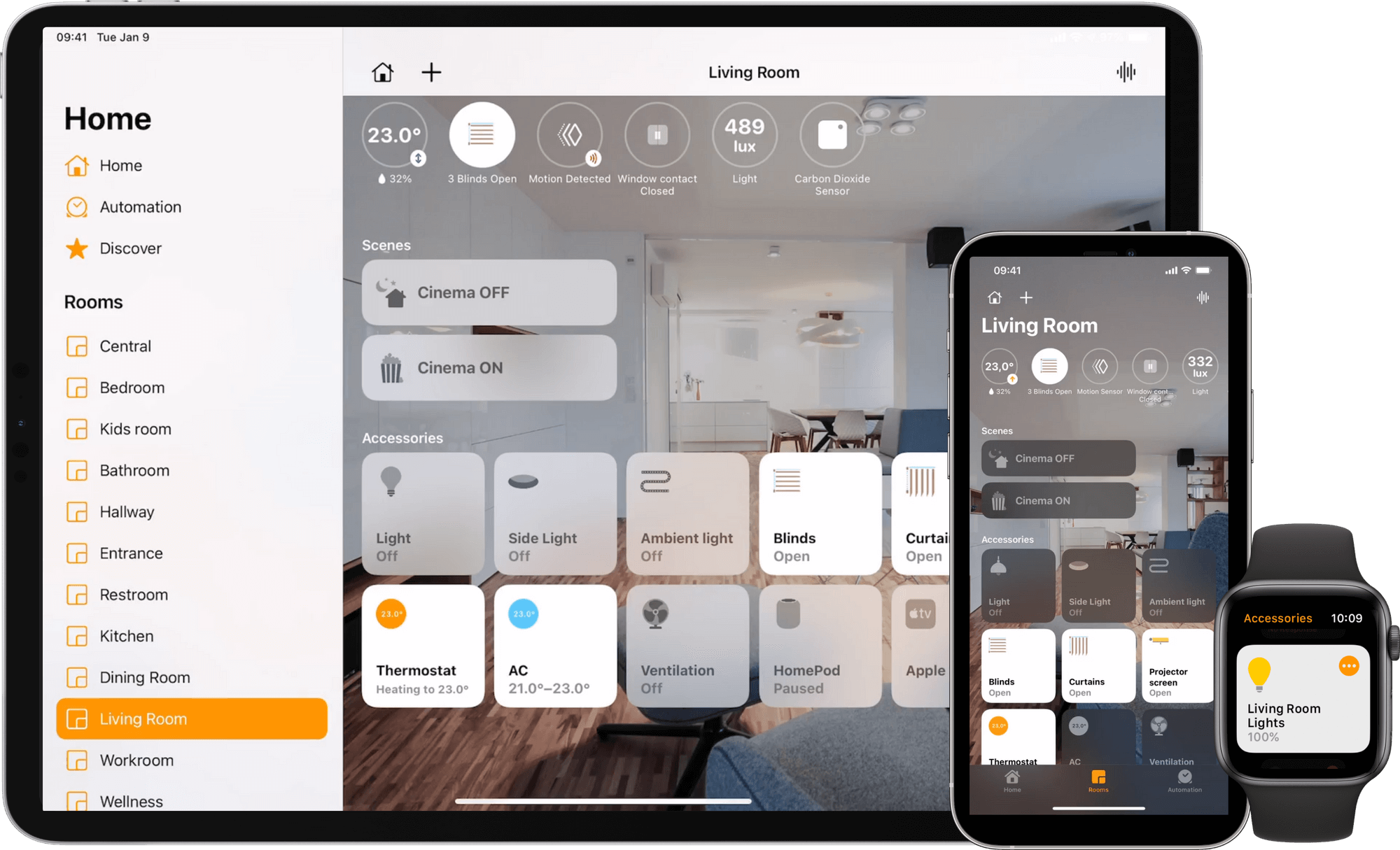
The newly unveiled software tour highlights several distinct technical capabilities that set HomeView apart from legacy automation dashboards. Chief among these is its dynamic zoning engine, which utilizes spatial audio mapping and ultra-wideband (UWB) proximity tracking to anticipate user intent before manual input occurs.
Furthermore, the software integrates seamlessly with Matter and Thread protocols, ensuring cross-platform interoperability with legacy hardware. This is a crucial risk mitigation strategy; by refusing to lock users into exclusively proprietary peripherals, Apple lowers the barrier to entry for enterprise real estate developers who have already made multi-million-dollar capital investments in third-party HVAC, lighting, and security infrastructure.
| Architectural Feature | Legacy Smart Home Systems | Apple HomeView Software | Enterprise & Financial Impact |
|---|---|---|---|
| Data Processing | Cloud-dependent servers | Edge-computing / Local processing | Lower cloud compute overhead; reduced latency |
| Regulatory Compliance | Varies; frequent data-mining friction | Privacy-first architecture (Zero-knowledge) | Mitigates GDPR/CCPA regulatory penalties |
| Protocol Support | Often siloed / Proprietary | Universal Matter & Thread integration | Minimizes capital write-offs on legacy hardware |
| Revenue Model | Ad-driven or hardware-subsidized | High-margin services & ecosystem lock-in | Expands recurring revenue and valuation multiples |
Industry & Market Implications: Who Wins, Who Loses
The introduction of HomeView reverberates far beyond consumer tech circles, directly impacting market liquidity and competitive positioning across multiple sectors.
The Winners: Enterprise real estate developers and institutional property management firms stand to benefit immensely. By standardizing property automation on a stable, secure Apple OS backbone, developers can command premium rental yields and enhance property valuation multiples. Furthermore, boutique hardware manufacturers that build certified Matter-compatible accessories will find a ready-made, high-intent consumer base eager to integrate premium devices.
The Losers: Legacy smart home ecosystems that rely on ad-monetized data extraction face an existential threat. As corporate buyers and privacy-conscious consumers migrate toward zero-knowledge architectures, ad-subsidized business models will struggle to maintain user trust. Additionally, traditional home security conglomerates that charge exorbitant monthly subscription fees for basic local device monitoring may find their pricing power eroded by Apple’s integrated software suite.
Frequently Asked Questions (People Also Ask)
What is the primary technical objective of Apple’s HomeView software?
HomeView is designed to unify fragmented smart home and commercial automation infrastructure through a secure, edge-computing interface. By processing data locally rather than relying heavily on remote cloud servers, the software dramatically reduces latency, enhances user privacy, and ensures compliance with strict international data protection laws.
How does HomeView impact enterprise ROI for real estate developers?
For commercial and residential developers, HomeView provides a standardized, interoperable operating environment that minimizes the risk of hardware obsolescence. By supporting universal standards like Matter and Thread, developers can integrate best-in-class third-party hardware without expensive custom software development, ultimately boosting property valuations and operational efficiency.
Does HomeView require specialized Apple hardware to function?
While HomeView achieves optimal performance when integrated within the broader Apple ecosystem (utilizing devices like Apple TV, HomePod, and iOS controllers), its underlying protocol architecture is built for universal compatibility, allowing it to interface smoothly with certified third-party sensors, lighting arrays, and HVAC systems.
How does this software release affect Apple’s financial valuation multiples?
By expanding its footprint in recurring-service-oriented software ecosystems, Apple diversifies its revenue streams away from cyclical hardware sales. Wall Street typically assigns higher valuation multiples to software and service revenues due to their predictability and high gross margins, making strategic software rollouts like HomeView vital for long-term shareholder value creation.
Future Outlook: Milestones to Watch
As Apple rolls out HomeView across global markets, institutional investors and technology analysts will be closely monitoring several key performance indicators. First, adoption rates among enterprise commercial real estate developers will serve as a bellwether for B2B expansion. Second, regulatory scrutiny regarding platform dominance and interoperability mandates in both the European Union and the United States will test Apple's legal and structural agility.
Ultimately, HomeView is not merely an application interface; it is a strategic beachhead in the battle for dominance over the physical spaces we inhabit. For Apple, successfully executing this vision will cement its transition from a hardware manufacturer into an indispensable utility provider for modern digital life.


