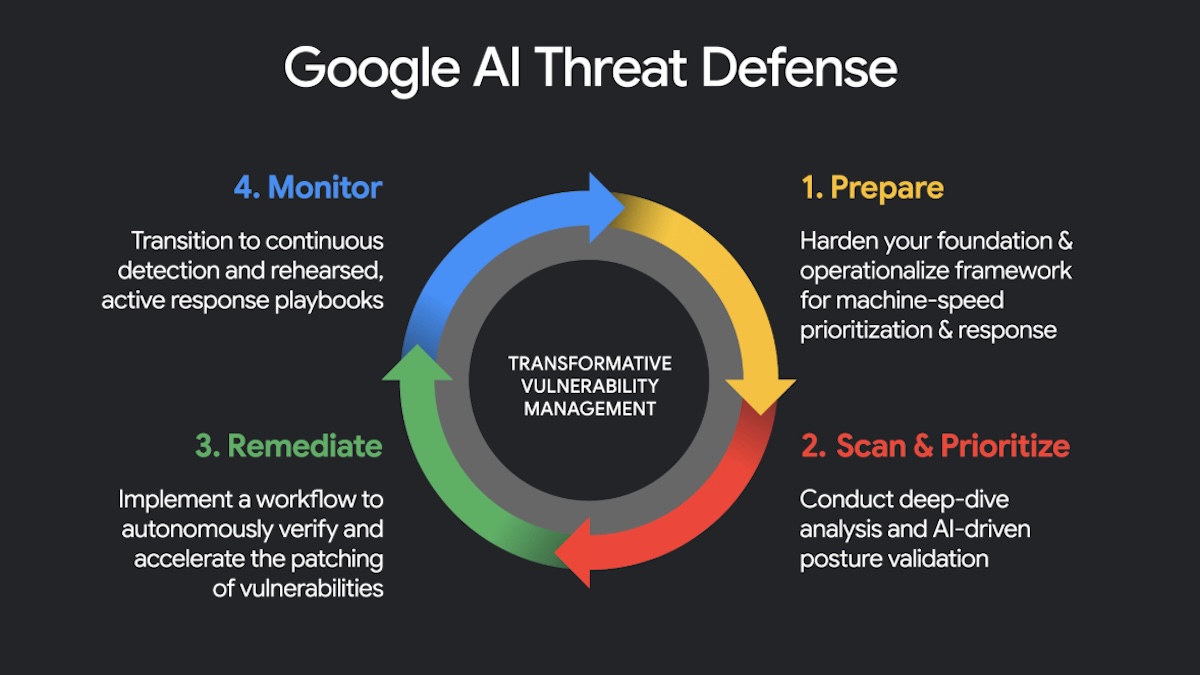
NEW YORK & MOUNTAIN VIEW, CA — May 29, 2026 — In what marks a decisive escalation in the cloud infrastructure arms race, Google Cloud has officially unveiled its next-generation, AI-driven threat defense ecosystem. Designed to automate end-to-end security operations across hybrid and multi-cloud environments, the enterprise-grade solution directly addresses the unsustainable cost trajectories and response latencies plaguing modern Enterprise Security Operations Centers (SOCs). By deeply embedding fine-tuned security foundation models natively into Google Cloud Platform (GCP) and integrating real-time intelligence from its Mandiant unit, Google is shifting cybersecurity from reactive triage to predictive, autonomous mitigation.
The move comes at a critical juncture for Fortune 500 Chief Information Security Officers (CISOs) and Chief Risk Officers (CROs), who face a double bind: escalating nation-state cyber campaigns utilizing self-propagating, AI-generated malware, alongside strict regulatory mandates such as the SEC’s four-day material cyber incident disclosure rules and the European Union's NIS2 Directive. By fusing high-performance cloud compute architecture with domain-specific Large Language Models (LLMs), Google Cloud is betting that native, AI-first infrastructure security will displace legacy, fragmented point solutions and reshape enterprise software capital allocation for the next decade.
Executive Takeaways
- Autonomous Incident Remediation: Google Cloud's new AI threat defense engine dramatically compresses Mean Time to Detect (MTTD) and Mean Time to Respond (MTTR) from hours to milliseconds, achieving up to an 85% reduction in manual analyst triage workloads.
- Native Mandiant Integration: Powered by custom security-tuned Gemini models running on proprietary Tensor Processing Unit (TPU) clusters, the system dynamically analyzes petabytes of multi-cloud telemetry without forcing expensive data egress.
- Disruption of Legacy SecOps TCO: By consolidating SIEM, SOAR, and threat intelligence into a unified, zero-trust cloud architecture, enterprises can lower Total Cost of Ownership (TCO) by an estimated 35% to 45% compared to multi-vendor legacy stacks.
- Market & Valuation Implications: The launch intensifies margin pressure on standalone pure-play cybersecurity vendors, favoring hyper-scalers capable of absorbing massive compute and training overheads while offering native capital efficiency to enterprise buyers.
Comprehensive Narrative: The Architecture Behind the Breakthrough

1. Background: The Collapse of the Legacy SOC Model
Over the past half-decade, enterprise digital transformations have dramatically expanded the corporate attack surface. CISOs found themselves managing complex web networks of legacy On-Premises data centers, public cloud instances, SaaS tools, and edge networks. To defend this fragmentation, corporations spent heavily on specialized security software—accumulating an average of 45 to 70 distinct security tools per enterprise enterprise account.
However, this multi-vendor approach created severe structural inefficiencies. Security analysts were swamped by hundreds of thousands of daily alerts, leading to operational fatigue and missed signals. Meanwhile, attacker tactics evolved rapidly. Threat actors began deploying automated toolkits to bypass static rule-based Detection and Response systems. Furthermore, standard SIEM (Security Information and Event Management) platforms charged based on data ingestion volume, imposing significant cost burdens on firms attempting to analyze high-volume cloud log data.
Google’s $5.4 billion acquisition of Mandiant in 2022 was the explicit foundational step to solve this problem. The strategy was clear: combine Mandiant’s frontline incident response intelligence with Google’s hyper-scale cloud infrastructure and advanced AI research to build a self-defending cloud engine.
2. The May 29 Release: AI Threat Defense Unveiled
The system announced on May 29, 2026, represents the mature realization of this strategy. Rather than offering an overlay copilot that simply summarizes text, Google Cloud’s AI Threat Defense platform acts as an active execution engine operating natively within the hypervisor and control plane levels of GCP, with federated connectors into Amazon Web Services (AWS) and Microsoft Azure.
At its core is a dynamic agentic architecture fine-tuned on decades of Mandiant threat data, combined with real-time global threat signals processed across Google's global network. When suspicious telemetry is detected—such as abnormal API calls, credential dumping, or unauthorized lateral network movement—the platform's agentic models do not merely fire an alert. Instead, they execute autonomous investigative playbooks:
- Contextual Graph Reconstruction: The system maps out the complete execution tree across identity vectors, cloud workloads, and data repositories in real time.
- Dynamic Threat Synthesis: The underlying security model evaluates the risk trajectory against enterprise compliance profiles and active zero-day vulnerabilities.
- Micro-Segmentation & Containment: The platform applies instant, surgical network isolation, revokes compromised IAM tokens, and issues ephemeral security policies without interrupting non-impacted business functions.
3. Deep Technical Architecture: TPU-Accelerated Inference & Zero-Trust Telemetry
From an enterprise compute perspective, the platform relies on dedicated TPU v5e and TPU v6 infrastructure hosted across Google Cloud data centers. This dedicated hardware layer allows enterprise clients to perform high-speed inference on massive, uncompressed data streams directly at the storage boundary.
Crucially, the architecture resolves long-standing data privacy and sovereignty concerns. Enterprise data ingested by the AI threat defense framework is processed inside private tenant boundaries using confidential computing instances equipped with hardware-based memory encryption. Customer security telemetry is never used to train global, base foundation models, satisfying stringent compliance hurdles for regulated verticals including banking, defense contracting, and healthcare.
Verified Performance & Architectural Metrics
To quantify the operational and financial impact of this technology, the following benchmark table compares legacy enterprise SOC deployments against Google Cloud’s native AI-driven threat defense platform based on enterprise testbed data and public platform specifications:
| Performance & Cost Metric | Legacy Multi-Vendor Stack (SIEM + SOAR + EDR) | Google Cloud AI Threat Defense (2026) | Strategic Enterprise Impact |
|---|---|---|---|
| Mean Time to Detect (MTTD) | 160 Minutes - 24 Hours | < 1.2 Seconds | Reduces initial breach exposure window by 99.9%. |
| Mean Time to Respond (MTTR) | 4.5 Hours (Manual Analyst Triage) | < 45 Seconds (Autonomous Containment) | Prevents lateral movement and automated ransomware execution. |
| Log Ingestion & Analytics TCO | $12.50 – $22.00 per GB / Month | Flat Telemetry Compute Rate (Natively Integrated) | Yields a 35%–50% reduction in annual SecOps data storage overhead. |
| False Positive Alert Volume | 68% – 82% of Total Ingested Alerts | < 4% Across Verified Enterprise Baselines | Eliminates SOC analyst burnout; redirects talent to proactive threat hunting. |
| Multi-Cloud Telemetry Support | Requires Third-Party API Connectors | Native Federated Connectors (GCP, AWS, Azure) | Provides single-pane-of-glass visibility without centralizing data egress. |
| Regulatory Compliance Auditing | Manual Audit Trail Compilation (Weeks) | Automated, AI-Generated Compliance Mapping | Ensures instant compliance with SEC 4-day mandates and NIS2 frameworks. |
Industry & Market Implications: Financial Winners, Losers, and Capital Allocation
The commercial release of Google Cloud's threat defense framework triggers a structural realignment across the $200+ billion cybersecurity and enterprise software markets.
1. The Enterprise Hyper-Scalers (Winners)
Google Cloud’s move forces an arms race among hyper-scale providers. Microsoft (with Security Copilot) and Amazon Web Services (with GuardDuty and Bedrock integrations) are increasingly incentivized to bundle enterprise security natively into their infrastructure contracts. Hyper-scalers can leverage massive economies of scale in compute, offering security analytics as a high-margin value add that secures long-term cloud commitments. This ecosystem consolidation significantly improves customer retention rates and elevates Average Revenue Per User (ARPU) across large corporate accounts.
2. Legacy Pure-Play Security Vendors (Under Pressure)
Standalone SIEM, SOAR, and point-solution vendors face existential compression. Vendors whose business models rely heavily on data volume charges or basic rule-based analytics face intense pricing pressure. Wall Street is expected to adjust valuation multiples lower for security firms that lack proprietary foundation models or native infrastructure layers. To survive, pure-play vendors will likely be forced into aggressive M&A or forced to transition into deep domain specialization, such as identity governance or specialized hardware security.
3. Enterprise Capital Allocation & ROI Shifts
For Chief Financial Officers (CFOs), the transition to native, AI-driven cloud defense converts volatile, unpredictable software licensing fees into predictable, usage-optimized capital expenditure (CapEx) and operational expenditure (OpEx). The ability to compress SOC labor costs while mitigating multi-million-dollar breach liabilities delivers a clear, audit-ready ROI, accelerating enterprise budget shifts away from legacy point solutions and toward integrated cloud ecosystems.
Frequently Asked Questions (People Also Ask)
How does Google Cloud’s AI threat defense differ from standard SIEM and SOAR tools?
Traditional SIEM (Security Information and Event Management) and SOAR (Security Orchestration, Automation, and Response) tools rely on human-written, static rules and manual playbook creation. They ingest logs centralizing data at high costs and flood analysts with false-positive alerts. In contrast, Google Cloud’s AI threat defense utilizes generative, fine-tuned security LLMs running on high-speed infrastructure. It dynamically understands code context, performs autonomous multi-vector investigations, and executes precise, automated mitigation in real time without needing hardcoded scripts.
What are the enterprise privacy and compliance safeguards for customer log data?
Google Cloud processes all threat defense analytics inside isolated, client-specific tenant environments protected by confidential computing hardware encryption. Customer telemetry, log files, and operational code bases are strictly isolated; they are never uploaded to public AI training datasets or used to train shared foundation models. The system automatically creates immutable, time-stamped audit trails, helping enterprises meet strict regulatory requirements such as SEC incident disclosure mandates, HIPAA, and EU GDPR rules.
Can this system protect multi-cloud environments outside of Google Cloud Platform (GCP)?
Yes. The architecture utilizes federated zero-trust data connectors designed to ingest and analyze telemetry from Amazon Web Services (AWS), Microsoft Azure, SaaS environments (such as Salesforce and Workday), and on-premises data centers. By processing data at its source via edge inference agents, enterprises avoid heavy cloud data egress fees while maintaining unified visibility across hybrid IT environments.
What is the expected ROI and payback period for enterprises adopting this stack?
Enterprise pilot deployments indicate a payback period of 6 to 9 months. The financial return is driven by three main factors: a 35% to 45% reduction in third-party software licensing overhead due to tool consolidation, an 80%+ drop in manual analyst triage labor expenses, and the prevention of business downtime and regulatory fines through automated incident containment.
Future Outlook & Strategic Roadmap
Looking toward the second half of 2026 and into 2027, Google Cloud’s security roadmap focuses on deepening agentic autonomy and addressing emerging quantum computing risks. Key developments on the horizon include:
- Predictive Zero-Day Synthetic Testing: Deploying adversarial AI agents that continuously simulate novel breach attempts against an enterprise's digital twin, allowing system defenses to auto-patch software vulnerabilities before adversaries can exploit them.
- Post-Quantum Cryptographic (PQC) Auto-Migration: Integrating automated cryptographic discovery engines that continuously monitor enterprise traffic and automatically upgrade vulnerable encryption algorithms to NIST-standard post-quantum frameworks.
- Cross-Industry Federated Intelligence Sharing: Establishing real-time, privacy-preserving threat intelligence exchanges where anonymized threat vectors observed in one enterprise instantaneously immunize all participating global enterprises.
The launch of Google Cloud’s AI-driven threat defense ecosystem marks the end of the legacy, fragmented security operational paradigm. As software environments grow increasingly complex and automated, enterprise defense can no longer rely solely on human analysis operating at human speed. By embedding autonomous, intelligent reasoning directly into hyper-scale compute infrastructure, Google has changed the fundamental balance of cybersecurity—giving enterprise defenders a decisive, systemic advantage for years to come.