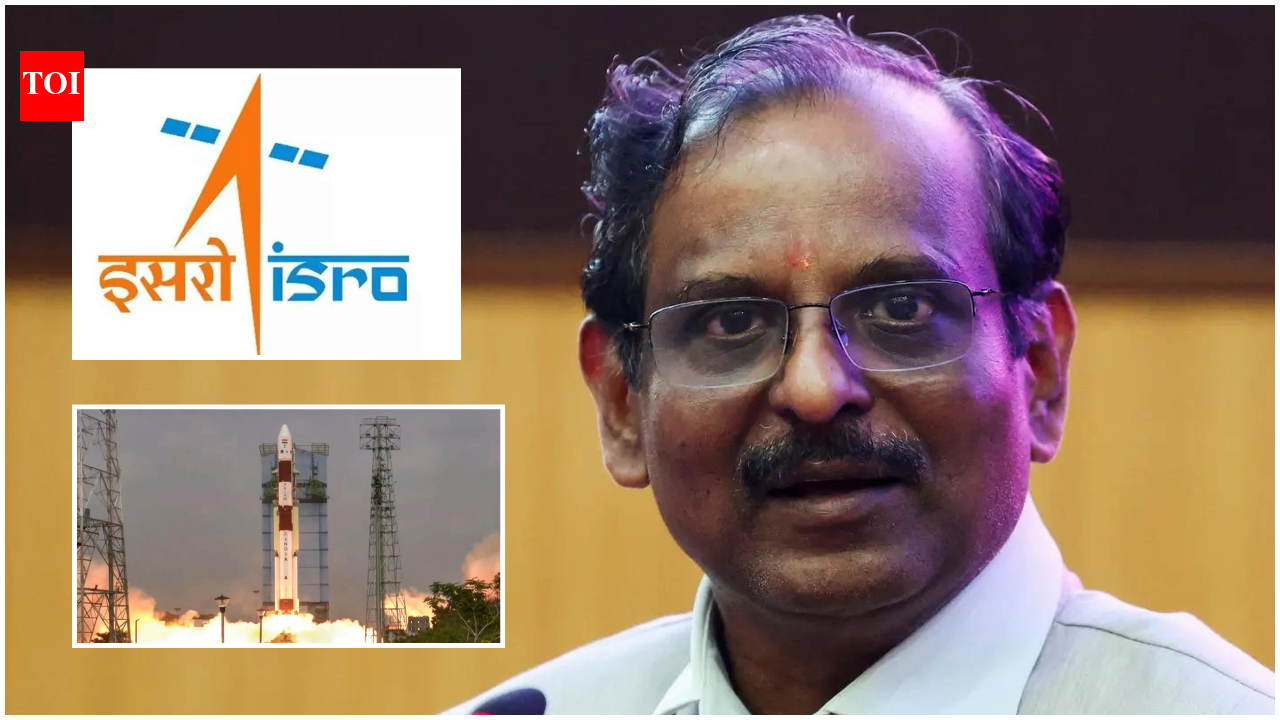
India’s Space Blitz: Inside ISRO’s Audacious 7-Launch Sprint and the Commercial Race to Undercut SpaceX
In a high-stakes bid to capture a dominant share of the global commercial satellite market, the Indian Space Research Organisation (ISRO) has locked in an aggressive manifest targeting seven major launches before the close of this fiscal year. The space agency's next orbital mission is scheduled to fly within the next two months, signaling a sharp transition from experimental milestones to high-frequency, commercial-grade operational tempos.
As Western satellite operators scramble for cost-effective alternatives to SpaceX and legacy European launchers, India is positioning itself as the ultimate low-cost, high-reliability gateway to Low Earth Orbit (LEO) and beyond. By leveraging a highly integrated local supply chain, state-backed manufacturing subsidies, and an increasingly privatized aerospace ecosystem, ISRO is executing a dual-track strategy: satisfying domestic security needs while aggressively undercutting global launch price points.
The Manifest: Seven Launches in Nine Months
According to official timelines briefed by aerospace officials in Bengaluru, the upcoming launch slate will deploy a mix of national strategic assets, earth observation satellites, and commercial payloads. The immediate priority is a dedicated flight slated for September 2026, which will test critical hardware upgrades meant to solidify the flight-proven status of India’s launcher family.
The upcoming manifest comprises a highly strategic mix of launch vehicles, optimized for different orbital profiles and payload capacities:
- The September Sentinel (Next Mission): A crucial earth observation or communication flight utilizing the Polar Satellite Launch Vehicle (PSLV), designed to validate next-generation structural composites that shave deadweight from the airframe.
- Gaganyaan Test Flights (G1 & G2): Two uncrewed test missions of India's human spaceflight capsule, assessing automated abort systems, orbital re-entry dynamics, and thermal protection shields.
- SSLV Commercial Scale-Up: Two dedicated launches of the Small Satellite Launch Vehicle (SSLV), aimed at the lucrative micro- and nano-satellite constellations market.
- LVM3 Heavy-Lift Deployments: Two commercial flights of India's heaviest rocket, the Launch Vehicle Mark-3 (LVM3), targeting global communication constellations seeking rapid orbital deployment.
— Senior ISRO Mission Planning Executive
Decoding the Ledger: How India Out-Economizes the West

The core driver behind ISRO's global competitiveness is its unmatched cost structure. While Western launch companies rely on complex, highly financialized supply chains with steep labor overheads, India’s domestic aerospace model operates on a fraction of those budgets. By domesticating component manufacturing and utilizing highly efficient solid-fuel booster technologies, ISRO has achieved a launch cost profile that remains the envy of the global space industry.
To understand how India delivers launches at roughly 30% to 40% lower costs than its global peers, we look at the estimated component and sub-system cost distribution for ISRO’s workhorse launchers:
Typical Cost Breakdown of ISRO Launch Vehicles (By System Share)
While exact component-by-component pricing is governed by strict state security classifications, internal industrial estimates from NewSpace India Limited (NSIL) and aerospace consortiums reveal the following typical allocation of manufacturing and assembly budgets:
| Subsystem / Component Group | Estimated Budget Share (%) | Primary Drivers & Material Sourcing |
|---|---|---|
| Propulsion Systems (Liquid & Cryogenic) | 35% – 40% | High-grade nimonic alloys, turbopumps, and complex injector systems manufactured by domestic public-private partnerships (e.g., HAL, Godrej Aerospace). |
| Solid Booster Castings & Fuel | 15% – 20% | Ammonium Perchlorate-based propellants and composite motor casings. Sourced completely domestically, keeping raw material costs exceptionally low. |
| Avionics, Guidance & Telemetry | 15% | On-board computers, navigation systems (NavIC integrated), and redundant telemetry units. Increasingly utilizing commercial off-the-shelf (COTS) space-grade components. |
| Structural Materials & Fairings | 12% – 15% | Aluminum-lithium alloys, carbon-fiber payload fairings, and inter-stage structures designed to withstand high aerodynamic loads. |
| Assembly, Integration & Launch Operations | 10% – 13% | Integration at Satish Dhawan Space Centre (SDSC), Sriharikota, leveraging highly skilled but competitively priced engineering talent. |
Geopolitical Headwinds Drive Commercial Demand
The acceleration of ISRO’s launch calendar comes at a critical geopolitical juncture. With Russian Soyuz rockets effectively blocked from the Western commercial market, and Europe's Ariane 6 program scaling up slower than expected, satellite operators are facing a severe launch capacity bottleneck.
SpaceX’s Falcon 9 currently commands a near-monopoly on Western commercial launches, leading to rising queue times and firmer pricing. By offering the LVM3 for heavy constellation deployments and the SSLV for rapid, on-demand light payloads, India’s commercial arm, NSIL, is positioning itself as the primary alternative. The targeted seven launches will serve as a vital demonstration of the agency’s ability to handle high-frequency commercial turnarounds.