By Our Senior Bureau Chief & Chief Investigative Editor
Court Room Crunch Time: Why McDonald’s Must Face Lawsuit Over McRib, Judge Rules, Threatening Corporate Valuation Multiples and Menu Marketing Standards
Test Our Free AI & Tech Utilities Suite
Calculate LLM API token costs, analyze article dwell-time, or simulate tech DCA returns.
Executive Takeaways
- Judicial Turning Point: A federal judge has officially ruled that McDonald’s must face a deceptive-marketing class action lawsuit centered around the seasonal scarcity and manufacturing claims of the iconic McRib.
- Valuation & Risk Mitigation: While the financial damages sought are minor relative to McDonald’s enterprise-scale capital allocation, the legal precedent could trigger broader regulatory compliance scrutiny across the quick-service restaurant (QSR) sector.
- Marketing Infrastructure Scrutiny: The litigation directly challenges long-standing promotional playbooks that leverage artificial scarcity and nostalgia to drive short-term comp-store sales spikes.
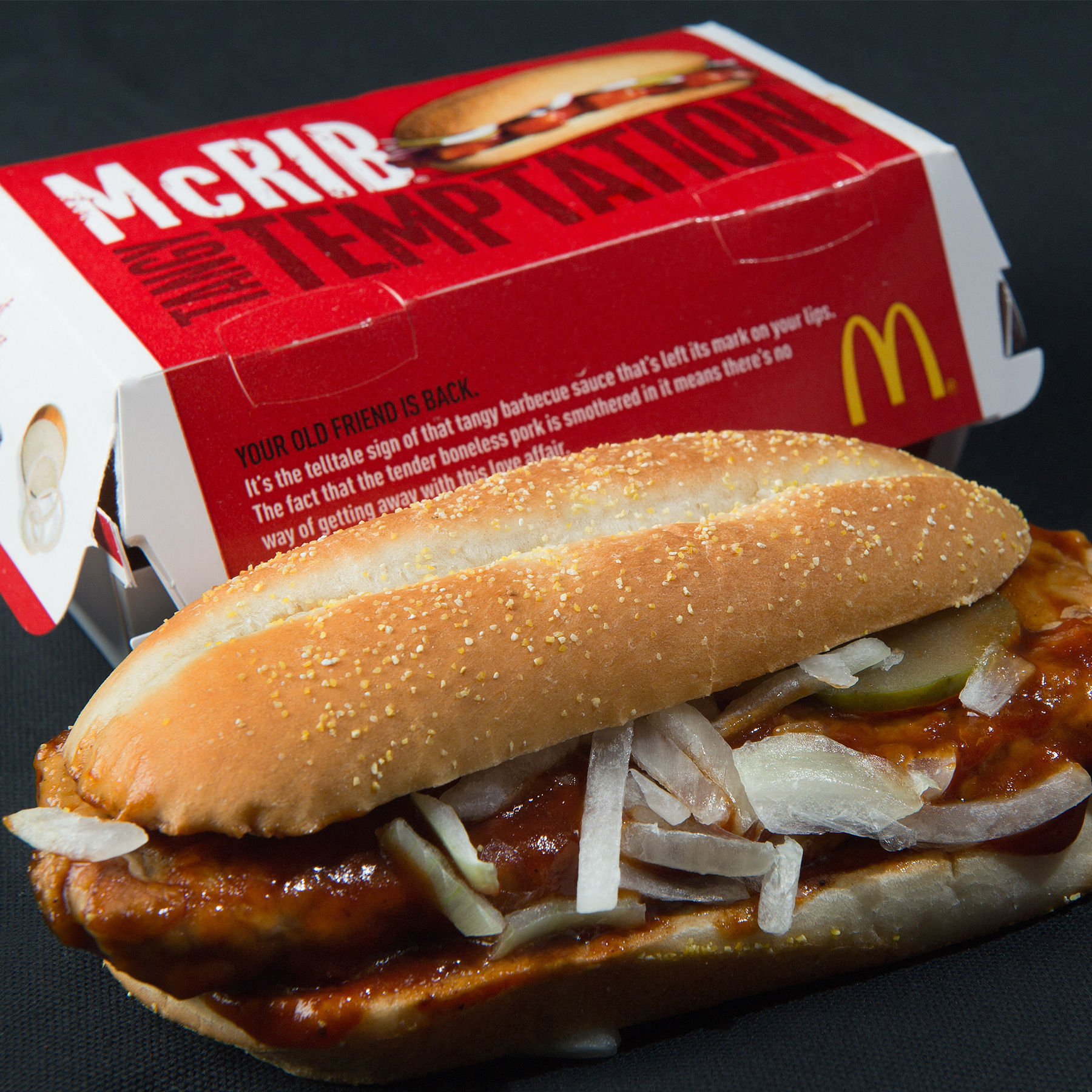
The golden arches are facing a legal grilling that could permanently alter how fast-food giants market their signature seasonal products. In a closely watched ruling that has sent ripples through corporate legal departments and equity research desks alike, a federal judge has determined that McDonald’s Corporation must face a consumer protection lawsuit concerning the marketing and structural reality of the McRib.
For decades, the McRib has functioned as a masterclass in behavioral economics, consumer psychology, and supply-chain orchestration. Billed as a fleeting, limited-time offering (LTO), the boneless pork sandwich commands intense brand loyalty and sparks localized media frenzies whenever it returns to menu boards. However, this latest judicial setback strips away the nostalgic veneer, forcing the fast-food titan to defend its promotional vocabulary in a court of law. As institutional investors reassess risk mitigation strategies and market liquidity positions around consumer discretionary stocks, this litigation moves beyond a mere corporate nuisance into a bellwether case for modern advertising transparency.
The Anatomy of the Dispute: Deconstructing the McRib Marketing Machine
To understand the gravity of the recent court ruling, one must examine the mechanics of how McDonald’s deploys the McRib within its broader enterprise architecture. The sandwich, introduced regionally in 1981 and nationally in 1982, was originally created to smooth out operational inefficiencies in pork supply chains during market downturns. Yet, its enduring market presence relies almost entirely on manufactured scarcity.
The plaintiffs in the class action lawsuit allege that McDonald’s utilizes deceptive marketing practices by framing the McRib as a rare, elusive delicacy tied to fluctuating pork commodity markets and seasonal availability, whereas critics and legal counsel argue the product's availability is dictated by internal corporate strategy and predictable commodity cost modeling rather than genuine supply constraints. The lawsuit contends that consumers are induced into purchasing the item under false pretenses regarding its rarity and ingredient provenance.
When the presiding judge denied McDonald’s motion to dismiss, it signaled that the plaintiffs’ claims crossed the threshold from mere commercial hyperbole into actionable consumer deception. In the eyes of the court, statements made in national advertising campaigns carry legal weight—particularly when they directly influence consumer purchasing behavior and capital allocation at the drive-thru window.
Financial Impact and Enterprise Valuation Multiples

From a strict balance-sheet perspective, the direct financial liabilities stemming from this lawsuit are unlikely to fracture McDonald’s robust market capitalization. The company generates tens of billions of dollars in system-wide sales, supported by an enviable franchise business model that insulates corporate headquarters from many operational liabilities. However, Wall Street analysts are monitoring the case for its indirect impacts on valuation multiples and regulatory compliance costs.
In the QSR sector, premium valuation multiples are heavily dependent on predictable cash flows, brand equity, and pricing power. If major consumer-facing brands are forced to dial back aggressive promotional language, or if discovery processes reveal internal pricing and supply-chain strategies that contradict public-facing marketing narratives, investor sentiment could experience compression. Furthermore, any mandatory changes to how limited-time offers are advertised could necessitate a massive overhaul of digital marketing infrastructure, mobile app engagement funnels, and supply chain forecasting models.
| Metric / Dimension | McDonald’s Corporate Position | Plaintiffs' Allegations | Market / Legal Implication |
|---|---|---|---|
| Product Availability | Driven by fluctuating seasonal pork supply and consumer demand cycles. | Artificially manipulated scarcity designed to drive FOMO and pricing power. | Greater scrutiny on advertising claims across the fast-food industry. |
| Legal Standard | Standard commercial puffery protected under established advertising norms. | Actionable misrepresentation violating consumer protection statutes. | Potential legal precedent limiting creative license in LTO campaigns. |
| Financial Exposure | Negligent impact on total enterprise cash flow and liquidity. | Restitution for millions of consumers influenced by deceptive framing. | Potential compliance overhead and settlement costs. |
Broader Industry & Market Implications
The ripple effects of this judicial decision extend far beyond the corporate offices in Chicago. Across the global food and beverage landscape, limited-time offerings represent a primary engine for driving comp-store sales growth and digital app engagement. Brands from Burger King and Wendy’s to Starbucks rely heavily on seasonal product launches to capture consumer attention in an increasingly fragmented digital media ecosystem.
If courts begin to look unfavorably upon promotional strategies that exaggerate scarcity or conflate corporate inventory management with organic supply shortages, entire marketing playbooks will need rewriting. Chief Marketing Officers (CMOs) and general counsel will be forced to implement rigorous risk mitigation frameworks, ensuring that every promotional hook—from "while supplies last" to "back by popular demand"—can withstand intense legal scrutiny during discovery.
Furthermore, institutional investors managing portfolios heavy in consumer discretionary equities must factor in regulatory compliance risk. As automated data scraping, consumer advocacy groups, and class-action law firms leverage digital tools to monitor corporate advertising, the margin for error in marketing communications is shrinking rapidly.
Frequently Asked Questions (People Also Ask)
Why is McDonald’s facing a lawsuit over the McRib?
McDonald’s is facing a class-action lawsuit because plaintiffs allege the company engages in deceptive marketing by framing the McRib as a scarce, limited-time offering dependent on pork market fluctuations, whereas critics claim its availability is driven entirely by internal corporate planning and predictable supply chains.
What was the judge's specific ruling in the McRib case?
The federal judge officially denied McDonald’s motion to dismiss the lawsuit, ruling that the plaintiffs have presented sufficient legal arguments regarding consumer deception to allow the case to proceed toward the discovery and trial phases.
Could this lawsuit impact other fast-food marketing campaigns?
Yes. If the plaintiffs successfully prove their case or secure a substantial settlement, it could set a legal precedent that forces quick-service restaurants to exercise greater transparency and caution when advertising limited-time offers (LTOs) and seasonal menu items.
What are the financial implications for McDonald’s investors?
While the direct monetary damages are unlikely to materially impact McDonald’s enterprise valuation or market liquidity, institutional investors are monitoring the case for potential compliance overhead, advertising policy shifts, and the long-term impact on brand equity valuation multiples.
Future Outlook and Key Milestones to Watch
As this high-profile litigation enters its next procedural phase, industry observers and legal analysts will be tracking several critical milestones:
- The Discovery Phase: Internal corporate communications, supply-chain data, and executive emails regarding McRib promotional timing will likely be subpoenaed, providing unprecedented visibility into how fast-food marketing strategies are formulated.
- Class Certification Hearings: The court will determine whether the lawsuit can proceed as a full national class action, which would significantly expand the scope of potential damages and legal exposure.
- Precedent on Commercial Puffery: Legal scholars will closely analyze how the court defines the boundary between traditional advertising exaggeration and actionable consumer fraud in the context of fast-food retail.
For McDonald’s, the challenge lies not just in successfully defending its legal position, but in navigating the delicate balance between maintaining the cultural mystique of the McRib and adhering to increasingly stringent standards of corporate transparency. In an era where consumers and regulators demand absolute authenticity, the days of whimsical, unverified marketing claims may officially be numbered.