Executive Takeaways
- Strategic Retreat: Meta Platforms Inc. has indefinitely postponed the rollout of contentious new business terms that would have expanded automated content harvesting across third-party publishing domains.
- Publisher Revolt: Global news media syndicates, legal advocacy groups, and digital rights coalitions threatened immediate antitrust litigation and technical IP blocking mechanisms.
- The AI Inflection Point: The controversy exposes the underlying friction between enterprise ROI on Large Language Model (LLM) training datasets and the intellectual property rights of traditional journalistic institutions.
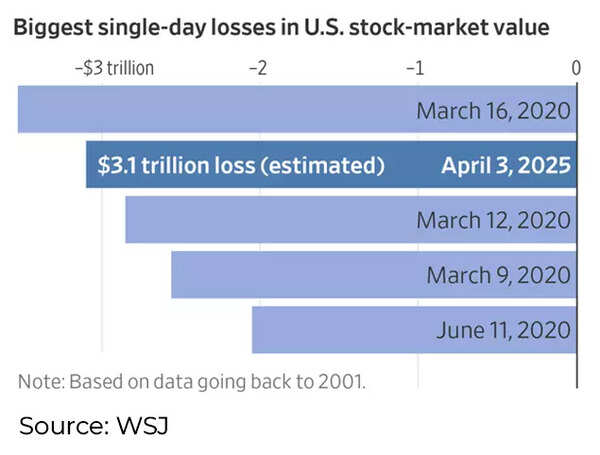
- Bruised valuation multiples and heightened regulatory compliance mandates continue to constrain Silicon Valley's aggressive infrastructure scalability plans.
SAN FRANCISCO & LONDON — In a high-stakes retreat that underscores the volatile economics of digital information, Meta Platforms has officially suspended the implementation of its updated business and platform terms. The policy shift, initially communicated quietly to enterprise partners and digital publishers, sparked an immediate and coordinated global outcry over provisions that critics argued would authorize unchecked web scraping of premium news sites for artificial intelligence model training.
The sudden pivot by Mark Zuckerberg’s leadership team lays bare the intensifying legal, financial, and reputational minefield surrounding data harvesting. As tech conglomerates race to secure high-entropy textual data required to maintain competitive parity in generative AI, legacy media organizations are aggressively erecting digital fortifications, demanding fair compensation, and invoking rigorous copyright protections to safeguard their intellectual capital.
The Anatomy of a Policy Contretemps
The crisis began to materialize when digital publishing executives and intellectual property attorneys dissected the fine print of Meta’s proposed autumn platform agreement updates. Buried within the dense legal terminology were clauses that appeared to grant Meta’s automated crawler infrastructure broader permissions to index, extract, and ingest content published on external domains—not merely for traditional social graph indexing and search discovery, but crucially, for feeding foundational AI architectures.
For months, institutional investors and Wall Street analysts have monitored Meta’s capital allocation strategy regarding cloud compute architecture and specialized silicon procurement. Training frontier models demands petabytes of clean, human-verified text. By attempting to update its terms of service to implicitly bundle web scraping rights into standard platform participation, Meta sought a frictionless shortcut to acquiring high-value training corpora.
However, the strategy grossly underestimated the organized pushback from publishers who have watched referral traffic plummet following Meta's systematic deprioritization of hard news across Facebook and Instagram feeds. Having already lost vital top-of-funnel audience acquisition channels, major newsrooms viewed the scraping provisions as an existential threat: an attempt to monetize their proprietary journalism twice—first by starving them of ad revenue, and second by harvesting their archives for commercial AI products without financial recompense.
Industry Resistance and Legal Exposure

The backlash was swift and multi-jurisdictional. News media trade associations in North America and the European Union mobilized legal teams to evaluate potential violations of copyright directives, unfair competition statutes, and anti-垄断 (antitrust) regulations. Furthermore, technical architects at several prominent publishing groups began preparing advanced IP-blocking protocols and bot-mitigation countermeasures designed to sever Meta’s web-crawler access at the server level.
This looming technological confrontation presented acute risk mitigation challenges for Meta’s executive suite. An escalating public relations war coupled with high-profile copyright litigation would not only damage enterprise valuation multiples but also invite aggressive regulatory intervention from competition watchdogs such as the European Commission’s Directorate-General for Competition and the U.S. Federal Trade Commission (FTC).
Verified Data & Metrics Breakdown
| Metric / Parameter | Pre-Controversy Status | Proposed Shift | Current Status Post-Outcry |
|---|---|---|---|
| Implementation Timeline | Scheduled Q4 Rollout | Immediate Global Mandate | Indefinitely Delayed |
| Scraping Authorization | Ambiguous Terms | Explicit AI Ingestion Rights | Under Structural Review |
| Publisher Engagement | Top-down Notification | Non-negotiable Opt-in | Stakeholder Consultations Open |
| Regulatory Exposure | Moderate Monitoring | High Antitrust Risk | Active Scrutiny Maintained |
Industry & Market Implications: Who Wins, Who Loses
The tactical retreat by Meta triggers significant ripple effects across the digital media and enterprise technology landscapes:
- Winners: Legacy Publishers & IP Holders. By successfully halting the forced terms update, media syndicates have reinforced the legal principle that content extraction for AI training requires explicit licensing agreements and commercial compensation, mirroring successful precedents set with OpenAI and Google.
- Losers: Meta’s AI Infrastructure Division. The delay forces Meta to rely on more costly, fragmented data acquisition strategies, potentially slowing the velocity of subsequent LLM iterations and inflating capital expenditure requirements for clean data acquisition.
- Neutral/Watchful: Advertisers & Enterprise Clients. Brands utilizing Meta’s advertising ecosystem remain shielded from immediate market disruptions, though long-term platform feature rollouts related to generative AI-driven ad generation may face localized delays.
Frequently Asked Questions (People Also Ask)
Why did Meta delay its new business and platform terms?
Meta paused the rollout following intense pushback from global news publishers, legal experts, and trade associations who objected to clauses that would have permitted automated web scraping of journalistic content for artificial intelligence model training without explicit consent or compensation.
How does web scraping impact news publishers' digital revenue?
Unchecked web scraping allows tech platforms to ingest journalistic reporting to train AI systems—such as conversational search bots and generative summaries—which retain users on platform rather than driving referral traffic and ad impressions back to the publisher's proprietary website.
Are other tech giants facing similar backlash over AI data harvesting?
Yes. Companies like OpenAI, Google, and Anthropic have faced widespread criticism, copyright lawsuits, and technical blocks from news organizations, book authors, and creative artists demanding compensation and robust opt-out mechanisms for AI training data.
What legal frameworks govern web scraping and intellectual property?
Legal frameworks include copyright law, database directives (particularly in the European Union), terms of service contract law, and emerging artificial intelligence regulations such as the EU AI Act, which mandates stringent transparency regarding training data sources.
Future Outlook & Milestones to Watch
As Meta recalibrates its legal strategy, industry observers should monitor several critical milestones in the coming quarters. First, watch for any announcements regarding formal licensing negotiations between Meta and major publishing conglomerates, which could establish a pricing benchmark akin to deals struck by competitors. Second, track potential policy interventions by international regulatory bodies addressing data harvesting limits for AI development.
Ultimately, Meta’s strategic pause signals that the era of unfettered, frictionless data extraction from open web publishing is drawing to a close. Technology platforms must increasingly balance their insatiable appetite for computational fuel with the robust legal and economic realities of intellectual property rights in the digital age.