Executive Takeaways
- Mission Termination: Starfish Space has officially lost contact with its pioneering Otter Pup spacecraft, bringing an abrupt end to its inaugural satellite inspection and proximity operations mission.
- Capital Allocation & Valuation Pressures: The incident tests investor sentiment in the NewSpace economy, forcing venture capitalists and institutional backers to reassess risk mitigation strategies and infrastructure scalability timelines.
- Regulatory & Orbital Safety Stakes: The sudden loss of an active rendezvous and proximity operations (RPO) vehicle highlights acute challenges in space traffic management, debris mitigation, and international regulatory compliance.
- Pivoting for Resilience: Despite the setback, aerospace analysts emphasize that iterative hardware-rich testing remains standard practice for venture-backed orbital service providers aiming for long-term enterprise ROI.
For the burgeoning commercial space economy, the promise of in-space servicing, assembly, and manufacturing (ISAM) has long been framed as the ultimate frontier for capital allocation. Yet, orbital mechanics remains an unforgiving arena. Starfish Space, an ambitious Seattle-based aerospace startup promising life-extension services for stranded or aging satellites, has confirmed the premature end of its inaugural mission. Following a sudden, catastrophic loss of telemetry and command links with its Otter spacecraft, the company’s flagship satellite inspection demonstration has ground to an unceremonious halt.
As financial markets digest the news, the incident serves as a stark reminder of the immense technical and operational hurdles facing private-equity and venture-backed space ventures. Beyond the immediate engineering post-mortem, the Otter anomaly reverberates across the broader aerospace ecosystem, triggering urgent discussions regarding insurance underwriting, cloud compute architecture for autonomous navigation, and the valuation multiples assigned to early-stage orbital logistics providers.
Anatomy of a Launch and the Road to Orbit
Test Our Free AI & Tech Utilities Suite
Calculate LLM API token costs, analyze article dwell-time, or simulate tech DCA returns.
Founded by former Blue Origin and NASA engineers Trevor Bennett and Austin Allison, Starfish Space entered the commercial aerospace sector with a distinct value proposition: developing Otter, a modular orbital vehicle designed to dock with and extend the operational lifespan of geostationary and low-Earth orbit (LEO) satellites. Given that orbital slots are finite and multi-million-dollar communication assets frequently face premature retirement due to propellant depletion rather than hardware failure, the total addressable market for satellite life-extension is valued in the tens of billions of dollars.
The journey to operational validation began in earnest when Starfish Space secured launch contracts to deploy its Otter Pup—a sub-scale technology demonstrator designed to test rendezvous, proximity operations, and docking (RPOD) software algorithms. The spacecraft was successfully integrated onto a third-party ride-share mission, riding to orbit with the expectation of proving out proprietary cold-gas propulsion systems and advanced optical navigation sensors.
Initial post-launch phases proceeded with cautious optimism. Engineering teams at the company’s Seattle headquarters monitored health and status metrics, validating core bus functionalities, power generation, and thermal control systems. However, as the mission transitioned into its critical proximity operations phase—where the spacecraft was slated to execute complex relative navigation maneuvers near a client asset—telemetry links degraded rapidly before dropping entirely. Despite exhaustive recovery protocols, uplinking contingency commands, and leveraging global ground-station networks, engineers were unable to re-establish a stable communication handshake.
Technical Breakdown: Navigating the Hazards of Proximity Operations
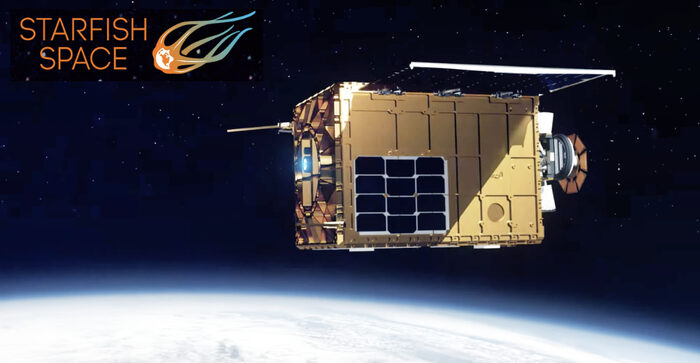
Executing rendezvous and proximity operations in microgravity is widely considered among the most mathematically and operationally rigorous disciplines in aerospace engineering. Unlike traditional satellite operations that involve station-keeping in largely unoccupied orbital regimes, RPO requires real-time relative navigation, sub-millimeter trajectory adjustments, and autonomous decision-making loops that minimize dependency on Earth-based ground stations.
Industry experts familiar with the architecture of early-stage orbital vehicles note that anomalies during these phases typically stem from a complex confluence of factors:
- Autonomous Software Loops: When a spacecraft transitions to autonomous guidance, navigation, and control (GN&C), unexpected sensor anomalies or edge-case lighting conditions can trigger safety aborts or processor lockups.
- Power and Thermal Anomalies: Micro-meteoroid impacts, battery degradation, or attitude control failures can swiftly compromise a spacecraft’s power budget, leading to undervoltage conditions that force protective system reboots.
- RF Communication Interuptions: High-gain antenna misalignment during complex rotational maneuvers can sever the critical umbilical link required for real-time human-in-the-loop oversight.
While Starfish Space has yet to release a granular forensic breakdown of the exact trigger, the ultimate outcome underscores the razor-thin margins for error inherent in orbital hardware development.
| Mission Parameter | Otter / Otter Pup Specifications | Industry Context & Benchmarks |
|---|---|---|
| Primary Mission Objective | Satellite inspection, rendezvous, and docking technology demonstration | Validation of ISAM (In-Space Servicing, Assembly, and Manufacturing) capabilities |
| Orbital Regime | Low Earth Orbit (LEO) | High-congestion zone requiring stringent collision avoidance protocols |
| Core Technology Tested | Proprietary cold-gas propulsion and autonomous optical navigation software | Essential for future active debris removal and life-extension services |
| Mission Outcome> | Premature termination due to irreversible loss of communication telemetry | Highlights systemic risk profiles in venture-backed orbital demonstration flights |
Industry & Market Implications: Reassessing Risk Mitigation and Capital Allocation
The premature termination of the Otter mission carries immediate ripples across the aerospace financial landscape. For venture capital firms and institutional investors backing NewSpace infrastructure, the incident acts as a sobering reality check regarding technology readiness levels (TRL) and capital deployment strategies.
Over the past decade, venture funding for space tech surged on the back of declining launch costs and growing commercial demand for space-based data. However, as macroeconomic conditions tightened and interest rates remained elevated, investors shifted their focus from speculative science projects to near-term enterprise ROI and rigorous risk mitigation. Anomaly events involving hardware loss inevitably prompt underwriters to recalibrate insurance premiums for upcoming orbital missions, making commercial risk transfer increasingly expensive for early-stage startups.
Conversely, established primes and well-capitalized defense contractors specializing in space situational awareness (SSA) and orbital logistics may view this setback as validation of their methodical, government-backed development pipelines. For competitors, Starfish Space's setback underscores the immense barriers to entry in the orbital servicing sector, where failure cannot be easily patched via over-the-air software updates once hardware is beyond low Earth orbit.
Despite these market pressures, veteran aerospace executives argue that the "fail fast, learn faster" iterative engineering philosophy—imported from the software industry into hardware-heavy space sectors—remains essential for long-term technological breakthroughs. Companies that transparently share failure data, rapidly implement corrective engineering changes, and maintain robust capital reserves are typically better positioned to retain client trust and secure subsequent round financing.
Frequently Asked Questions (People Also Ask)
What exactly caused Starfish Space to lose contact with the Otter spacecraft?
While exhaustive forensic investigations are ongoing, the loss of contact is attributed to a critical telemetry and command link failure during active proximity operations. Early assessments point to potential anomalies within autonomous navigation loops, power management systems, or antenna alignment routines during critical orbital maneuvers.
Will this mission failure jeopardize Starfish Space’s future commercial contracts?
While the loss of the Otter Pup demonstrator is a tangible setback, commercial clients and government partners in the aerospace sector are historically accustomed to high development risks in unproven orbital domains. Starfish Space’s ability to secure future contracts will largely depend on its transparency, the thoroughness of its root-cause analysis, and how quickly it can demonstrate hardware resilience in subsequent iterations.
How does this impact the broader in-space servicing and manufacturing (ISAM) market?
The incident highlights the immense engineering complexity of rendezvous and proximity operations (RPO). It is expected to prompt tighter regulatory scrutiny, more conservative insurance underwriting practices, and a renewed emphasis on rigorous ground-testing and hardware redundancy across the entire commercial orbital services industry.
What is the current orbital status of the Otter spacecraft?
The spacecraft remains in orbit as inert hardware, subject to natural atmospheric drag. Because the vehicle was operating in a well-monitored regime, orbital tracking networks continue to catalog its trajectory to ensure it poses no collision hazard to other operational space assets.
Future Outlook: What Comes Next for Orbital Servicing
As Starfish Space pivots from the immediate triage of the Otter mission toward long-term engineering remediation, the broader ISAM sector stands at a critical crossroads. The economic imperatives driving the market remain entirely intact: thousands of active commercial and government satellites represent trillions of dollars in global infrastructure, and the ability to service, refuel, and relocate these assets will eventually become a foundational pillar of the space economy.
Key milestones to watch across the industry over the next 12 to 24 months include:
- Regulatory Evolution: Increased demands from regulatory bodies such as the FCC and FAA for hardened collision avoidance protocols and verified end-of-life disposal plans for RPO vehicles.
- Capital Market Adjustments: A flight to quality among venture investors, favoring startups with proven military or civil space heritage over unproven consumer-tech imports.
- Redundancy in GN&C Architecture: Accelerated adoption of resilient cloud compute architecture and hardware-in-the-loop simulation testing to catch complex edge-case software failures prior to launch.
Ultimately, the frontier of space exploration has never been forgiving of capital shortcuts or unmitigated technical risk. How Starfish Space and its peers navigate the aftermath of the Otter anomaly will define the maturity of the commercial space industry for the next decade.