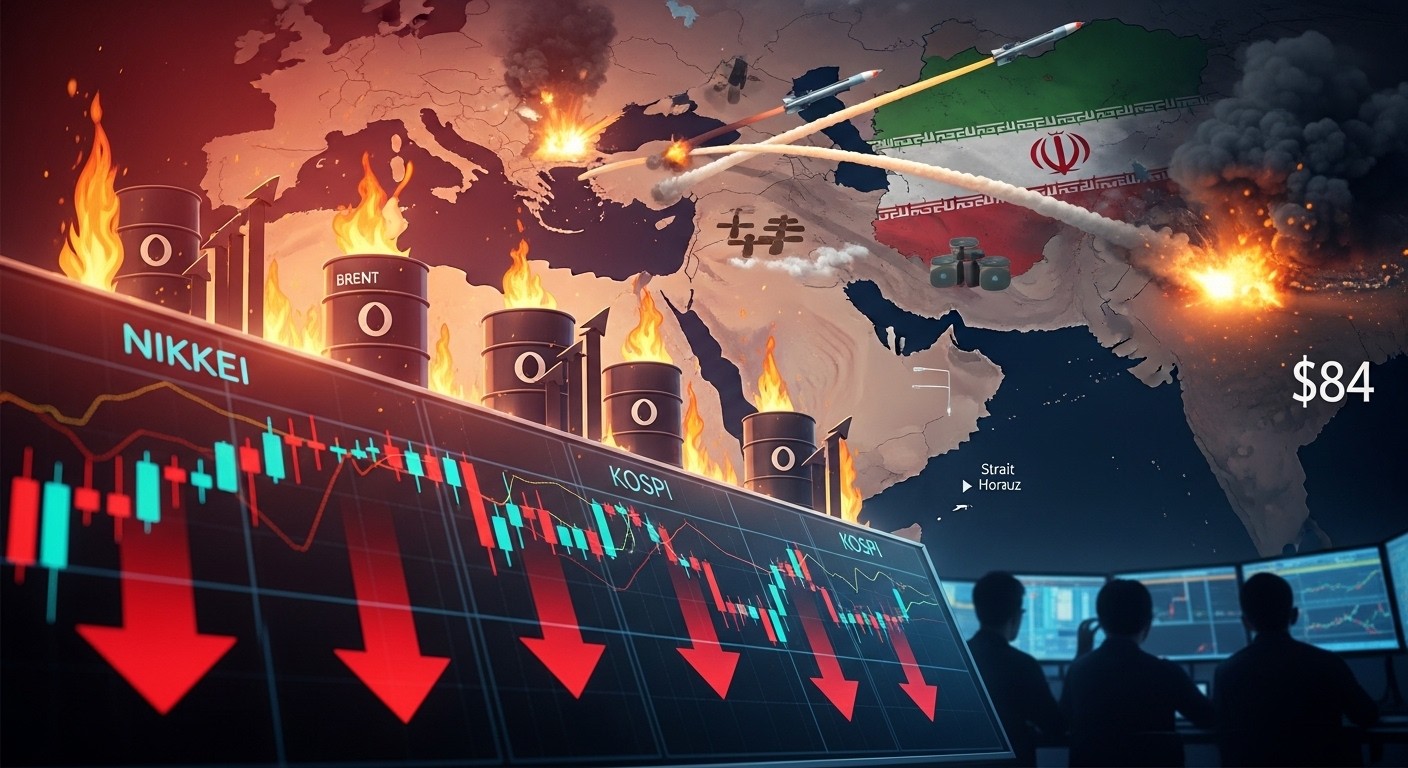
Executive Takeaways
- Tech Valuation Re-pricing: A sharp Nasdaq sell-off driven by stretched valuation multiples and rising Treasury yields has directly clouded Asian equity openings, forcing institutional capital allocation shifts.
- Geopolitical Supply Shocks: Crude oil futures tumbled following reports of mitigated tensions regarding Iran, easing immediate supply-chain risk premiums and altering energy sector cash flow projections.
- Liquidity and Risk Mitigation: Global fund managers are aggressively adjusting risk mitigation protocols, balancing enterprise cloud compute exposure against macroeconomic interest rate uncertainties.
- Cross-Asset Rebalancing: Fixed-income and currency markets are experiencing heightened volatility as algorithmic trading desks reprice macroeconomic trajectories across developed and emerging markets.
Global financial architecture is facing a synchronized stress test as overnight equities bloodletting in U.S. technology sectors reverberates through Asian exchanges. Simultaneously, a sharp downward correction in international crude oil benchmarks—triggered by receding geopolitical risk premiums tied to Iran—has fundamentally altered commodity pricing models. Institutional desks from New York to Tokyo are scrambling to execute capital preservation strategies, recalibrating portfolio risk parameters as market liquidity thins and volatility indexes spike.
The convergence of a tech-led Wall Street retreat and abrupt de-escalation in the Middle East exposes the fragility of modern asset pricing. For corporate treasurers, portfolio managers, and institutional allocators, navigating this environment requires a granular understanding of cross-asset correlations, capital allocation shifts, and the underlying macroeconomic catalysts driving today’s market action.
Anatomy of the Tech Correction: The Nasdaq Slide
Test Our Free AI & Tech Utilities Suite
Calculate LLM API token costs, analyze article dwell-time, or simulate tech DCA returns.
The catalyst for the current regional market gloom originated on U.S. trading floors, where the Nasdaq Composite experienced an aggressive liquidation phase. Mega-cap technology equities, long treated as safe-haven growth assets, faced intense selling pressure as institutional investors reassessed forward-looking valuation multiples in light of sticky macroeconomic inflation prints and persistent terminal interest rate expectations.
For months, the bull case for the technology sector relied heavily on projected enterprise return on investment (ROI) derived from artificial intelligence deployment and infrastructure scalability. However, as bond yields climbed, the discount rate applied to future cash flows forced a brutal repricing. High-growth software and hardware providers experienced multiple compression, dragging benchmark indexes lower and triggering automated stop-loss orders across quantitative trading funds.
This contagion quickly crossed the Pacific. Asian equity indices opened under severe downward pressure, with semiconductor manufacturers, export-oriented electronics giants, and high-beta consumer tech platforms bearing the brunt of the institutional sell-off. Foreign portfolio investors (FPIs) accelerated net outflows from regional exchanges, seeking refuge in short-duration sovereign debt and cash equivalents.
Crude Oil Pressured by Iranian Supply Realities

While equity markets absorbed technology sector losses, the energy complex experienced its own dramatic narrative. Crude oil futures tumbled during Asian trading hours following diplomatic signals and supply-side assessments suggesting that potential military escalations involving Iran would be contained, averting catastrophic blockages in critical maritime transit choke points such as the Strait of Hormuz.
The evaporation of the geopolitical risk premium sent shockwaves through energy trading desks. For weeks, energy bulls had priced in a worst-case supply disruption scenario, pushing futures contracts higher despite sluggish industrial demand metrics out of Europe and mainland China. The sudden reversal caught leveraged long positions off guard, resulting in cascading liquidations.
Corporations across the energy sector are now forced to recalculate capital expenditure budgets and hedging strategies. While lower crude prices offer welcome relief to consumer price indices and central bankers battling inflation, upstream exploration and production firms face immediate pressures on profit margins and projected free cash flow generation.
Market Snapshot: Cross-Asset Performance Metrics
The following table outlines the comparative performance, volatility shifts, and valuation adjustments across key asset classes during the current market wrap window.
| Asset Class / Index | Directional Move | Primary Driver | Risk Implication |
|---|---|---|---|
| Nasdaq Composite | Sharp Decline | Valuation compression, rising yields | Tech sector multiple contraction |
| Brent Crude / WTI | Bearish Drop | Easing Iran geopolitical risk premium | Upstream margin pressure, lower inflation |
| Asian Equities (MSCI Asia) | Moderate to Heavy Loss | Wall Street contagion, FPI outflows | Regional liquidity tightening |
| U.S. Treasury Yields | Elevated / Stable | "Higher-for-longer" Fed monetary stance | Higher cost of capital globally |
Industry & Market Implications: Winners and Losers
Market dislocations of this magnitude invariably create distinct bifurcations between corporate winners and losers. Understanding these structural shifts is essential for institutional risk managers and enterprise leaders navigating current economic headwinds.
The Losers: High-Beta Tech and Upstream Energy
The immediate victims of this market wrap are growth-oriented technology enterprises lacking near-term profitability, alongside oil exploration and production firms. Companies heavily reliant on venture capital funding or aggressive debt-financed infrastructure scalability face severe liquidity constraints. As capital costs remain elevated, balance sheet hygiene and regulatory compliance supersede aggressive top-line expansion.
The Winners: Defensive Sectors and Cash-Rich Balance Sheets
Conversely, defensive sectors—including healthcare, consumer staples, and regulated utilities—are attracting safe-haven capital flows. Furthermore, large-cap enterprises possessing fortress balance sheets, substantial cash reserves, and minimal debt exposure are uniquely positioned to capitalize on distressed asset valuations, executing strategic mergers and acquisitions while smaller competitors retrench.
Frequently Asked Questions (People Also Ask)
What triggered the sudden Nasdaq slide and its impact on Asian markets?
The Nasdaq correction was driven by a combination of stretched valuation multiples, rising sovereign bond yields, and investor anxiety over sustainable tech earnings growth. Because global technology supply chains and investor portfolios are highly interconnected, this U.S. sell-off immediately spilled over into Asian equity markets, sparking algorithmic liquidations and foreign capital outflows.
Why did crude oil prices fall in response to developments regarding Iran?
Crude oil prices fell because traders rapidly removed the geopolitical risk premium previously baked into energy futures. Reports indicating mitigated tensions involving Iran reduced fears of immediate supply disruptions, such as blockages in the Strait of Hormuz, causing speculative long positions to unwind.
How should institutional investors approach risk mitigation during cross-asset volatility?
Institutional allocators are prioritizing risk mitigation by reducing exposure to high-beta growth equities, increasing liquidity allocations, and hedging against currency and interest rate fluctuations. Diversifying into defensive sectors and short-duration fixed income remains a favored strategy to weather macroeconomic uncertainty.
What role do macroeconomic interest rates play in current tech valuations?
Interest rates dictate the discount rate applied to future corporate earnings. When benchmark yields rise—driven by central bank monetary tightening or sticky inflation—the present value of future cash flows for high-growth tech companies drops significantly, forcing a downward re-pricing of valuation multiples.
Future Outlook and Key Milestones to Watch
As global financial markets digest the dual shocks of technology valuation adjustments and shifting commodity pricing, institutional focus pivots toward upcoming macroeconomic data releases and central bank pronouncements. Key milestones in the coming weeks include upcoming U.S. employment reports, Consumer Price Index (CPI) prints, and central bank policy meetings across G7 nations.
For corporate leadership teams, operational resilience, disciplined capital allocation, and rigorous risk mitigation will remain paramount. While volatility creates formidable near-term headwinds, it also paves the way for well-capitalized enterprises to consolidate market share and secure long-term strategic dominance as market fundamentals eventually reassert themselves.