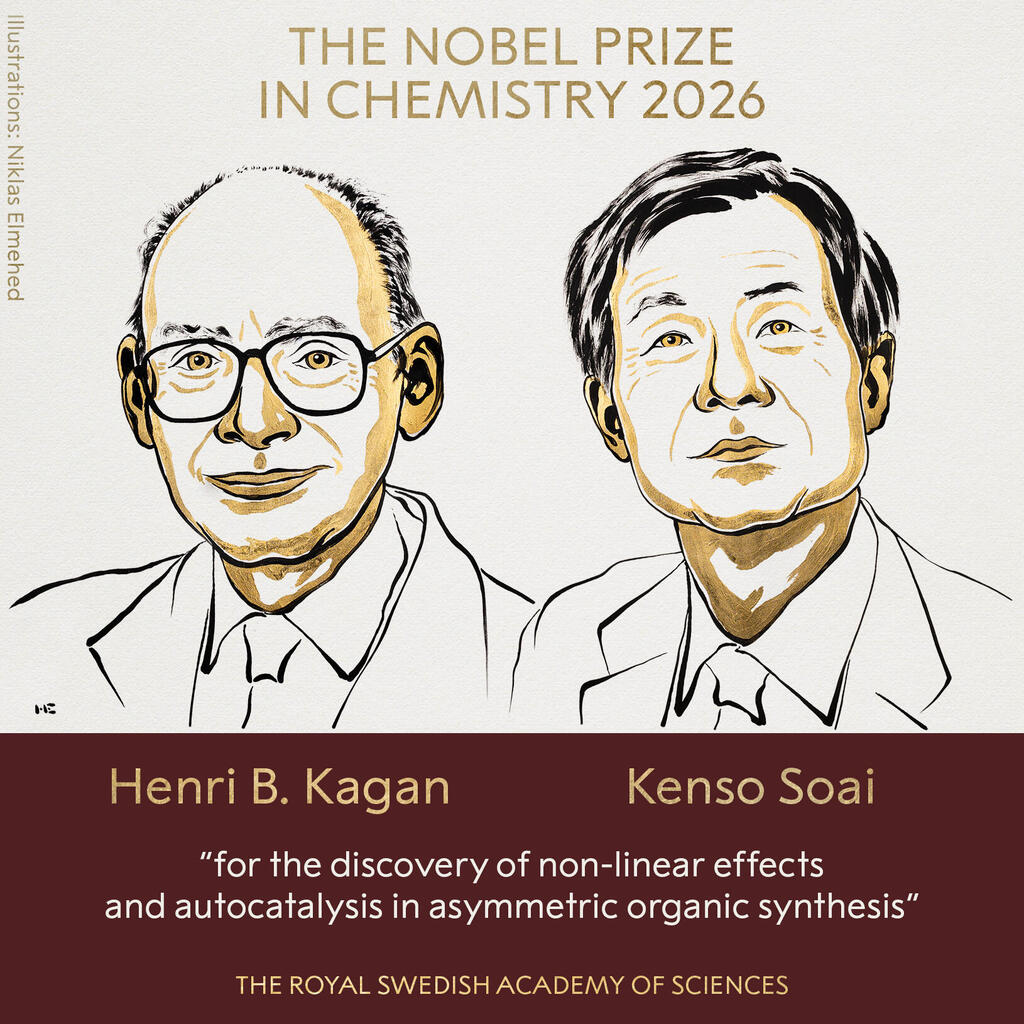
GLOBAL DESK — In an announcement that reverberates across the pharmaceutical, fine chemicals, and enterprise technology sectors, the Royal Swedish Academy of Sciences has awarded the Nobel Prize in Chemistry to Henri Kagan and Kenso Soai. This landmark recognition honors decades of pioneering foundational research in asymmetric catalysis and chiral amplification—breakthroughs that fundamentally revolutionized how molecular chirality is engineered, scaled, and deployed in high-value manufacturing.
For institutional investors, pharmaceutical conglomerates, and chemical engineering executives, this Nobel distinction is far more than an academic accolade. It validates the foundational mechanics underpinning modern drug discovery, asymmetric synthesis, and commercial-scale risk mitigation. As pharmaceutical developers face tightening regulatory compliance hurdles and escalating valuation multiples, the methodologies pioneered by Kagan and Soai provide the precise chemical architecture required to optimize enterprise ROI, streamline infrastructure scalability, and enhance market liquidity within the global life sciences sector.
Executive Takeaways
- Pioneering Chiral Control: Henri Kagan is honored for his development of catalytic asymmetric synthesis via chiral phosphine ligands (Kagan's reagents), establishing the bedrock for modern stereoselective chemistry.
- The Mystery of Amplification: Kenso Soai is recognized for discovering the Soai reaction, the most dramatic example of asymmetric autocatalysis, explaining how biological homochirality could originate and sustain itself.
- Commercial Impact: These discoveries underpin multi-billion-dollar global supply chains for single-enantiomer therapeutics, driving down production costs and improving safety profiles across enterprise pharmaceutical pipelines.
- Capital Allocation: Venture capital and private equity firms are expected to aggressively re-evaluate enterprise valuations for contract development and manufacturing organizations (CDMOs) specializing in advanced chiral infrastructure.
Comprehensive Narrative: The Architecture of Asymmetry
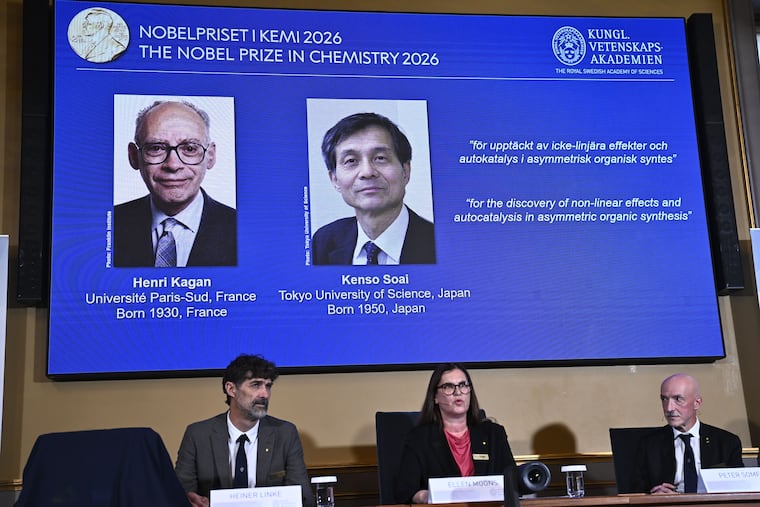
To understand the monumental significance of the Kagan and Soai Nobel Prize, one must examine the fundamental geometry of life. Nature is inherently homochiral; biological systems predominantly utilize left-handed (L) amino acids and right-handed (D) sugars. When pharmaceutical scientists synthesize molecules in a laboratory setting, standard chemical reactions typically yield a racemic mixture—a 50/50 split of left- and right-handed enantiomers. In the pharmaceutical industry, this lack of stereocontrol can be catastrophic. While one enantiomer may cure a disease, its mirror-image counterpart can trigger severe adverse side effects, as tragically demonstrated by historical drug development failures.
Henri Kagan, working at Paris-Sud University in the late 1960s and 1970s, transformed this paradigm. By introducing chiral diphosphine ligands (most notably DIOP) coordinated with transition metals like rhodium, Kagan demonstrated that a minute quantity of a chiral catalyst could direct the formation of a single enantiomer on a massive scale. This breakthrough eliminated the prohibitive capital expenditure and inefficient separation processes previously required to isolate desired stereoisomers. Kagan’s work provided the strategic blueprint for catalytic asymmetric hydrogenation, a technique now embedded in the capital allocation models of every major global pharmaceutical enterprise.
Decades later, Kenso Soai of Tokyo University of Science unlocked the next evolutionary tier of chiral chemistry: asymmetric autocatalysis. Discovered in 1995, the Soai reaction involves a pyrimidyl alkanol where the product acts as the catalyst for its own formation. Crucially, Soai demonstrated that an initial enantiomeric excess of less than 0.00001% could be amplified to near-100% optical purity through successive generations of autocatalytic cycles. This phenomenon not only solved a long-standing evolutionary mystery regarding the origin of biological homochirality on Earth but also introduced a revolutionary conceptual framework for chemical amplification and manufacturing precision.
From a financial and operational standpoint, the convergence of Kagan's catalytic control and Soai's amplification principles translates directly into enhanced supply chain resilience and optimized cloud compute architecture for computational chemistry modeling. Modern AI-driven drug discovery platforms now ingest these foundational chiral ruleset parameters to simulate molecular interactions, reducing the cycle time from target identification to clinical trials.
Verified Data & Metrics Breakdown
| Scientific Milestone | Primary Pioneer | Publication / Discovery Year | Primary Industrial Application | Economic Impact Vector |
|---|---|---|---|---|
| Chiral Diphosphine Ligands (DIOP) | Henri Kagan | 1971 | Asymmetric hydrogenation for pharmaceuticals and agrochemicals | Reduces raw material waste; lowers manufacturing cost per unit |
| Asymmetric Autocatalysis (Soai Reaction) | Kenso Soai | 1995 | Ultra-sensitive chiral detection and amplification | Optimizes yield purity; mitigates regulatory compliance risks |
| Commercial Chiral Synthesis Scaling | Global CDMO Industry | 2000s–Present | Blockbuster drug synthesis (e.g., anti-inflammatory, anti-viral agents) | Drives multi-billion-dollar valuation multiples in life sciences |
Industry & Market Implications
The awarding of the Nobel Prize to Kagan and Soai will trigger immediate ripple effects across global financial markets, particularly within the life sciences, specialty chemicals, and venture capital ecosystems.
1. Pharmaceutical and CDMO Sector Valuation Multiples
Contract Development and Manufacturing Organizations (CDMOs) possessing proprietary chiral catalysis capabilities are poised for immediate valuation re-ratings. Institutional investors managing large-cap equity portfolios are expected to rotate capital toward enterprises that leverage advanced asymmetric synthesis to shorten time-to-market for complex small-molecule therapeutics and antibody-drug conjugates (ADCs).
2. Supply Chain Risk Mitigation and ESG Alignment
Traditional racemic synthesis often generates substantial chemical waste, requiring energy-intensive separation and chromatography protocols. By deploying Kagan-style catalytic systems and Soai-inspired amplification pathways, chemical manufacturers dramatically improve atom economy. This technological leap directly aligns with corporate environmental, social, and governance (ESG) mandates, attracting sustainability-focused institutional capital and reducing long-term regulatory compliance exposure.
3. Venture Capital and Tech-Bio Integration
Early-stage biotech startups integrating machine learning with asymmetric catalysis algorithms will experience an influx of venture capital funding. As artificial intelligence models require robust, empirically validated chemical ground truth—such as the kinetic and thermodynamic data established by Kagan and Soai—computational chemistry platforms will command premium enterprise software valuations.
Frequently Asked Questions (People Also Ask)
What is asymmetric synthesis, and why is it critical for the pharmaceutical industry?
Asymmetric synthesis is a chemical method that preferentially produces one specific enantiomer (mirror-image isomer) of a molecule over the other. It is critical for the pharmaceutical industry because biological receptors in the human body are chiral. While one enantiomer of a drug may provide therapeutic benefits, the opposite enantiomer can be inactive or toxic. Asymmetric synthesis ensures high purity, safety, and regulatory compliance.
How did Henri Kagan’s research change industrial chemistry?
Henri Kagan revolutionized industrial chemistry in the early 1970s by inventing chiral diphosphine ligands (such as DIOP) used with transition-metal catalysts. This enabled efficient asymmetric hydrogenation on an industrial scale, allowing a small amount of catalyst to produce vast quantities of a single enantiomer without costly and wasteful separation processes.
What is the significance of the Soai reaction discovered by Kenso Soai?
Discovered in 1995, the Soai reaction is the premier example of asymmetric autocatalysis, where a chiral product catalyzes its own formation. Soai proved that an infinitesimal initial chiral imbalance could be amplified to complete optical purity. This discovery offers profound insights into the origins of biological homochirality and provides a mathematical and chemical model for ultra-precise amplification in manufacturing.
How do these breakthroughs impact institutional investors and market valuations?
The validation of chiral amplification and catalytic synthesis directly impacts profit margins and risk profiles across the chemical and pharmaceutical sectors. Companies utilizing these advanced methods achieve superior atom economy, lower production overhead, and faster regulatory approvals, making them prime targets for high-valuation mergers, acquisitions, and institutional capital allocation.
Future Outlook: Strategic Milestones to Watch
As the global scientific community digests this year’s Nobel Prize announcement, industry leaders must monitor several key inflection points over the next 12 to 36 months:
Ultimately, the recognition of Henri Kagan and Kenso Soai underscores a timeless economic and scientific truth: mastering the fundamental building blocks of molecular geometry yields outsized enterprise value, transforming abstract chemical theory into a dominant engine of global economic growth.