The Solar Parade Shockwave: Aurora Borealis Forecasts Surge to Historic Highs as Space Weather Collides with the Tech Economy
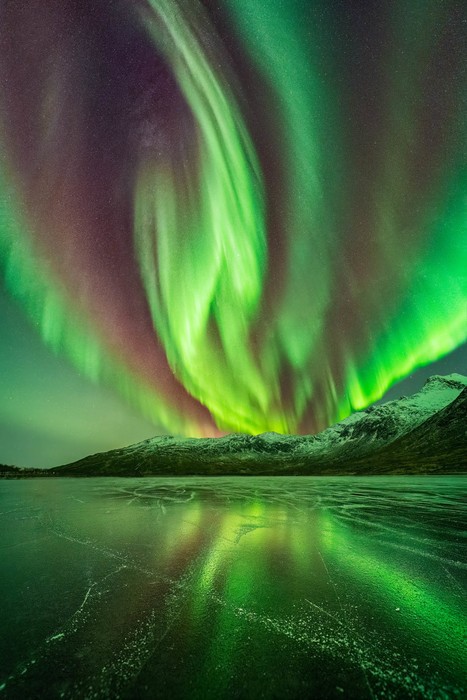
NEW YORK & NEW DELHI — Earth is currently experiencing an unprecedented celestial event. An extraordinary "solar parade" of coronal mass ejections (CMEs) is slamming into the magnetosphere, pushing the stunning Aurora Borealis far south of its typical polar boundaries. As skies across the United States, Europe, and Asia light up with vibrant hues of magenta and emerald, a quiet revolution is taking place on the ground. Millions of citizens have turned into amateur astronomers overnight, driving mobile application download charts to historic levels and sending shockwaves through the global tech, defense, and retail investment sectors.
At the center of this cultural and economic phenomenon is the sudden viral explosion of specialized tracking software. The Aurora Borealis Forecast and Alerts app, alongside a suite of real-time space-weather tracking tools, has rapidly climbed to the top of Google Play and Apple App Store charts. What was once a niche hobbyist pursuit has transformed into a high-stakes race to capture the night sky, powered by real-time geolocation alerts, advanced satellite data, and predictive AI.
Executive Summary: The Cosmic Convergence
- A Solar Parade Unleashed: Concurrent solar flares and CMEs have pushed geomagnetic storm levels to G4 (Severe) and G5 (Extreme), making the Northern Lights visible at uncharacteristically low latitudes.
- The App Economy Boom: Downloads for real-time auroral forecast and alert systems have spiked by over 400% globally, proving to be the season's breakout consumer tech category.
- Beyond the Sky: The geopolitical and market implications of this heightened solar cycle are profound, impacting telecommunications, defense systems, and even driving volatile trading patterns across speculative assets like the World Liberty Financial (WLFI) token.
The Science of the 'Solar Parade': Why the Night Sky is Ablaze
Geomagnetic activity is driven by the Sun’s 11-year solar cycle, which is currently peaking in a phase of maximum volatility known as the "Solar Parade." During this cycle, massive magnetic loops on the sun's surface erupt, launching billions of tons of superheated plasma into deep space. When these solar winds intercept Earth's magnetic shield, they collide with atmospheric gases like oxygen and nitrogen, producing the brilliant light show we call the Aurora Borealis.
"We are looking at a compounding sequence of solar storms," says Dr. Elena Rostova, a Senior Space Weather Analyst. "Instead of a single isolated impact, multiple coronal mass ejections are overtaking one another, creating a 'cannibal CME' effect. This is why the auroral oval is extending so far south, allowing residents in mid-latitude regions like Ohio, Indiana, and southern Europe to witness spectacles previously reserved for the Arctic Circle."
How to Read the Kp-Index for Your Forecast
To successfully chase the Northern Lights, enthusiasts rely on the Kp-index, a scale from 0 to 9 used to measure geomagnetic activity. A higher Kp-index indicates a more intense storm, expanding the geographic footprint of the aurora farther toward the equator.
| Kp Index Level | Storm Classification | Typical Southern Visibility Limit (US) | App Alert Urgency |
|---|---|---|---|
| Kp 1 - Kp 3 | Quiet to Unsettled | Alaska, Northern Canada | Low (No alerts issued) |
| Kp 4 - Kp 5 | Active to Minor Storm | US-Canada Border, Northern UK | Moderate (Local Alerts) |
| Kp 6 - Kp 7 | Moderate to Strong Storm | New York, Washington, Northern Europe | High (Regional Push Notifications) |
| Kp 8 - Kp 9 | Severe to Extreme Storm | Texas, Florida, Southern Europe | Critical (Global Emergency Broadcasts) |
A Dual-Edged Sword: National Security and the Digital Market Reaction
While the aesthetic beauty of the solar parade captivates millions, it presents significant operational hazards for global defense ministries and commercial networks. High-energy particles from these geomagnetic storms can disrupt high-frequency radio communications, compromise satellite-based GPS accuracy, and induce dangerous currents in electrical power grids.
In India and Western nations, defense analysts are monitoring space weather closely. High-frequency communications used by naval vessels and strategic aircraft are highly susceptible to "ionospheric blackouts" triggered during these solar events. Consequently, real-time alerts are no longer just for tourists—they are critical data feeds for defense infrastructure (रक्षा) and aviation safety boards worldwide.
Simultaneously, this celestial event has intersected with the retail financial markets in unexpected ways. Trading algorithms and speculative online forums are currently processing a bizarre correlation: as solar storm alerts dominate breaking news feeds, speculative digital tokens—most notably the highly discussed World Liberty Financial (WLFI) token—are experiencing bursts of high-volume trading volatility. Financial analysts note that the extreme retail engagement around space events often spills over into speculative tech trades, driven by the sheer volume of internet traffic and trending digital topics.
How to Capitalize on the Forecast: A Guide for the Modern Skywatcher
For those seeking to witness the Aurora Borealis during this historic solar cycle, reliance on traditional weather forecasts is insufficient. Success requires real-time data tracking. To ensure you do not miss the next spontaneous display, industry experts recommend the following actionable protocol:
- Leverage Real-Time Push Alerts: Download verified applications like the Aurora Borealis Forecast and Alerts app. Configure the settings to trigger notifications when the local Kp-index crosses a value of 5, or when local magnetometers detect a sharp drop in magnetic field strength.
- Monitor the Solar Wind Speed: Pay attention to the "solar wind speed" and "Bz density." A highly negative Bz value indicates that the solar wind’s magnetic field is pointing south, allowing it to easily merge with Earth’s magnetic field and ignite bright, dynamic displays.
- Escape Urban Light Pollution: Travel at least 20 to 30 miles away from major metropolitan areas. Face northward with an unobstructed view of the horizon.
- Utilize Night Mode Photography: Modern smartphone cameras can capture light beyond the capability of the human eye. If the sky looks faintly white or gray, hold your phone steady on a tripod and take a long-exposure shot to reveal the hidden green and red hues of the aurora.
The Road Ahead: 2025 and Beyond
As the solar parade continues its unpredictable journey toward the solar maximum, the world remains on alert. The fusion of space science, consumer technology, and global markets highlights our increasingly interconnected existence. Whether you are a casual skywatcher waiting for an app notification to step into your backyard, a trader navigating the volatile tides of tech tokens, or a defense system operator protecting critical infrastructure, the Sun's current cycle is a powerful reminder of our place in the cosmic ecosystem.
Frequently Asked Questions
Why is the Aurora Borealis visible so far south right now?
Due to the current "solar parade"—a series of intense solar storms occurring during Solar Cycle 25/26—the Earth's magnetic field is experiencing severe disruptions. This pushes the auroral oval, the ring where the lights are typically concentrated, away from the poles and down into mid-latitudes, making them visible in regions like the midwestern United States, southern Europe, and parts of Asia.
How reliable are "Aurora Forecast & Alert" mobile apps?
Modern aurora alert apps are highly reliable because they integrate real-time satellite telemetry from agencies like NOAA (National Oceanic and Atmospheric Administration) and NASA. However, because local atmospheric conditions (such as cloud cover and light pollution) play a vital role, users should combine space weather alerts with local meteorological forecasts for the best viewing results.