
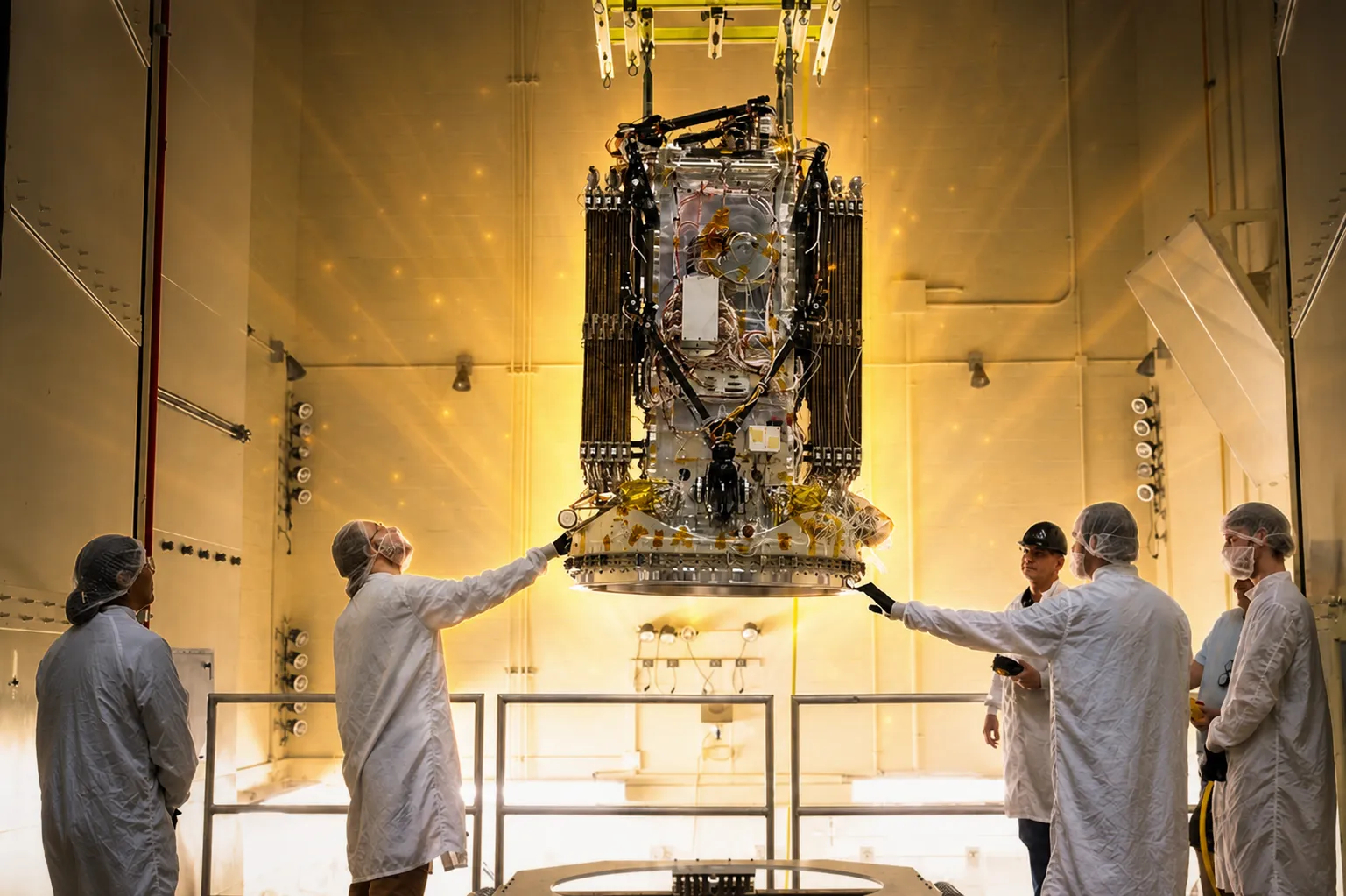
Executive Takeaways
- Imminent Re-entry: A retired NASA space telescope is rapidly decaying from orbit, with mission controllers projecting atmospheric interface within days.
- Quantifying Risk: While NASA’s Office of Safety and Mission Assurance estimates the risk of ground casualties at approximately 1-in-2,467, insurers and risk-management desks are reassessing liability frameworks.
- Infrastructure Scalability Crisis: The event underscores a broader systemic challenge regarding low-Earth orbit (LEO) congestion, regulatory compliance, and the capital allocation needed for active debris removal.
- Market Implications: Aerospace defense primes, commercial insurance syndicates, and space situational awareness (SSA) tech providers face shifting valuation multiples as regulatory scrutiny intensifies.
WASHINGTON — For decades, it scanned the cosmos in wavelengths invisible to the human eye, capturing data that reshaped astrophysical paradigms and challenged foundational models of stellar evolution. Today, that legacy hardware is executing its final, uncontrolled descent. As a retired NASA space telescope plunges unguided back toward Earth, global space agencies, aerospace executives, and risk-management strategists are confronting a stark reality: the era of benign neglect in orbital infrastructure management has officially closed.
Official statements from NASA and the Department of Defense’s U.S. Space Command maintain that the aggregate "risk of harm is unlikely," citing rigorous probabilistic modeling and the vast expanse of the planet's oceans. Yet, behind closed doors in Washington, London, and Zurich, capital allocators, aerospace underwriters, and regulatory compliance officers are running independent models. In an era where low-Earth orbit (LEO) represents a multi-billion-dollar commercial frontier supporting enterprise-grade telecommunications and Earth-observation networks, the fiery descent of an obsolete federal asset is more than a celestial spectacle—it is a stress test for modern infrastructure scalability and orbital governance.
The Anatomy of an Orbital Decay: From Frontier Science to Liability
Test Our Free AI & Tech Utilities Suite
Calculate LLM API token costs, analyze article dwell-time, or simulate tech DCA returns.
The trajectory of this impending re-entry has been decades in the making. Launched during an era when space debris mitigation standards were nascent, the telescope was designed for high-performance data acquisition rather than end-of-life disposal efficiency. Unlike modern constellations equipped with propulsion-driven decommissioning maneuvers or automated collision-avoidance systems, legacy assets rely entirely on natural atmospheric drag.
As solar activity fluctuates and Earth’s upper atmosphere expands and contracts in response to solar weather cycles, the orbital decay rate accelerates unpredictably. This creates a challenging operational environment for space situational awareness (SSA) providers. Predicting the exact window and footprint of a decaying spacecraft requires parsing complex variables, including thermospheric density, gravitational anomalies, and unpredictable solar flare outputs.
For aerospace engineers, the primary concern during atmospheric re-entry is not the spacecraft's total mass, but its thermal tolerance. Heavy refractory metals, reaction wheels forged from titanium, and optical components housed in beryllium structures frequently survive the extreme heating of re-entry—which can exceed 3,000 degrees Fahrenheit—and impact the Earth’s surface. While the statistical probability of these fragments striking populated infrastructure remains low, the potential legal and financial exposure for sovereign space agencies and commercial operators alike has forced a fundamental rethink of risk mitigation strategies.
Verified Data and Technical Specifications Breakdown
To contextualize the scale and trajectory of the decaying asset, the following table compiles key mission parameters, re-entry metrics, and risk assessments derived from public NASA disclosures and orbital tracking telemetry:
| Parameter | Mission Specification / Metric | Operational & Risk Implication |
|---|---|---|
| Spacecraft Mass | ~2,400 kg (approx. 5,300 lbs) | Sufficient mass to survive partial thermal ablation during re-entry. |
| Projected Casualty Risk | 1-in-2,467 (NASA Estimate) | Significantly exceeds historical NASA safety thresholds for controlled vs. uncontrolled re-entries, though deemed within acceptable policy margins by officials. |
| Primary Structural Survivors | Titanium tanks, beryllium mirrors, and steel reaction wheels | High-durability components most likely to reach the Earth's surface intact. |
| Orbital Inclination | Moderate-to-high inclination orbit | Ensures a wide geographic footprint for potential debris dispersion, spanning multiple continents. |
| Primary Oversight Agency | NASA Office of Safety and Mission Assurance / U.S. Space Command | Coordinates global tracking telemetry and inter-agency diplomatic notifications. |
Industry & Market Implications: Who Wins, Who Loses, and Economic Impact
The unguided plunge of a federal telescope is more than an astronomical event; it is a catalyst for economic restructuring across the space economy. As low-Earth orbit transitions from a government-dominated scientific domain to a hyper-commercialized digital highway, incidents of orbital decay directly impact valuation multiples, capital allocation, and risk management strategies across several key sectors:
- The Aerospace Insurance Syndicate: Commercial space insurers are currently recalibrating underwriting models. With thousands of defunct satellites and rocket bodies littering LEO, the expected value of collision and ground-impact liabilities is rising. Insurers are tightening policy language, demanding stricter end-of-life disposal protocols, and raising premiums across enterprise satellite portfolios.
- Space Situational Awareness (SSA) Providers: Companies specializing in orbital tracking, predictive modeling, and radar telemetry are experiencing a surge in demand. Enterprise customers and defense agencies are allocating capital toward high-precision tracking technologies to minimize blind spots during critical re-entry windows. Providers with advanced cloud compute architecture capable of processing real-time telemetry are capturing outsized market share.
- Defense Primes and Active Debris Removal (ADR) Startups: Traditional defense contractors and venture-backed ADR innovators stand to benefit from forthcoming regulatory mandates. As governments face public relations and legal fallout from uncontrolled re-entries, legislative bodies in Washington and Brussels are moving toward mandatory active de-orbiting capabilities for all new satellite licenses. This regulatory shift promises robust federal R&D spending and long-term procurement contracts for remediation technology.
- Global Telecom and Earth-Observation Operators: Commercial operators face increased scrutiny regarding regulatory compliance. The cost of capital for constellations that lack reliable propulsion or automated de-orbit mechanisms is climbing as institutional investors factor environmental, social, and governance (ESG)—specifically orbital sustainability—metrics into their valuation frameworks.
Frequently Asked Questions (People Also Ask)
What is the exact timeline for the telescope’s re-entry?
While exact re-entry windows fluctuate due to dynamic upper-atmosphere density changes driven by solar radiation, tracking agencies project the atmospheric interface to occur within a tight multi-day window. Precise pinpointing of the exact minute and latitude of impact typically becomes possible only hours before disintegration.
Where are the surviving debris fragments most likely to land?
Due to the orbital inclination of the spacecraft, potential debris footprints span a broad latitudinal band covering large portions of the globe. However, because approximately 71% of the Earth's surface is covered by oceans, and vast tracts of land are unpopulated or sparsely inhabited, statistical models overwhelmingly favor an ocean impact or a remote terrestrial landing.
Why didn’t NASA execute a controlled de-orbit maneuver?
The telescope was designed and launched decades ago, long before modern orbital debris mitigation guidelines mandated onboard propulsion systems capable of targeted de-orbiting. Furthermore, the spacecraft exhausted its primary operational propellant reserves years ago, leaving mission controllers with no fuel to actively steer the vehicle into a remote oceanic graveyard such as the South Pacific Ocean Uninhabited Area (Point Nemo).
How do insurance markets and governments handle damages if debris strikes private property?
Under international space law—specifically the 1972 Space Liability Convention—launching states bear absolute liability for damage caused by their space objects on the surface of the Earth or to aircraft in flight. If a fragment were to cause property damage or injury, diplomatic channels and sovereign claims tribunals would govern compensation, though domestic aerospace policies and federal appropriations would absorb the primary financial impact.
Future Outlook: Regulatory Milestones and Market Evolution to Watch
The impending splashdown or impact of NASA’s aging telescope serves as a warning shot for an industry approaching critical orbital density. Over the next twenty-four to thirty-six months, several pivotal milestones will dictate the commercial and regulatory trajectory of low-Earth orbit management:
- Federal Communications Commission (FCC) and FAA Enforcement: Watch for tighter federal enforcement of the FCC’s landmark "5-rule," which mandates that satellites in LEO be disposed of within five years of mission completion. Non-compliant operators face escalating licensing delays and potential fines.
- Venture Capital Flows into ADR: Expect accelerated M&A activity and venture capital deployment into active debris removal technologies, robotic capture mechanisms, and space tugs designed to service or de-orbit legacy dead satellites.
- International Treaty Modernization: Diplomatic pressure is mounting within the United Nations Committee on the Peaceful Uses of Outer Space (COPUOS) to update binding international norms regarding unguided re-entries, potentially holding sovereign states to stricter financial and operational accountability standards.
As this telescope completes its final, fiery loop around the planet, its descent will illuminate not just the night sky, but the urgent necessity of engineering a sustainable economic and operational framework for humanity's future in space.


