Executive Takeaways
- Commercial Inflection: For the first time in its history, Palantir Technologies generated more revenue from its domestic commercial division than its foundational US government sector, proving enterprise market adoption.
- Upgraded Guidance: Citing explosive demand for its Artificial Intelligence Platform (AIP), management raised its full-year revenue outlook, defying broader tech sector capital expenditure scrutiny.
- Valuation Multiples: The structural shift from a government-dependent defense contractor to a high-margin enterprise software titan has fundamentally recalibrated capital allocation and institutional investor sentiment.
- Infrastructure Scalability: The accelerated deployment cycles of AIP "bootcamps" have compressed enterprise sales funnels, driving down customer acquisition costs while maximizing infrastructure scalability.
NEW YORK & LONDON — In a watershed moment for Silicon Valley and defense-tech alike, Palantir Technologies has officially crossed a strategic Rubicon. For the first time since the company’s inception two decades ago, quarterly domestic commercial sales have outpaced its lucrative US government revenue. This structural realignment was unveiled alongside an upgraded full-year revenue outlook, sending shockwaves through Wall Street and forcing institutional portfolio managers to re-evaluate the firm's valuation multiples, risk mitigation models, and long-term enterprise software trajectory.
Long characterized by market critics as an elite, high-touch defense contractor overly reliant on federal intelligence contracts and Department of Defense appropriations, Palantir has executed one of the most aggressive and successful pivots in corporate history. The catalyst behind this transformation is the unprecedented market penetration of its Artificial Intelligence Platform (AIP), a suite designed to operationalize large language models securely within complex, data-siloed enterprise architectures.
The Genesis of a Pivot: From Dark-Site Analytics to Corporate Boardrooms
Test Our Free AI & Tech Utilities Suite
Calculate LLM API token costs, analyze article dwell-time, or simulate tech DCA returns.
Founded in 2003 with backing from CIA venture arm In-Q-Tel, Palantir spent its formative years building bespoke intelligence and counter-terrorism systems—platforms like Gotham and Foundry—for elite national security agencies. While these contracts yielded predictable, sticky revenue streams, they also exposed the company to cyclical federal budget stalemates, procurement bureaucracy, and severe top-line volatility tied to congressional appropriations bills.
The strategic blueprint to diversify into the Fortune 500 commercial sector faced initial skepticism. Financial analysts questioned whether bespoke, government-grade infrastructure scalability could successfully transition to commercial enterprise ROI metrics. However, the launch of AIP in 2023 changed the macroeconomic calculus. Instead of multi-year sales cycles, Palantir deployed its proprietary "AIP Bootcamp" methodology—interactive, hands-on workshops where prospective enterprise clients build live production applications using their own enterprise data in a matter of days.
This aggressive go-to-market strategy compressed enterprise sales funnels from quarters into days, driving exponential customer acquisition. As enterprise executives scrambled to find practical applications for generative AI beyond chat interfaces, Palantir’s ontology-driven architecture provided the exact regulatory compliance, data provenance, and security guardrails required by highly regulated industries such as healthcare, financial services, and heavy manufacturing.
Deconstructing the Financial Metrics and Capital Allocation
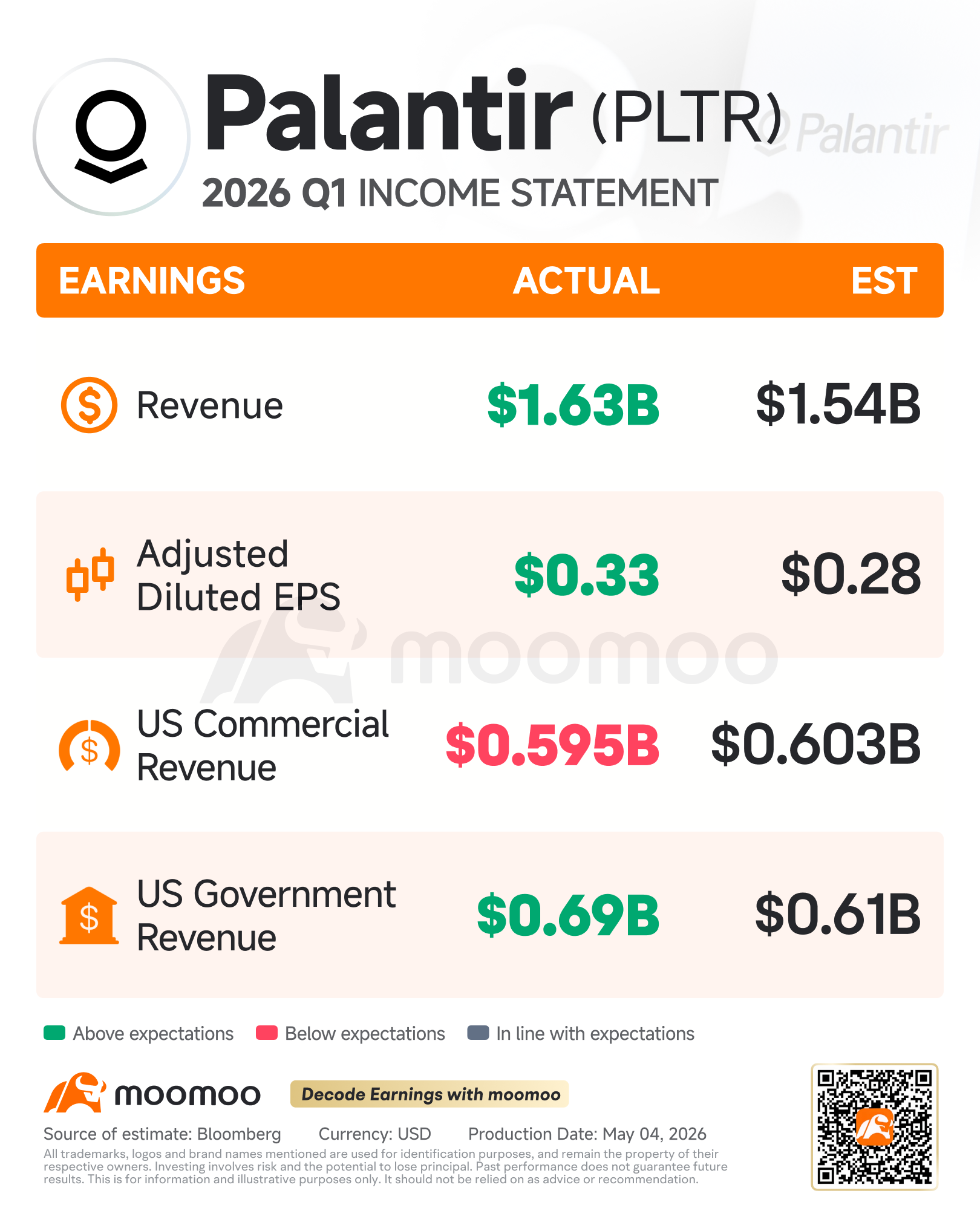
The financial implications of this commercial crossing are profound. By scaling its commercial footprint without a linear increase in headcount, Palantir has dramatically improved its operating margins and free cash flow generation. The latest fiscal disclosures confirm that US commercial customer count surged dramatically year-over-year, accompanied by an impressive net retention rate that underscores high stickiness across core accounts.
Institutional investors monitoring cloud compute architecture and software-as-a-service (SaaS) efficiency metrics have taken note. Palantir’s ability to command premium pricing while simultaneously lowering deployment friction has positioned the firm uniquely among mega-cap technology peers. Below is a comprehensive financial and operational breakdown highlighting this historic pivot.
| Metric / Indicator | Previous Baseline (Historical Avg) | Current Reported Period | Strategic Implication |
|---|---|---|---|
| US Revenue Mix (Commercial vs. Govt) | Government > 55% to 60% | US Commercial > US Government | Validates enterprise software thesis; diversifies federal budget risk. |
| Full-Year Revenue Outlook | Conservative / Inline with Guidance | Upgraded Across All Metrics | Reflects unyielding enterprise demand for AIP deployments. |
| Sales Cycle Velocity | 6 to 18 Months (Traditional Enterprise) | Days to Weeks (via AIP Bootcamps) | Drastically lowers customer acquisition costs (CAC). |
| Net Dollar Retention Rate | Consistent 110% – 115% | Accelerating in US Commercial | Existing enterprise clients expand usage into broader operating units. |
Industry & Market Implications: Winners, Losers, and Economic Shifts
The broader macroeconomic and competitive landscape is undergoing rapid consolidation as a direct result of Palantir’s commercial breakout. Legacy enterprise resource planning (ERP) providers and traditional cloud hyperscalers now face a formidable competitor that sits cleanly on top of existing database infrastructure, orchestrating workflows rather than merely storing data.
- The Winners: Enterprise buyers who have struggled to extract measurable ROI from experimental generative AI projects. Palantir’s ontology approach offers a deterministic execution layer that bridges chaotic unstructured data with enterprise business logic. Long-term institutional shareholders also reap the rewards of multiple expansion as Palantir transitions into a high-margin commercial titan.
- The Losers: Traditional IT consulting firms and legacy systems integrators whose business models relied on multi-year, multi-million-dollar custom integration projects. Palantir’s bootcamps demonstrate that complex data integration can be achieved autonomously in days, disintermediating traditional advisory gatekeepers.
- Macroeconomic Impact: This milestone signals to global capital markets that enterprise spending on artificial intelligence is shifting rapidly from proof-of-concept exploration to mission-critical operational deployment, setting a high benchmark for upcoming tech sector earnings reports.
Frequently Asked Questions (People Also Ask)
Why is Palantir’s US commercial revenue surpassing government revenue significant?
For over twenty years, Palantir was viewed primarily as a defense contractor dependent on federal intelligence and military budgets. Surpassing government sales with US commercial revenue proves that its enterprise software products—specifically Foundry and AIP—have achieved mainstream corporate adoption, opening a vastly larger addressable market and reducing exposure to federal budget impasses.
What drove the sudden acceleration in Palantir’s commercial sales?
The primary driver is the Artificial Intelligence Platform (AIP) and the company's innovative "bootcamp" sales model. Instead of relying on lengthy PowerPoint presentations and traditional sales pitches, Palantir brings prospective clients into hands-on workshops where they deploy live AI applications using their own corporate data within days, dramatically accelerating purchasing decisions.
How does this revenue shift impact Palantir's stock valuation and market liquidity?
Wall Street historically priced Palantir at a discount or premium based on lumpy government contract renewals. Transitioning to a predictable, high-growth commercial enterprise software model aligns Palantir with top-tier SaaS valuation multiples, enhancing institutional market liquidity and attracting mainstream growth-fund capital allocations.
Does the growth in commercial sales mean Palantir is pulling back from government contracts?
No. Palantir's government sector continues to grow in absolute dollar terms, maintaining its vital role in defense technology and national security infrastructure. The commercial division is simply growing at an accelerated velocity, allowing it to overtake the federal sector as the primary growth engine.
Future Outlook: Strategic Milestones to Watch
As Palantir digests its newfound status as a commercial-first enterprise titan, executive leadership faces both immense opportunity and rigorous scrutiny. The central challenge moving forward will be maintaining rapid deployment velocity while scaling international commercial markets to mirror its domestic success in the United States.
Key operational milestones for institutional investors to monitor over the next four quarters include international commercial conversion rates, the expansion of partner ecosystems (such as consulting alliances with major global system integrators), and sustained operating margin expansion as cloud compute architecture costs optimize. If Palantir can replicate its domestic commercial playbook across European and Asian enterprise markets, the current valuation re-rating may only be the prologue to an even larger structural market dominance.