Executive Takeaways
- Primordial Reservoir Confirmed: Geochemical analyses of ocean island basalts reveal pristine, unadulterated signatures of Earth's Hadean eon leaking upward from the liquid outer and solid inner core boundaries.
- Isotopic Smoking Gun: Ratios of Helium-3 to Helium-4, alongside heavy tungsten isotopes, provide undeniable proof that the deep Earth is not a chemically closed system, forcing a total rewrite of planetary thermal evolution models.
- Capital Allocation and Exploration Shifts: While primarily an academic breakthrough, deep-earth volatile tracking directly impacts risk mitigation for rare-earth element (REE) exploration, long-term resource valuation multiples, and next-generation seismic monitoring infrastructure.
- Thermodynamic Paradigm Shift: The revelation that the core is actively bleeding primordial heat and matter alters our understanding of planetary magnetic field longevity, core-mantle boundary dynamics, and long-term climate stability.
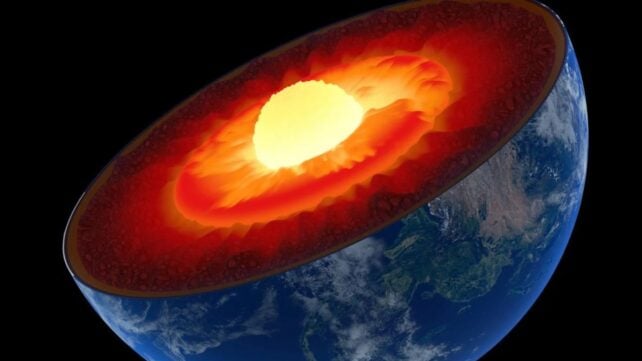
For decades, standard textbooks in geophysics and planetary science operated under a neat, tidy consensus: Earth was stratified shortly after its violent birth 4.5 billion years ago into distinct, chemically isolated layers—the crust, the mantle, and the core. The core, situated nearly 3,000 kilometers beneath our feet, was viewed as a titanic, hermetically sealed vault. Encasing iron, nickel, and trapped primordial remnants of the solar nebula, it was thought to interact with the mantle strictly through thermal conduction, driving plate tectonics and powering the geodynamo without actually swapping physical inventory.
That foundational certainty is now shattered. A growing body of empirical geochemical evidence spearheaded by international research teams utilizing high-precision mass spectrometry has confirmed what radical theorists long suspected: Earth’s core is leaking. Deep mantle plumes are dragging up pristine, unaltered chemical signatures from the planet's infancy. This discovery forces an immediate recalibration of our models regarding Earth's thermal engine, mantle convection cycles, and the fundamental geochemical inventory of our world.
The Hadean Echo: Unlocking the Vault of Deep-Earth Geochemistry
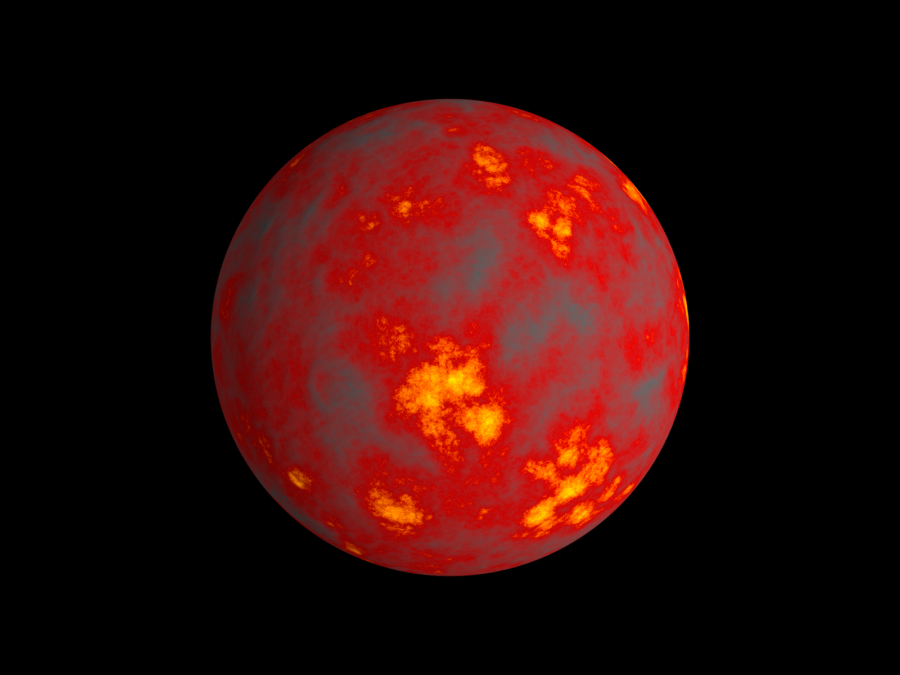
To understand the magnitude of this discovery, one must look to the Hadean eon—the hellish first 500 million years of Earth's existence. During this epoch, the infant planet was molten, bombarded by planetesimals, and subjected to extreme pressures and temperatures. Heavy elements like iron and nickel sank toward the center, dragging siderophile (iron-loving) elements down with them. Lighter silicates formed the mantle above.
Conventional geological models assumed that once this planetary sorting was complete, diffusion across the core-mantle boundary (CMB) was virtually nonexistent. However, geochemists studying rare basalt lavas erupted from deep-mantle plume hot spots—such as those beneath Iceland, Samoa, and the Galapagos Islands—detected isotopic anomalies that simply should not exist if the mantle had been thoroughly mixed and recycled over billions of years.
The smoking gun centers on noble gases, particularly the ratio of Helium-3 ($\text{^{3}He}$) to Helium-4 ($\text{^{4}He}$). Helium-3 is a primordial isotope left over from the formation of the solar system; Helium-4 is continuously generated by the radioactive decay of uranium and thorium within the crust and mantle. Because terrestrial crustal processes naturally scrub out pristine noble gases, any modern lava exhibiting an abnormally high $\text{^{3}He}/\text{^{4}He}$ ratio must be drawing from a deep, untouched reservoir. For years, scientists debated whether this reservoir resided in a sluggish, unmixed region of the lower mantle or deeper still. Recent breakthroughs isolating short-lived tungsten-182 ($\text{^{182}}\text{W}$) anomalies have closed the loop. Tungsten-182 is the daughter product of hafnium-182, an extinct radionuclide that decayed entirely within the first 50 million years of the solar system. Finding distinct tungsten isotopic variations in plume-fed basalts that match core-formation signatures proves beyond doubt that material is migrating upward across the core-mantle boundary.
Verified Data Metrics: Core vs. Mantle Isotopic Signatures
To contextualize the scale of this leakage, geophysicists rely on precise isotopic ratios measured in picomoles per gram. The following table contrasts the geochemical signatures of normal upper mantle material against the primordial leakage detected from the core-mantle boundary.
| Isotopic System / Metric | Normal Upper Mantle (Depleted) | Core-Leaked Plume Signature | Geological Significance |
|---|---|---|---|
| $\text{^{3}He}/\text{^{4}He}$ Ratio (R/Ra) | ~8 times atmospheric | Up to 50+ times atmospheric | Indicates an undegassed, primordial volatile reservoir. |
| Tungsten-182 Excess ($\mu\text{^{182}W}$) | Zero to slight positive deviation | Measurable negative anomaly | Reflects early core-mantle metal-silicate equilibration. |
| Platinum-Group Elements | Highly depleted due to crustal filtering | Elevated siderophile concentrations | Direct chemical fingerprint of core alloy leakage. |
| Estimated Boundary Heat Flux | Standard conductive baseline | Spatially variable, high thermal plumes | Drives convective instabilities in the lower mantle. |
Industry & Market Implications: Risk Mitigation, Valuation, and Resource Exploration
While this discovery originates in pure academic geoscience, the commercial and economic ripple effects are profound. For enterprise resource corporations, mining conglomerates, and energy majors engaged in deep-earth exploration and risk mitigation, understanding mantle dynamics is far from an esoteric exercise.
1. Resource Exploration and Capital Allocation
Major mining firms and venture capital syndicates allocate billions of dollars annually toward identifying primary deposits of platinum-group elements (PGEs), rare-earth elements, and deep volatile resources. The confirmation that the core-mantle boundary is chemically active provides new predictive modeling frameworks for deep mantle plumes. These plumes act as geological conveyor belts, transporting material from thousands of kilometers deep into the lithosphere. Prospecting models that integrate core-leakage tracking offer higher valuation multiples on exploratory assets by pinpointing high-probability zones for deep-seated mineral enrichment.
2. Seismic Monitoring and Infrastructure Scalability
As governments and global telecommunications infrastructure providers invest in robust seismic monitoring networks for risk mitigation against earthquakes and tsunamis, understanding the thermal-mechanical state of the lower mantle becomes paramount. Core leakage implies that chemical reactions—potentially involving hydrogen, carbon, and silicon—are actively altering the viscosity and density of the D'' layer (the seismic discontinuity just above the core). Integrating these variables into cloud compute architecture running global seismic simulation models improves predictive accuracy for catastrophic geological events.
3. Regulatory Compliance and Carbon Accounting
Long-term climate models and deep carbon cycle budgets rely heavily on estimates of volatile outgassing from Earth's interior. Recognizing that the core acts as a persistent reservoir of primordial volatiles alters long-term carbon accounting equations. While anthropogenic emissions remain the dominant driver of near-term climate change, macroeconomic energy frameworks and environmental, social, and governance (ESG) compliance models must account for deep-earth degassing baselines when projecting multi-century planetary stabilization.
Frequently Asked Questions (People Also Ask)
1. Is the leaking core material dangerous to human life on the surface?
Answer: Absolutely not. The materials leaking from Earth's core are dispersed over hundreds of millions of years and heavily diluted as they travel upward through thousands of kilometers of mantle rock via slow-moving plumes. By the time these chemical traces reach the surface via volcanic activity (such as ocean island basalts), they are integrated into normal rock and gas compositions.
2. How do scientists know the material comes from the core and not just a deep, unmixed mantle layer?
Answer: The definitive proof relies on tungsten-182 isotopes. Tungsten-182 is formed exclusively by the radioactive decay of hafnium-182, an isotope that completely decayed away within the first 50 million years of the solar system's history. Because hafnium enters silicate rocks while tungsten partitions into molten iron, the core and mantle developed distinct tungsten signatures very early on. Modern basalts carrying these specific tungsten isotope anomalies match theoretical core compositions, ruling out a simple mantle origin.
3. Does this core leakage mean Earth is running out of material at its center? Will the core eventually empty out?
Answer: No. The volume of material leaking from the core is infinitesimally small compared to the titanic mass of the core itself (which accounts for roughly one-third of Earth's total mass). The core contains immense reserves of iron, nickel, and trapped volatiles. While this leakage reshapes our scientific models, it poses zero threat to the stability or longevity of Earth's core.
4. How does this discovery affect our understanding of Earth's magnetic field?
Answer: The geodynamo—the convection of liquid iron in the outer core that generates Earth's protective magnetic field—is driven by thermal and compositional buoyancy. Discovering that matter is actively crossing the core-mantle boundary provides crucial boundary conditions for fluid dynamics simulations. It helps researchers understand how heat escapes the core, shedding light on the long-term stability and historical fluctuations of Earth's magnetic shield.
Future Outlook: Milestones and the Next Frontier in Ge geophysics
As the scientific community digests the empirical reality of a leaking core, research priorities are shifting rapidly toward high-resolution seismic tomography and extreme high-pressure laboratory experiments. Key milestones to watch over the next decade include:
- Advanced Neutrino Geophysics: The expansion of geoneutrino detectors (such as KamLAND in Japan and Borexino in Italy) to map radioactive decay isotopes within the deep mantle and core interface with unprecedented precision.
- Diamond Anvil Cell Breakthroughs: Replicating the extreme pressures and temperatures of the core-mantle boundary (exceeding 135 gigapascals and 4,000 Kelvin) to observe direct chemical reactions between liquid iron alloys and mantle silicates in real-time.
- Global Seismic Array Densification: Deployment of next-generation ocean-bottom seismometers to map the structural topography of the D'' layer, identifying exact conduits where core plumes breach the lower mantle.
Ultimately, the confirmation that Earth's core is leaking ancient matter transforms our perception of our home planet. Earth is not a static, finished machine whose parts operate in isolation. It is a dynamic, evolving, and interconnected thermodynamic system where the deepest, most inaccessible realms continue to whisper secrets from the dawn of creation.