
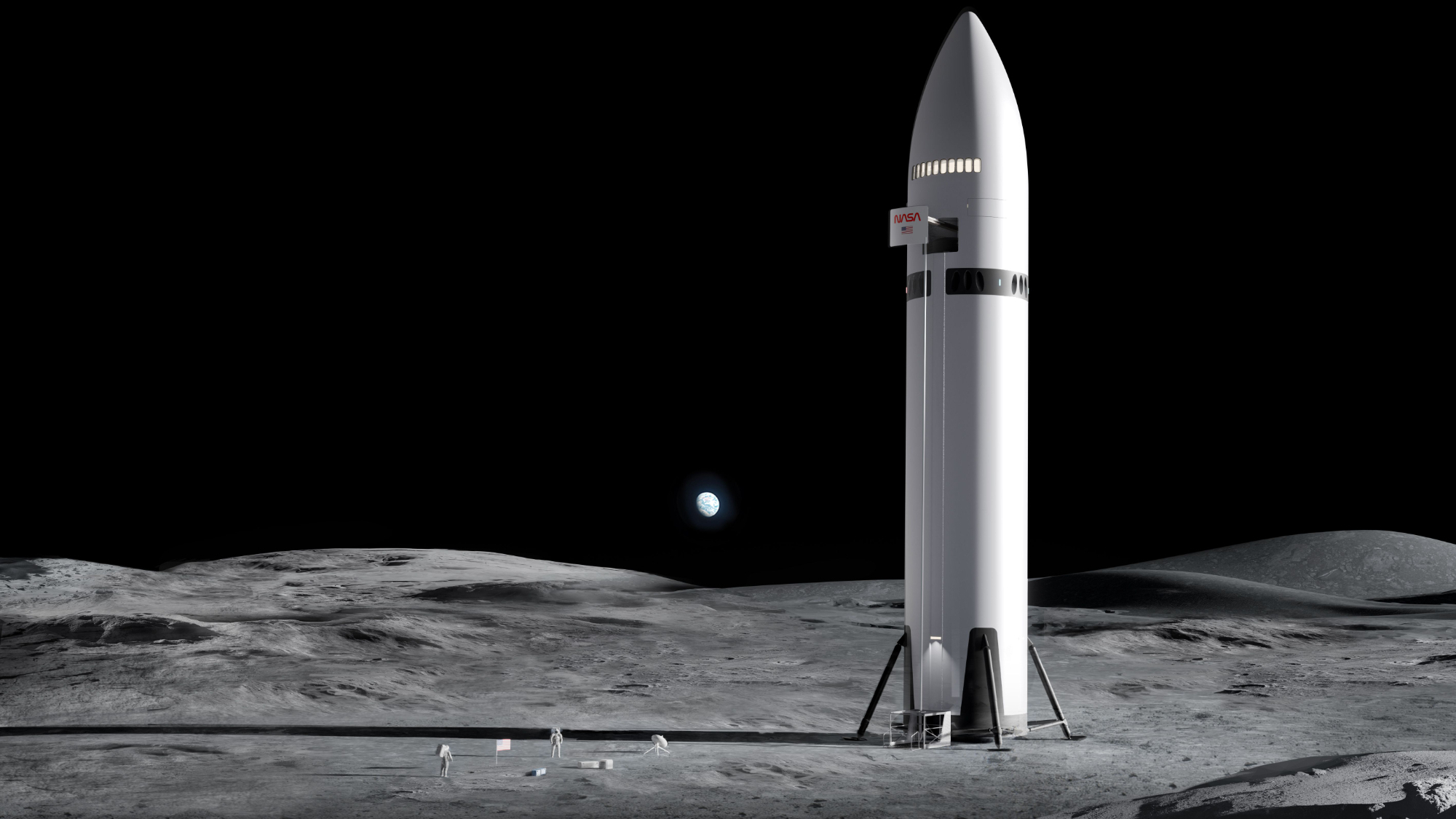
Inside SpaceX’s Bold Bid to Save NASA’s Moon Mission: A Radical ‘Simplified’ Starship Proposed to Beat China
WASHINGTON — October 30, 2025 — Under mounting pressure to deliver on the United States’ historic return to the lunar surface before the end of the decade, Elon Musk’s SpaceX has formally proposed a dramatic tactical pivot. In an official update released today, SpaceX confirmed it is actively assessing a "simplified" version of its Starship Human Landing System (HLS) for the pioneering Artemis 3 mission. The objective is clear: slash engineering complexity, bypass orbital propellant bottlenecks, and guarantee American astronauts walk on the Moon before a fast-moving Chinese space program can claim the ultimate geopolitical prize.
With NASA’s current schedule under heavy scrutiny from Congress and federal watchdogs, the proposal represents a high-stakes compromise between raw technical capability and temporal urgency. By stripping down the initial mission profile, SpaceX believes it can accelerate its timelines, offering NASA a highly viable insurance policy against crippling delays.
Executive Summary: The SpaceX Artemis Pivot
- The Core Proposal: SpaceX has formally submitted and is assessing a "simplified" Starship lander configuration designed to minimize the number of critical orbital refueling flights required before departing for lunar orbit.
- The Temporal Urgency: While Artemis 3 is officially scheduled for late 2026, independent auditors have repeatedly warned of slips into 2028 or later. This proposal aims to pull the timeline back toward the original target.
- The Refueling Bottleneck: The standard Starship HLS profile relies on upwards of ten to twenty "tanker" flights in Low Earth Orbit (LEO) to transfer cryogenic liquid oxygen and methane. The simplified version aims to radically compress this launch cadence.
- Geopolitical Stakes: As Beijing aggressively targets a 2030 manned lunar landing, Washington views any delay to Artemis 3 as a significant strategic risk to American space dominance.
The Engineering Trade-Off: How a 'Simplified' Starship Works

The primary hurdle facing the baseline Starship HLS is not the landing on the Moon itself, but the massive logistics chain required to get it out of Earth’s orbit. In its original configuration, Starship requires a fleet of tanker variants to launch in rapid succession, transferring super-chilled propellants to a central depot in Low Earth Orbit. This unprecedented orbital dance must happen quickly to avoid "boil-off"—the gradual loss of cryogenic fuel over time.
The "simplified" proposal seeks to bypass a significant portion of this logistical nightmare. While specific technical blueprints remain proprietary, industry insiders suggest the simplified Starship HLS will feature a reduced dry mass, a scaled-back life support system optimized for a shorter surface stay, and fewer redundant cargo bays.
By decreasing the weight of the lander, SpaceX can drastically cut down the volume of propellant required for the lunar transit. In turn, the number of Super Heavy tanker launches drops from the double digits down to a much more manageable single-digit cadence. This reduction in launch frequency significantly lowers the statistical risk of flight anomalies and schedule slips, offering a streamlined path to flight readiness.
Comparing the Flight Profiles: Standard vs. Simplified HLS
To understand the strategic shift SpaceX is proposing, it is essential to analyze the operational trade-offs between the two mission profiles:
| Mission Parameter | Standard Starship HLS (Original Plan) | Proposed "Simplified" Starship HLS |
|---|---|---|
| LEO Refueling Launches | Estimated 10 to 20 flights | Targeting single-digit flights (estimated 5 to 8) |
| Lunar Surface Stay Duration | Up to 14 days (full lunar day) | Shortened stay (approximately 2 to 4 days) |
| Payload & Scientific Cargo | Maximum capacity for heavy scientific gear | Optimized, lighter payload configuration |
| Propellant Boil-Off Risk | High (extended orbital storage window) | Low to Medium (accelerated launch-to-departure window) |
| Estimated Timeline Readiness | 2028 or later (per GAO estimates) | Targeting late 2026 to mid-2027 |
Why the Pivot Matters: The Geopolitical and Financial Imperative
For NASA, the "simplified" Starship proposal is a double-edged sword. On one hand, the agency has historically favored robust, highly redundant systems capable of maximizing scientific output. On the other hand, the agency is facing a bleak geopolitical reality. The China National Space Administration (CNSA) is moving forward with clinical efficiency, systematically testing its own lunar hardware and landing systems with an eye on 2030.
If the United States falls behind its current schedule, it risks losing the race to establish the international norms, commercial standards, and legal frameworks for the extraction of lunar resources. This is not just a scientific mission; it is a territorial and regulatory positioning battle for the 21st-century space economy.
Financially, the stakes are equally high for SpaceX. Under the firm-fixed-price Milestone Payment contract awarded by NASA under the NextSTEP-2 Appendix H program, SpaceX only receives payments upon meeting specific development thresholds. Prolonged delays in mastering orbital cryogenic refueling could strain the program’s capital efficiency. By executing a simplified mission first, SpaceX can secure a monumental historical victory, unlock critical milestone payments, and subsequently iterate toward the fully realized, heavy-payload version of Starship for later Artemis flights.
The Road Ahead: Next Steps for SpaceX and NASA
The formal assessment of this simplified mission architecture is currently underway within NASA's Exploration Systems Development Mission Directorate. For the plan to succeed, SpaceX must demonstrate that the simplified lander still meets NASA’s stringent safety standards for human spaceflight, particularly regarding life support redundancy and emergency abort capabilities.
Concurrently, SpaceX is continuing its rapid prototyping and launch cadence from Starbase in Boca Chica, Texas. The upcoming Integrated Flight Tests (IFT) will serve as the ultimate proving ground for the hot-staging techniques, rapid booster catch mechanics, and thermal protection systems required to make any version of Starship—simplified or not—a flight-proven reality.
Frequently Asked Questions
Does this mean the original, larger Starship concept is being abandoned?
No. The "simplified" Starship is a tactical bridge designed specifically to accelerate the timeline for the Artemis 3 mission. SpaceX and NASA still plan to utilize the fully capable, heavy-payload Starship configuration for subsequent, longer-duration missions (such as Artemis 4 and 5) that will build the permanent lunar Gateway and base camps.
How does this change affect the safety of the astronauts?
NASA will not compromise on its core loss-of-crew (LOC) safety metrics. While the simplified version will have less scientific payload capability and a shorter lunar stay, it will maintain all critical safety systems. In fact, reducing the complexity of the orbital refueling phase inherently removes several high-risk operational steps, which could theoretically make the initial mission safer.


