State of American Democracy Hits Historic Low: Plunging Institutional Trust Collides With Shaky Economic Gains
WASHINGTON — Public confidence in the structural integrity and operational health of United States democratic institutions has dropped to its lowest level on record, according to an expansive multi-index assessment released this week. The findings portray a nation caught in a volatile paradox: while top-line economic indicators from 2025 demonstrated modest declines in poverty and slight upticks in median family income, civic fabric indicators and institutional credibility are deteriorating at an accelerating pace.
The report, compiled from cross-partisan governance research, academic indices, and nationwide voter sentiment surveys, warns that democratic resilience is being severely tested by hyper-polarization, legal brinkmanship over executive powers, and deep cynicism regarding judicial neutrality. At the same time, the fragile economic stability achieved by working families faces immediate peril from impending social safety net retrenchments, creating fertile ground for further socio-political volatility.
Executive Summary: A System Under Compounding Strain
The diagnosis from researchers and policy analysts highlights systemic friction spanning federal, state, and grassroots civic layers. Key takeaways include:
- Unprecedented Deficit in Civic Faith: Fewer than 19% of surveyed Americans express robust confidence in the operational efficacy of the federal government, marking a historic trough across five decades of longitudinal tracking.
- Judicial and Constitutional Headwinds: A succession of emergency judicial interventions—including recent high-profile federal injunctions halting aggressive administrative overhauls—has intensified charges of institutional overreach from both sides of the aisle.
- The Safety Net Cliff: While national census and economic data revealed that real family incomes rose and baseline poverty dropped marginally in 2025, researchers emphasize that impending cuts to entitlement and nutritional programs threaten to erase those gains instantaneously.
- Visual Indicators of Distress: Civic organizations and municipal infrastructure are absorbing the fallout; hubs like the Los Angeles Regional Food Bank are logging unprecedented lines for basic provisions despite macro-level employment data appearing resilient.
The Anatomy of Institutional Decline
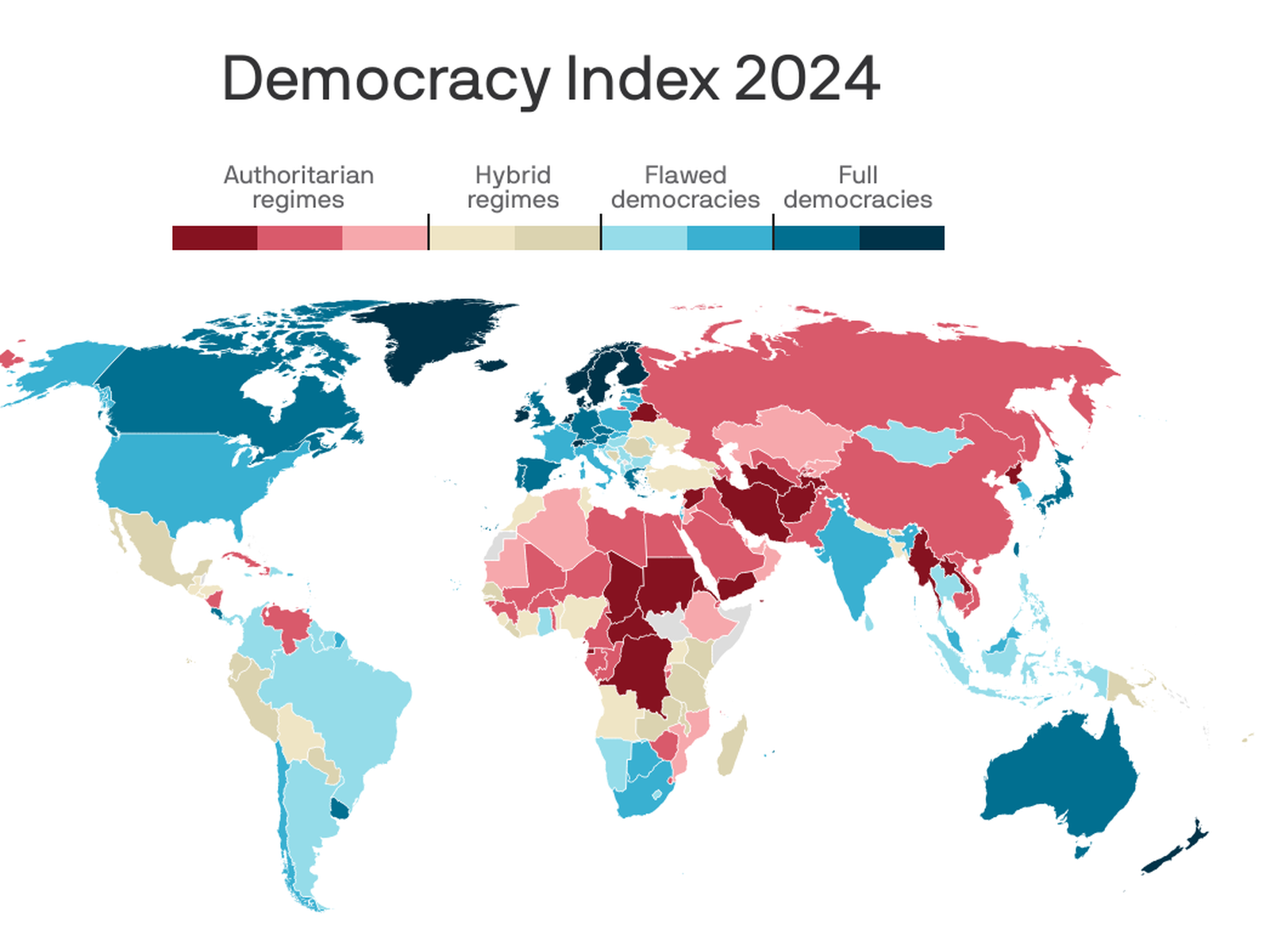
The report measures democratic viability across four core pillars: electoral administration, judicial credibility, administrative checks and balances, and civic participation. Every individual metric registered a downward trajectory over the trailing 12-month period, driven largely by partisan combat over the rule of law and election certification protocols.
Legal battles have moved to the center of governance. Federal judges have repeatedly been forced to act as emergency arbiters over executive directives regarding civil service restructuring, regulatory enforcement, and public expenditure allocations. While legal analysts view judicial injunctions as evidence that institutional guardrails are holding, public perception increasingly frames the bench through a hyper-partisan prism, further eroding the legitimacy of the rule of law.
“We are witnessing a profound decoupling between formal statutory checks and the public’s belief in those checks,” noted Dr. Elena Vance, Senior Fellow in Democratic Governance at the Center for Public Policy Analysis. “When every regulatory enforcement or court ruling is received purely as an act of political warfare, the baseline social compact that sustains a constitutional republic begins to liquidate.”
The Socioeconomic Paradox: Fragile Prosperity and Rising Need
The deterioration in democratic cohesion cannot be analyzed in a vacuum away from kitchen-table economics. A significant portion of the report explores the nexus between institutional instability and resource security. On paper, macroeconomic performance in 2025 delivered surprising durability: aggregate poverty rates receded, assisted by persistent labor market tightness, and median household income posted modest inflation-adjusted improvements.
However, analysts caution that these top-line achievements sit on precarious footings. Proposed and enacted statutory rollbacks to federal assistance programs—ranging from nutritional support to community healthcare subsidies—risk destabilizing millions of vulnerable households. In metropolitan epicenters nationwide, civil society is already buckling under the weight of the transition.
At distribution points organized by the Los Angeles Regional Food Bank, volunteers and administrators report lines stretching across city blocks for basic grocery allocations. The juxtaposition of falling national poverty figures alongside record lines at food distribution hubs underscores a glaring divergence between aggregate economic metrics and lived financial vulnerability. When basic material security feels fleeting, public willingness to invest trust in democratic processes plummets.
Democratic Health & Economic Indicators: A Five-Year Comparison
The convergence of civic decay and economic fragility is illustrated in the cross-sector data tracking key indicators over the past half-decade:
| Metric / Indicator | 2021 Benchmark | 2023 Midpoint | Current Reality | Institutional Risk Profile |
|---|---|---|---|---|
| Public Trust in Federal Institutions | 24% | 22% | 18% | Critical (Historic Low) |
| Judicial Impartiality Index (0–100) | 62 | 54 | 46 | High Alert (Erosion of Compliance) |
| Official Poverty Rate | 11.6% | 11.5% | 11.1% | Moderate (Gains at Risk) |
| Metropolitan Food Insecurity Demand | Baseline | +14% | +28% | Severe Strain on Non-Profits |
| Partisan Polarization Deficit | Elevated | Acute | Severe | Systemic Gridlock Threat |
Capital Markets and the Political Risk Premium
For decades, international institutional investors and Wall Street allocators viewed American political risk as an oxymoron, assigning an implicit “stability premium” to U.S. sovereign debt and corporate equity. That assumption is facing sustained revision. Credit rating agencies and risk consultancies have flagged domestic governance friction, repeated debt ceiling confrontations, and institutional unpredictability as chronic headwinds to long-term sovereign creditworthiness.
Corporate boardrooms are similarly adjusting their strategic planning. Executives increasingly cite regulatory volatility, sudden policy swings triggered by administrative decree, and civil polarization as operational liabilities. As legal battles continue to stall regulatory execution, corporate capital expenditure faces prolonged cycles of uncertainty, dampening the productive capacity of the broader economy.
Outlook: Navigating the Civic Deficit
The path forward requires addressing both institutional governance and economic vulnerability in tandem. Experts warn that cosmetic reforms will do little to reverse deep-seated disillusionment if large swathes of the population continue to feel that democratic structures fail to protect their economic interests or represent their civic voices.
As state and federal legislatures gear up for contentious budget negotiations and programmatic reauthorizations, the stability of the American system hinges on whether institutions can deliver tangible, equitable results before public frustration permanently fractures the democratic framework.
Frequently Asked Questions
Why does the report link democratic health directly to social safety net programs?
Modern democratic stability is deeply tethered to economic security. When citizens experience material volatility—such as losing access to nutrition or healthcare assistance—their faith in the prevailing political order erodes rapidly. Economic desperation exacerbates political polarization and fuels anti-institutional sentiment, making systemic stability impossible to maintain through legal statutes alone.
What specific factors caused public trust in U.S. institutions to hit a new low?
The decline is driven by an accumulation of compounding factors: persistent political combat surrounding the legitimacy of elections and oversight bodies, frequent emergency court rulings that politicize the federal judiciary, policy whiplash between administrations, and a widening perception that government institutions are unresponsive to the practical challenges of everyday citizens.