Executive Takeaways
- Market Reaction: Major U.S. stock futures dropped sharply overnight following unexpected Democratic majorities in the midterm elections, directly disrupting high-flying tech valuations.
- The Core Catalyst: Wall Street traders are aggressively repricing risk, betting that a newly empowered Democratic caucus will impose strict environmental regulations, transmission caps, and power-consumption penalties on the booming hyperscale data center sector.
- Sector Impact: Infrastructure REITs, electric utilities powering AI clusters, and semiconductor giants face immediate capital allocation headwinds and compressed valuation multiples.
- Strategic Pivot: Institutional investors are rapidly shifting portfolio strategies toward defensive risk mitigation, questioning the near-term enterprise ROI of massive generative AI capital expenditures.
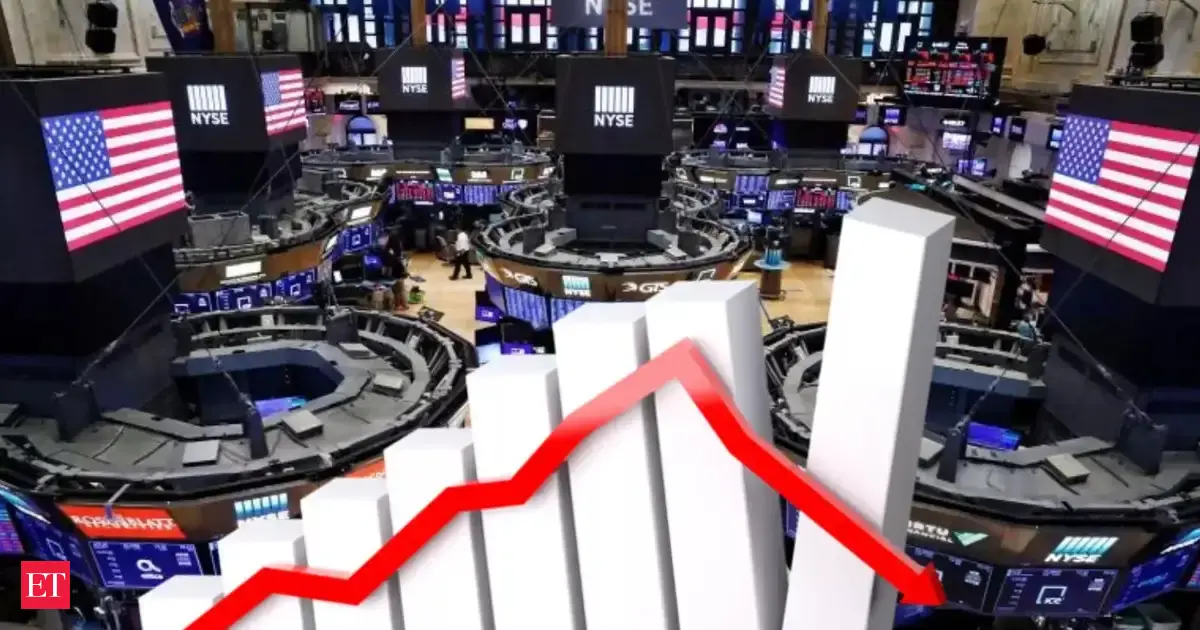
NEW YORK — Wall Street awoke to a shifting political and economic landscape this morning as futures tied to the Dow Jones Industrial Average, S&P 500, and Nasdaq Composite tumbled in pre-market trading. The sudden market downdraft was catalyzed by a decisive midterm election outcome that saw Democrats secure critical legislative majorities. While broader political shifts routinely trigger market adjustments, this sell-off is concentrated with laser-like precision on a single, highly lucrative engine of the recent bull market: the exponential, capital-intensive buildout of hyperscale data centers driving the artificial intelligence revolution.
For the past eighteen months, institutional capital allocation has favored technology infrastructure with religious fervor. Big Tech firms—spanning cloud compute architects, semiconductor manufacturers, and specialized real estate investment trusts (REITs)—enjoyed soaring valuation multiples as they poured billions into artificial intelligence compute clusters. However, the unexpected political shift has abruptly altered the regulatory horizon. Traders on international desks and domestic trading floors are now aggressively pricing in the likelihood of legislative gridlock, strict carbon-intensity mandates, local zoning pushback, and federal restrictions on grid access designed to protect residential ratepayers from surging electricity costs.
The Catalytic Shift: How Election Results Collided with Big Tech Infrastructure
Test Our Free AI & Tech Utilities Suite
Calculate LLM API token costs, analyze article dwell-time, or simulate tech DCA returns.
The intersection of politics and infrastructure scalability has rarely been so volatile. Over the previous legislative cycle, the rapid deployment of liquid-cooled data centers across Northern Virginia, Texas, Ohio, and Oregon triggered intense local friction. Communities grappled with soaring municipal water usage, acoustic pollution from industrial-grade chillers, and unprecedented demands on regional power transmission lines. During the campaign cycle, progressive candidates increasingly seized on these local flashpoints, framing the hyperscale data center boom as an existential threat to grid stability and climate-emissions targets.
With Democrats outperforming historical mid-term trends and capturing legislative leverage, institutional desks immediately recalibrated their baseline assumptions regarding regulatory compliance. The market consensus shifted from an era of deregulation and unfettered energy consumption to an environment defined by stringent environmental reviews, federal energy-efficiency standards, and potential surcharges on heavy power users. For cloud service providers operating on razor-thin margins, any federally mandated slowdown in data center deployment threatens to upend complex enterprise ROI models.
Furthermore, Wall Street’s quantitative analysts point out that the sell-off is not merely about environmental oversight; it touches directly on market liquidity and capital expenditure amortization. When institutional portfolio managers evaluate cloud compute architecture, speed-to-market is treated as a primary variable. If zoning boards, environmental protection agencies, and federal energy regulators introduce multi-year bureaucratic friction into the site-selection and permitting process, the depreciation schedules and revenue generation timelines of multi-billion-dollar campuses are severely compromised.
Verified Data & Metrics Breakdown: Market Impact and Infrastructure Exposure

To understand the depth of the current market correction, institutional investors are closely analyzing the quantitative exposure of key sectors linked directly to the data center value chain. The table below outlines the pre-market financial shift across critical market segments.
| Sector / Asset Class | Pre-Market Futures Shift | Primary Regulatory Risk Factor | Valuation Multiple Impact |
|---|---|---|---|
| Hyperscale Cloud Providers | -2.4% to -3.8% | Federal energy caps, carbon emission taxes on compute power. | Compression of forward P/E multiples by 3–5 points. |
| Independent Power Producers (IPPs) | -1.8% to -2.9% | Scrutiny over behind-the-meter nuclear and fossil-fuel power purchase agreements (PPAs). | Re-pricing of long-term contracted cash flows. |
| Data Center REITs | -4.1% to -5.6% | Zoning delays, water-usage restrictions, local transmission tariffs. | Discount to net asset value (NAV) widening significantly. |
| Semiconductor & Cooling Hardware | -3.0% to -4.5% | Softening enterprise demand due to delayed campus completions. | Earnings per share (EPS) downward revisions for upcoming quarters. |
Industry & Market Implications: Winners, Losers, and Economic Realities
The structural adjustment rippling across the equity markets highlights a profound divergence in economic winners and losers. While capital-intensive tech infrastructure names face immediate headwinds, defensive sectors and traditional energy market participants are seeing a different dynamic unfold.
The Losers: Big Tech CapEx and Infrastructure Developers
The primary casualties of the Democratic midterm surge are the engineering firms, real estate developers, and utility-scale contractors who built their multi-year revenue pipelines on the assumption of unhindered AI expansion. Companies specializing in massive campus buildouts now face the prospect of extended environmental impact statements (EIS), protracted legal challenges from environmental advocacy groups, and federal scrutiny over wholesale electricity market manipulations. If a newly empowered legislative majority moves to restrict direct behind-the-meter power arrangements between tech giants and nuclear or natural gas plants, the foundational energy security underpinning next-generation large-language models is placed in jeopardy.
The Winners: Grid Modernization and Energy Efficiency Specialists
Conversely, pockets of the market are positioning for structural gains. Enterprises focused on grid modernization, high-efficiency power electronics, advanced cooling technologies, and software-defined energy management systems are attracting defensive capital. If hyperscale operators are legally or regulatory constrained from building *more* physical square footage, their financial imperative instantly shifts toward making existing compute infrastructure radically more efficient. Consequently, vendors offering advanced thermal management, sub-ambient cooling systems, and low-power silicon architectures are experiencing a surge in institutional interest.
Frequently Asked Questions (People Also Answered)
Why are stock futures falling specifically over data center construction fears?
Stock futures are declining because Wall Street traders anticipate that a Democratic legislative majority will enact stricter environmental reviews, grid connection caps, and power-consumption taxes. These regulatory hurdles threaten to delay multi-billion-dollar data center projects, compressing the expected return on investment (ROI) for major tech firms investing heavily in artificial intelligence infrastructure.
Which specific market sectors face the highest downside risk from this political shift?
Specialized Data Center Real Estate Investment Trusts (REITs), independent power producers partnering with tech companies for dedicated energy supplies, hyperscale cloud service providers, and high-performance semiconductor manufacturers face the most acute valuation pressures and immediate capital allocation headwinds.
Does this market reaction signal a permanent end to the artificial intelligence boom?
No. Financial analysts emphasize that this is a regulatory friction and valuation repricing event rather than a collapse of underlying technology demand. Instead of halting AI development entirely, the regulatory pressure is forcing a strategic pivot toward energy efficiency, software optimization, and alternative site locations.
How are institutional portfolio managers hedging against these regulatory risks?
Institutional investors are executing risk mitigation strategies by reallocating capital away from physical infrastructure developers and toward grid modernization plays, high-efficiency thermal management firms, and companies specializing in low-power compute architecture.
Future Outlook: Milestones and Key Indicators to Watch
As the opening bell approaches on Wall Street, market participants are transitioning from immediate knee-jerk selling to rigorous scenario planning. The trajectory of equities over the coming quarters will depend heavily on legislative announcements, upcoming committee appointments in Congress, and executive actions from federal regulatory bodies such as the Federal Energy Regulatory Commission (FERC) and the Environmental Protection Agency (EPA).
Chief investment officers advise watching three primary leading indicators to gauge the durability of this market correction:
- Hyperscale CapEx Guidance: Corporate earnings calls over the next month will reveal whether Big Tech executives intend to trim, reallocate, or fiercely defend their multi-billion-dollar capital expenditure budgets in the face of political headwinds.
- Utility PPA Approvals: Decisions by state public utility commissions regarding direct-connect power agreements between data centers and power generators will serve as a legal bellwether for future infrastructure bottlenecks.
- Grid Capacity Tariffs: Any movement toward nationwide congestion pricing or discriminatory transmission tariffs for heavy industrial power users will provide concrete data on the financial drag imposed by new regulatory frameworks.
Ultimately, while the midterm election surprise has injected a heavy dose of volatility into an otherwise buoyant technology market, it also forces a much-needed financial reckoning regarding the physical, environmental, and infrastructural boundaries of the artificial intelligence era. Institutional discipline, risk mitigation, and structural adaptability will separate the market leaders from the laggards as this high-stakes policy drama unfolds.