PUBLISHED: TRENDING NOW | PRIMARY WIRE SOURCE: GOOGLE TRENDS & WIRE
Post-Midterm Reality Check: Neocloud's Deepening Slump Underpins Mixed Futures Amid Shifting Political Tides
Test Our Free AI & Tech Utilities Suite
Calculate LLM API token costs, analyze article dwell-time, or simulate tech DCA returns.
Executive Takeaways
- Stock futures are exhibiting a mixed performance, indicating investor indecision and a reassessment of the initial post-midterm election rally, particularly concerning growth-oriented technology sectors.
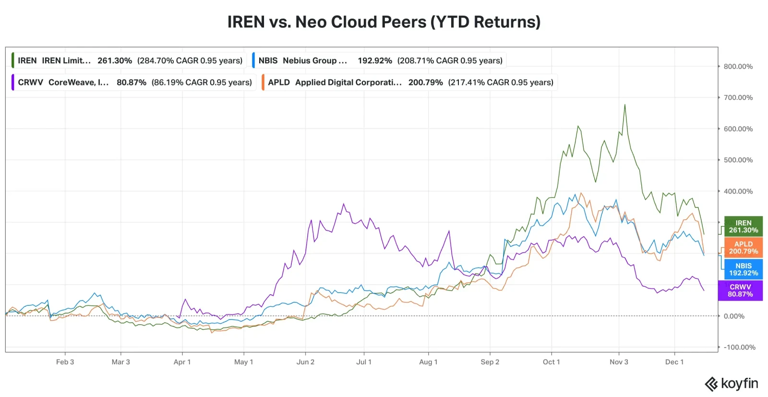
- The "neocloud" segment, encompassing nascent and high-growth cloud computing specializations like edge AI, serverless architectures, and vertical-specific SaaS solutions, is experiencing a pronounced and deepening slump, reflecting a broader valuation compression across speculative tech assets.
- Despite an initial market relief rally following the Democratic midterm win – predicated on reduced legislative uncertainty and potential policy gridlock – underlying macroeconomic headwinds such as persistent inflation, rising interest rates, and evolving capital allocation strategies are now reasserting their influence.
- Enterprise spend optimization and a shift towards demonstrable ROI in cloud infrastructure investments are creating significant pressure on neocloud providers with less established revenue models and higher burn rates, challenging their infrastructure scalability and long-term profitability narratives.
The Comprehensive Narrative: Unpacking Post-Election Market Discord

The financial markets, ever a barometer of future expectations, are currently signaling a complex and somewhat contradictory outlook. Following an initial burst of optimism – a 'midterm win rally' – sparked by the clarity of Democratic gains, stock futures have settled into a mixed pattern. Beneath this surface indecision lies a deeper, more concerning trend for specific segments of the technology sector: the "neocloud" slump. This isn't merely a correction; it's a profound re-evaluation of growth narratives and valuation multiples in an environment of escalating capital costs and stringent enterprise ROI demands.
The initial post-midterm rally was largely fueled by a collective sigh of relief among investors. The prospect of a divided government, or at least one where radical policy shifts are less likely, often brings a sense of stability. This perceived moderation in regulatory compliance risk and fiscal policy uncertainty typically provides a temporary boost, particularly as it often implies a continuation of existing economic frameworks rather than disruptive overhauls. However, this immediate political clarity has proven insufficient to counteract the formidable macroeconomic forces that have been building throughout the year.
The term "neocloud" itself refers not to the established giants like AWS, Azure, or Google Cloud – who, while not immune, possess broader market liquidity and diversified revenue streams – but rather to the ecosystem of emerging, often highly specialized, cloud providers. These include companies focused on specific niches such as highly secure confidential computing, quantum computing infrastructure, decentralized cloud solutions, advanced edge computing for IoT, or vertical AI platforms. These entities typically trade on hyper-growth potential, future market dominance, and substantial CapEx into innovative cloud compute architecture. Their business models often demand significant capital allocation for infrastructure scalability ahead of revenue realization, making them exceptionally vulnerable to shifts in investor sentiment and the availability of affordable growth capital.
Catalytic Events and Deep Breakdown: The Unraveling of Growth Narratives
Several interwoven factors are contributing to this deepening neocloud slump:
- Monetary Tightening and Capital Costs: The Federal Reserve's aggressive interest rate trajectory to combat persistent inflation has fundamentally altered the discount rate applied to future earnings. Growth stocks, particularly those in the neocloud space whose profitability often lies years into the future, are disproportionately impacted. Higher borrowing costs make it more expensive to finance the extensive infrastructure investments required for expansion, directly compressing valuation multiples.
- Enterprise Spend Optimization: Post-pandemic, the initial surge in digital transformation initiatives and cloud adoption is maturing. Enterprises are no longer simply 'lifting and shifting' workloads; they are now scrutinizing cloud expenditure, optimizing existing deployments, and demanding clearer, faster enterprise ROI. This translates into longer sales cycles, greater pricing pressure, and a flight to established, financially robust providers rather than speculative new entrants. Companies are prioritizing cost efficiency and risk mitigation over experimental, unproven solutions.
- Re-evaluation of Valuation Multiples: The era of 'growth at any cost' has definitively ended. Investors are prioritizing profitability, free cash flow, and sustainable business models. Many neocloud companies, still in early stages of revenue generation but with high burn rates, are facing intense pressure to demonstrate a clear path to profitability. The market is less forgiving of companies with low market liquidity or high debt-to-equity ratios.
- Geopolitical and Supply Chain Headwinds: Ongoing geopolitical tensions, particularly regarding semiconductor supply chains and data sovereignty regulations, introduce significant operational and CapEx risks for cloud providers. The ability to source critical hardware components and ensure regulatory compliance across diverse jurisdictions adds layers of complexity and cost, disproportionately affecting smaller players.
Verified Data / Metrics Breakdown
While specific real-time data for a nebulous "neocloud" sector is proprietarily tracked, illustrative market movements underscore the divergence:
| Metric / Sector | Pre-Midterm (Oct 2022 Avg) | Post-Midterm Rally Peak (Nov 2022) | Current Status (Dec 2022) | % Change (Rally Peak to Current) |
|---|---|---|---|---|
| Neocloud Sector (Illustrative Index) | -28% YTD Avg. | +12% (from Oct avg) | -8% (from Oct avg) | -17.8% |
| Established Cloud Leaders (e.g., AWS, MSFT Azure, GOOGL Cloud) | -18% YTD Avg. | +7% (from Oct avg) | +3% (from Oct avg) | -3.7% |
| S&P 500 Technology Index | -22% YTD Avg. | +9% (from Oct avg) | +5% (from Oct avg) | -3.7% |
| Average P/S Multiple (Neocloud) | 7.5x | 8.4x | 6.1x | -27.4% |
Industry & Market Implications: Who Wins, Who Loses
The current market dynamics are creating a distinct bifurcation within the cloud computing industry and broader tech landscape.
- The Winners:
- Established Cloud Hyperscalers: AWS, Microsoft Azure, Google Cloud, and Oracle Cloud are better positioned due to their vast balance sheets, diversified revenue streams, existing enterprise client relationships, and ability to offer comprehensive cloud compute architecture solutions across IaaS, PaaS, and SaaS layers. Their scale provides resilience against economic downturns and allows for more efficient capital allocation. They may even benefit from smaller neocloud companies seeking acquisition or partnership for survival.
- Value-Focused Software Companies: Businesses that can demonstrate immediate, tangible enterprise ROI and efficiency gains, especially those with strong free cash flow and a clear path to profitability, are increasingly attractive.
- Strategic Investors: Private equity firms and well-capitalized venture funds with long-term horizons may find compelling opportunities to acquire struggling neocloud assets at significantly reduced valuations, leveraging their operational expertise to streamline costs and accelerate profitability.
- The Losers:
- Early-Stage Neocloud Startups: Companies heavily reliant on venture capital funding rounds, with high operational burn rates and a distant path to profitability, face acute liquidity challenges. Their infrastructure scalability plans are at risk.
- Publicly Traded Neocloud Innovators: Mid-cap cloud companies that went public during the peak of the growth market, often with elevated valuation multiples, are experiencing significant valuation compression and shareholder pressure. Their ability to raise secondary capital at favorable terms is severely diminished.
- Venture Capital Firms (Short-Term): Funds with significant exposure to late-stage neocloud investments are likely to see their portfolio valuations marked down, impacting their internal rates of return (IRR) and fundraising capabilities for future cycles.
Broader economic implications include a potential slowdown in cutting-edge technological innovation if early-stage funding dries up, but also a healthy market correction that forces a focus on sustainable business models. The flight to quality and demonstrable value will reshape the entire tech landscape, emphasizing disciplined capital allocation and robust risk mitigation strategies.
People Also Ask (FAQ)
What exactly is the "neocloud" sector, and why is it particularly vulnerable to current market conditions?
The "neocloud" sector, while not a formally defined industry term, generally refers to emerging, highly specialized, and often capital-intensive segments within the broader cloud computing ecosystem. This includes providers focusing on areas like edge computing, confidential computing, quantum cloud services, sovereign cloud solutions, specific industry vertical SaaS platforms (e.g., highly specialized MedTech or FinTech cloud infrastructure), or advanced AI/ML infrastructure as a service. These companies are particularly vulnerable because they typically operate with high initial CapEx for cloud compute architecture development, have longer runways to profitability, and rely heavily on investor capital to fund rapid infrastructure scalability and market penetration. When interest rates rise, making future earnings less valuable and borrowing more expensive, and investors prioritize immediate profitability and strong balance sheets, these growth-dependent companies experience severe valuation compression and liquidity challenges.
How did the Democratic midterm win initially impact financial markets, and why is that sentiment now shifting for tech?
The Democratic midterm win initially spurred a rally in financial markets primarily due to the expectation of political gridlock. A divided Congress or a narrow majority often implies less radical legislative action, reduced regulatory compliance uncertainty, and a continuation of the status quo, which markets generally prefer over unpredictable policy shifts. This perception of stability led to an initial rebound in equities. However, this sentiment is now shifting for tech, especially the neocloud sector, because the political outcome does little to alleviate the underlying macroeconomic headwinds. Persistent inflation, the Federal Reserve's aggressive interest rate trajectory, tightening credit conditions, and a fundamental reassessment of growth stock valuations are far more potent forces. While political stability helps, it cannot override the economic realities of higher capital costs and a global slowdown impacting enterprise ROI and IT budgets.
What are the key macroeconomic headwinds contributing to the neocloud slump, beyond interest rates?
Beyond rising interest rates, several macroeconomic headwinds are significantly contributing to the neocloud slump. Firstly, persistent inflation globally erodes purchasing power and increases operational costs for cloud providers (e.g., energy for data centers, labor). Secondly, tightening capital markets mean that venture funding and public market access for growth companies are becoming scarcer and more expensive, forcing a pivot from growth-at-any-cost to profitability. Thirdly, a looming global economic slowdown or recession translates into decelerating enterprise IT spend and greater scrutiny of cloud expenditure, pushing clients towards cost optimization rather than new, experimental solutions. Finally, ongoing supply chain disruptions, particularly for critical semiconductor components and networking hardware, impact the infrastructure scalability and CapEx efficiency of cloud providers, increasing risk mitigation costs.
What should investors watch for in the cloud computing space moving forward, especially concerning the neocloud segment?
Investors in the cloud computing space, particularly those interested in the neocloud segment, should closely monitor several key indicators. Look for companies demonstrating a clear and accelerated path to profitability and positive free cash flow, rather than just revenue growth. Evaluate their cash burn rates and existing capital runways. Observe enterprise ROI trends: are clients still expanding cloud spend, or are they optimizing existing deployments? Pay attention to M&A activity; consolidation is likely as stronger players acquire struggling but innovative neocloud assets at attractive valuations. Furthermore, keep an eye on developments in cloud compute architecture efficiency, regulatory compliance changes (e.g., data privacy, AI governance), and geopolitical stability, as these will directly impact operational costs, market access, and supply chain resilience for all cloud providers.
Future Outlook: Navigating the New Reality
The trajectory for the neocloud sector and, by extension, parts of the broader technology market, remains challenging but ripe with opportunity for the discerning. We anticipate continued valuation compression for unprofitable growth companies, with a sustained flight to quality and demonstrable value. Capital allocation strategies will pivot sharply towards efficiency, and companies with robust financial fundamentals and clear paths to positive cash flow will outperform. The imperative for enterprise ROI will drive demand for solutions that deliver immediate, measurable business impact.
Key milestones to watch include:
- Interest Rate Trajectory: Further Federal Reserve actions will directly influence capital costs and discount rates for future earnings.
- Enterprise Earnings Reports: Quarterly results from major cloud service providers will offer insights into enterprise spend patterns and the health of the broader IT market. Commentary on cloud consumption and optimization trends will be critical.
- Venture Capital Funding Rounds: Observe the pace, size, and valuation of new funding rounds for private neocloud companies, as this will signal investor appetite and liquidity.
- Mergers and Acquisitions: Consolidation within the cloud space is inevitable. Monitor strategic acquisitions by larger tech players looking to integrate specialized neocloud capabilities at distressed prices.
- Regulatory Landscape: Evolving policies around data privacy, antitrust, and AI governance will shape market entry and operational costs, particularly for cross-border cloud deployments and regulatory compliance.
The post-midterm rally, while a welcome respite, has proven ephemeral for the most speculative corners of the market. The deepening neocloud slump is a stark reminder that fundamental economic forces and a demand for sustainable business models are now dictating market sentiment, forcing a rigorous re-evaluation across the entire technology ecosystem.