
Executive Takeaways
- Geochemical Breakthrough: Advanced mineralogical analysis has definitively ruled out Wales as the source of Stonehenge’s iconic 6-tonne Altar Stone, overturning a century of archaeological consensus.
- Narrowing Geographic Scope: Recent isotopic fingerprinting redirects investigators toward the far north—specifically, the Orcadian Basin in northeast Scotland or remote parts of Shetland.
- Logistical and Economic Re-evaluation: Transporting a six-tonne monolith over 450 miles in the Late Neolithic era requires a complete reassessment of prehistoric infrastructure, capital allocation of communal labor, and maritime trade routes.
- Enterprise and Tourism Impact: Cultural heritage valuations, regional tourism capital, and academic research funding are pivoting rapidly to exploit this paradigm shift in British prehistory.
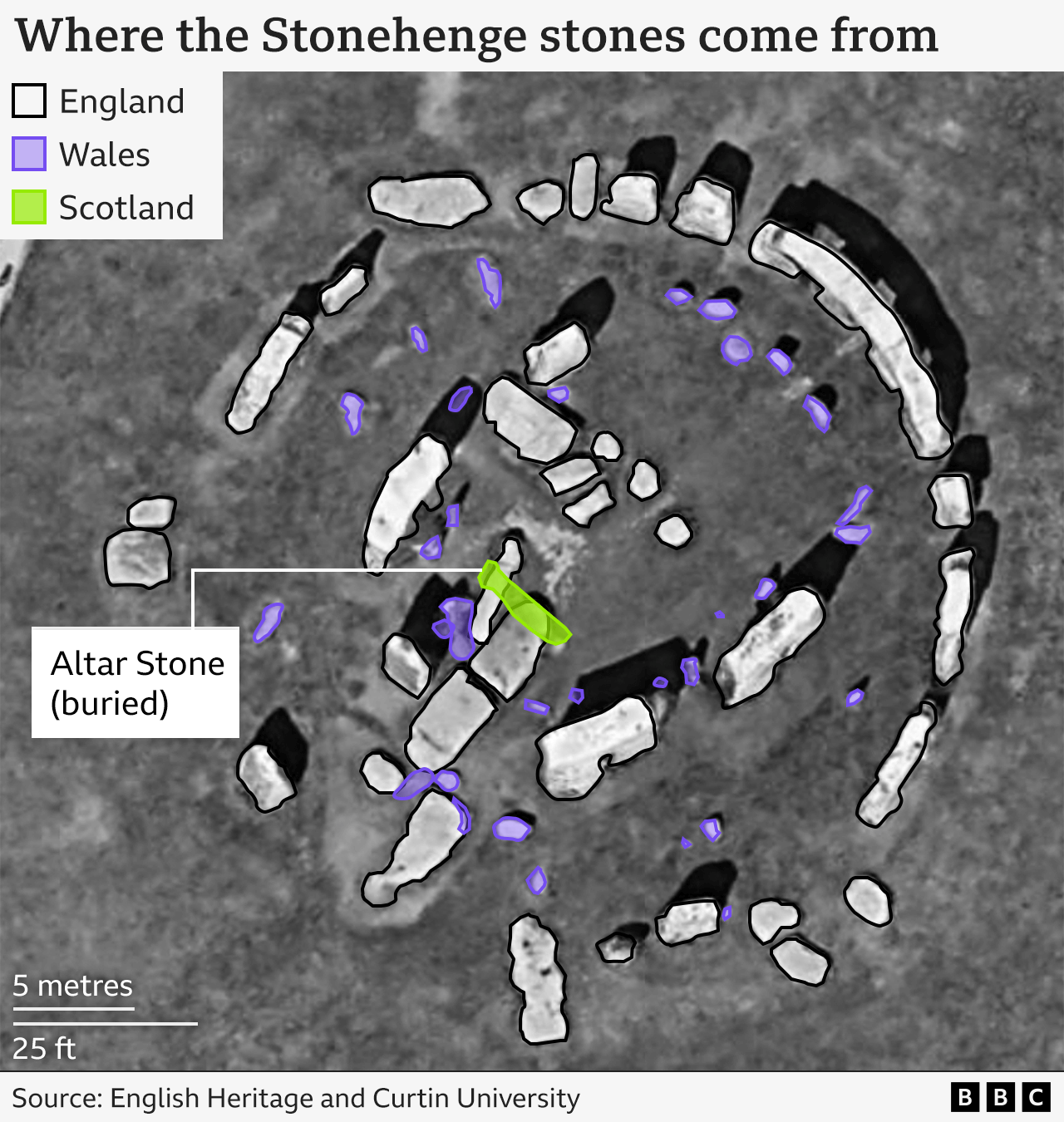
For centuries, the silent megaliths of Salisbury Plain have held fast to their architectural secrets. Yet, beneath the tourist gaze and the meticulous grids of modern archaeological excavations, a quiet scientific revolution is dismantling long-held assumptions about Britain’s most famous prehistoric monument. At the center of this paradigm shift is the Altar Stone—a flat-lying, greenish sandstone monolith half-hidden beneath the fallen debris of the monument's central trilithon. For generations, textbook orthodoxy maintained that this solitary slab, like the iconic bluestones flanking it, originated in the Preseli Hills of southwest Wales.
Recent high-precision geochemical and mineralogical investigations, however, have utterly fractured that hypothesis. By isolating microscopic zircon and apatite crystals within the sandstone matrix and subjecting them to uranium-lead dating and Raman spectroscopy, geochronologists have mapped a distinct chemical signature. The results are unequivocal: the Altar Stone did not come from Wales. As the search footprint narrows toward the rugged terrains of far northern Scotland, researchers are forced to confront an astonishing historical reality—one that redefines our understanding of Neolithic enterprise, long-distance maritime logistics, and the sociopolitical complexity of prehistoric Britain.
The Archaeological Catalytic Event: Upending a Century of Orthodoxy
Test Our Free AI & Tech Utilities Suite
Calculate LLM API token costs, analyze article dwell-time, or simulate tech DCA returns.
To understand the gravity of the current investigations, one must examine the baseline historical framework. Since the pioneering geological surveys of H.H. Thomas in the 1920s, the scientific community operated on a neat, elegant narrative. Stonehenge was viewed as a dual-provenance monument: the massive sarsen stones were hauled from the Marlborough Downs roughly 20 miles to the north, while the smaller bluestones embarked on an arduous 140-mile journey from the Mynydd Preseli in Pembrokeshire, Wales.
The Altar Stone, measuring nearly 5 meters in length and weighing approximately six tonnes, was traditionally lumped in with the Welsh bluestone cohort due to its distinct lithology. However, its unusual composition—rich in barium and dominated by a heavy mineral suite uncharacteristic of Welsh Old Red Sandstone—became an increasingly glaring anomaly as analytical techniques grew more sophisticated.
The catalyst for the current investigative surge arrived when a multi-institutional team of geologists and archaeologists applied laser ablation inductively coupled plasma mass spectrometry (LA-ICP-MS) to fragments of the Altar Stone. The age spectrum of the mineral grains within the stone revealed a population dominated by ages between 1.0 and 2.0 billion years, with a distinct signature of younger minerals dating to around 450 million years ago. This specific chronological fingerprint is utterly absent in Welsh geological formations, effectively eliminating Pembrokeshire from contention and transforming a localized transit puzzle into a continental-scale geographical mystery.
Geochemical Fingerprinting and the Scottish Lead

With Wales ruled out, researchers turned their analytical instruments toward the broader British and Irish geological tapestry. The precise age profile and mineralogical makeup of the Altar Stone point unmistakably toward ancient sedimentary basins formed during the Caledonian orogeny—a mountain-building event that occurred hundreds of millions of years ago.
This geochemical narrowing has trained investigative sights on the Orcadian Basin of northeast Scotland, stretching across parts of Caithness, the Orkney Islands, and Shetland. The Old Red Sandstone deposits in these regions share the exact mineralogical idiosyncrasies and isotopic ratios identified in the Stonehenge monolith. The prospect that prehistoric builders hauled a six-tonne block of stone from the edge of the Scottish Highlands—or even the northern isles—over four and a half millennia ago challenges every conventional metric of Neolithic capability.
[Insert Infographic: Comparative Isotopic Signatures of Stonehenge Altar Stone vs. Welsh Preseli Hills and Scottish Orcadian Basin]
In terms of project management, risk mitigation, and labor coordination, moving a massive stone across such vast topographical distances requires us to view Neolithic societies not as isolated, primitive tribal units, but as highly organized enterprises capable of large-scale capital allocation and inter-regional trade networks. Just as modern corporations optimize supply chain logistics and infrastructure scalability, Late Neolithic communities appear to have maintained sophisticated maritime and overland transport corridors capable of moving monumental architectural assets across the British Isles.
Verified Data & Metrics Breakdown
The following comparative matrix outlines the shifting parameters of the Stonehenge Altar Stone investigation, contrasting the legacy Welsh hypothesis with the emerging Scottish provenance model and its broader infrastructural implications.
| Analytical Parameter | Legacy Paradigm (Wales) | Current Consensus (Northern Scotland / Orcadian Basin) | Infrastructural / Economic Impact |
|---|---|---|---|
| Geographic Distance | ~140 miles (225 km) | ~450+ miles (725+ km) | Triples the historical transport radius; demands advanced maritime logistics. |
| Primary Dating Technique | Visual lithological matching & basic stratigraphy | Uranium-Lead (U-Pb) zircon dating & Raman spectroscopy | Elevates archaeological standards to high-precision geochemical forensics. |
| Estimated Stone Weight | ~6 tonnes | ~6 tonnes | Requires sustained communal labor investment and specialized raft/sled engineering. |
| Socioeconomic Implications | Regional Welsh pilgrimage / ritual unification | Pan-British political alliances and long-range maritime commerce | Shifts valuation models of prehistoric Britain toward complex trade economies. |
Industry & Market Implications: Heritage Tourism and Academic Capital
While the investigation into the Altar Stone is fundamentally rooted in earth sciences and archaeology, the ripple effects extend far beyond academic journals. The heritage tourism sector, cultural institutions, and regional economic development boards are closely monitoring these developments. Stonehenge remains a premier anchor for the United Kingdom's tourism economy, generating substantial annual revenues and driving high-value hospitality and travel metrics.
Every major scientific revision breathes new life into the monument's global brand equity. Exhibits updating the narrative of the Altar Stone drive visitor engagement, media syndication, and educational grants. Furthermore, the methodological framework being pioneered—combining advanced geochronology with spatial archaeology—serves as a benchmark for high-value research grants and technological investments in heritage management across Europe.
Conversely, institutions and regional bodies tied exclusively to the Welsh bluestone narrative must adapt their interpretive frameworks. As academic consensus shifts northward, local tourism marketing strategies in Pembrokeshire and Salisbury Plain alike are recalibrating to capture the public fascination generated by this unfolding geological detective story.
Frequently Asked Questions (People Also Ask)
Why is the Stonehenge Altar Stone considered so unique compared to the other stones?
Unlike the towering sarsens, which are local to the Wiltshire downs, or the smaller bluestones of Wales, the Altar Stone is a massive, fine-grained sandstone slab lying flat at the heart of the monument. Its heavy mineral composition—specifically high levels of barium and distinct zircon age profiles—sets it apart from every other megalith at the site, sparking decades of debate over its true geographic origin.
How do scientists prove where a 4,500-year-old stone came from?
Geologists use high-precision analytical techniques such as laser ablation inductively coupled plasma mass spectrometry (LA-ICP-MS) and uranium-lead dating on microscopic accessory minerals like zircon embedded within the sandstone. By determining the exact radioactive decay clocks of these minerals, researchers create an isotopic "fingerprint" that can be matched against specific bedrock formations across the globe.
How could Neolithic people transport a six-tonne stone from Scotland to southern England?
Transporting a six-tonne monolith over 450 miles during the Late Neolithic period likely involved a combination of coastal seafaring using large skin- or timber-framed rafts and overland hauling via wooden sledges, rollers, and organized human labor teams. This logistical feat demonstrates that prehistoric British societies possessed advanced engineering capabilities and extensive maritime trade routes.
What does this discovery mean for the broader history of Stonehenge?
The narrowing search toward northern Scotland forces historians to abandon the view of Stonehenge as a purely local or regional tribal focal point. Instead, it positions the monument as a pan-British gathering place that united disparate communities from the far extremities of the island, highlighting a surprisingly interconnected prehistoric landscape.
Future Outlook: Milestones and Next Steps in the Investigation
As the investigative net tightens around northern Scotland and the Orcadian Basin, the next phase of research will focus on hyper-local geochemical matching. Field geologists are currently sampling specific outcrops in Caithness, Orkney, and neighboring regions to pinpoint the exact quarry source of the Altar Stone. Success in this endeavor would represent one of the most remarkable provenance achievements in modern archaeological science.
Key milestones to watch over the coming 12 to 18 months include peer-reviewed publications detailing the exact isotopic matches from targeted northern Scottish formations, as well as experimental archaeology projects testing the maritime logistics required to move a six-tonne slab down the North Sea coast. For capital markets, academic institutions, and cultural heritage regulators, the unfolding story of the Altar Stone proves that even the most ancient monuments still hold modern surprises—reminding us that history is constantly rewritten when advanced technology meets relentless investigative rigor.


