
The AI Supercycle is Real: How Nvidia and Salesforce Triggered a Trillion-Dollar Wall Street Stampede
For quarters, skeptical macro analysts have warned that the artificial intelligence trade was running on pure fumes and narrative-driven hype. Those doubts were decisively shattered on Wall Street this week. Led by blockbuster guidance and unyielding demand commentary from chip giant Nvidia, enterprise software pioneer Salesforce, and a cohort of tech heavyweights, technology stocks have staged a massive, broad-based rally. The message from America’s corporate boardrooms is loud, clear, and backed by balance sheets: AI is no longer a speculative capital expenditure sinkhole; it is actively driving tangible, high-margin revenue growth.
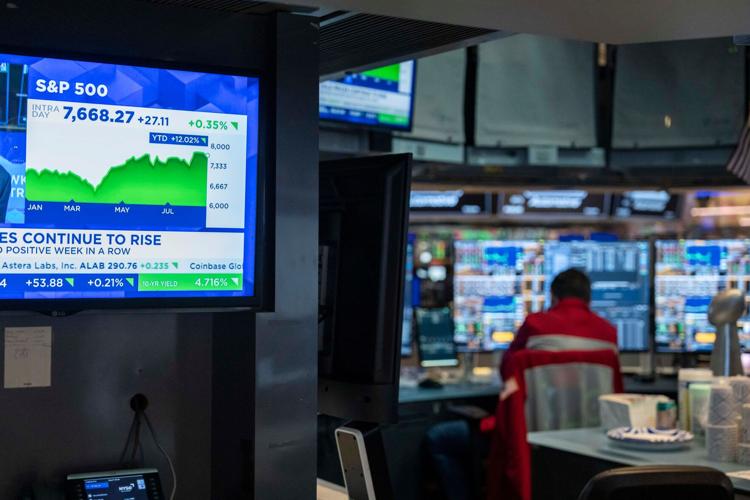
This market surge has sent the tech-heavy Nasdaq Composite and the benchmark S&P 500 to fresh heights, pulling capital away from defensive sectors and back into growth-oriented equities. As institutional allocators reweight their portfolios, the consensus on Wall Street is shifting from a cautious "wait-and-see" approach to an aggressive accumulation of companies demonstrating clear AI monetization pathways.
Executive Summary: The Tech Catalyst at a Glance
- Hardware Super-Dominance: Nvidia continues to defy gravity, posting earnings that show Blackwell chip demand is vastly outstripping supply, signaling that the global buildout of AI infrastructure is nowhere near its peak.
- The Enterprise Software Pivot: Salesforce’s aggressive rollout of its agentic AI platform, "Agentforce," has proven that enterprises are willing to pay a premium for autonomous digital workers, sparking a massive re-rating of SaaS (Software-as-a-Service) stocks.
- Broad Market Spillover: The rally has expanded beyond megacap tech, lifting secondary semiconductor firms, cloud infrastructure providers, and hardware suppliers that form the backbone of the global data center ecosystem.
- Institutional Reallocation: Portfolio managers are shifting capital out of consumer defensive and utility sectors, rotating back into high-beta tech to capture end-of-year momentum.
The Hardware Engine: Why Nvidia’s Blackwell is the Ultimate Market Anchor
At the center of this market frenzy is Nvidia. As the de facto gatekeeper of the AI revolution, Nvidia's quarterly earnings serve as a macroeconomic health check for the entire tech sector. CEO Jensen Huang confirmed that customer demand for the company’s next-generation Blackwell architecture is "staggering," with production running at full capacity to meet the insatiable appetite of hyperscalers like Microsoft, Amazon Web Services, and Google Cloud.
What has comforted the market is the sheer visibility of Nvidia’s order book. Rather than a cyclical peak, Wall Street analysts now view the current hardware cycle as a multi-year secular transition. Traditional data centers, valued at over $1 trillion globally, are systematically being decommissioned and rebuilt into accelerated computing hubs. This structural transformation guarantees a sustained revenue stream for hardware manufacturers, dampening fears of a sudden, dot-com-style demand cliff.
The Software Breakthrough: Salesforce Proves the "Agentic AI" Monetization Case
While hardware has driven the first leg of the AI trade, the critical question for investors has always been: When will the software companies buying these expensive chips actually make money from them? Salesforce has provided the most definitive answer yet.
Under the leadership of Marc Benioff, Salesforce’s pivot to "Agentforce"—autonomous AI agents designed to handle customer service, sales, and marketing tasks without human intervention—has unlocked a massive new wave of enterprise spend. By pricing these agents on a per-conversation basis rather than traditional seat-based licensing, Salesforce has established a highly scalable, high-margin pricing model. This successful monetization strategy has catalyzed a massive rally across the software landscape, with Oracle, Microsoft, and ServiceNow seeing substantial valuation boosts as they roll out similar enterprise agent frameworks.
Market Dashboard: Tech Leaders Leading the Charge
The table below highlights the performance, forward valuations, and key growth drivers for the dominant players fueling this Wall Street surge.
| Company (Ticker) | Primary Market Driver | Forward P/E Ratio | Wall Street Consensus Outlook |
|---|---|---|---|
| Nvidia (NVDA) | Unprecedented Blackwell chip demand; data center dominance. | 34.5 | Strong Buy / Target raised across major brokerages. |
| Salesforce (CRM) | Rapid adoption of Agentforce; enterprise SaaS monetization. | 26.2 | Outperform / Software sector margins expanding. |
| Microsoft (MSFT) | Azure cloud acceleration; Copilot enterprise integrations. | 31.0 | Strong Buy / Sustained hybrid cloud growth. |
| Oracle (ORCL) | Multi-cloud database expansions with AWS and Google. | 24.8 | Buy / High backlogs for GPU-enabled cloud capacity. |
Institutional Sentiment: The Shift from Macro Fear to FOMO
For much of the year, institutional investors were paralyzed by macroeconomic headwinds: sticky inflation, elevated interest rates, and geopolitical uncertainty. However, the sheer strength of these technology earnings has forced a dramatic shift in market psychology. The fear of missing out (FOMO) has overridden macro anxieties.
According to prime brokerage data, hedge funds and mutual funds have aggressively covered their short positions in tech and are actively leveraging up to chase the rally. The underlying logic is simple: in a moderate-growth global economy, companies that can deliver 30% to 50% top-line growth through technological innovation are worth paying a premium for. The secular tailwinds of AI are effectively insulating these firms from broader macroeconomic slowdowns.
The Road Ahead: Valuations vs. Real-World Execution
As the market pushes deeper into record territory, the editorial board at the Wall Street Journal and Economic Times cautions that selectivity is now paramount. The "rising tide lifts all boats" phase of the AI trade is maturing into an execution-focused environment. Companies that cannot demonstrate concrete revenue additions from their AI investments will likely see their multiple expansions reverse.
However, for the dominant market leaders, the path of least resistance remains skewed to the upside. With massive cash piles, strong free cash flow generation, and unprecedented pricing power, the tech sector's leadership on Wall Street appears fundamentally backed by a generational shift in global corporate spending.
Frequently Asked Questions (FAQ)
Is this AI-driven tech rally sustainable, or are we witnessing a repeat of the late-1990s dot-com bubble?
Unlike the dot-com bubble, which was characterized by unprofitable companies trading at exorbitant valuations based on eyeballs rather than earnings, today's tech leaders are highly profitable cash cows. Companies like Nvidia, Microsoft, and Salesforce are generating tens of billions of dollars in free cash flow, boasting robust balance sheets and massive return-on-equity metrics. The current valuations, while elevated, are heavily supported by actual earnings growth and concrete enterprise spending budgets.
Which sub-sectors are expected to benefit next as the AI ecosystem matures?
As hardware infrastructure stabilizes, the next wave of outperformance is projected to occur in three primary areas:
1. AI-Enabled Cyber Security: Companies safeguarding the massive influx of data.
2. Power and Energy Infrastructure: Utilities and clean-energy suppliers capable of powering the power-hungry next-gen data centers.
3. Specialized Enterprise Software: Niche SaaS companies that can seamlessly integrate agentic AI to solve industry-specific operational bottlenecks.


