Executive Takeaways
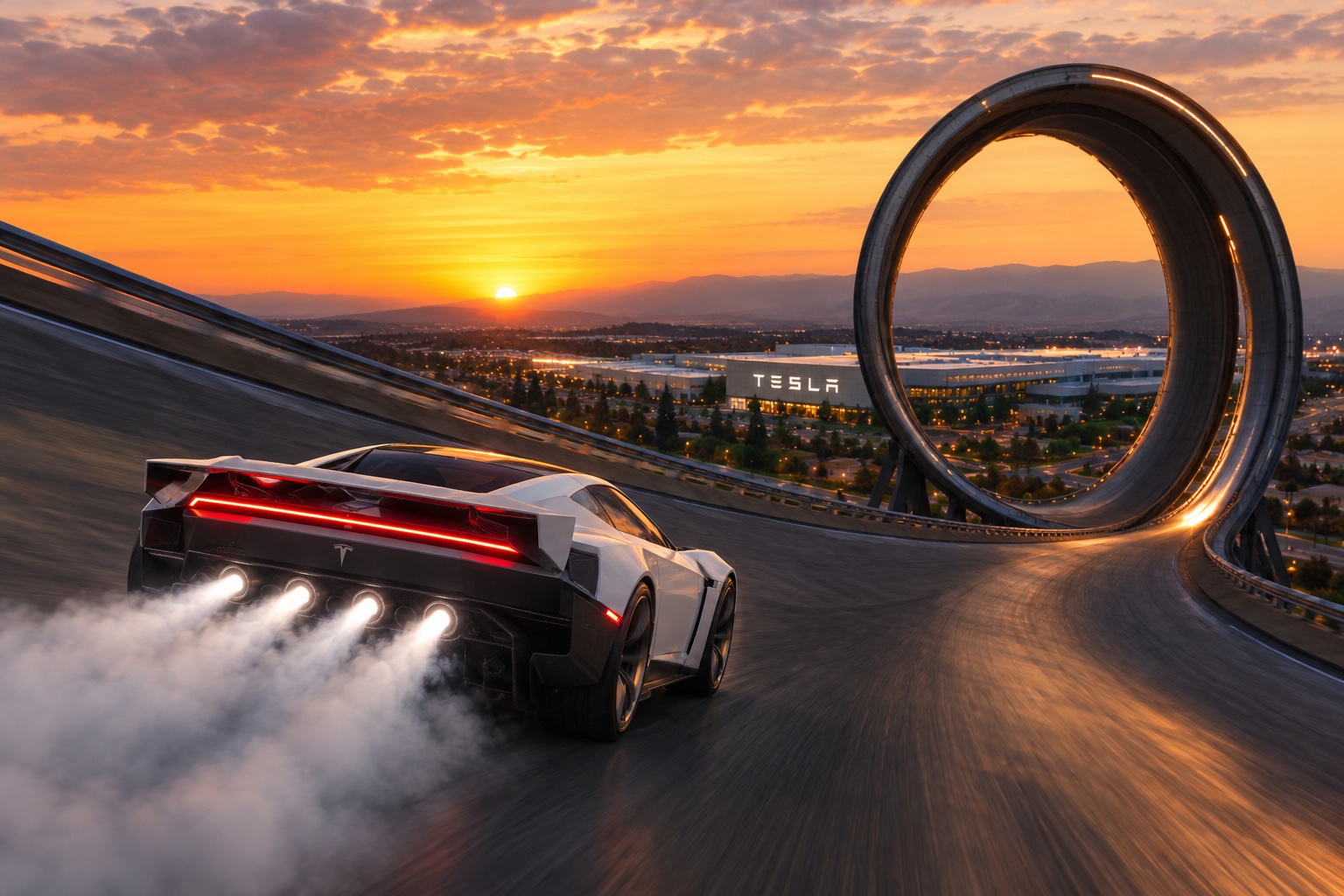
- Unprecedented Control Capabilities: Chief Executive Elon Musk confirmed that Tesla Roadster reservation holders will gain direct, command-level access to live unveiling stunts, including a dynamic "Flying Stunt Mode" powered by integrated SpaceX cold-gas thruster architecture.
- Capital Allocation Friction: The announcement re-energizes over $250 million in long-standing reservation liabilities held since 2017, forcing institutional investors to weigh high-margin halo projects against core vehicle platform manufacturing and margin preservation.
- Regulatory and Liability Hurdles: Operating pneumatic propulsion systems and dynamic aerobatic routines on specialized looping tracks introduces unprecedented compliance vectors across the National Highway Traffic Safety Administration (NHTSA) and aerospace safety boards.
- Enterprise Valuation Impact: Analysts are scrutinizing whether high-dwell, ultra-high-performance halo vehicles can re-expand Tesla's valuation multiples amid tightening electric vehicle (EV) pricing environments and global market saturation.
The Anatomy of a Stunt: Engineering Ambition vs. Production Reality
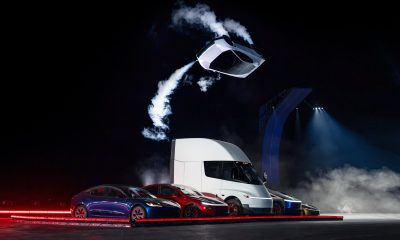
When Tesla Inc. first unveiled the second-generation Roadster in late 2017, the automotive and financial communities viewed the ultra-high-performance vehicle as a crown jewel designed to establish absolute engineering dominance over internal combustion rivals. Nearly a decade later, following years of delays driven by supply chain bottlenecks, battery cell density challenges, and high-volume platform prioritization, Chief Executive Officer Elon Musk has re-ignited the conversation surrounding the elusive supercar with a series of high-profile technical disclosures.
Central to this renewed push is the introduction of a public-facing "Flying Stunt Mode"—a software and mechanical interface allowing verified Roadster owners to interact with, command, and execute automated aerobatic maneuvers, including brief levitation or thrust-assisted launch cycles. Musk further detailed plans to construct dedicated closed-course looping tracks designed explicitly to showcase the vehicle’s sustained lateral and vertical g-force capabilities. The announcement has sent ripples across both retail investor forums and institutional trading desks, raising immediate questions regarding software safety validation, mechanical reliability, and the ultimate ROI of Tesla's capital deployment in niche hypercar segments.
The technical foundation of this feature lies in the long-rumored "SpaceX Package," which substitutes the vehicle's rear seating row with composite-overwrapped pressure vessels (COPVs). These vessels store compressed air at ultra-high pressures (approximately 10,000 psi), routed through cold-gas thruster nozzles located behind the vehicle's license plate frame and chassis perimeter. While traditional performance vehicles rely exclusively on mechanical tire friction for acceleration, cornering, and braking, the thruster-integrated Roadster utilizes pneumatic vectoring to manipulate downforce and transient lift in real time.
Software Integration: Telemetry, Cloud Compute, and Control Systems
Executing an automated or driver-commanded stunt sequence requires a complex hardware-software synthesis. According to engineering sources familiar with Tesla’s experimental vehicle platforms, the "Flying Stunt Mode" relies heavily on low-latency telemetry streaming and real-time physics engine calculations executed via an onboard edge-compute node. This architecture processes input data from micro-electromechanical system (MEMS) gyroscopes, optical wheel-speed sensors, and radar terrain mappers at frequencies exceeding 1,000 Hertz.
To safely execute dynamic maneuvers—such as brief vertical hovers or automated loop maneuvers on custom-engineered tracks—the platform leverages a specialized variant of Tesla's Full Self-Driving (FSD) dynamic motion planner. Instead of navigating urban traffic, the neural network evaluates structural load limits, thruster tank pressure decay curves, and aerodynamic drift in real time. The goal is simple yet mathematically daunting: mitigate human error during high-velocity maneuvers where reaction times fall below biological thresholds.
| Metric / Feature | Standard Roadster Specs (2017 Unveil) | SpaceX Package / Stunt Mode Variant | Regulatory & Capital Implications |
|---|---|---|---|
| 0–60 mph Acceleration | 1.9 Seconds | < 1.0 Second (Thruster Assisted) | Requires specialized tire compound and track surfaces. |
| Propulsion Architecture | Tri-Motor AWD Electric Drive | Tri-Motor + 10 SpaceX Cold-Gas Thrusters | Classified under dual-use automotive/aerospace components. |
| Base Pricing / Deposit | $200,000 ($50,000 Reservation) | Estimated $250,000+ (Founders Series) | Represents long-term unearned revenue liabilities on balance sheet. |
| Operational Environment | Public Highways & Standard Circuits | Private Closed-Course Looping Tracks | Demarcates liability exposure between public roads and closed tracks. |
Capital Allocation, Customer Liabilities, and Balance Sheet Mechanics
From an enterprise finance perspective, the Roadster program occupies a unique and controversial position within Tesla’s broader portfolio. In late 2017, Tesla collected reservation deposits ranging from $50,000 for standard models to $250,000 for full-payment Founders Series reservations. Aggregated across thousands of prospective owners, these non-interest-bearing deposits served as a vital source of zero-cost capital during the challenging manufacturing ramp of the Model 3.
However, as time elapsed, these deposits converted into long-term unearned revenue liabilities. Institutional equity research desks at firms like Goldman Sachs and Morgan Stanley have consistently analyzed how capital allocated to low-volume hypercars affects Tesla’s broader return on invested capital (ROIC). While mass-market programs like the Model Y and the planned Next-Gen low-cost platform drive immediate gross margin expansion and cash flow scalability, halo programs like the Roadster consume crucial engineering mindshare and high-value compute resources.
By framing the Roadster reveal around extreme software capabilities and closed-course stunt experiences, Tesla aims to pivot the market narrative. Rather than competing strictly on conventional automotive metrics—where luxury incumbents like Porsche, Ferrari, and Rimac have made significant high-voltage performance gains—Tesla is attempting to reposition the vehicle as a cross-industry technology demonstration. If successfully monetized through high-margin track access subscriptions, proprietary telemetry software packages, and bespoke experience tiers, the Roadster could deliver an above-average enterprise gross margin despite its low annual production unit count.
Regulatory Compliance and Liability Risk Mitigation
The operational reality of deploying cold-gas thrusters capable of levitating or accelerating a 4,000-pound passenger car introduces complex legal and regulatory hurdles. Public road integration of high-pressure COPV tanks falls under strict Department of Transportation (DOT) and NHTSA safety mandates. Discharging high-velocity compressed air in proximity to pedestrians or standard traffic creates severe product liability and public safety concerns.
To mitigate these risks, Tesla’s strategy hinges on geo-fencing software architecture. The "Flying Stunt Mode" and full-thrust launch capabilities will remain electronically locked via cloud-based GPS verification, activating only when the vehicle detects it is physically located within authorized, closed-course environments or purpose-built looping tracks. This operational separation allows Tesla to navigate automotive safety standards while shifting primary liability to controlled event environments.
Even within private facilities, insurance underwriting for high-g dynamic maneuvers presents significant friction. The risk mitigation strategy requires continuous cloud compute logging, where every microsecond of throttle position, thruster valve actuation, and structural strain is immutably recorded to onboard black-box storage and instantly mirrored to Tesla enterprise servers. In the event of a structural failure or track loss-of-control event, real-time telemetry analysis will serve as the primary legal defense against hardware defect claims.
Industry & Market Implications: Strategic Impact Analysis
The prospective launch of a thruster-assisted, track-bound supercar creates distinct competitive outcomes across the global automotive and financial landscape:
- Legacy Supercar Manufacturers (Losers): Traditional high-performance brands relying on internal combustion or incremental hybrid powertrains face further brand erosion if Tesla achieves sub-one-second 0–60 mph acceleration benchmarks that mechanical tires cannot replicate.
- Tesla Retail Investor Sentiment (Winners): The re-emergence of the Roadster serves as a powerful catalyst for retail sentiment, reinforcing Tesla’s identity as an innovation-driven technology company rather than a commodity auto manufacturer.
- Institutional Risk Models (Neutral/Cautious): Wall Street analysts remain cautious regarding execution timing. Capital diverted toward specialized looping tracks and low-volume thruster manufacturing could draw scrutiny if core automotive gross margins face continued pressure from global EV price wars.
- Third-Party Motorsport & Telemetry Ecosystems (Winners): The creation of dedicated, high-tech looping tracks opens new revenue streams for specialized event management, high-bandwidth telemetry infrastructure providers, and bespoke track safety engineering firms.
Frequently Asked Questions (People Also Ask)
What is Tesla's "Flying Stunt Mode" and how does it work?
Tesla's "Flying Stunt Mode" is a specialized software and hardware control system designed for the second-generation Roadster equipped with the SpaceX Package. It utilizes an array of ultra-high-pressure cold-gas thrusters fed by compressed air tanks (COPVs) to generate transient thrust vectoring. This extra force enables extreme acceleration, enhanced cornering downforce, and brief dynamic levitation maneuvers on authorized closed courses.
Will the Tesla Roadster's cold-gas thrusters be legal on public roads?
It is extremely unlikely that active thruster propulsion will be authorized for use on public highways due to NHTSA safety regulations, pedestrian safety risks, and DOT pressure vessel constraints. Tesla plans to restrict full thruster output and "Flying Stunt Mode" to geo-fenced closed courses, private tracks, and dedicated looping facilities through over-the-air software limits.
How does the Roadster program affect Tesla's financial performance and stock valuation?
While the Roadster represents a small fraction of total vehicle delivery volume, it acts as a primary brand halo that elevates Tesla's technology profile. Financially, converting long-held customer deposits into realized revenue improves balance sheet health. However, institutional investors closely evaluate whether the capital and engineering resources allocated to the hypercar distract from high-volume, mass-market manufacturing priorities.
When will Tesla Roadster reservation holders receive their vehicles?
Following initial promises in 2017 and subsequent engineering delays, production updates suggest finalized reveals and initial low-volume deliveries are target milestones for upcoming operating cycles. Full feature availability—including track access and stunt mode activation—will roll out in phases via over-the-air software updates following initial hardware deliveries.
Strategic Outlook and Key Milestones to Watch
As Tesla prepares for the formal final unveil of the production-spec Roadster, institutional investors and industry observers must monitor several critical performance metrics and operational milestones:
- Validation of Hardware Specs: Confirmation of whether production units retain the 600-mile battery range alongside the high-mass penalty of the SpaceX cold-gas thruster assembly.
- Regulatory Filings: NHTSA and DOT compliance filings detailing pressure vessel certification, structural crash test results with rear COPV integration, and geo-fenced safety overrides.
- Track Infrastructure Deployment: Capital expenditure disclosures regarding the acquisition and construction of specialized, high-banked looping tracks designed to accommodate thruster-assisted cornering dynamics.
- Unearned Revenue Conversion: The formal accounting transition of multi-million-dollar reservation liabilities into recognized automotive sales revenue upon initial customer handovers.
Whether the "Flying Stunt Mode" emerges as a transformational engineering milestone or remains a high-dwell marketing spectacle, Tesla's hypercar strategy continues to push the boundaries of conventional vehicle design and financial storytelling. For institutional investors, the ultimate test lies in Tesla’s ability to convert raw innovation and brand spectacle into sustainable, high-margin revenue scalability without compromising its core mass-market manufacturing execution.