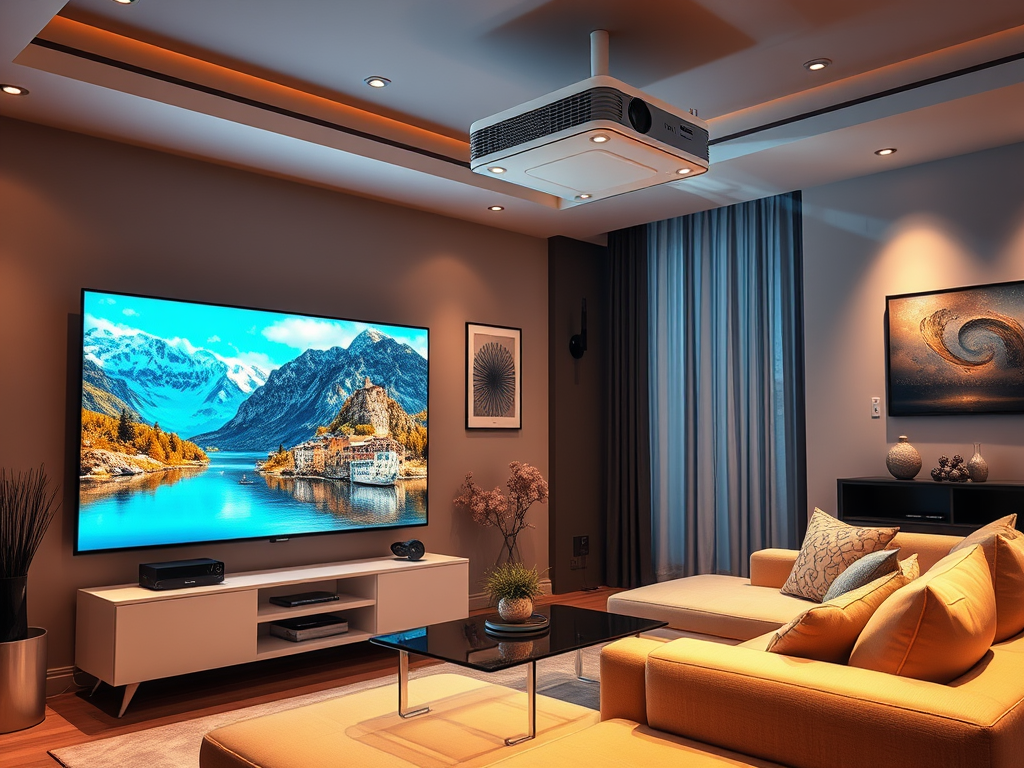
LONDON & NEW YORK — In an era when multi-trillion-dollar valuations are routinely commanded by software ecosystems and cloud-compute architecture, the physical foundations of modern digital infrastructure are frequently overlooked. Yet, every time a consumer mounts an ultra-thin 85-inch OLED display in a suburban living room, or an enterprise deploys mission-critical command center monitors, they are reaping the commercial and technological dividends of a quiet British physicist’s breakthroughs in the 1960s and 1970s. Cyril Hilsum, a pioneering materials scientist at the Royal Radar Establishment in Malvern, did not merely invent a laboratory curiosity; he engineered the foundational science of liquid crystal displays (LCDs). His capital-efficient, high-precision research unlocked a multi-billion-dollar global display economy, fundamentally altering consumer electronics, enterprise productivity, and capital allocation across the hardware supply chain.
Executive Takeaways
- The Genesis of Modern Display Tech: Cyril Hilsum’s pioneering work on liquid crystals at the Royal Radar Establishment laid the groundwork for all modern flat-panel displays, transitioning the tech from unstable laboratory oddity to stable commercial utility.
- Massive Economic Spillover: Hilsum’s chemical formulations enabled the global LCD market, which underpins a multi-trillion-dollar ecosystem spanning consumer HDTVs, enterprise monitors, automotive dashboards, and mobile devices.
- Strategic Risk Mitigation & R&D: The transition from bulky cathode-ray tubes (CRTs) to flat panels represents one of the most successful public-private sector technology transfers in industrial history, proving the immense ROI of foundational government-backed scientific research.
- In the current era of advanced MicroLED, OLED, and quantum dot displays, the fundamental physics of liquid crystal modulation and molecular alignment established by Hilsum and his contemporaries remain a benchmark of materials science engineering.
The Catalyst: Moving Beyond the Cathode-Ray Tube
Test Our Free AI & Tech Utilities Suite
Calculate LLM API token costs, analyze article dwell-time, or simulate tech DCA returns.
For the better part of the 20th century, the visual interface of the global economy was shackled by the cathode-ray tube (CRT). Bulky, power-hungry, and thermally inefficient, CRTs imposed severe physical constraints on product design, real estate utilization, and infrastructure scalability. By the late 1960s, the burgeoning demand for portable instrumentation and low-voltage digital readouts created an urgent technological bottleneck. Military contractors, consumer electronics conglomerates, and telecommunications giants recognized that electronic systems were advancing exponentially, while human-machine interfaces remained anchored to heavy glass tubes.
Enter Cyril Hilsum and his dedicated team of researchers at the UK Ministry of Defence’s Royal Radar Establishment (RRE) in Malvern. While academic institutions in the United States and corporate labs like RCA had observed electro-optic effects in liquid crystals, these early formulations were wildly unstable at room temperature, degraded rapidly under electrical current, and operated within impractically narrow thermal ranges. Hilsum understood that if liquid crystals were to transition from academic physics papers to viable commercial products, the underlying chemistry required rigorous, systematic stabilization.
Hilsum applied rigorous thermodynamic and molecular principles to design chemical compounds—specifically cyanobiphenyls—that exhibited stable nematic liquid crystal phases at ambient room temperatures. This breakthrough solved the primary engineering roadblock that had stymied corporate research and development departments worldwide. By establishing predictable molecular alignment and reliable threshold voltages, Hilsum and his team provided the exact technical blueprint required for mass manufacturing.
From Malvern to Mass Manufacturing: The Commercialization Lifecycle
The transformation of Hilsum’s materials science discoveries into global commercial dominance illustrates a textbook study in technology transfer and intellectual property dissemination. Rather than locking down the discoveries behind restrictive proprietary walls, the British government’s approach allowed international licensees to iterate upon Hilsum’s cyanobiphenyl formulations. Japanese electronics giants—including Sharp, Seiko, and Toshiba—quickly recognized the immense market liquidity and consumer demand waiting to be unlocked.
The initial wave of commercialization manifested in digital wristwatches and pocket calculators during the 1970s. These devices offered unprecedented battery life and readability, redefining consumer expectations. However, the true inflection point for enterprise valuation and capital expenditure arrived in the late 1990s and 2000s, when manufacturing yields matured sufficiently to scale LCDs to desktop monitor and television dimensions.
As manufacturing facilities scaled across South Korea, Taiwan, and mainland China, unit economics plummeted while resolution, contrast ratios, and response times scaled exponentially. The capital allocation strategies of major global tech firms pivoted aggressively away from legacy display lines toward thin-film transistor (TFT) LCD fabrication plants (fabs), which required multi-billion-dollar capital expenditures. Today, whether examining the valuation multiples of consumer electronics titans or assessing corporate supply chain resilience, the structural DNA of the flat-panel display traces directly back to Hilsum’s foundational chemical engineering.
Verified Data & Metrics Breakdown
To understand the monumental scale of the display industry enabled by early materials science breakthroughs, consider the following comparative metrics tracking the evolution of display technology from Hilsum’s early formulations to contemporary ultra-high-definition ecosystems:
| Metric / Parameter | Early Liquid Crystal Era (1970s) | Peak LCD Maturity (2010s) | Modern Display Ecosystem (Current) |
|---|---|---|---|
| Dominant Substrate Chemistry | Early Schiff base & impure nematic mixtures | Advanced Cyanobiphenyls & Fluorinated mixes | Advanced Liquid Crystals, OLED, & MicroLED |
| Typical Operating Temperature Range | 15°C to 30°C (Highly volatile) | -20°C to 80°C (Highly stable) | -40°C to 105°C (Automotive / Industrial grade) |
| Average Panel Thickness | > 10 mm (Segmented glass cells) | 15 mm to 30 mm (With backlight units) | < 4 mm (Ultra-thin profiles & flexible substrates) |
| Global Market Valuation Impact | Millions (Niche industrial & watch sector) | Over $100 Billion annually | Multi-Trillion-Dollar integrated hardware & media ecosystem |
Industry & Market Implications: Winners, Losers, and Economic Shifts
The macroeconomic ripples generated by Hilsum’s breakthroughs extend far beyond consumer electronics retail floors. In corporate finance and equity research, the transition from heavy CRTs to lightweight, high-resolution flat panels fundamentally restructured several major industry verticals:
- Semiconductor & Materials Providers: Chemical conglomerates and specialty gas suppliers that mastered the synthesis of high-purity liquid crystal mixtures secured decades of recurring, high-margin revenue streams, acting as vital toll-booths in the global hardware supply chain.
- Enterprise Productivity & Cloud Operations: Financial trading desks, software development hubs, and command-and-control infrastructure experienced exponential efficiency gains. Multi-monitor arrays powered by flat-panel technology enabled data ingestion rates impossible under legacy CRT constraints.
- Legacy CRT Manufacturers: Industrial casualties were swift and absolute. Companies that failed to amortize legacy manufacturing investments and pivot capital expenditures toward thin-film transistor fabrication lines faced rapid insolvency or forced market exit.
- Retail & Media Economics: The physical shrinking of televisions transformed interior architecture and catalyzed the home-theater economy, directly amplifying content streaming monetization models for media conglomerates.
People Also Ask (Frequently Asked Questions)
Frequently Asked Questions
Who is Cyril Hilsum and what was his primary contribution to display technology?
Cyril Hilsum was a prominent British physicist working at the Royal Radar Establishment in Malvern during the 1960s and 1970s. His primary breakthrough was formulating stable chemical compounds—specifically cyanobiphenyls—that allowed liquid crystals to operate reliably at room temperature, solving the instability issues that previously prevented commercial viability.
How did Hilsum’s research enable modern giant HDTVs?
By establishing stable chemical formulations and electrical switching parameters for liquid crystals, Hilsum provided the scientific foundation for liquid crystal displays (LCDs). As manufacturing techniques matured, these principles scaled from small watch screens to massive, high-definition flat-panel televisions adorning living rooms today.
Why are liquid crystal stability and phase behavior critical for enterprise display manufacturing?
Commercial displays require operational reliability across diverse environmental conditions and extended lifespans. Hilsum’s materials science innovations ensured that liquid crystal molecules maintain precise optical rotation and alignment under continuous electrical voltage without degrading or shifting phase across normal operating temperatures.
What is the economic significance of public-sector research in modern hardware development?
Hilsum’s work exemplifies high-ROI public-sector R&D. By absorbing early-stage scientific risk and solving fundamental materials science challenges, government research institutions created the foundational intellectual property that global private enterprises later scaled into multi-billion-dollar commercial markets.
Future Outlook: The Horizon Beyond Liquid Crystals
As institutional investors and enterprise technologists evaluate the next decade of hardware evolution, the display landscape continues to iterate beyond traditional LCD architectures. Emerging technologies such as self-emissive Organic Light-Emitting Diodes (OLED), quantum dot enhancements, and micro-scale inorganic LEDs (MicroLED) are steadily capturing high-end market share. These advancements offer superior contrast ratios, faster response times, and elimination of traditional backlight requirements.
Yet, even as display engineering pushes toward atomic-scale precision and flexible substrates, the fundamental engineering methodologies pioneered by Cyril Hilsum remain the gold standard of materials science innovation. His rigorous approach to phase stability, molecular engineering, and scalable chemical synthesis established the playbook for modern display development. For capital markets, equity analysts, and technology historians alike, recognizing the profound impact of Hilsum's Malvern laboratories is essential to understanding how the physical architecture of our digital world was built.