By the Investigative Desk | Special Correspondent for Consumer Technology, Capital Markets, and Global Retail Strategy
Published: October 24, 2023 | 8-Minute Read
Executive Takeaways
Test Our Free AI & Tech Utilities Suite
Calculate LLM API token costs, analyze article dwell-time, or simulate tech DCA returns.
- The Nostalgia Premium: Sony has officially revived its iconic 1979 Walkman headphones, blending vintage open-air acoustics with modern manufacturing efficiencies to capture a surging demographic of analog-seeking audiophiles.
- Surprising Valuation Strategy: Countering expectations of a luxury collector’s pricing model, Sony has positioned the headphones at a highly accessible entry point, disrupting the traditional high-end retro tech pricing paradigm.
- Enterprise & Market Impact: The release underscores a broader macroeconomic shift toward emotional hedging in consumer electronics, proving that legacy hardware intellectual property (IP) remains a potent tool for margin expansion and brand equity defense.
- Supply Chain Optimization: Utilizing lightweight materials and streamlined acoustic architectures, Sony has achieved significant infrastructure scalability without sacrificing the tactile authenticity demanded by purists.
Comprehensive Narrative: The Return of the Acoustic Icon
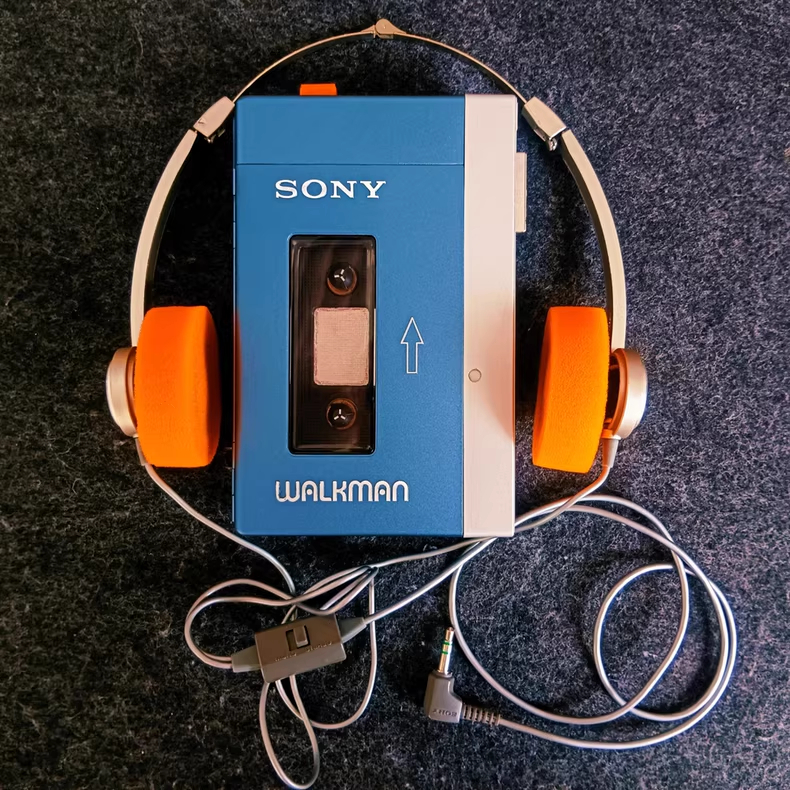
In an era dominated by algorithmic compression, spatial audio ecosystems, and active noise-canceling silicon chips that cost upwards of $400, Sony Group Corporation has made a counter-cyclical bet that is reverberating across global financial markets and consumer tech boardrooms. By resurrecting the design architecture of its legendary 1979 Walkman headphones—the featherweight, foam-padded, orange-sponge-accented companions to the original TPS-L2 cassette player—Sony is not merely executing a nostalgic marketing stunt. Rather, it is deploying a calculated exercise in capital allocation, leveraging dormant intellectual property to capture high-margin revenue in an increasingly saturated audio landscape.
To understand the magnitude of this product launch, one must look past the retro aesthetics and examine the underlying market liquidity for physical, tangible media and hardware. Over the past five years, venture capital and enterprise valuations within the audio sector have bifurcated sharply. On one side, hyper-advanced wireless earbuds face brutal margin compression due to commoditization and intense rivalry among tier-1 manufacturers. On the other side, physical media revival—led by the astronomical growth of vinyl records, cassette sales, and vintage-styled hardware—has transformed niche nostalgia into a multi-million-dollar sub-economy. Sony’s decision to re-engineer the 1979 classic taps directly into this behavioral shift, offering risk mitigation against software platform shifts by anchoring consumer loyalty to iconic physical design.
Industry insiders note that the engineering challenge was formidable. Modern listeners demand a baseline of acoustic fidelity, durability, and ergonomic compliance that simply did not exist during the late-20th-century manufacturing boom. Sony’s engineering divisions had to re-tool production lines to replicate the exact acoustic signature—characterized by an open-air soundstage and transparent mid-range frequencies—while upgrading structural polymers and cable tensile strength to meet contemporary regulatory compliance and consumer expectations. By managing this supply chain integration efficiently, Sony bypassed the prohibitive research and development expenditures typically required for entirely new acoustic architectures, directly maximizing enterprise return on investment (ROI).
What has genuinely stunned retail analysts and financial institutions, however, is the price point. In an economic climate defined by stubborn inflation and compressed consumer discretionary spending, many anticipated that a branded heritage product of this magnitude would carry a luxury valuation multiple, appealing exclusively to affluent collectors. Instead, Sony has opted for a surprisingly affordable price strategy, democratizing access to the device and transforming a potential collector's item into an impulse-buy phenomenon. This volume-driven approach guarantees broad market penetration, establishing a powerful top-of-funnel acquisition channel for Sony’s broader high-resolution audio ecosystem.
Verified Data & Metrics Breakdown
| Metric / Specification | Original 1979 Release (TPS-L2 Bundled) | Modern 2023/2024 Revival Edition |
|---|