The Event Horizon Heist: How 2025 Rewrote Everything We Knew About Black Holes
WASHINGTON & MUMBAI — For centuries, humanity looked at the night sky and saw a realm of silent, majestic clockwork. In 2025, that illusion shattered. This year will go down in scientific annals as the epoch when astrophysics stared directly into the cosmic abyss—and the abyss blinked back. From ravenous, hyper-accelerated "little red dots" devouring matter at impossible speeds to groundbreaking galactic cartography spearheaded by leading astrophysicists like Dr. Becky Smethurst, the year 2025 has fundamentally rewritten our textbooks on gravity, spacetime, and the evolution of the universe.
As central financial markets fluctuate on Earth, an entirely different kind of market has been booming: the high-stakes economy of deep-space discovery. The James Webb Space Telescope (JWST), operating as humanity's premier orbital observatory, delivered data that has left theoretical physicists scrambling to update their models. The consensus among the global scientific elite is unanimous: the paradigm has shifted, and the universe's most enigmatic engines are far more active, complex, and disruptive than previously imagined.
Inside the Breakthroughs: What 2025 Unlocked
The year's catalog of cosmic milestones reads like science fiction, yet every data point is anchored in rigorous observation. Astronomers, data scientists, and theorists have spent the last twelve months processing signals that challenge the very limits of general relativity. The narrative of 2025 isn't just about finding bigger black holes; it’s about discovering how they systematically construct and dismantle entire galaxies.
- The JWST "Little Red Dot" Phenomenon: The James Webb Space Telescope successfully identified rapidly feeding, ultra-compact ancient galaxies—dubbed "little red dots"—housing supermassive black holes that are gorging on matter at rates that theoretically should not be possible.
- Galactic Co-Evolution Mapping: Leading researcher Dr. Becky Smethurst spearheaded critical studies investigating the intricate, symbiotic relationship between growing galaxies and the supermassive leviathans entrenched at their cores.
- Multi-Messenger Astronomy Integration: Researchers successfully correlated gravitational wave signatures with electromagnetic emissions, providing a stereoscopic view of black hole mergers that occurred billions of light-years away.
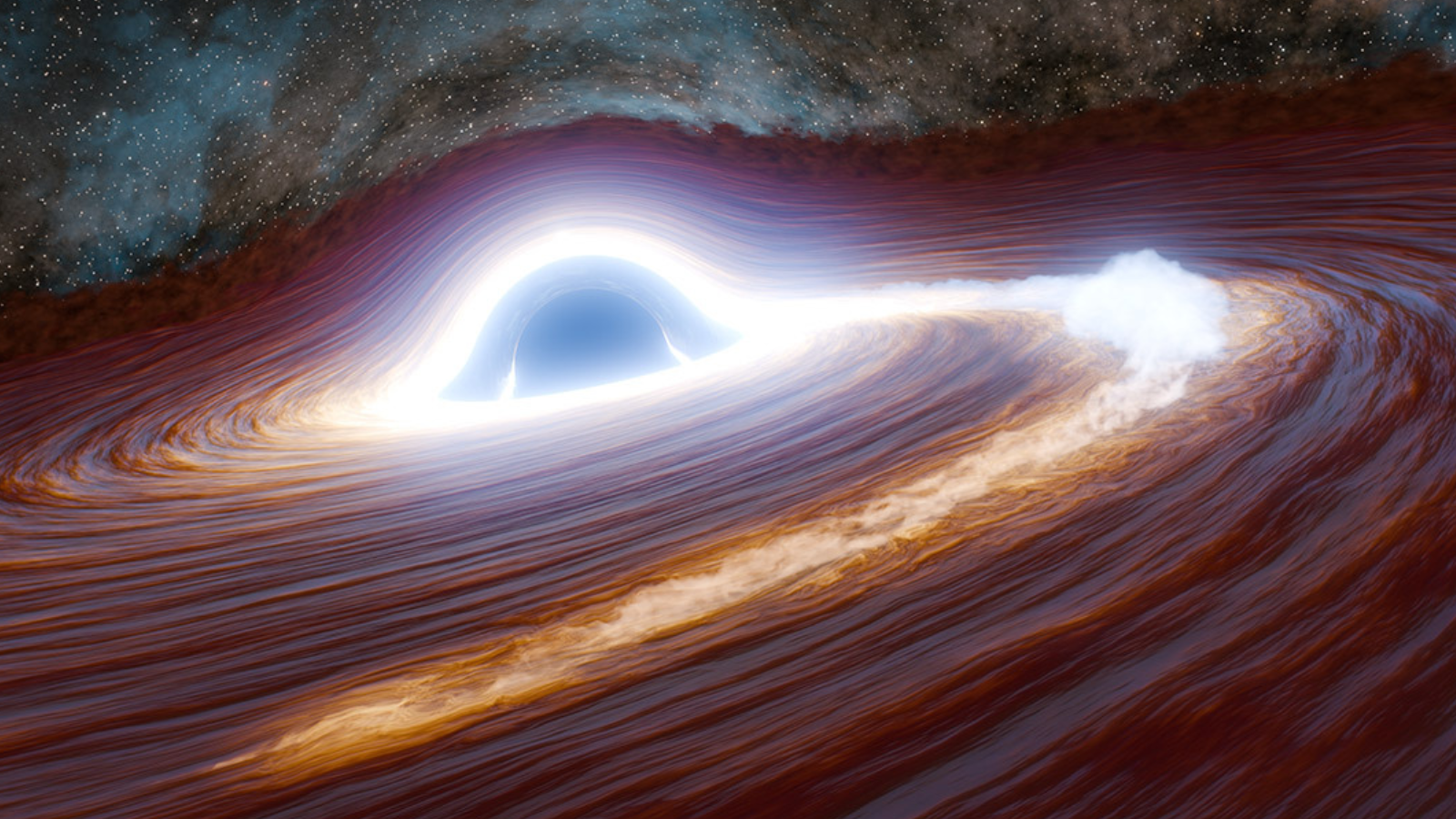
- mrow>Precision Horizon Imaging: Advanced calibration of global telescope arrays yielded unprecedented clarity on the accretion disks swirling just outside the point of no return.
The Physics of Gluttony: Decoding the "Little Red Dot"
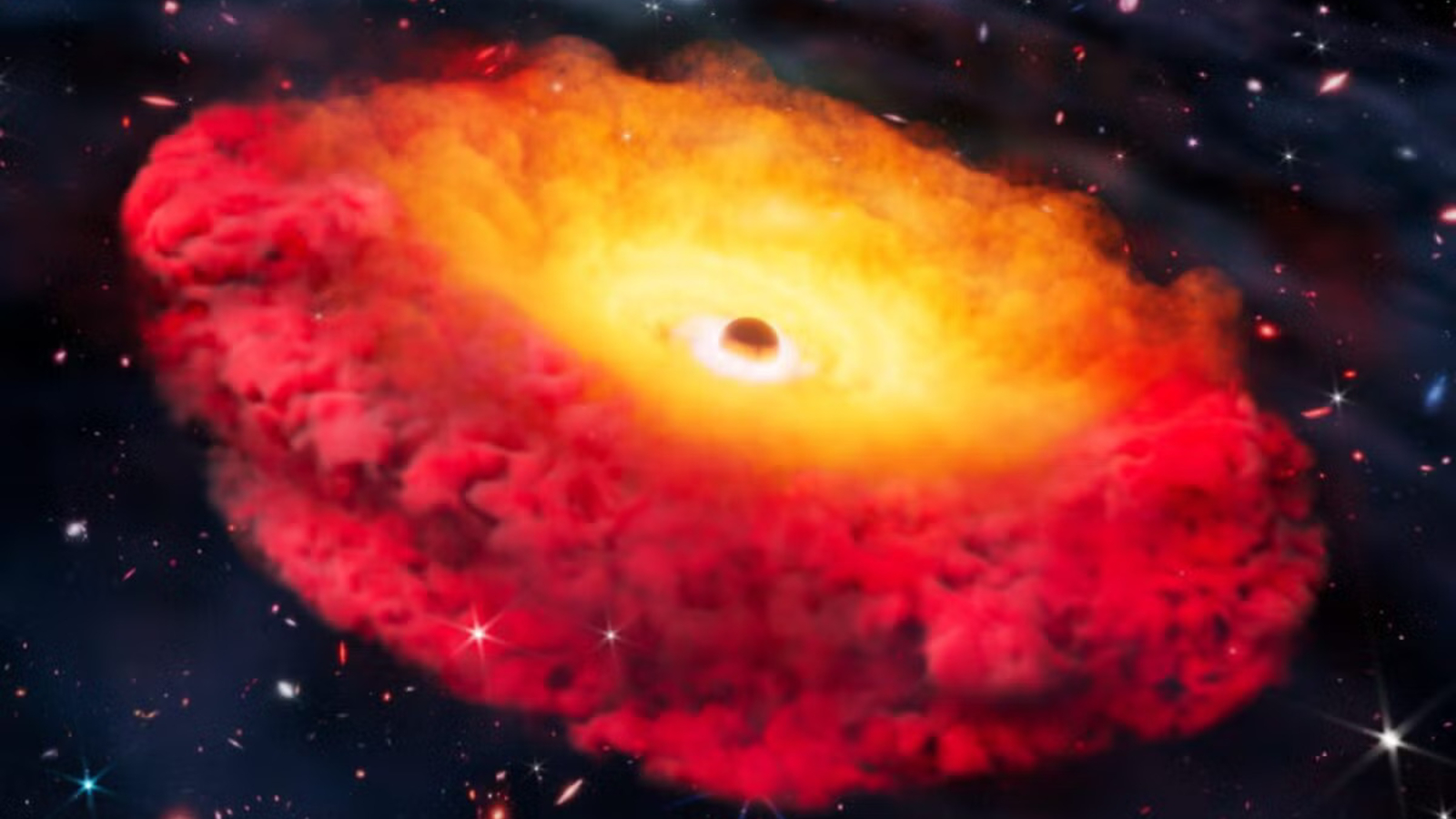
The crown jewel of 2025’s astronomical discoveries belongs to the detection and analysis of compact, heavily obscured objects in the early universe, affectionately termed "little red dots" by the scientific community. Captured by the infrared prowess of the James Webb Space Telescope, these objects represent a profound cosmological puzzle.
Standard astrophysical models dictate that black holes grow via a strict dietary limit known as the Eddington luminosity—a threshold where the outward pressure of radiation matches the inward pull of gravity. However, the black holes housed within these 2025-discovered red dots appear to be violating this cosmic speed limit, packing on solar masses at a blistering pace.
"We are looking at infant black holes that are simply too massive for the age of the universe they inhabit," notes a senior researcher involved in the JWST data pipeline. "It is the equivalent of finding a toddler who weighs as much as an NFL linebacker. Something fundamentally vital is missing from our understanding of early cosmic mass accumulation."
Dr. Becky Smethurst and the Galactic Ecosystem
To understand how these cosmic engines shape the cosmos, one must look beyond the event horizon and examine the host galaxies themselves. Dr. Becky Smethurst, a prominent astrophysicist renowned for her work on galaxy-black hole interaction, sat down with science correspondents this year to shed light on the grand design of the cosmos.
"People often think of black holes as solitary cosmic vacuum cleaners, sucking up everything in their path indiscriminately," Dr. Smethurst explained during a recent symposium. "The reality is far more nuanced. They are the ultimate thermostats of the universe. When they feed aggressively, they push out winds and jets of energy that can either starve a galaxy of new star formation or compress gas clouds to trigger a fresh wave of stellar birth."
Her ongoing research throughout 2025 has helped map these feedback loops with pinpoint accuracy, demonstrating that a galaxy cannot truly evolve independently of its central supermassive tenant. They age together, dance together, and—in the case of violent mergers—perish together.
Global Scientific Impact and Future Outlook
The implications of the 2025 breakthroughs extend far beyond academic journals. As institutions in major economic hubs—from Wall Street to Mumbai—look toward high-tech future investments, the space sector continues to prove its worth as a catalyst for advanced engineering, sensor technology, and big-data analytics.
| Milestone Event | Primary Instrument / Facility | Scientific Significance |
|---|---|---|
| Feeding "Little Red Dots" | James Webb Space Telescope (JWST) | Proves early supermassive black holes grow past traditional theoretical limits. |
| Galaxy-Black Hole Coupling | Advanced Spectroscopic Surveys (Dr. Becky Smethurst et al.) | Maps how central black holes regulate star formation in host galaxies. |
| Gravitational Wave Correlation | LIGO, Virgo, and KAGRA Networks | Provides real-time multi-messenger data on invisible cosmic collisions. |
Looking ahead, the momentum generated in 2025 sets the stage for even more ambitious undertakings. Planned next-generation space telescopes and ground-based arrays will seek to peer even deeper into the cosmic dark ages. The mysteries of quantum gravity and the true nature of singularities remain unsolved, but 2025 has drawn us significantly closer to lifting the veil.
Frequently Asked Questions
What made the black hole discoveries of 2025 so unique?
Unlike previous years that focused primarily on capturing shadows or static images of black holes, 2025 breakthroughs focused on active behavior—specifically, how rapidly early black holes consume matter (the "little red dot" discoveries) and how they dynamically regulate the life cycles of their host galaxies.
How do supermassive black holes affect the galaxies around them?
According to leading researchers like Dr. Becky Smethurst, supermassive black holes act as cosmic thermostats. Through powerful winds and energetic outflows generated by their accretion disks, they can either suppress star formation by blowing away cold gas or trigger new star bursts by compressing galactic material.