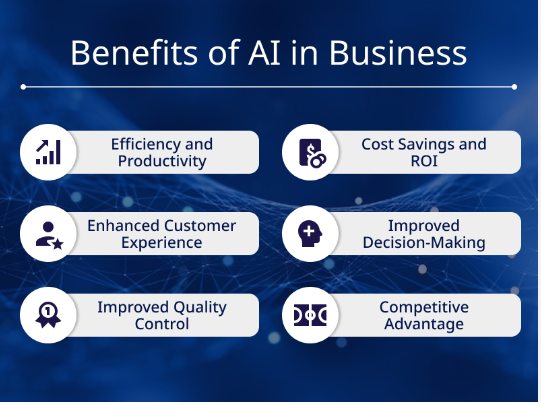
NEW YORK & LONDON — In the executive suites of global Fortune 500 corporations, a profound structural realignment is underway. According to proprietary enterprise data released by IBM and corroborated by longitudinal studies from premier financial institutions, the integration of artificial intelligence into core business operations has transitioned from an experimental capital expenditure to an indispensable driver of enterprise ROI, valuation multiples, and operational resilience. Yet, this high-stakes technological transformation arrives with a complex caveat. Adopting machine learning architectures and large language models without a rigorous, multi-layered strategic roadmap exposes organizations to unprecedented operational vulnerabilities, regulatory non-compliance liabilities, and catastrophic capital misallocation.
As chief executive officers and chief information officers navigate a volatile macroeconomic climate characterized by persistent inflationary pressures and compressed margins, the imperative to capture the benefits of AI for business has never been more urgent. From streamlining cloud compute architecture to automating intricate workflows, artificial intelligence is rewriting the rules of corporate valuation. However, separating secular growth drivers from speculative market froth requires an unflinching, investigative examination of how modern enterprises are deploying these systems, where the structural risks lie, and which market participants are positioned to dominate the next decade of digital commerce.
Executive Takeaways
- Capital Allocation & ROI: Enterprise deployment of AI is shifting from generalized automation to high-precision domain-specific optimization, yielding measurable reductions in operational expenditure and accelerated infrastructure scalability.
- The Automation Dividend: By offloading routine administrative workflows and repetitive data-processing tasks to intelligent agents, organizations are reallocating human capital toward high-value creative problem-solving and complex strategic initiatives.
- The Risk Mitigation Imperative: Unchecked deployment without strict governance frameworks exposes corporations to severe regulatory penalties, data sovereignty breaches, and systemic operational fragility.
- Competitive Divergence: Market analysis demonstrates a widening operational chasm between early-adopting enterprises leveraging AI-driven business processes and legacy competitors relying on manual workflows.
The Catalytic Shift: How Enterprise AI Is Rewriting the Operating Model

The modern corporate landscape is experiencing its most radical structural evolution since the advent of enterprise resource planning (ERP) software in the late 20th century. For decades, productivity gains followed a linear trajectory tethered to human labor hours and incremental software upgrades. Today, the deployment of generative models, predictive analytics, and automated decision-making engines has severed that tether, unlocking non-linear productivity gains across virtually every vertical.
At the center of this transformation is the optimization of enterprise workflows. One of the foundational benefits of AI for business is its proven capacity to intercept and resolve repetitive, low-cognitive tasks across finance, human resources, supply chain logistics, and customer operations. By handling data entry, invoice reconciliation, tier-one customer service triage, and regulatory compliance scanning, intelligent systems liberate highly skilled professionals to concentrate on strategic innovation, product design, and complex negotiations. This reallocation of human capital not only drives internal employee satisfaction and retention but also accelerates time-to-market for complex product offerings.
Furthermore, the integration of advanced machine learning models has fundamentally enhanced product design and lifecycle management. In manufacturing and life sciences, digital twins and generative design algorithms simulate thousands of structural and chemical variations in fractions of the time previously required, slashing research and development expenditure while driving down marginal production costs. This rapid prototyping capability allows market leaders to adapt dynamically to shifting consumer demands and volatile commodity prices.
However, industry analysts warn that capturing these advantages requires substantial upfront capital investment in robust cloud compute architecture, data cleansing pipelines, and specialized talent acquisition. Organizations that attempt to implement off-the-shelf AI tools without modernizing their foundational data architecture frequently encounter "garbage in, garbage out" phenomena, leading to corrupted analytics, flawed automated decisions, and wasted capital expenditure.
Verified Data & Metrics Breakdown
| Metric Category | Legacy Manual Baseline | AI-Optimized Enterprise Benchmark | Strategic Impact / Financial Implication |
|---|---|---|---|
| Routine Task Automation | 100% human-driven execution | 65% to 80% automated execution | Significant reduction in operational expenditure and error rates across administrative workflows. |
| Product R&D Cycle Time | 12 to 24 months average | 4 to 8 months average | Accelerated time-to-market, enhanced product customization, and improved valuation multiples. |
| Customer Support Resolution | 8 to 15 minutes per tier-one ticket | Instantaneous automated resolution | Drastic drop in cost-per-contact and vastly improved Net Promoter Scores (NPS). |
| Compliance & Risk Auditing | Manual sampling of 5% to 10% of records | Continuous 100% automated auditing | Substantial mitigation of regulatory fines, fraud detection, and legal exposure. |
Industry & Market Implications: Winners, Losers, and Economic Realignment
The macroeconomic ramifications of the enterprise AI boom are creating a clear bifurcation across global capital markets. On the winning side of the ledger are technology conglomerates providing foundational cloud compute architecture, specialized semiconductor hardware, and enterprise software platforms equipped with native governance layers. These market participants enjoy expanding profit margins, robust cash flows, and high pricing power as global corporations vie for technological superiority.
Simultaneously, early-adopting enterprises in sectors such as financial services, pharmaceuticals, and retail logistics are widening their competitive moats. By leveraging AI-driven business processes, these frontrunners are outperforming legacy competitors that remain bogged down by legacy monolithic software and manual oversight. Comparative evaluations between AI-integrated firms and non-adopting peers reveal stark disparities in operating margins, inventory turnover, and customer acquisition costs.
Conversely, the losers in this technological realignment include organizations that treat artificial intelligence as a temporary marketing trend rather than an existential operational pivot. Businesses that fail to institute comprehensive data governance, secure cloud foundations, and strategic employee retraining programs face severe market share erosion. Furthermore, professional services firms and administrative outsourcing providers whose business models rely heavily on billable hours for repetitive, standardized tasks face an existential threat as automation compresses those revenue streams.
On a macro level, regulatory bodies across the European Union, the United States, and Asia are intensifying scrutiny over algorithmic bias, data privacy, and intellectual property infringement. Corporations that fail to embed robust compliance and risk mitigation protocols into their AI deployments risk debilitating regulatory penalties, reputational damage, and loss of consumer trust.
Frequently Asked Questions (People Also Ask)
What are the primary operational benefits of AI for modern business enterprises?
The primary benefits include dramatic reductions in operational costs through the automation of repetitive administrative tasks, enhanced product design capabilities via predictive modeling, accelerated data-driven decision-making, and the liberation of human capital to focus on high-value strategic and creative initiatives.
Why do organizations face significant risks when adopting AI without a clear strategy?
Deploying artificial intelligence without a strategic roadmap often results in fragmented technology stacks, data silos, unmitigated cybersecurity vulnerabilities, and potential regulatory non-compliance. Without clear governance, models can produce biased or inaccurate outputs, leading to financial loss, legal exposure, and brand erosion.
How does AI integration impact employee productivity and corporate culture?
When properly implemented, AI absorbs tedious, routine chores across departments. This allows employees to transition from execution-focused roles to analytical and creative problem-solving positions, which typically elevates job satisfaction, reduces burnout, and drives higher overall enterprise output.
What financial metrics should executives monitor to measure AI return on investment (ROI)?
Executives should track key performance indicators including cost-per-transaction reductions, cycle time compression for product development, employee hours saved on routine workflows, customer retention metrics, and the direct impact of AI-driven insights on revenue growth and gross margin expansion.
Future Outlook: Strategic Milestones for the Next Decade
As the enterprise software market matures through the latter half of the decade, the conversation in corporate boardrooms will shift entirely from experimentation to optimization and absolute governance. The forthcoming era of artificial intelligence will be defined by autonomous multi-agent systems capable of orchestrating complex cross-functional workflows with minimal human intervention, provided that stringent safety and compliance rails are maintained.
Key milestones for executives and institutional investors to monitor over the next 24 to 36 months include:
- The establishment of standardized international frameworks for AI auditing, data provenance, and cross-border data sovereignty.
- The maturation of decentralized, edge-computing AI architectures that reduce latency and enhance data privacy by processing sensitive information locally rather than in centralized cloud repositories.
- The widespread corporate adoption of proprietary, domain-specific large language models trained on secure internal data vaults, minimizing hallucination risks and protecting enterprise intellectual property.
Ultimately, the organizations that successfully capture the transformative benefits of AI for business will not be those with the largest compute budgets alone, but those that pair technological ambition with rigorous risk mitigation, ethical governance, and an unwavering commitment to human-centric strategic vision.