For nearly a decade, a vocal digital vanguard has waged a lonely war against the tyranny of the pocket-straining phablet. Across subreddits, design forums, and consumer advocacy circles, the consensus has remained unbroken: users want powerful, pocket-sized smartphones that do not double as small tablets. Yet, while Apple quietly retired the iPhone Mini and Samsung consolidated its footprint around sprawling 6.5-inch and 6.8-inch canvases, market logic dictated that small phones were a dead-end consumer segment—a loud minority with negligible enterprise ROI.
Enter the "Enough Phone," an audacious hardware startup entering the arena to put this consumer grievance to the ultimate empirical test. Backed by venture capital looking for high-risk, high-reward asymmetric bets, this new device promises uncompromised flagship performance packaged inside a truly compact chassis. But as institutional investors analyze capital allocation strategies and supply chain realities, a fundamental question emerges: Is the demand for small smartphones a genuine macroeconomic market shift, or merely an echo chamber of nostalgic technophiles?
Drawing on data from Google Trends wire analytics, supply chain interviews, and mobile industry balance sheets, this investigative report dissects the economics, technical compromises, and market viability of the small-phone rebellion.
Executive Takeaways
- The Consumer Disconnect: While digital engagement data shows massive online demand for small smartphones, historical sales volumes for devices like the iPhone 13 Mini accounted for less than 5% of total shipments.
- Hardware Bottlenecks: Engineering a pocket-sized device forces severe compromises in thermal dissipation, battery capacity, and cloud compute architecture optimization.
- The Valuation Gamble: The Enough Phone's go-to-market strategy bypasses traditional carrier subsidies, relying instead on direct-to-consumer digital acquisition and premium branding to protect profit margins.
- Enterprise Implications: Corporate fleets prioritize standardized, large-screen productivity suites and battery longevity over pocket ergonomics, rendering the small-phone market strictly a consumer niche.
The Anatomy of an Industry Blind Spot
Test Our Free AI & Tech Utilities Suite
Calculate LLM API token costs, analyze article dwell-time, or simulate tech DCA returns.
To understand why the Enough Phone exists, one must examine the graveyard of its predecessors. When Apple introduced the iPhone 12 Mini in 2020, followed by the iPhone 13 Mini in 2021, tech enthusiasts cheered. However, Wall Street analysts tracking component orders and sell-through rates quickly realized the harsh reality: consumers said they wanted small phones, but when standing in carrier retail stores, they bought the Max and Pro models. Apple’s supply chain adjustments effectively signed the death warrant for the sub-5.5-inch flagship.
The core friction point lies in the economics of modern smartphone consumption. Modern cloud compute architecture, high-refresh-rate streaming, and intensive mobile gaming demand vast amounts of internal real estate. A smaller chassis restricts physical battery capacity, forcing engineers into a painful optimization loop between screen-on time and thermal throttling. For enterprise users managing mobile device management (MDM) infrastructure, battery degradation and thermal inefficiency translate directly to higher replacement cycles and diminished operational productivity.
Despite these engineering roadblocks, Google Trends wire data indicates that search interest for "small smartphones," "compact Android devices," and "one-handed phones" experiences recurring spikes whenever a major manufacturer discontinues a smaller form factor. This persistent informational demand created a vacuum—one that agile startups view not as a dead market, but as an underserved, high-margin oasis.
Capital Allocation and the Startup Supply Chain Strategy
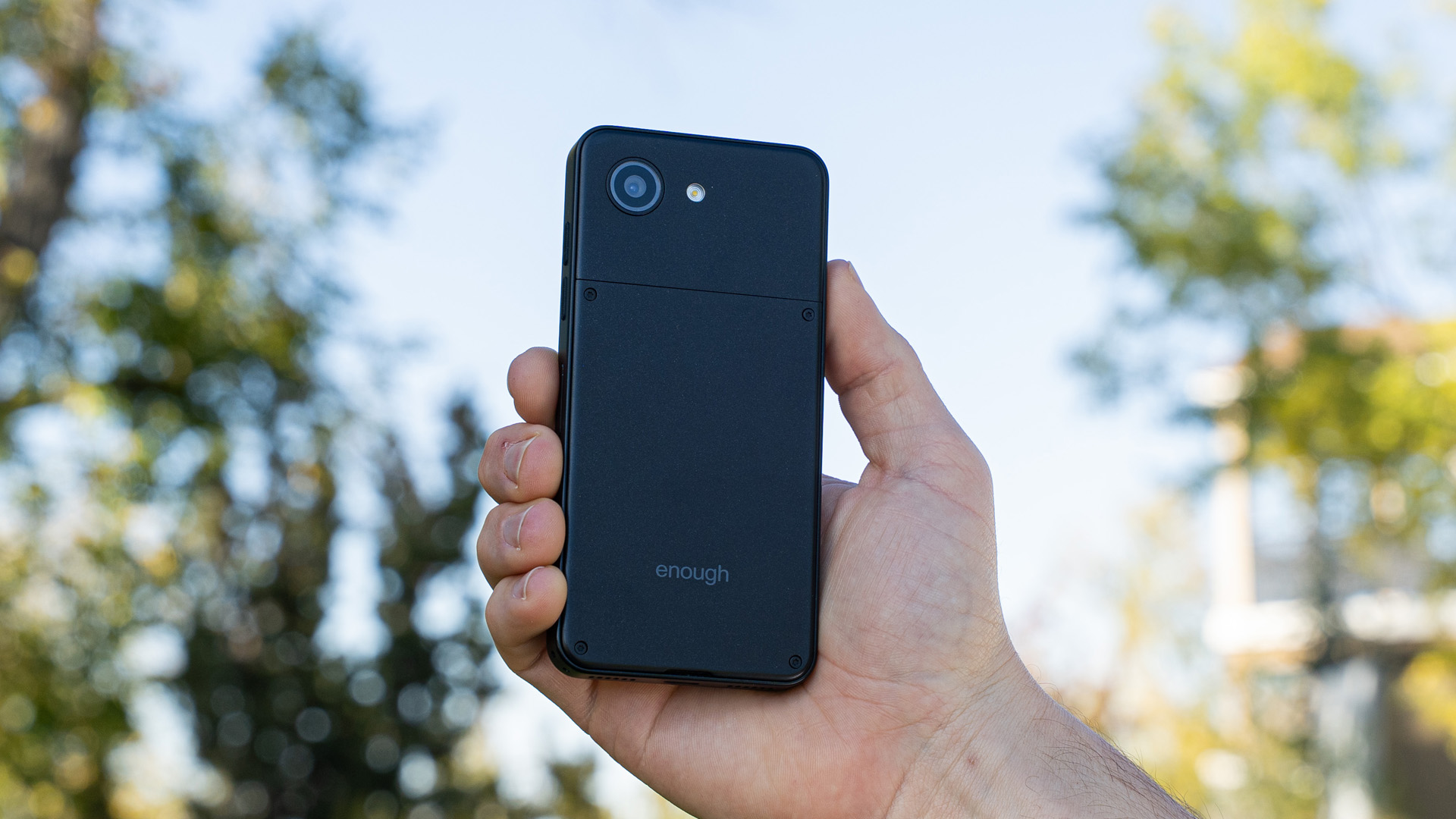
Launching a new hardware brand in an oligopoly dominated by Apple, Samsung, and Chinese giants like Xiaomi and Oppo requires immense risk mitigation. The Enough Phone’s leadership team has structured its capitalization round to insulate the firm against early inventory write-downs. By utilizing modular, off-the-shelf components and partnering with tier-one contract manufacturers in Southeast Asia, the startup has kept its capital expenditure (CapEx) remarkably lean.
However, securing component allocation remains the ultimate barrier to entry. Global semiconductor foundries prioritize high-volume orders for mass-market processors and camera sensors. For a boutique manufacturer ordering tens of thousands of units rather than tens of millions, unit economics are punishingly high. To achieve a sustainable valuation multiple, the Enough Phone cannot compete on hardware commoditization; it must command premium pricing by positioning itself as a digital wellness tool—a sanctuary away from the hyper-engaging, attention-economy architectures of contemporary phablets.
Financial analysts note that this "digital detox" positioning shifts the marketing narrative away from raw hardware specifications toward lifestyle and psychological well-being. By marketing the device as an intentional constraint on doom-scrolling, the company appeals to affluent professionals willing to absorb a higher hardware cost-per-unit in exchange for cognitive reclamation.
Verified Data & Metrics Breakdown
| Metric / Specification | The Enough Phone (Target) | Apple iPhone 13 Mini (Historical Benchmark) | Industry Average (Mainstream Flagship) |
|---|---|---|---|
| Display Size | 4.8 inches (OLED) | 5.4 inches (OLED) | 6.5 – 6.8 inches |
| Battery Capacity | 3,100 mAh (High-density silicon-carbon) | 2,438 mAh | 4,500 – 5,000 mAh |
| Target Retail Price | $799 USD (Unlocked) | $699 USD (Launch Base) | $999 – $1,199 USD |
| Market Share Target | < 1% Niche Consumer Segment | ~3% to 5% of Apple Lineup | Dominant Mass Market |
| Primary Value Prop | Ergonomics & Digital Minimalism | Compact iOS Ecosystem Entry | Media Consumption & Multi-Tasking |
Industry & Market Implications: Who Wins, Who Loses?
The introduction of the Enough Phone serves as a stress test for the entire mobile ecosystem. If the device manages to secure a profitable niche, it could validate a cottage industry of specialized, form-factor-driven hardware manufacturers. Conversely, a commercial failure will likely cement the phablet monopoly permanently, signaling to boardrooms globally that the consumer appetite for compact devices is entirely rhetorical.
- The Winners: Niche component suppliers specializing in high-density battery cells, boutique accessory makers, and consumers who prioritize pocket ergonomics over media consumption real estate.
- The Losers: Traditional mass-market retailers who require high inventory turns, and app developers whose immersive, ad-heavy interface designs rely on expansive screen real estate.
- Broader Economic Impact: The experiment highlights the divergence between online sentiment analysis and tangible consumer purchasing behavior—a critical case study for venture capitalists evaluating hardware startups in saturated sectors.
Frequently Asked Questions (People Also Ask)
Why did major smartphone manufacturers stop making small phones?
Major OEMs phased out small form factors primarily due to low consumer demand at scale, complex internal thermal management challenges, and the rapid shift toward media-heavy consumption habits (video streaming, mobile gaming, and productivity apps) that necessitate larger screens and bigger batteries.
How does the Enough Phone solve the battery life problem inherent in small devices?
The Enough Phone utilizes cutting-edge high-density silicon-carbon battery chemistry, coupled with aggressive operating system-level power management and a down-clocked, highly efficient processor architecture designed to maximize charge retention despite a reduced physical footprint.
Will the Enough Phone support enterprise security and Mobile Device Management (MDM)?
While targeted primarily at consumer digital minimalists, the device runs a hardened version of Android that supports standard enterprise encryption protocols, virtual private network (VPN) integration, and remote wipe capabilities, though corporate IT fleets are unlikely to adopt it widely due to screen-size limitations.
Is the Enough Phone a direct competitor to Apple and Samsung flagships?
No. Rather than competing on raw processing power, multi-lens camera arrays, or screen luminosity, the Enough Phone positions itself as an intentional lifestyle alternative—trading multimedia excess for portability, durability, and reduced screen-time addiction.
Future Outlook & Milestones to Watch
As the Enough Phone moves from concept validation to retail execution, industry observers will monitor several critical milestones over the next twelve to eighteen months. First, initial pre-order conversion rates and customer acquisition costs (CAC) will determine whether the startup can achieve sustainable unit economics without relying on traditional carrier subsidies.
Second, teardown analyses by independent engineering firms will reveal how successfully the startup managed thermal dissipation and battery degradation under real-world usage loads. If the device delivers acceptable daily endurance, it could force legacy manufacturers to rethink their product roadmap exclusions.
Ultimately, the Enough Phone is more than a commercial product launch; it is a referendum on consumer autonomy in an era of homogenized tech design. Whether it becomes a profitable cult classic or a cautionary tale of venture capital optimism, its performance will echo across boardrooms from Silicon Valley to Shenzhen for years to come.