Executive Takeaways
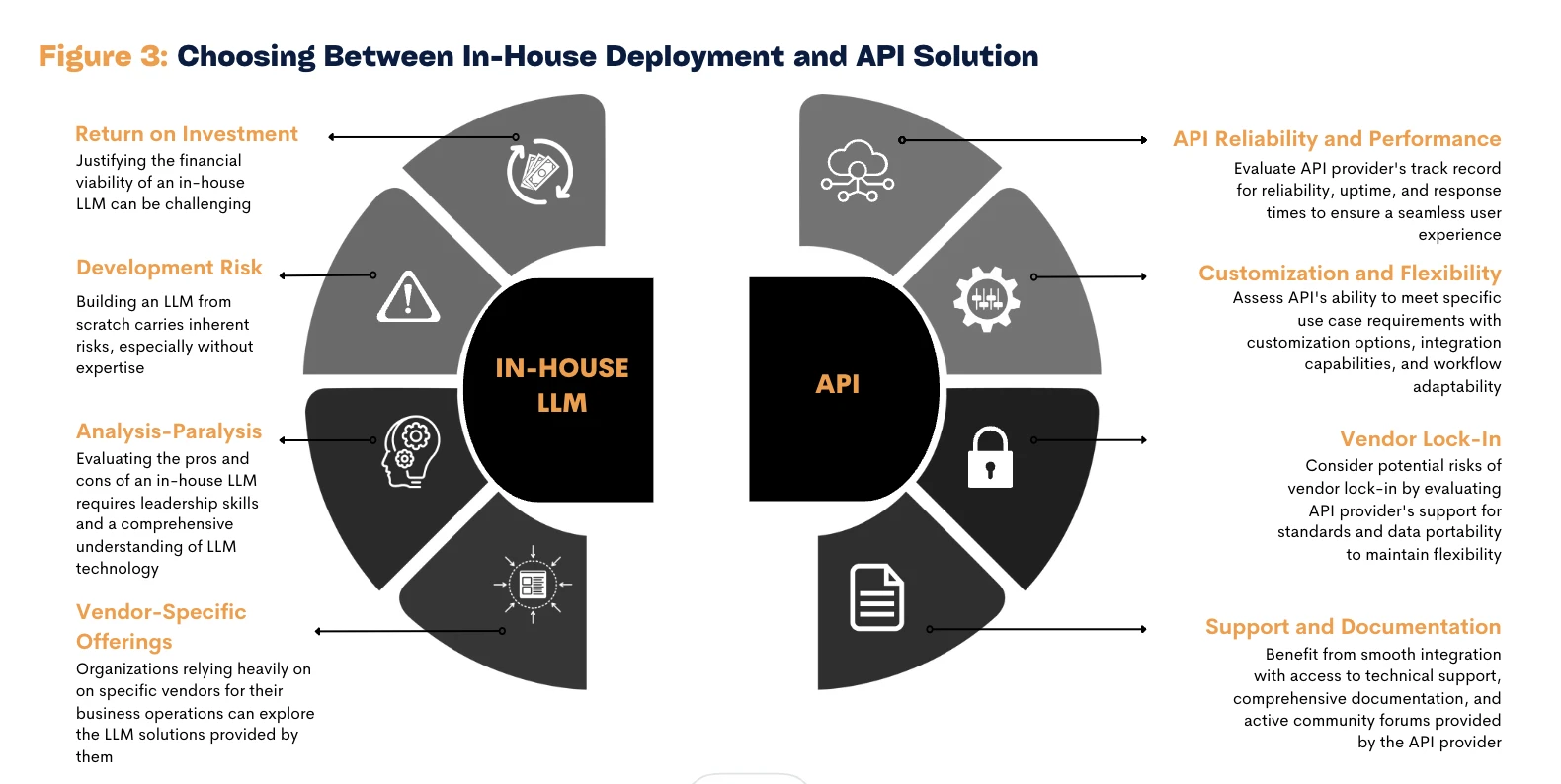
- Capital Expenditure Realignment: Enterprise software budgets are bifurcating, balancing the hyperscale elastic elasticity of cloud models like GPT-5.5 and Claude Opus 4.7 against the fixed-cost predictability of on-premise local deployments.
- The Regulatory Arbitrage: Stricter global data sovereignty frameworks, including expanded GDPR enforcement and regional banking mandates, are forcing high-compliance sectors to absorb the latency and capital overhead of local, air-gapped LLMs.
- Total Cost of Ownership (TCO) Inflection: While cloud inference remains the dominant vector for transient, high-token burst workloads, dense local parameter architectures deliver superior long-term ROI for high-frequency, low-latency enterprise core operations.
For more than half a decade, the corporate narrative surrounding artificial intelligence was dominated by a singular, centrifugal force: the cloud. Hyperscale data centers, fueled by billions of dollars in venture capital and corporate treasury outlays, positioned centralized, API-driven Large Language Models as the inevitable destination for enterprise intelligence. Today, that architectural monopoly is fracturing. As multinational conglomerates, financial institutions, and healthcare giants audit their balance sheets, a more nuanced deployment matrix has emerged—one defined by a high-stakes calculus balancing cloud compute agility against local infrastructure ownership.
The catalytic shift defining the current market cycle centers on control, latency, and margin protection. Cloud LLMs, anchored by next-generation engines such as OpenAI’s GPT-5.5 and Anthropic’s Claude Opus 4.7, offer virtually boundless scaling capabilities and access to reasoning horizons previously unimaginable on standard hardware. Yet, this power arrives with structural friction: recurring API overheads, data residency vulnerabilities, and exposure to third-party outages. Conversely, local LLMs—run on-premises or within private virtual clouds via optimized open-weight frameworks—offer complete data sovereignty and zero marginal token cost post-amortization, albeit at the expense of heavy upfront capital allocation for silicon and thermal infrastructure.
The Structural Divergence: Cloud Elasticity vs. Local Autonomy
To understand the current corporate migration patterns, one must examine the fundamental mechanics of modern cloud compute architecture. Cloud LLMs operate on a multi-tenant, utility-pricing model. Enterprises consume intelligence as an operational expenditure (OpEx), scaling token consumption dynamically without maintaining physical hardware. This model optimizes cash flow for volatile, unpredictable workloads—such as seasonal customer service surges or exploratory exploratory data science projects. The infrastructure scalability of hyperscalers ensures that even the most massive context-window queries are resolved via elastic compute clusters distributed globally.
However, this multi-tenant dependency introduces severe corporate risk vectors. When proprietary intellectual property, non-public financial statements, or patient electronic health records traverse third-party API endpoints, legal and compliance teams face regulatory exposure under frameworks like the EU AI Act, HIPAA, and Basel III. Furthermore, as token volumes scale into the tens of millions daily, the cumulative operational expense of cloud APIs often surpasses the amortized cost of deploying enterprise-grade local clusters equipped with specialized AI accelerators.
Local LLMs rewrite this economic equation. By downloading and executing advanced open-weight architectures directly on private hardware—often powered by enterprise accelerators from NVIDIA, AMD, or custom ASICs—organizations establish an air-gapped security perimeter. The financial profile shifts from variable OpEx to a predictable capital expenditure (CapEx) model. While initial hardware procurement and datacenter retrofitting require significant upfront capital allocation, the marginal cost of running billions of tokens drops near zero, preserving operating margins for high-volume, mission-critical automation.
Comparative Market Matrix: Cloud vs. Local LLMs
| Architectural Metric | Cloud LLMs (e.g., GPT-5.5, Claude Opus 4.7) | Local LLMs (On-Premises / Private VPC) |
|---|---|---|
| Primary Cost Structure | Variable Operational Expenditure (OpEx / Pay-per-token) | Fixed Capital Expenditure (CapEx / Hardware & Power) |
| Data Sovereignty & Compliance | Requires stringent enterprise data-processing agreements; third-party data transit | Absolute air-gapped security; zero external data leakage |
| Latency & Network Dependency | Dependent on internet bandwidth and provider API rate limits | Ultra-low latency; isolated from wide-area network (WAN) outages |
| Model Complexity & Updates | Instantaneous updates to frontier models managed by vendor | Requires manual quantization, fine-tuning, and infrastructure maintenance |
Industry & Market Implications: Winners and Losers
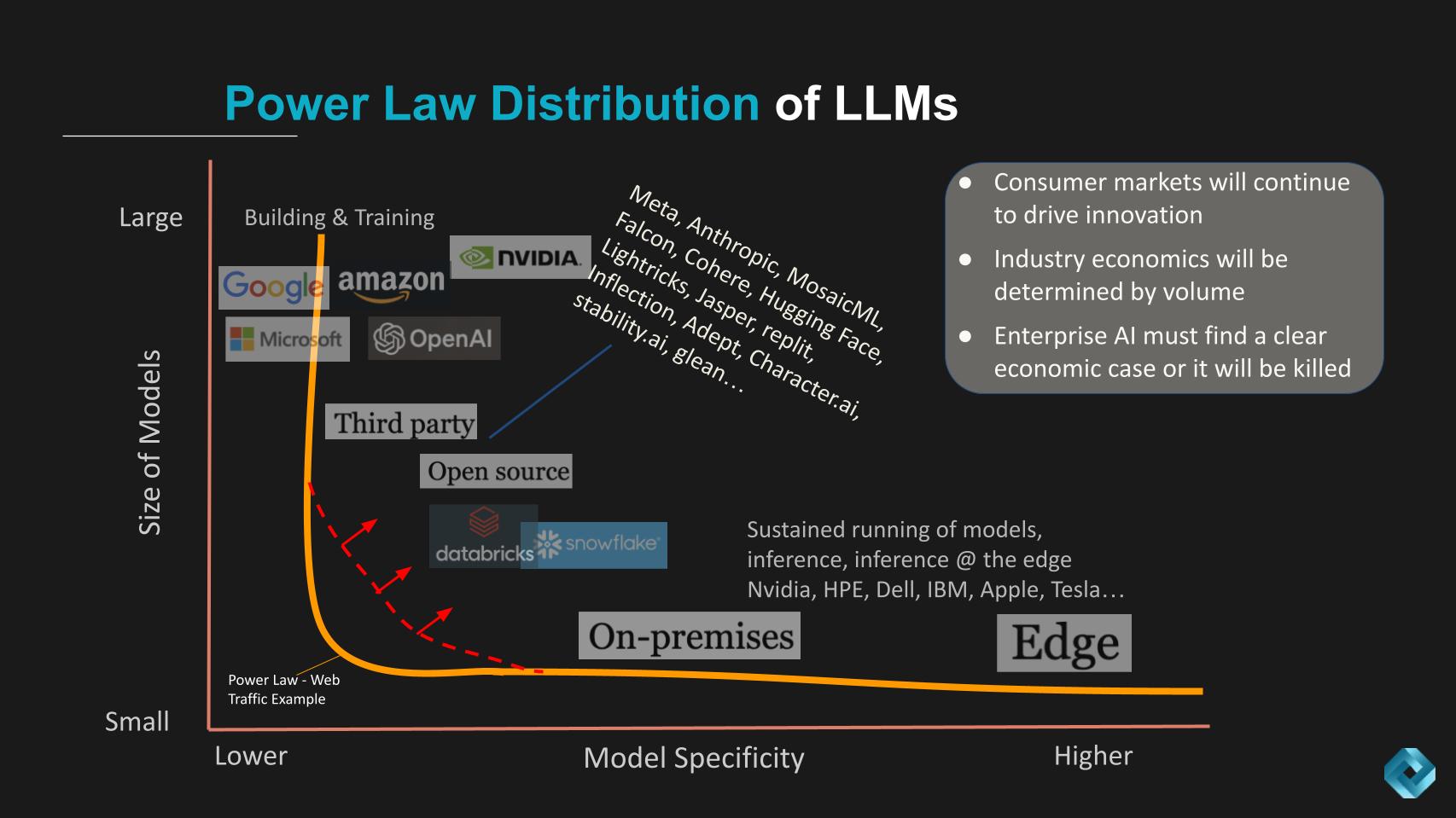
The bifurcation between cloud and local AI architectures is actively reshaping enterprise technology valuation multiples and supply chain dynamics. Hyperscale cloud providers—including Microsoft Azure, Amazon Web Services, and Google Cloud—remain foundational winners for general-purpose enterprise tasks, developer tooling, and massive unstructured data ingestion. Their ability to bundle advanced LLMs with existing database and enterprise resource planning (ERP) systems secures entrenched enterprise stickiness.
However, a distinct beneficiary class has emerged in hardware manufacturing, specialized silicon design, and enterprise IT consulting. Silicon foundries and server OEMs are experiencing unprecedented demand for high-density GPU racks and liquid-cooled data center appliances tailored for on-premise AI inference. Furthermore, cybersecurity vendors specializing in local model alignment, prompt-injection defense, and private vector database management are capturing significant market share as corporations prioritize data hardening.
Conversely, pure-play API wrappers and software-as-a-service (SaaS) startups that fail to offer hybrid or local deployment options face severe valuation pressure. Enterprise chief information security officers (CISOs) are increasingly rejecting single-tenant cloud applications that lack local data-routing fallback, accelerating consolidation across the enterprise software sector.
Frequently Asked Questions (People Also Ask)
What is the primary financial difference between Cloud LLMs and Local LLMs?
Cloud LLMs operate on a variable operational expenditure (OpEx) model where enterprises pay per token via API calls, minimizing upfront costs but introducing recurring expenses that scale with usage. Local LLMs require heavy initial capital expenditure (CapEx) for hardware procurement, power, and infrastructure, but offer fixed ongoing costs and zero marginal token expenses once deployed.
How do local LLMs address corporate compliance and data sovereignty?
Local LLMs execute entirely within an organization’s private infrastructure or air-gapped data centers. Because proprietary data, customer records, and internal codebases never leave the corporate perimeter, organizations can effortlessly satisfy stringent regulatory frameworks such as GDPR, HIPAA, and regional financial data residency laws.
Can local open-weight models match the reasoning performance of frontier cloud LLMs?
While frontier cloud models like GPT-5.5 and Claude Opus 4.7 maintain an edge in massive, generalized cross-domain reasoning and context length, advanced open-weight local models—when fine-tuned on domain-specific enterprise data—frequently outperform cloud models in narrow, high-stakes operational workflows.
Which industries are adopting local LLMs at the fastest rate?
Regulated sectors—including global investment banking, defense contractors, healthcare providers, and intellectual-property-heavy technology firms—are leading the migration toward local LLM architectures to mitigate legal liability and secure proprietary data.
Future Outlook: The Hybrid Enterprise Blueprint
As the artificial intelligence market matures through 2026 and beyond, the simplistic dichotomy of choosing exclusively between cloud and local deployment is giving way to sophisticated hybrid frameworks. Enterprise architecture teams are designing tiered routing layers: routine, low-risk, high-complexity queries are dispatched dynamically to elastic cloud frontier models, while high-frequency, sensitive, and latency-critical operational workflows are handled entirely by localized, fine-tuned private models.
For executive leadership, the mandate moving forward is clear. Capital allocation strategies must move past transient hype cycles and focus on long-term Total Cost of Ownership (TCO), risk mitigation, and structural data governance. Companies that successfully master this architectural balancing act will capture enduring efficiency gains, while those tethered to inflexible legacy models risk structural margin erosion.