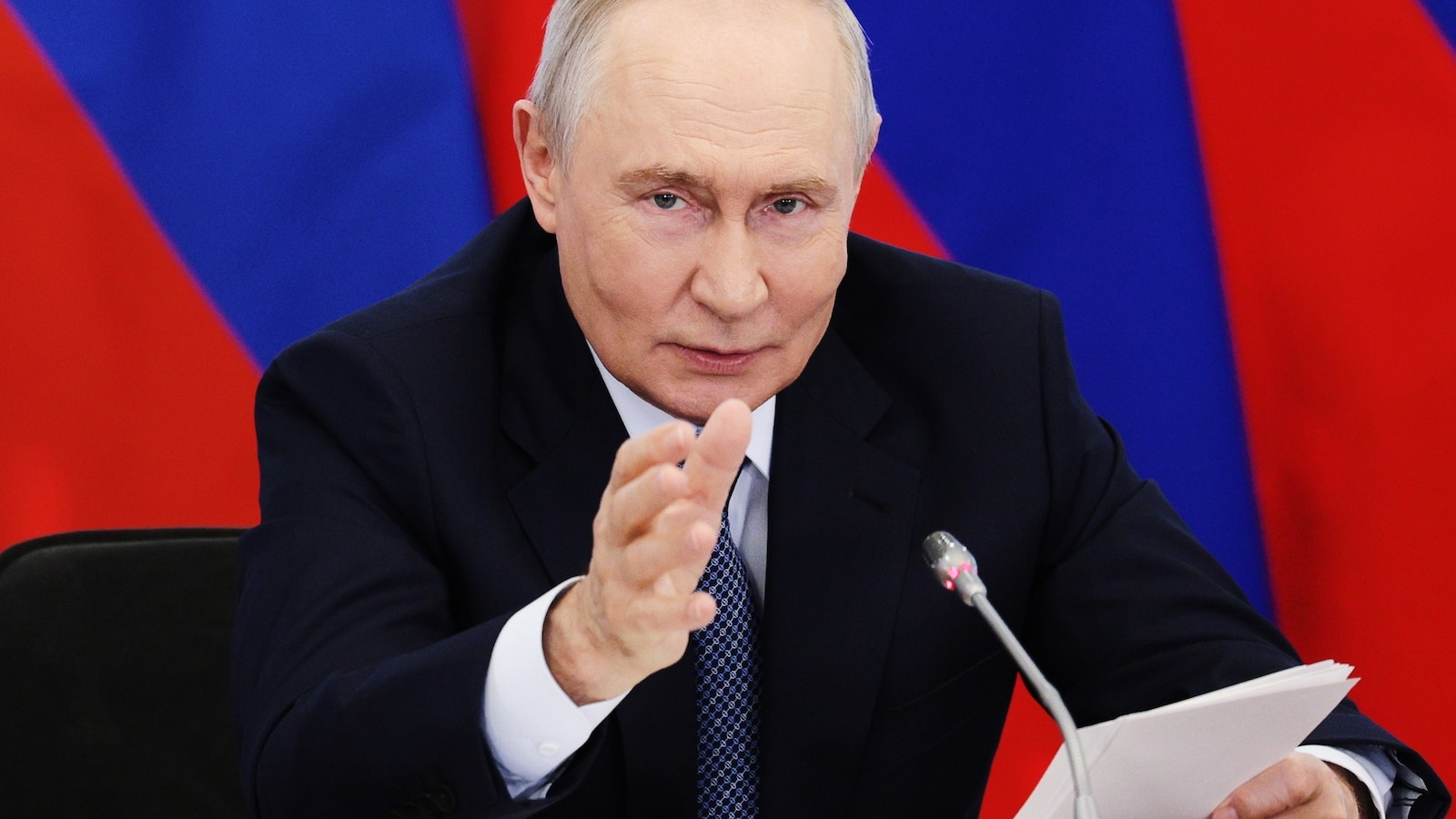
Inside Russia’s Managed Democracy: How Staged Elections Cement Putin’s Grip Amid Disillusionment
MOSCOW — Across Russia’s vast expanse, from the frozen industrial hubs of Siberia to the quiet suburbs of Moscow, a quiet resignation has settled over the electorate. Recent regional and municipal contests, widely dismissed by international monitors and domestic critics as heavily orchestrated spectacles, have once again laid bare the ironclad control of President Vladimir Putin’s political apparatus. With opposition figures sidelined, media tightly controlled, and the electoral machinery tilted overwhelmingly in favor of the ruling party, the sentiment among disillusioned citizens is captured by a grim consensus: "There are no decent parties left."
For global markets, foreign policy strategists, and economic analysts, these tightly managed polls are far from a mere domestic footnote. They serve as a critical barometer of political stability inside the world’s largest nuclear-armed state, signaling a regime that is tightening its internal security and insulating its leadership structure against dissent as the war in Ukraine and sweeping Western sanctions continue to reshape the domestic economy.
The Mechanics of a Controlled Ballot
The latest electoral cycle followed a familiar, highly predictable script. Independent candidates attempting to run on anti-war platforms or critical economic policies faced systemic bureaucratic hurdles, disqualifications on technicalities, or outright intimidation. Meanwhile, the Kremlin-backed United Russia party, alongside state-sanctioned opposition factions that reliably vote with the Kremlin on key issues, dominated the ballot.
Political analysts note that the goal of these exercises is no longer to convince voters of a vibrant, competitive democracy. Instead, the objective is twofold: to project an image of overwhelming popular mandate for the Kremlin’s policies, and to demoralize potential opposition movements by demonstrating the futility of resistance.
- Systemic Sidelining: Genuine opposition voices were barred from registering well before ballots were cast, effectively preempting any grassroots campaigning.
- Controlled Alternatives: Parties nominally positioned as opposition entities largely echoed the Kremlin's geopolitical narratives, leaving anti-establishment voters without a viable ballot option.
- Digital and Physical Surveillance: Expanded electronic voting mechanisms, heavily criticized by independent watchdogs for their lack of transparency, made independent verification virtually impossible.
- Apathy as a Strategy: Low voter turnout in several key districts was treated by state planners not as a crisis of legitimacy, but as a neutral outcome that favors the status quo.
Economic Realities Meet Political Orthodoxy
The tightening political grip comes at a delicate time for the Russian economy. While heavy state spending on the military-industrial complex has kept headline GDP figures afloat and wages artificially high in certain sectors, inflation, labor shortages, and technological isolation are imposing long-term structural strains.
Business leaders and economists point out that the lack of political pluralism directly impacts economic policy predictability. With no genuine parliamentary debate or legislative opposition to challenge executive overreach, fiscal decisions are made behind closed doors with an increasing emphasis on state mobilization rather than market efficiency.
| Metric / Indicator | Current Status | Implication for Markets & Governance |
|---|---|---|
| Electoral Competition | Extremely Low / Managed | Eliminates legislative friction for executive decrees, ensuring policy continuity at the expense of accountability. |
| Opposition Representation | Confined to Systemic Parties | Prevents the rise of alternative economic or foreign policy platforms capable of challenging the Kremlin line. |
| Public Sentiment | Deep Apathy & Disillusionment | Reduces active civil protest but breeds long-term consumer and labor cynicism. |
| Economic Policy Focus | State-Centric Mobilization | Prioritizes security and defense spending over consumer-facing structural reforms. |
Voices from the Ground: Disillusionment Deepens
In interviews conducted across urban centers, citizens expressed a profound disconnect between their daily economic struggles and the triumphant narratives broadcast on state television. The refrain that "all politicians are the same" has evolved from cynical humor into a survival mechanism.
“People are focused on surviving the cost of living and navigating the sanctions environment,” said a Moscow-based political sociologist who spoke on the condition of anonymity due to security concerns. “Voting has ceased to be seen as a tool for change. For the average person, engaging with the formal political system is viewed either as a compliance ritual or an irrelevance.”
Independent civil society monitors, operating under intense pressure and the constant threat of being designated as foreign agents or undesirable organizations, reported numerous irregularities, including forced voting among public sector employees and opaque vote-counting procedures. However, with independent media largely driven into exile or silenced, these findings struggle to reach the broader domestic audience.
What Lies Ahead for Putin’s Russia
As Vladimir Putin solidifies his authority through these managed electoral rituals, the outlook for internal political liberalization remains dim. The regime has successfully insulated its core power structures from electoral shocks, utilizing administrative resources, legal constraints, and security apparatuses to maintain dominance.
For international observers and investors, the key takeaway is stability through control. The absence of genuine political competition means that any future shifts in Russian domestic or foreign policy will emerge exclusively from elite power dynamics within the Kremlin rather than public pressure at the ballot box. Until structural economic pressures intersect with public discontent in a way that state controls can no longer suppress, the managed democracy model is set to remain the defining feature of Russia's political landscape.
Frequently Asked Questions
Why are Russian elections described as "managed" or "sham" by international monitors?
Independent watchdogs, such as the OSCE, point to the systematic disqualification of genuine opposition candidates, severe restrictions on independent media, lack of transparency in vote-counting—particularly with electronic voting systems—and the pervasive use of administrative resources to favor ruling party candidates.
How do these elections impact foreign businesses and investors?
The lack of political pluralism and legislative debate means that economic policies are dictated entirely by the executive branch. This ensures short-term predictability in terms of regime survival, but it concentrates risk and eliminates institutional checks and balances that protect private enterprise and market competition.