
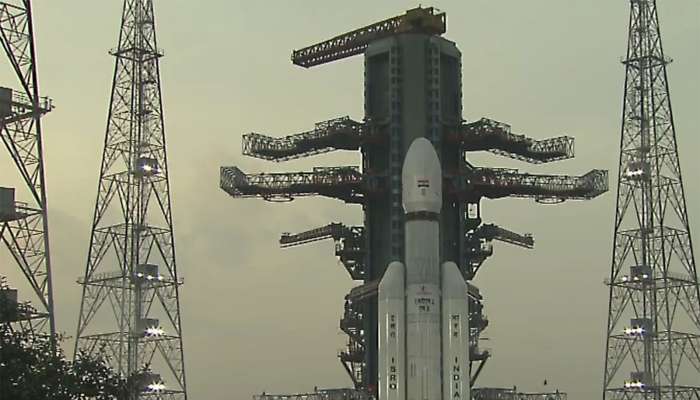
From Lunar South Pole to Global Launchpad: How Chandrayaan-3 Ignited India’s $44 Billion Space Economy Boom
BENGALURU & NEW DELHI — It has been three years since the historic touchdown of Chandrayaan-3 near the lunar South Pole on August 23, 2023. That single event did more than cement India’s status as a spacefaring superpower; it acted as the definitive inflection point for the nation's commercial aerospace sector. Today, what was once a state-monopolized bureaucracy is morphing into a hyper-competitive, private-sector-led engine of economic growth, venture capital deployment, and technological sovereignty.
For institutional investors, sovereign wealth funds, and enterprise tech strategists, the narrative has shifted decisively. India’s space economy is no longer judged solely by its scientific milestones, but by its enterprise ROI, infrastructure scalability, and capital allocation frameworks. As the country targets a fivefold expansion of its global market share over the next decade, the convergence of policy reform, indigenous engineering talent, and private equity has created a generational investment thesis.
Executive Takeaways
- Commercialization Surge: Over 250 registered private space-tech startups now operate in India, backed by progressive regulatory compliance and streamlined capital allocation from IN-SPACe.
- Valuation Multiples & Venture Capital: Early-stage and growth-equity funding in Indian space-tech have accelerated, driven by high-margin export potential in satellite manufacturing, launch services, and earth observation data analytics.
- Global Supply Chain Diversification: International aerospace primes are increasingly looking to Indian Tier-1 and Tier-2 suppliers for risk mitigation and cost-optimized component fabrication.
- Infrastructure Scalability: Ground station infrastructure, dedicated launch complexes, and cloud compute architecture are scaling rapidly to handle petabytes of orbital telemetry and payload data.
The Catalytic Impact of Chandrayaan-3: Beyond the Lunar Dust
When the Vikram lander touched down on the unexplored lunar terrain, it shattered international perceptions regarding mission efficiency and cost-to-value ratios. Executed on a frugal budget of roughly $75 million—far below the production cost of many Hollywood sci-fi blockbusters—Chandrayaan-3 proved that high-reliability engineering could be achieved without exorbitant capital expenditure. This demonstrated proof-of-concept sent shockwaves through global aerospace markets, prompting western primes to re-evaluate their supply chain dependencies and engineering partnerships.
More importantly, the psychological and structural impact domestically was profound. The Indian government, operating through the Indian Space Research Organisation (ISRO) and the newly empowered Indian National Space Promotion and Authorization Centre (IN-SPACe), fast-tracked structural reforms. The rigid walls separating state-run research from private enterprise dissolved, paving the way for technology transfers, shared access to testing facilities, and public-private partnerships (PPPs) that were previously unthinkable.
This policy pivot unlocked a wave of venture capital and private equity interest. Founders who previously faced insurmountable regulatory hurdles could now leverage ISRO’s decades of accumulated intellectual property. The resulting ecosystem has evolved past simple contract manufacturing; today’s Indian space startups are building proprietary launch vehicles, sovereign communication constellations, and advanced propulsion systems capable of capturing global market liquidity.
Verified Data / Metrics Breakdown
| Metric / Indicator | Pre-Chandrayaan Era (2020) | Current Landscape (Post-2023 Shift) | Projected Milestone (2030) |
|---|---|---|---|
| Estimated Global Market Share | ~2% | ~3.5% | 8% to 10% |
| Registered Private Space Startups | < 20 | 250+ | 1,000+ (Target) |
| Cumulative Private Investment | <$50 Million | $400M+ (Accelerating) | $10 Billion+ |
| Primary Regulatory Body | ISRO (Monopoly & Regulator) | IN-SPACe (Independent Regulator) | Fully Open Commercial Market |
Industry & Market Implications: Winners, Losers, and Economic Realities
The maturation of India’s space economy is reshaping competitive dynamics across multiple verticals. Understanding who captures value—and who gets disrupted—requires a rigorous examination of enterprise balance sheets and technological moats.
The Winners: Agility and Downstream Analytics
Agile private launch providers and satellite payload manufacturers stand out as the primary beneficiaries. Companies capable of rapid prototyping and iterative testing are securing lucrative international contracts, undercutting legacy Western providers on launch cost-per-kilogram without sacrificing reliability. Furthermore, downstream analytics firms—those translating raw earth observation telemetry into actionable agricultural, meteorological, and defense insights—are scaling rapidly. By integrating advanced cloud compute architecture with space-derived data, these firms are locking in high-margin, recurring SaaS-like enterprise revenues.
The Challenges: Legacy Suppliers and Capital Intensity
Conversely, traditional defense and aerospace incumbents that fail to pivot toward modular, commercial-off-the-shelf (COTS) components face margin compression. The high capital intensity of hardware development also means that undercapitalized startups risk market exit if they cannot secure bridge funding amidst tightening global liquidity. Regulatory compliance, while vastly improved, still presents friction points regarding orbital debris tracking, spectrum allocation, and international export controls under regimes like the Missile Technology Control Regime (MTCR).
People Also Ask (FAQ)
How has the role of ISRO changed since the success of Chandrayaan-3?
ISRO has transitioned from being the sole designer, builder, and operator of space assets into a strategic facilitator and R&D anchor. While ISRO continues to focus on complex interplanetary exploration and deep-space missions, it has transferred routine launch operations and satellite manufacturing responsibilities to the private sector via IN-SPACe, allowing commercial entities to utilize state testing facilities and launch pads.
What is IN-SPACe, and what role does it play in the private space economy?
The Indian National Space Promotion and Authorization Centre (IN-SPACe) is an independent single-window nodal agency under the Department of Space. It acts as an autonomous regulator that authorizes, promotes, and oversees private sector activities, ensuring that commercial entities can safely access ISRO infrastructure, launch sites, and orbital slots.
Which sectors within India's space economy are attracting the highest venture capital inflows?
Venture capital and private equity are heavily concentrating on upstream launch vehicle development, small-satellite (SmallSat) constellations, and downstream geospatial data analytics. Investors favor business models that offer scalable software margins combined with hardware sovereignty, particularly those serving enterprise logistics, precision agriculture, and maritime surveillance markets.
Can international investors directly fund Indian space-tech startups?
Yes. Recent regulatory amendments have significantly liberalized Foreign Direct Investment (FDI) norms in the space sector. Under the updated policy framework, automatic approval routes are available for satellite manufacturing, data products, and ground segment components up to specific ownership thresholds, streamlining cross-border capital allocation.
Future Outlook: Milestones on the Horizon
As the three-year anniversary of Chandrayaan-3 fades into a foundation for future ambitions, the runway ahead is defined by high-stakes milestones. The upcoming uncrewed and crewed test flights of the Gaganyaan human spaceflight program will test life-support systems and re-entry physics, setting the stage for India to become one of the few nations capable of indigenous crewed orbital flight.
Simultaneously, commercial spaceports in southern India are expanding to accommodate a higher frequency of dedicated small-lift and medium-lift commercial launches. For global institutional investors, the directive is clear: India’s space ecosystem is transitioning from an emerging frontier into an institutionalized asset class. Navigating this market successfully will require rigorous due diligence, local technical partnerships, and a clear understanding of regulatory evolution as India steers toward its goal of commanding a 10% share of the global space economy by 2030.


!['Mirzapur: The Movie' box office collection Day 2 [LIVE]: Pankaj Tripathi, Ravi Kishan, and Ali Fazal sta](https://static.toiimg.com/thumb/resizemode-4,width-1280,height-720,msid-133797053/133797053.jpg)
