Silicon Hegemony: Inside the Trillion-Dollar Battleground of NVIDIA and the Top 30+ AI Chip Makers Reshaping Global Capital
By The Investigative Desk | Published from New York and London
Executive Takeaways
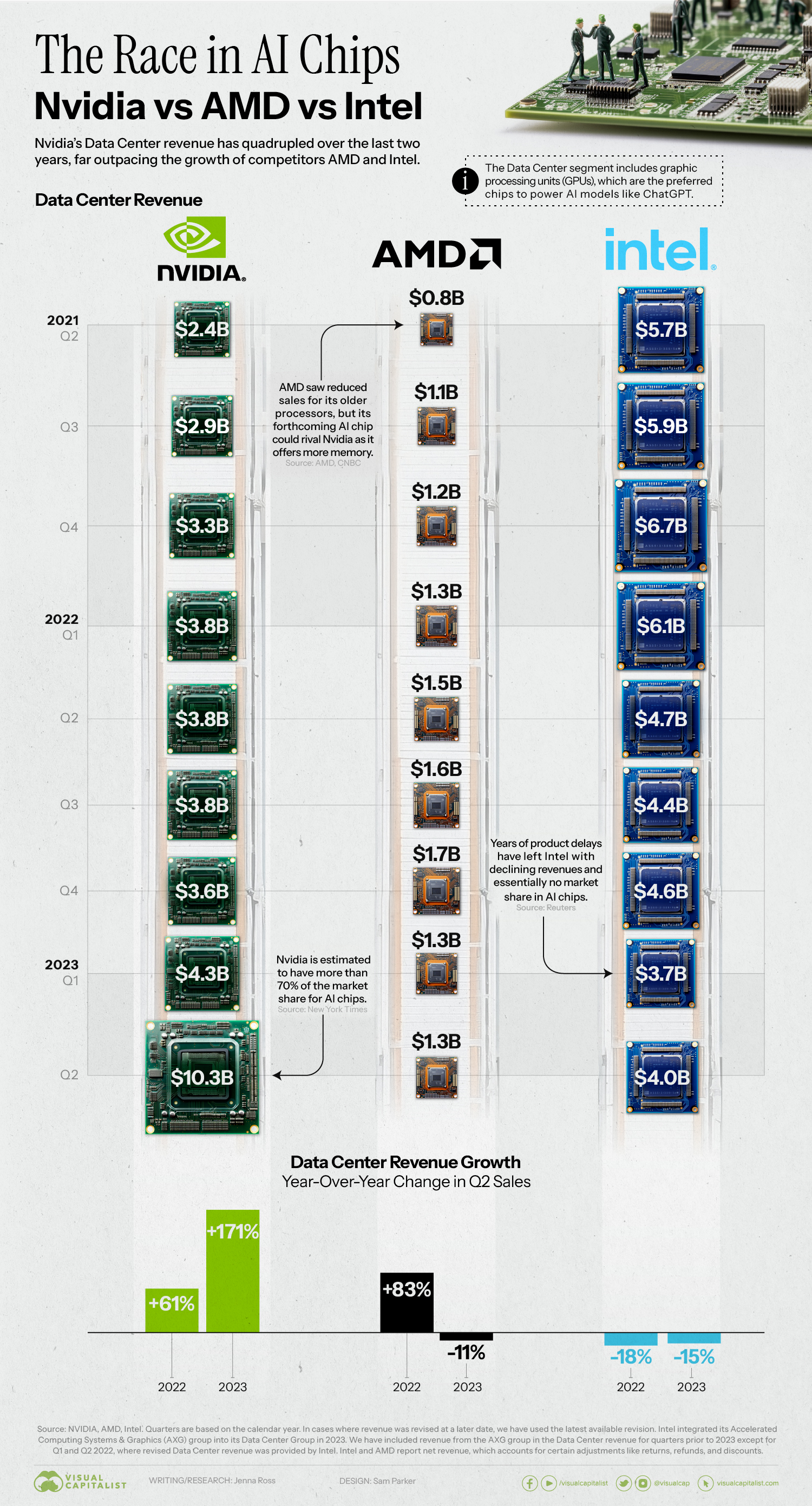
- The Monopoly Premium: NVIDIA commands an estimated 70% to 80% market share in enterprise-grade AI accelerators, driving unprecedented valuation multiples and historic corporate cash-flow margins.
- Diversification Imperative: Hyperscale cloud providers—including Microsoft, Amazon, and Google—are aggressively allocating capital toward custom application-specific integrated circuits (ASICs) to optimize infrastructure scalability and mitigate single-vendor supply chain risks.
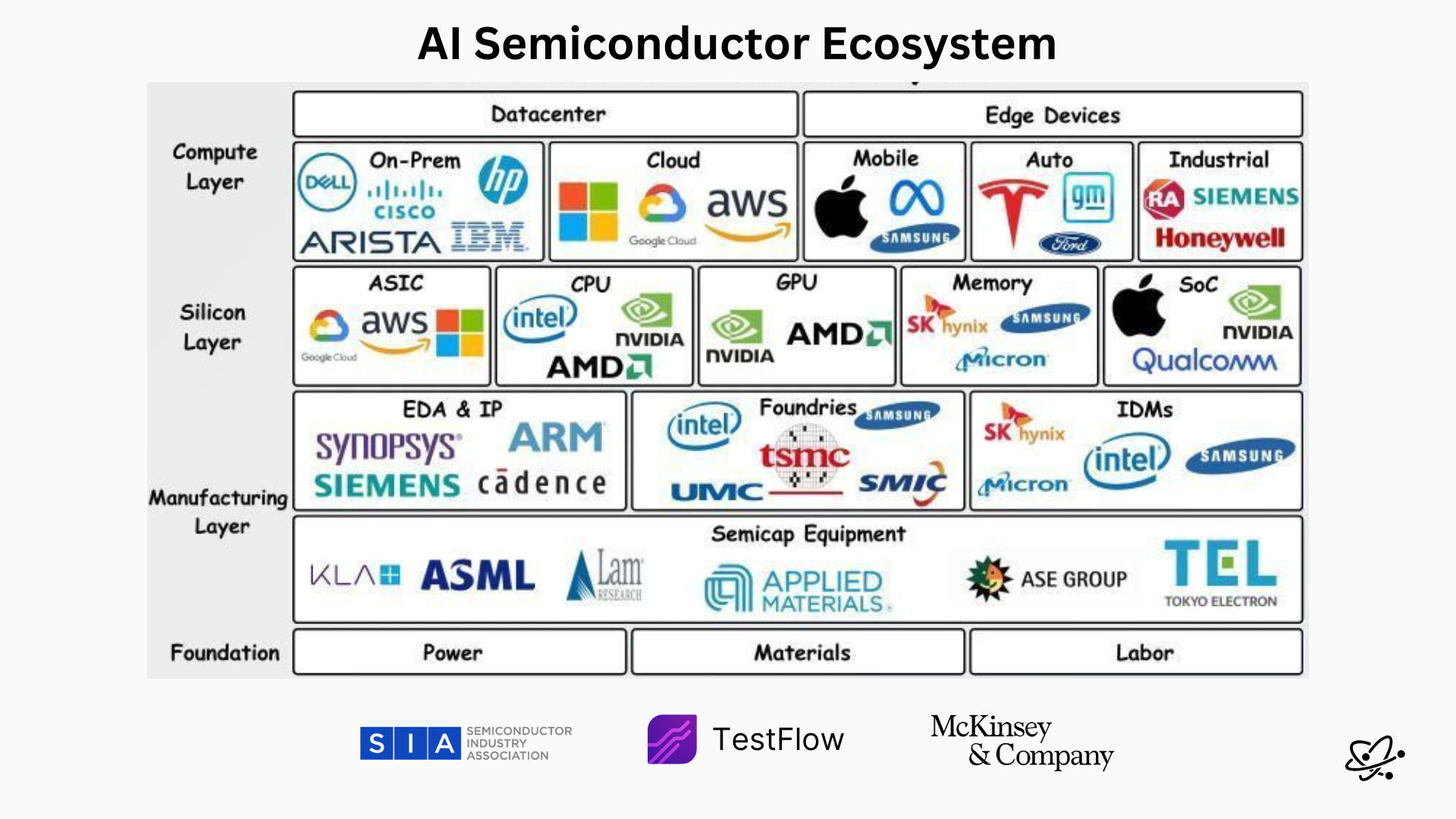
- The Foundry Bottleneck: Global semiconductor manufacturing remains hyper-concentrated, with Taiwan Semiconductor Manufacturing Company (TSMC) serving as the indispensable linchpin for nearly all advanced-node AI silicon production.
- Infrastructural capital expenditure cycles are fundamentally shifting enterprise ROI models, forcing CFOs to reassess long-term cloud compute architecture and data center power consumption constraints.
Introduction: The New Global Reserve Currency
In the modern digital economy, advanced silicon has eclipsed crude oil as the world’s most coveted strategic resource. The explosive maturation of generative artificial intelligence, large language models (LLMs), and autonomous neural networks has triggered a multi-trillion-dollar race for computational supremacy. At the epicenter of this tectonic shift stands NVIDIA Corporation, a firm whose parallel computing architecture turned graphics processors into the de facto engine of modern intelligence.
Yet, the high-stakes game of enterprise AI infrastructure is rapidly expanding beyond a single titan. Wall Street analysts, venture capitalists, and corporate boardrooms are aggressively tracking a sprawling ecosystem of over 30 alternative chip makers, ranging from cash-rich hyper-scalers designing proprietary application-specific integrated circuits (ASICs) to well-funded fabless startups aiming to upend traditional GPU paradigms. For institutional investors and enterprise technology buyers, navigating this shifting landscape requires a rigorous examination of capital allocation, supply chain risk mitigation, and the evolving economics of cloud compute architecture.
The NVIDIA Hegemony: Architecture, Ecosystem, and Moats
To understand the current market equilibrium—or lack thereof—one must examine the structural foundations of NVIDIA's dominance. The company’s rise was not merely a product of superior hardware specifications, but of a calculated, multi-decade bet on software co-design. Launched in 2006, the Compute Unified Device Architecture (CUDA) programming model created a formidable developer lock-in. Millions of machine learning engineers worldwide write code optimized directly for CUDA, rendering migration to rival hardware architectures a complex, costly engineering hurdle.
Furthermore, NVIDIA's strategic pivot toward full-stack data center solutions—encompassing Hopper and Blackwell architectures, high-speed InfiniBand and NVLink networking switches, and enterprise-grade orchestration software—has allowed the company to capture unprecedented value. For chief information officers (CIOs) managing massive data workloads, purchasing discrete chips is no longer the standard; enterprises buy integrated rack-scale systems designed to maximize throughput and compress model training times from months to days.
However, this vertical integration carries inherent vulnerabilities. Soaring capital expenditures by hyperscale cloud providers ("hyperscalers") have exposed the market to single-vendor pricing power dynamics. Corporate treasuries are increasingly strained by soaring hardware costs, prompting a fierce industry-wide search for cost-effective alternatives.
The Challenger Landscape: Hyperscalers, Established Rivals, and Disruptive Startups
The race to challenge NVIDIA's monopoly has mobilized billions of dollars in venture capital and internal research and development budgets. This competitive ecosystem bifurcates into distinct operational tiers:
- The Hyperscale Insurgents: Tech giants such as Alphabet (Google), Amazon (AWS), and Microsoft are reducing their reliance on external merchant silicon by developing proprietary ASICs. Google’s Tensor Processing Units (TPUs), AWS’s Trainium and Inferentia chips, and Microsoft’s newly minted Maia accelerators are engineered specifically to handle internal workloads, optimizing enterprise ROI and lowering long-term operating margins.
- The Traditional Merchant Silicon Giants: Advanced Micro Devices (AMD) and Intel continue to marshal their legacy manufacturing partnerships and massive balance sheets. AMD’s MI300 series has gained meaningful traction among secondary cloud providers seeking viable multi-vendor procurement strategies, while Intel’s Gaudi accelerators market themselves on aggressive price-to-performance ratios for enterprise inferencing tasks.
- The Venture-Backed Fabless Vanguard: A new wave of specialized startups—including SambaNova Systems, Groq, Cerebras Systems, and Tenstorrent—are pioneering radically different compute paradigms. Whether utilizing wafer-scale engines or deterministic single-core architectures, these firms target specific algorithmic bottlenecks in memory bandwidth and latency, offering specialized solutions for high-performance computing (HPC) and real-time generative AI deployment.
Verified Data: Comparative Landscape of AI Silicon Leaders
Evaluating the top-tier players requires a comparative examination of their architectural focus, target deployment vectors, and strategic positioning within the global supply chain.
| Company / Entity | Primary Silicon Architecture | Target Market / Deployment | Strategic Advantage |
|---|---|---|---|
| NVIDIA | Hopper / Blackwell GPUs (CUDA) | Universal Training & Inferencing | Complete software ecosystem & massive developer moat. |
| AMD | Instinct MI300 Series (ROCm) | Cloud Hyperscalers & Enterprise Data Centers | High memory bandwidth and competitive pricing. |
| Google (Alphabet) | Tensor Processing Units (TPUs) | Internal Workloads & GCP Enterprise Clients | Vertical integration and optimized power efficiency. |
| Amazon Web Services | Trainium & Inferential ASICs | AWS Cloud Infrastructure Subscribers | Deep cloud infrastructure integration and cost savings. |
| Intel | Gaudi Accelerators & Xeon Scalable | Enterprise On-Premises & Hybrid Cloud | Ubiquitous CPU install base and foundry pivot. |
| Cerebras Systems | Wafer-Scale Engine (WSE-3) | Scientific Computing & Ultra-Fast LLM Training | Unprecedented on-chip memory capacity and speed. |
Industry & Market Implications: Winners, Losers, and Macro Pressures
The scramble for AI silicon is reordering the global corporate hierarchy. Financial markets are pricing in aggressive future earnings growth for semiconductor designers, yet underlying vulnerabilities threaten systemic volatility. The economic impact spans three distinct operational pillars:
- Supply Chain Geopolitics: The entire industry remains exposed to severe geographic concentration risk. With the vast majority of advanced sub-5nm chips fabricated in Taiwan by TSMC, any geopolitical disruption in the Taiwan Strait presents an existential threat to global market liquidity and tech sector valuations.
- The Energy and Thermal Bottleneck: Modern AI data centers consume power equivalent to mid-sized municipalities. Chip makers are increasingly judged not merely by floating-point operations per second (FLOPS), but by thermal design power (TDP) efficiency and liquid-cooling compatibility. Infrastructure scalability is now constrained by electrical grid capacity.
- Venture Capital Reallocation: While general software startups face compressed valuation multiples, semiconductor and hardware-adjacent ventures are commanding premium funding rounds. Institutional investors recognize that owning the underlying compute layer provides ultimate pricing power over the entire software stack.
Frequently Asked Questions (People Also Ask)
Why is NVIDIA currently dominating the AI chip market?
NVIDIA’s dominance stems from a potent combination of hardware performance and software lock-in. Their proprietary CUDA programming platform, established nearly two decades ago, created an insurmountable developer ecosystem. By pairing cutting-edge graphics processors with full-stack networking and orchestration tools, NVIDIA delivers complete, turnkey data center solutions that competitors struggle to replicate.
Are custom chips (ASICs) built by cloud providers replacing GPUs?
Custom ASICs built by firms like Google, Amazon, and Microsoft are not fully replacing GPUs, but rather absorbing predictable, high-volume workloads to lower operating costs and improve infrastructure scalability. General-purpose GPUs remain the gold standard for exploratory research, complex model training, and dynamic enterprise applications requiring maximum algorithmic flexibility.
What role does TSMC play in the global AI chip ecosystem?
Taiwan Semiconductor Manufacturing Company (TSMC) acts as the indispensable manufacturing backbone for nearly all leading fabless AI chip designers, including NVIDIA, AMD, and major cloud providers. Their advanced-node fabrication facilities possess the precise lithography capabilities required to produce densely packed, high-performance accelerators.
How are enterprise CFOs mitigating the high costs of AI infrastructure?
Chief Financial Officers are optimizing capital allocation through hybrid cloud strategies, multi-vendor procurement models (such as integrating AMD and Intel alternatives alongside NVIDIA), and rigorous total cost of ownership (TCO) analyses that factor in long-term power consumption, cooling requirements, and actual enterprise ROI.
Future Outlook: Milestones and Key Indicators to Watch
As the AI hardware market matures past its initial hyper-growth phase, industry observers must monitor several critical inflection points. First, the success of foundry diversification efforts—such as Intel Foundry Services and TSMC’s expansion of fabrication plants in the United States, Japan, and Europe—will dictate long-term supply chain resilience.
Second, the evolution of software abstraction layers will be decisive. If open-source compiler projects and alternative frameworks successfully erode the CUDA monopoly, enterprise switching costs will plummet, paving the way for a more commoditized, highly competitive merchant silicon market.
Finally, corporate capital allocation strategies will face severe stress-testing. As enterprise boards demand concrete financial returns on massive generative AI deployments, the pressure will mount on chip makers to deliver exponential gains in energy efficiency and price-to-performance ratios. For investors and industry leaders alike, the next chapter of the AI revolution will reward those who can reconcile unyielding compute demand with sustainable economic and environmental realities.