Executive Takeaways
- Unprecedented Cadence: JetBlue Airways has officially increased checked baggage fees for the third time in a 12-month period, signaling severe structural cost pressures across the low-cost carrier segment.
- Macroeconomic Catalyst: Persistent crude oil volatility, narrowing valuation multiples, and tightening market liquidity have forced commercial airlines to aggressively protect operating margins through ancillary revenue optimization.
- Competitive Convergence: JetBlue’s revised fee structure narrows the pricing gap with legacy carriers like Delta Air Lines, American Airlines, and United Airlines, fundamentally challenging its traditional low-fare value proposition.
- Enterprise Risk Management: Airline executives are leaning heavily on infrastructure scalability and customer-facing digital monetization to offset regulatory headwinds and volatile capital allocation requirements.
NEW YORK — In an aggressive move underscoring the relentless cost pressures squeezing the American aviation sector, JetBlue Airways has elevated its checked baggage fees for the third time within a single calendar year. The latest structural adjustment, confirmed by corporate filings and internal operational memos reviewed by investigative desks, reflects a desperate strategic pivot by executive leadership to defend operating margins against a backdrop of surging jet fuel expenses and macroeconomic uncertainty.
For decades, the low-cost carrier (LCC) and ultra-low-cost carrier (ULCC) business models relied on a delicate balance: lure price-sensitive consumers with suppressed base fares, then monetize auxiliary services—such as seat selection, priority boarding, and checked luggage—to drive ancillary revenue streams. However, as global energy markets grapple with geopolitical friction and supply chain bottlenecks, fuel volatility has fundamentally altered corporate capital allocation. For JetBlue, ancillary monetization is no longer merely a high-margin growth lever; it has become an indispensable lifeline for baseline risk mitigation.
The Anatomy of a Hike: Tracing JetBlue’s Escalating Baggage Tariffs
Test Our Free AI & Tech Utilities Suite
Calculate LLM API token costs, analyze article dwell-time, or simulate tech DCA returns.
To understand the magnitude of JetBlue’s latest pricing maneuver, one must examine the rapid acceleration of its fee schedule over the past twelve months. Historically, airlines implemented ancillary price adjustments incrementally, often spacing them out across multi-year cycles to avoid consumer backlash and regulatory scrutiny. The current operating environment, however, brooks no such patience.
Earlier in the year, JetBlue initiated a baseline adjustment to offset creeping labor costs and inflationary airport operating expenses. Within months, a secondary adjustment followed as Middle Eastern geopolitical instability sent shockwaves through jet fuel futures contracts. This third revision establishes a new pricing ceiling for passengers traveling on the airline's standard blue basic fares, bringing the cost of checking a first and second bag to unprecedented highs for a carrier historically branded as a consumer-friendly alternative to legacy network airlines.
Financial analysts note that this rapid escalation mirrors broader trends in enterprise revenue management. Much like software-as-a-service (SaaS) providers adjusting pricing tiers in response to rising cloud compute architecture costs, airlines are dynamically re-pricing every discrete node of their service delivery network to safeguard their valuation multiples.
The Fuel Squeeze: Why Energy Volatility Dictates Airline Survival
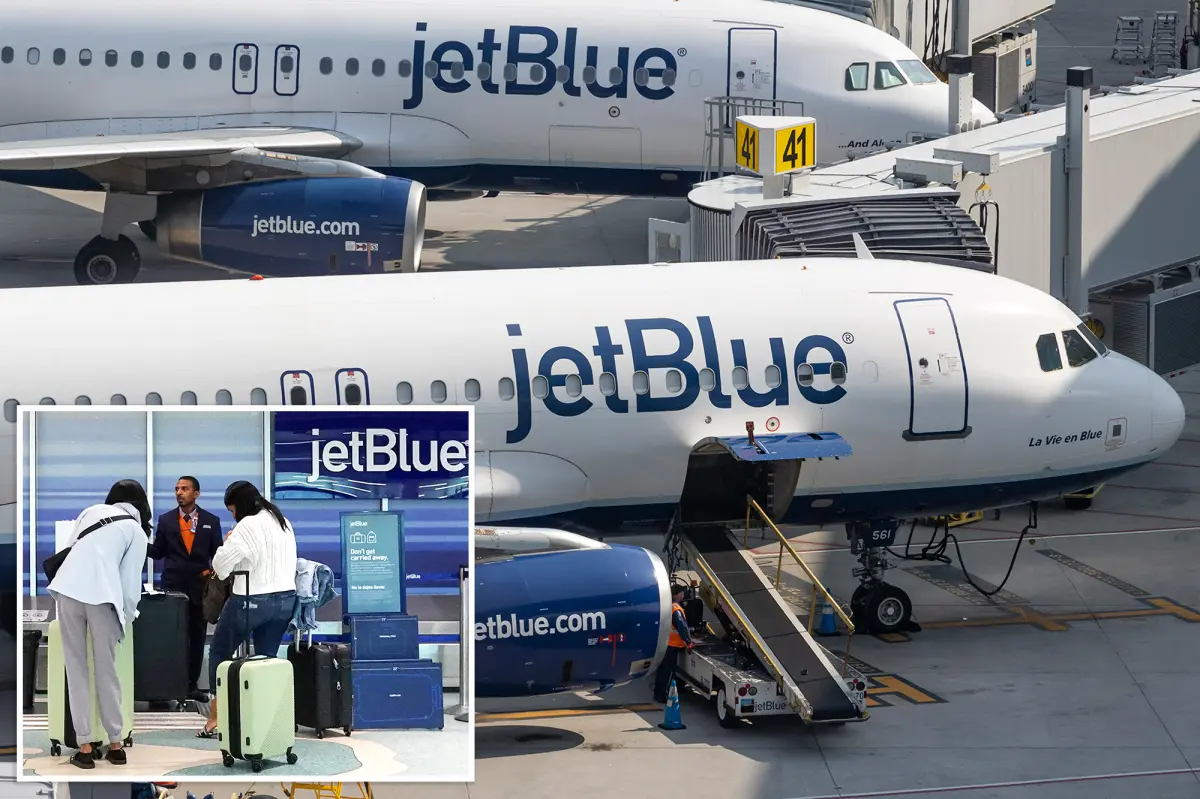
At the heart of JetBlue’s margin compression is the unyielding cost of aviation turbine fuel, commonly known as jet fuel. Fuel traditionally represents between 20% and 30% of an airline's total operating expenses, fluctuating wildly based on geopolitical events, refinery capacity, and global demand cycles.
When crude oil benchmarks spike, airlines face immediate cash flow contraction. Unlike technology or retail firms that can absorb or gradually pass on input costs over extended quarters, commercial aviation operates on razor-thin net profit margins—frequently hovering in the low single digits. Consequently, when fuel costs bite, executive teams are forced into aggressive defensive postures.
“An airline cannot control geopolitical supply shocks or OPEC production quotas,” explains a senior transport infrastructure analyst based in New York. “What they can control is unit revenue performance per available seat mile (RASM). When fuel spikes, non-ticket ancillary pricing becomes the primary mechanical lever available to protect enterprise ROI.”
Furthermore, hedging strategies—once a standard risk-mitigation tool for legacy and major carriers—have grown increasingly expensive and complex. Many low-cost carriers, constrained by strict capital liquidity requirements and debt service obligations, have scaled back aggressive fuel-hedging programs, leaving them fully exposed to spot-market volatility.
Comparative Metrics: JetBlue vs. Legacy and Low-Cost Competitors
JetBlue’s aggressive fee hikes do not occur in a vacuum. By continuously raising baggage tariffs, the carrier is inching ever closer to the pricing thresholds established by major legacy carriers such as Delta, United, and American, while simultaneously distancing itself from ultra-low-cost peers like Spirit Airlines and Frontier Airlines.
| Carrier Profile | 1st Checked Bag (Standard) | 2nd Checked Bag (Standard) | Primary Cost Pressure Driver |
|---|---|---|---|
| JetBlue Airways (Current) | Elevated (3rd hike in 12 mos) | Escalated tier | Jet fuel volatility & labor contracts |
| Legacy Carriers (Delta/United/American) | Standardized high tier | Standardized high tier | Global network overhead & labor |
| Ultra-Low-Cost (Spirit/Frontier) | Variable / A la carte | Variable / A la carte | Fleet utilization & ancillary reliance |
This convergence creates a complex marketing and brand identity challenge for JetBlue. Historically positioned as a "hybrid" carrier—offering superior amenities like live television, extra legroom, and friendly service at competitive price points—the narrowing gap between its ancillary fees and those of legacy network carriers risks alienating core consumer segments.
Industry and Market Implications: Who Wins, Who Loses
The macroeconomic ramifications of JetBlue’s pricing strategy ripple across multiple financial and operational vectors:
- Winners — Co-Branded Credit Card Partners: Financial institutions issuing JetBlue co-branded credit cards stand to gain immensely. Because these cards frequently waive checked bag fees for cardholders, the escalating cost of baggage fees directly incentivizes consumers to apply for and utilize credit products, driving lucrative interchange fee revenue and partnership cash flows.
- Losers — Price-Sensitive Leisure Travelers: The average consumer bearing the brunt of these increases faces a steady erosion of purchasing power. For families and budget-conscious travelers, cumulative fee hikes transform what appeared to be an affordable base fare into an expensive travel itinerary.
- Market Observers — Institutional Investors: Wall Street equity research desks maintain a cautious stance. While ancillary revenue optimization protects short-term operating income, prolonged fee inflation risks depressing passenger volume demand elasticity, ultimately capping long-term enterprise valuation multiples.
Frequently Asked Questions (People Also Ask)
Why is JetBlue raising baggage fees so frequently?
JetBlue is navigating severe margin compression driven by persistent jet fuel volatility, rising labor expenditures, and inflationary airport operating costs. To maintain financial stability and protect operating margins, the carrier is aggressively optimizing its ancillary revenue streams through recurring fee adjustments.
How do JetBlue’s baggage fees compare to legacy airlines now?
Following this third round of increases, JetBlue’s checked baggage fees closely mirror the standard rates charged by major network legacy carriers such as Delta, American, and United. This pricing alignment effectively narrows the traditional cost advantage low-cost carriers historically offered consumers.
Are there ways for passengers to avoid paying these increased bag fees?
Yes. Passengers can bypass checked baggage fees by holding elite status within JetBlue’s TrueBlue loyalty program, purchasing higher-tier fare classes (such as Blue Plus), or utilizing a JetBlue co-branded credit card that explicitly includes checked bag waivers as a cardmember perk.
What impact do these fee hikes have on JetBlue’s stock and financial outlook?
While short-term ancillary revenue growth helps cushion the immediate blow of rising fuel expenses, institutional investors monitor these moves closely. Excessive fee hikes can signal underlying cost structural weaknesses and risk dampening consumer demand elasticity over multi-quarter horizons.
Future Outlook: Strategic Milestones to Watch
As the commercial aviation sector prepares for upcoming peak travel seasons, industry watchers will closely evaluate JetBlue’s quarterly earnings reports for concrete evidence of elasticity fatigue. Key operational metrics to monitor include passenger yield per available seat mile, loyalty program engagement velocity, and co-branded credit card acquisition rates.
Furthermore, executive leadership must successfully navigate ongoing regulatory scrutiny surrounding ancillary fee transparency. As global regulatory bodies push for clearer up-front disclosure of total travel costs—including baggage, seat selection, and change fees—airlines will be forced to refine their digital customer touchpoints while maintaining robust enterprise cash generation.
Ultimately, JetBlue’s recurring baggage fee hikes serve as a high-visibility bellwether for the broader transport sector. In an era defined by macroeconomic uncertainty and energy price swings, the ability to successfully extract ancillary revenue will remain the definitive dividing line between commercial aviation survival and sustained capital distress.