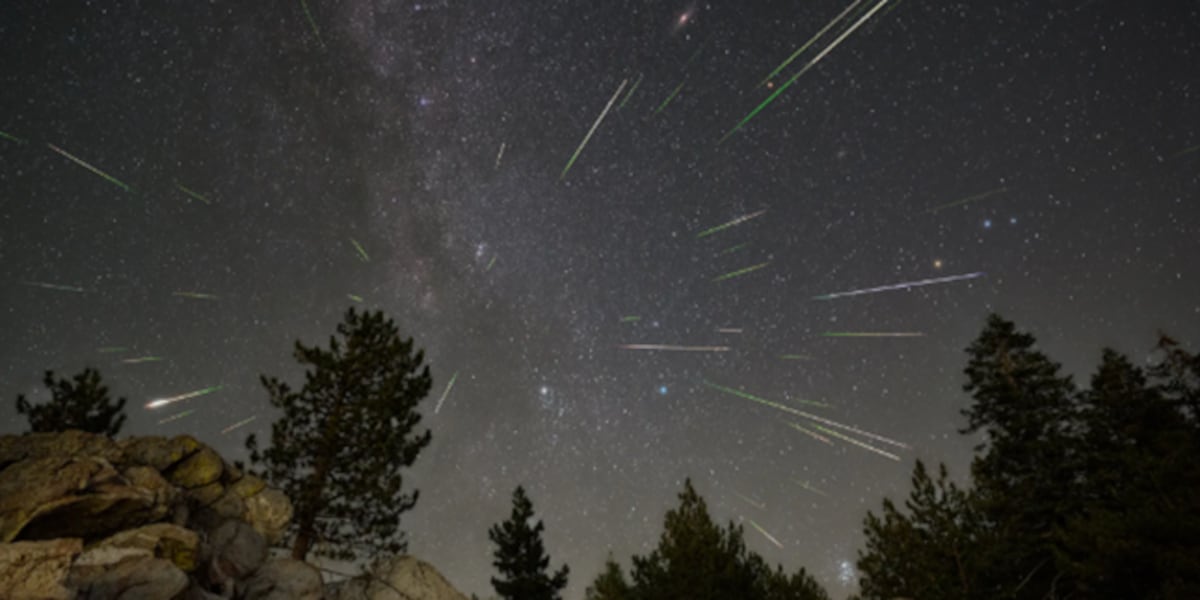
**New York, NY – [Current Date/Time]** – Tonight, as the autumnal chill settles across the northern hemisphere, sky-gazers and scientists alike are bracing for a potentially unprecedented celestial event: the Southern Taurid meteor shower is anticipated to deliver an extraordinary display of rare, exceptionally bright fireballs. This isn't merely a nightly stargazing opportunity; it represents a significant intersection of astrophysics, aerospace security, and strategic capital allocation within the burgeoning space economy. Our comprehensive investigation delves beyond the visual spectacle to uncover the profound implications for enterprise ROI, infrastructure scalability, and the evolving landscape of space-based risk mitigation.
Executive Takeaways:
Test Our Free AI & Tech Utilities Suite
Calculate LLM API token costs, analyze article dwell-time, or simulate tech DCA returns.
- **Elevated Fireball Activity:** The Southern Taurids, known for their infrequent but brilliant meteors, are expected to exhibit a heightened rate of fireballs tonight, driven by Earth's passage through a denser stream of debris from Comet 2P/Encke.
- **Critical Data Acquisition Opportunity:** This event presents a vital, real-time opportunity for aerospace research institutions and private space defense firms to collect high-fidelity data on meteoroid atmospheric entry dynamics, informing future risk mitigation strategies for orbiting assets.
- **Space Economy Catalyst:** Increased public and scientific interest could stimulate further capital allocation into advanced observational technologies, orbital debris tracking, and specialized insurance products, potentially impacting valuation multiples for key players in the space tech sector.
- **Global Observational Imperative:** The transient nature of fireballs necessitates rapid, coordinated global observation efforts, leveraging sophisticated sensor networks and robust cloud compute architecture for immediate data processing and analysis.
The Southern Taurids: A Deep Dive into a Cosmic Anomaly
The Taurid meteor shower complex is unique, originating from the highly fragmented Comet 2P/Encke, which boasts the shortest orbital period of any known comet, completing a circuit around the Sun every 3.3 years. Unlike other showers known for their sheer volume of meteors, the Taurids are famed for their "fireball potential"—exceptionally bright meteors that often exceed the brightness of Venus. This characteristic is attributed to the larger-than-average size of the meteoroids shed by Encke, fragments ranging from pea-sized to small boulders, which survive atmospheric entry longer, burning brighter and deeper.
The "Southern" Taurids, which peak tonight, are distinct from their Northern counterparts due to Earth's passage through different, albeit related, streams of debris. Periodically, roughly every 3,000 to 7,000 years, Earth encounters denser "swarms" within Encke's debris stream. While full-scale "swarm" encounters are extremely rare and linked to historical events of significant impact (e.g., the Tunguska event, theorized by some to be a Taurid fragment), the current anticipation of rare fireballs tonight signals a notably denser, albeit benign, section of this ancient debris field. This increased density translates directly into a higher probability of encountering larger meteoroids, thereby elevating the likelihood of fireball generation.
The scientific community, particularly those focused on planetary defense and atmospheric physics, views these events as invaluable natural laboratories. The atmospheric entry of larger meteoroids provides real-world data points on ablation rates, ionization trails, and shockwave propagation. This information is critical for refining models that predict the behavior of potential Earth-crossing asteroids and for validating ground-based and space-based sensor arrays designed for object detection and tracking. From an enterprise perspective, the successful capture and analysis of such data can significantly enhance the *enterprise ROI* for investments in advanced atmospheric monitoring systems.
Historical Precedent and Observational Imperatives
While the Taurids are an annual event, specific years have seen notable fireball surges. The years 1993, 1999, and 2005 were particularly active, with increased reports of bright meteors. Astronomical predictions, based on the gravitational perturbations of Encke's orbit by Jupiter, indicate that Earth is once again entering a region of higher meteoroid density. This cyclical nature underscores the long-term observational commitment required to understand these complex celestial mechanics. Data collected tonight will contribute to a multi-decade dataset, enhancing our predictive capabilities for future events.
Observing tonight's event requires more than just clear skies. Professional networks, such as NASA's Meteoroid Environment Office (MEO) and the American Meteor Society (AMS), utilize all-sky cameras, radar systems, and even satellite-based sensors to triangulate fireball trajectories. This sophisticated *infrastructure scalability* for data collection and processing is crucial. The sheer volume of potential observational data necessitates robust *cloud compute architecture* to rapidly analyze trajectories, brightness curves, and spectral signatures, translating raw sensor inputs into actionable scientific insights.
Verified Data / Metrics Breakdown: Comparing Key Meteor Showers
To contextualize the Southern Taurids' significance, particularly its fireball potential, a comparison with other prominent meteor showers is illustrative. While the Zenithal Hourly Rate (ZHR) for Taurids is relatively low, its mean meteoroid mass and associated energy release are notably higher.
| Shower Name | Parent Body | Peak Date | Typical ZHR (Visual) | Fireball Potential | Velocity (km/s) |
|---|---|---|---|---|---|
| Southern Taurids | Comet 2P/Encke | Early Nov | 5-10 | **High (Tonight: Very High)** | 27 |
| Perseids | Comet 109P/Swift-Tuttle | Mid-Aug | 60-100+ | Medium | 59 |
| Geminids | Asteroid 3200 Phaethon | Mid-Dec | 120-150 | High | 35 |
| Leonids | Comet 55P/Tempel-Tuttle | Mid-Nov | 10-20 (Storm: 1000s) | Medium | 71 |
Industry & Market Implications: A New Frontier for Capital Markets
The heightened activity of the Southern Taurids, while not posing a direct threat to orbital assets, serves as a powerful reminder of the dynamic and occasionally hazardous nature of the space environment. This awareness has tangible implications across several high-value sectors:
- **Space Insurance & Risk Mitigation:** For companies operating multi-billion-dollar satellite constellations, understanding the meteoroid flux is integral to *risk mitigation* strategies. While micro-meteoroids are a constant concern, infrequent larger fragments could cause catastrophic damage. The data collected from events like tonight's enhances actuarial models for space insurance, affecting premiums and coverage for orbital assets. Providers of space situational awareness (SSA) services see increased demand, impacting their *valuation multiples*.
- **Aerospace & Defense Contractors:** Manufacturers of satellites and spacecraft are continually innovating to improve shielding and resilience. Insights gained from meteoroid atmospheric entry help refine materials science and structural engineering, driving *enterprise ROI* for R&D investments in hardened components and autonomous debris avoidance systems.
- **Data Analytics & Cloud Computing:** The explosion of observational data from terrestrial and orbital sensors creates significant demand for advanced *cloud compute architecture* and AI-driven analytics platforms. Firms specializing in processing vast geospatial and astronomical datasets stand to gain. Their ability to deliver real-time insights from ephemeral events like fireballs is a key differentiator, influencing *capital allocation* decisions in the big data sector.
- **Financial Markets & Investment:** Public interest generated by spectacular celestial events can indirectly boost investment in the broader space economy. From specialized optics manufacturers to launch service providers, the increased visibility translates into heightened investor interest, influencing *market liquidity* for space-related stocks and driving venture capital funding for innovative startups. Investors closely watch scientific milestones and public engagement metrics as indicators of long-term growth potential in this sector.
- **Regulatory Compliance & International Collaboration:** As space becomes more congested, the need for international standards in space debris tracking and *regulatory compliance* becomes paramount. Data from meteor showers feeds into global models for object tracking, fostering collaborative efforts among space agencies and governments to ensure the long-term sustainability of orbital operations.
People Also Ask (FAQ):
What causes the Southern Taurid fireballs and how rare are they?
The Southern Taurid fireballs originate from larger-than-average debris particles shed by Comet 2P/Encke. When Earth passes through a denser region of this debris stream, more of these substantial meteoroids collide with our atmosphere. Unlike typical "shooting stars" which are often dust-grain sized, these larger fragments, sometimes pebble-to-boulder sized, burn up with significantly more energy, producing a superheated plasma trail that appears as a brilliant fireball. While the Southern Taurids occur annually, the specific conditions leading to a "fireball outbreak" as anticipated tonight are relatively rare, occurring every few years to a decade, dependent on Earth's precise orbital intersection with particularly dense knots in Encke's complex debris field. This rarity makes tonight's event a prime observational target for scientific data capture, critical for enhancing our understanding of meteoroid composition and atmospheric interaction.
What are the economic implications or investment opportunities related to increased meteor shower activity?
Increased meteor shower activity, particularly with fireballs, directly impacts the nascent space economy by highlighting the need for robust space situational awareness (SSA) and planetary defense capabilities. This drives *capital allocation* into companies developing advanced sensors, radar systems, and AI-driven analytics for orbital debris tracking. Investment opportunities arise in firms specializing in *risk mitigation* for satellite operators, space-grade material science, and the burgeoning space insurance sector. Furthermore, the public engagement spurred by such events can increase demand for space-tourism related ventures, astrophotography equipment, and educational STEM initiatives, creating long-tail market opportunities and potentially affecting *valuation multiples* for companies operating in these niches.
How do meteor showers like the Taurids impact satellite operations and space-based infrastructure?
While the Southern Taurids are not typically associated with meteor storms that pose an immediate, high-probability threat to operational satellites, any meteor shower increases the background flux of small particles. Satellite operators meticulously monitor these events to implement proactive *risk mitigation* strategies, which may include reorienting solar panels or adjusting orbits for highly sensitive assets. The data collected from ground-based and space-based observations of fireballs is crucial for refining micro-meteoroid impact models, informing the design of future satellite shielding, and ensuring the long-term resilience of *space-based infrastructure*. This continuous assessment is vital for maintaining the *enterprise ROI* of multi-million and multi-billion dollar orbital assets.
What advanced technologies are being deployed to observe and analyze these events?
The observation and analysis of tonight's Southern Taurid fireballs leverage a sophisticated array of technologies. This includes wide-field, high-resolution all-sky camera networks (e.g., NASA's All-Sky Fireball Network), multi-wavelength spectroscopy to determine meteoroid composition, and Doppler radar systems for precise velocity and trajectory measurements. These ground-based systems are often augmented by space-based assets like dedicated meteoroid observation satellites or sensors aboard the International Space Station. The enormous datasets generated require robust *cloud compute architecture* for real-time processing, AI/machine learning algorithms for anomaly detection and classification, and advanced visualization tools. The goal is to achieve comprehensive *infrastructure scalability* in data acquisition and analysis, maximizing the scientific return from these transient celestial phenomena.
Future Outlook: Monitoring the Encke Complex and Beyond
Tonight's Southern Taurid fireball display is more than a fleeting moment of beauty; it is a critical data-gathering event that will feed into long-term scientific and strategic planning. The ongoing monitoring of Comet 2P/Encke and its associated debris streams remains a high priority for planetary scientists, as a deeper understanding of its complex dynamics could provide insights into future, potentially more intense, encounters. This continuous vigilance underscores the need for sustained *capital allocation* into astronomical research, advanced sensor development, and global data-sharing initiatives.
Key milestones to watch include the analysis of data from tonight's event, with preliminary findings expected in the coming weeks and peer-reviewed publications within months. These reports will detail the observed fireball rates, trajectories, and spectral characteristics, further refining our understanding of the Taurid meteoroid complex. Furthermore, advancements in AI-driven predictive modeling will continue to enhance our ability to forecast such events with greater precision, allowing for proactive *risk mitigation* and optimized data acquisition strategies. The confluence of cosmic phenomena, cutting-edge technology, and global economic interests ensures that the night sky remains not just a source of wonder, but a frontier for scientific inquiry and strategic investment.