India’s Space Power Play: Inside ISRO’s Flawless EOS-05 Launch and What It Means for Global Tech Supremacy
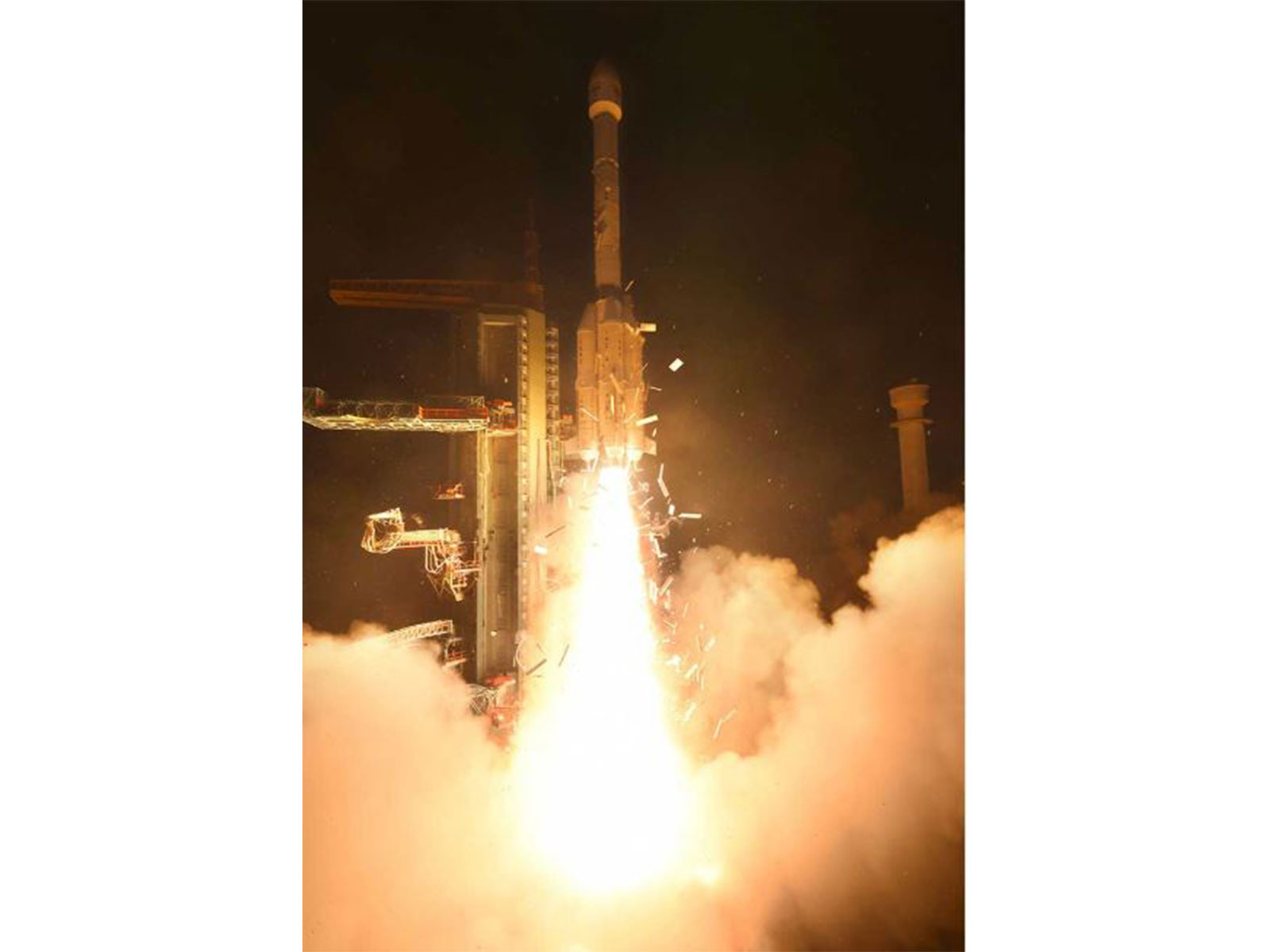
BENGALURU — In a move that cements India’s position as an undisputed titan in the global space economy, the Indian Space Research Organisation (ISRO) has successfully executed the launch of its highly anticipated Earth Observation Satellite-05 (EOS-05). The flawless orbital injection has triggered waves of celebration across the global scientific and diplomatic communities, drawing high-profile praise from Vice President CP Radhakrishnan, who lauded the engineers and scientists behind the breakthrough mission.
The successful deployment, executed from the Satish Dhawan Space Centre (SDSC) in Sriharikota, represents more than just a routine scientific milestone; it is a decisive geopolitical statement. As the global race for sovereign space-based intelligence and environmental data intensifies, India’s low-cost, high-reliability launch model continues to disrupt traditional Western aerospace monopolies.
Vice President Radhakrishnan Hails a "New Era of Atmanirbhar Space Power"
Following the confirmation of telemetry signals showing EOS-05 settled securely into its target sun-synchronous orbit, Vice President CP Radhakrishnan issued a stirring commendation to the ISRO team. In a statement that resonated deeply with the nation’s vision of self-reliance, the Vice President emphasized the dual-use capabilities of the state-of-the-art payload.
"The successful launch of the EOS-05 mission is a testament to the unwavering dedication, precision, and technological prowess of our scientists and engineers at ISRO," Vice President Radhakrishnan stated. "By continuously pushing the boundaries of what is possible, ISRO is not only securing India's technological future but also providing the world with invaluable tools for climate monitoring, disaster management, and sustainable development. This is Atmanirbhar Bharat in its most brilliant orbit."
The Vice President’s remarks highlight a strategic shift in India’s public messaging regarding its space program. No longer viewed merely as a frugal domestic endeavor, India’s space achievements are increasingly positioned as critical components of global infrastructure and international diplomacy.
The Mission Blueprint: Why EOS-05 is a Game-Changer

The EOS-05 satellite is a sophisticated, state-of-the-art Earth observation spacecraft designed to operate in a sun-synchronous polar orbit. Equipped with advanced optical and microwave imaging payloads, the satellite is engineered to bypass atmospheric interference, providing high-resolution imagery under all weather conditions, day or night.
According to technical briefs released by ISRO, the satellite will serve several critical sectors:
- Precision Agriculture: Delivering real-time crop health monitoring, soil moisture estimation, and yield prediction data to optimize agricultural outputs across South Asia.
- Disaster Mitigation: Providing rapid-imaging support during cyclones, floods, and landslides, allowing emergency services to deploy resources with unprecedented geographic accuracy.
- National Security & Infrastructure: Enhancing border monitoring capabilities and tracking large-scale infrastructure projects across difficult terrains.
- Forestry and Water Resource Mapping: Tracking deforestation trends, glacial melt rates, and the health of major river basins in the face of escalating climate volatility.
Key Mission Specifications at a Glance
The technical precision of the launch has been analyzed by aerospace experts as a masterclass in orbital mechanics. The following table highlights the vital parameters of the EOS-05 mission:
| Parameter | Specification Details |
|---|---|
| Launch Vehicle | GSLV-Mk II / SSLV-D4 (Configured for Precision Sun-Synchronous Injection) |
| Satellite Mass | Approximately 1,250 kg |
| Orbital Altitude | 510 km above Earth's surface |
| Mission Life | Minimum of 7 Years (Expected active operations) |
| Primary Payloads | Multi-spectral Optical Imager & Synthetic Aperture Radar (SAR) |
The Economic Edge: Disruption in the Global Launch Market
From a Wall Street and Economic Times perspective, the commercial implications of this launch are immense. The global market for Earth observation data is projected to swell to over $11 billion by 2030, driven by commercial agriculture, insurance underwriting, and climate risk assessments.
Historically, commercial enterprises and sovereign states relied on expensive European or American launch providers. However, ISRO’s commercial arm, NewSpace India Limited (NSIL), has aggressively undercut Western competitors on price while matching—and often exceeding—their reliability metrics. By proving the viability of the EOS-05 platform, India positions itself as the partner of choice for Global South nations seeking affordable satellite manufacturing and launch services.
"ISRO has mastered the economics of space," says a senior orbital analyst at a global investment bank. "Every successful EOS launch lowers the risk premium associated with Indian launch vehicles, attracting heavy institutional capital and commercial contracts away from legacy players."
What Lies Ahead: India’s Aggressive Space Roadmap
The success of EOS-05 is not an isolated triumph but a stepping stone toward a highly ambitious slate of upcoming missions. Over the next 24 months, ISRO is poised to accelerate its human spaceflight program (Gaganyaan) and execute key preparatory tests for its proposed space station, the Bharatiya Antariksha Station.
Furthermore, the data generated by EOS-05 will be integrated into India’s national geospatial database, offering domestic startups and tech firms unprecedented access to high-fidelity geographic information systems (GIS). This is expected to trigger a boom in the domestic space-tech startup ecosystem, which has already received substantial venture capital inflows over the past fiscal year.
Frequently Asked Questions (FAQ)
What makes the EOS-05 satellite different from its predecessors?
EOS-05 features advanced Synthetic Aperture Radar (SAR) technology alongside multi-spectral optical sensors. Unlike older generation satellites that struggled with cloud cover or night-time imaging, EOS-05 can capture highly detailed, high-resolution imagery regardless of weather conditions or time of day, making it invaluable for real-time disaster management.
How does this launch impact India’s commercial space sector?
The flawless execution of the EOS-05 mission bolsters the track record of ISRO’s launch vehicles, significantly boosting the commercial credibility of NewSpace India Limited (NSIL). It positions India as a highly reliable, cost-efficient destination for international commercial satellite launches, directly competing with SpaceX and European aerospace consortia.