
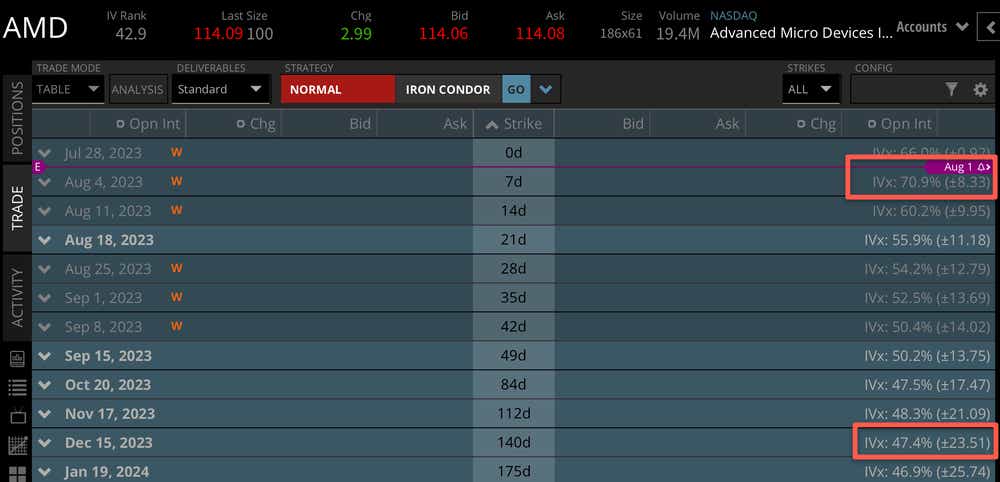
NEW YORK — As Wall Street trading desks finalize their positions ahead of Advanced Micro Devices' (NASDAQ: AMD) upcoming quarterly earnings release, derivatives markets are signaling an impending violent repricing. According to sophisticated pricing models across major options exchanges, institutional investors and market makers have priced in an implied move of approximately 7% in either direction following the bell. This heightened anticipation underscores a critical juncture for capital allocation in the semiconductor sector, where enterprise demand for high-performance compute architecture and artificial intelligence acceleration hardware faces rigorous valuation scrutiny.
As senior investigative financial editors monitoring institutional capital flows, corporate governance, and semiconductor supply chains, we unpack the macroeconomic catalysts, competitive dynamics, and structural market mechanics driving this pivotal earnings event. For institutional portfolio managers, risk mitigation teams, and retail investors alike, understanding the underlying drivers of this expected 7% volatility is essential for navigating near-term market liquidity and long-term valuation multiples.
Executive Takeaways
Test Our Free AI & Tech Utilities Suite
Calculate LLM API token costs, analyze article dwell-time, or simulate tech DCA returns.
- Implied Volatility Surge: Options market pricing indicates a roughly 7% post-earnings move for AMD (NASDAQ: AMD), reflecting profound divergence in analyst expectations regarding near-term data center revenue growth and gross margin trajectories.
- AI Infrastructure Scalability: Investors will scrutinize Lisa Su's executive commentary regarding enterprise ROI, customer adoption velocity for the MI300 series accelerators, and supply chain allocation amidst tightening foundry capacity.
- Valuation Multiples Under Scrutiny: Trading at a premium relative to historical earnings, AMD must prove that its multi-billion-dollar total addressable market (TAM) expansion in artificial intelligence can successfully offset cyclical softness in traditional PC and embedded markets.
- Competitive Landscape: The widening competitive chasm between AMD and market leader NVIDIA will dictate whether institutional capital reallocates toward or away from semiconductor equities this quarter.
Comprehensive Narrative: The Catalysts Behind the 7% Implied Move
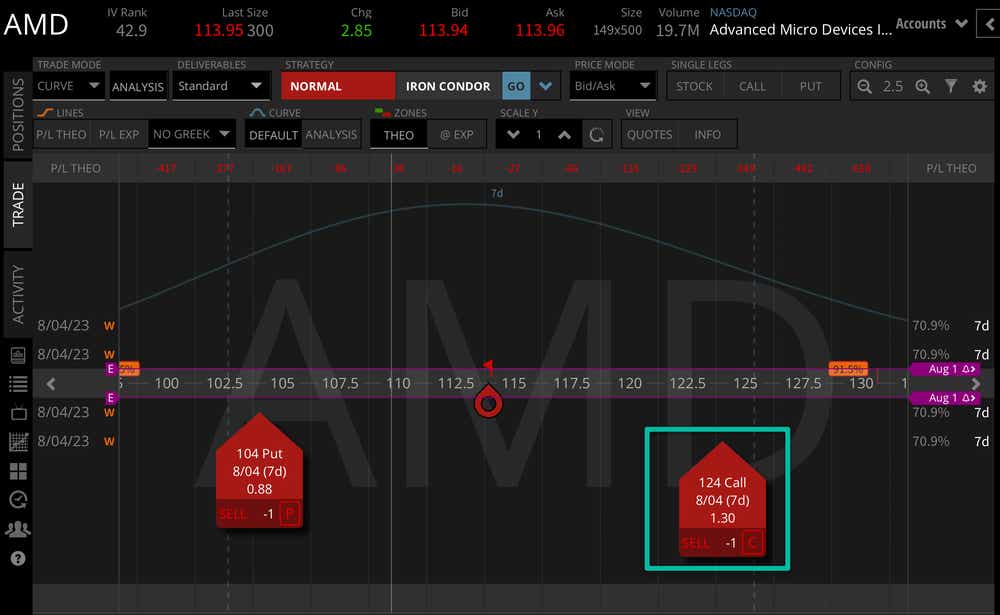
The options market acts as the ultimate diagnostic tool for measuring corporate uncertainty. When derivative instruments price in a swing as large as 7% for a mega-cap technology equity like Advanced Micro Devices, it signals a fundamental lack of consensus among buy-side institutions. The core debate centers on execution risk: Can AMD successfully capture meaningful market share from NVIDIA in the generative AI compute ecosystem while simultaneously defending its core stronghold in enterprise server CPUs and client computing?
Over the past twelve quarters, AMD has steadily transformed from a traditional x86 processor challenger into a diversified computing powerhouse. However, the market's current fixation remains squarely on the MI300 accelerator family. Hyperscale cloud service providers—including Microsoft Azure, Meta, and Oracle Cloud—have signaled aggressive capital expenditure budgets aimed at expanding their cloud compute architecture. Yet, Wall Street analysts are demanding concrete data regarding profit margins on these large-scale deployments. Lower initial margins on complex AI hardware have previously spooked investors, creating a delicate balancing act between top-line revenue expansion and bottom-line margin preservation.
Compounding this complexity is the macroeconomic backdrop. Corporate IT spending is undergoing stringent risk mitigation and budget optimization. Chief Information Officers are demanding verifiable enterprise ROI before committing to multi-million-dollar infrastructure upgrades. Consequently, AMD’s management team must articulate a compelling narrative proving that its silicon solutions offer superior TCO (Total Cost of Ownership) compared to legacy architectures and rival offerings.
| Metric / Indicator | Current Consensus / Estimate | Prior Quarter Actual | Market Implication |
|---|---|---|---|
| Implied Post-Earnings Move | ~7.0% (Up or Down) | ~5.5% | Higher uncertainty and divergence in institutional positioning. |
| Data Center Segment Revenue | $2.3B - $2.5B | $2.1B | Primary growth engine; must beat expectations to sustain valuation. |
| Non-GAAP Gross Margin | ~53% - 54% | 52.5% | Key indicator of product mix shift toward high-end AI accelerators. |
| Forward P/E Multiple | Approx. 38x - 42x | 36x | Reflects high expectations for future earnings compounding. |
Industry & Market Implications: Who Wins, Who Loses
The ramifications of AMD’s earnings report extend far beyond ticker symbol AMD. Semiconductor equities are deeply interconnected through shared foundry ecosystems, packaging dependencies, and macroeconomic sentiment loops.
The Winners (Conditional): If AMD delivers an earnings beat accompanied by an upwardly revised guidance for its data center GPU business, tier-1 suppliers, specialized contract manufacturers, and advanced packaging specialists stand to benefit. Furthermore, enterprise software providers leveraging accelerated computing frameworks will see validation of their deployment timelines.
The Vulnerable: Conversely, any indication of supply chain bottlenecks—particularly in advanced CoWoS (Chip-on-Wafer-on-Substrate) packaging capacity or high-bandwidth memory (HBM) procurement—could trigger an immediate sell-off. Because valuation multiples are sensitive to minor earnings misses, a conservative forward guidance statement could exert downward pressure not only on AMD shares but also on peer semiconductor firms, compressing sector-wide valuations.
Frequently Asked Questions (People Also Ask)
Why is the options market predicting a 7% move for AMD following earnings?
An implied move of 7% is calculated by analyzing the pricing of at-the-money call and put options expiring immediately after the earnings announcement. This percentage reflects the collective assessment of market makers regarding the magnitude of earnings surprise, guidance adjustments, and institutional hedging activity required to absorb upcoming volatility.
What are the key financial metrics institutional investors are watching most closely?
While headline earnings per share (EPS) and total revenue remain vital, institutional analysts prioritize Data Center segment growth, non-GAAP gross margin expansion, and forward-looking guidance for AI accelerator shipments (such as the MI300X series). Margin resilience in the face of rising manufacturing costs is particularly critical.
How does AMD’s valuation compare to historical norms and sector peers?
AMD trades at a forward Price-to-Earnings (P/E) multiple significantly higher than its historical ten-year average, though generally in line with high-growth semiconductor peers capitalizing on the artificial intelligence infrastructure super-cycle. This elevated multiple leaves little room for execution missteps.
What role do macroeconomic factors and enterprise IT budgets play in this earnings report?
Corporate capital expenditure cycles dictate enterprise demand for cloud compute architecture and server upgrades. Amid cautious macroeconomic conditions, CFOs demand strict verification of enterprise ROI, making enterprise-grade software compatibility and total cost of ownership paramount selling points for AMD hardware.
Future Outlook: Milestones to Monitor Post-Earnings
As the market digests the impending earnings report, attention will rapidly shift toward execution milestones over the subsequent two to four quarters. Investors must monitor:
- Hyperscale Adoption Rates: Public announcements regarding new or expanded cloud deployments by major hyperscalers utilizing AMD accelerators.
- Supply Chain Execution: Management commentary concerning foundry partnerships (primarily TSMC) and the availability of critical components like HBM3e memory.
- Software Ecosystem Maturity: Progress updates on ROCm (AMD's open software platform) adoption among enterprise developers seeking viable alternatives to proprietary ecosystems.
Ultimately, whether AMD validates the options market's 7-percent volatility expectation or shatters it with a parabolic breakout will depend entirely on management's ability to translate robust artificial intelligence tailwinds into bottom-line financial outperformance. Regulatory compliance, capital allocation discipline, and engineering execution will remain the definitive pillars of long-term shareholder value creation.


