

Executive Takeaways
- Broad Market Retrenchment: Global stock indices experienced a sharp sell-off following decisive Democratic electoral victories, triggering immediate risk-off capital allocation shifts across international exchanges.
- AI Infrastructure Anxiety: Investors are aggressively repricing the artificial intelligence boom, fearing that incoming legislative agendas will introduce stringent regulatory compliance frameworks, antitrust scrutiny, and higher corporate tax burdens on hyperscalers.
- Valuation Compression: High-multiple tech equities face severe downward pressure as enterprise ROI timelines on trillion-dollar data center investments come under intense congressional oversight.
- Liquidity & Rotation: Institutional portfolio managers are executing risk mitigation strategies, rotating capital out of high-flying semiconductor and cloud compute architecture plays into defensive assets.
NEW YORK / LONDON / TOKYO — Global financial markets underwent a violent recalibration this week as a wave of unexpected Democratic electoral victories sent shockwaves through international bourses. The catalyst for the broad-based equity slide centers on mounting anxiety over the future of the artificial intelligence boom. Institutional investors, long accustomed to a deregulatory status quo and frictionless venture capital deployment, are rapidly repricing valuations across the technology sector amid fears of aggressive regulatory intervention, tighter antitrust enforcement, and impending tax code overhauls.
The contagion spread swiftly from Wall Street to European trading desks in Frankfurt and London, before culminating in a sea of red across Asian markets in Tokyo and Hong Kong. Semiconductor designers, hyperscale cloud providers, and enterprise software giants bore the brunt of the liquidation. This sudden market stress underscores a fragile macroeconomic ecosystem where stellar corporate earnings reports are increasingly overshadowed by systemic political and regulatory tail risks.
The Catalytic Shift: How Political Winds Chilled Silicon Valley
Test Our Free AI & Tech Utilities Suite
Calculate LLM API token costs, analyze article dwell-time, or simulate tech DCA returns.
For the past thirty-six months, the global equity rally has been inextricably bound to the exponential capital expenditure cycle surrounding generative artificial intelligence. Big Tech titans—including Microsoft, Alphabet, Amazon, and Meta Platforms—poured hundreds of billions of dollars into cloud compute architecture, specialized neural processing units (NPUs), and high-density power grids. Market liquidity remained flush, fueled by the assumption that legislative bodies on both sides of the aisle would maintain a hands-off approach to foster domestic technological supremacy against geopolitical rivals.
The recent Democratic electoral sweeps have fundamentally altered this calculus. Wall Street’s premier investment banks and economic research desks immediately issued advisory notes highlighting the shifting legislative landscape. A strengthened progressive and moderate Democratic coalition in key legislative chambers is widely expected to prioritize consumer protection, labor market safeguards in the age of automation, and rigorous federal oversight of algorithmic bias.
Furthermore, capital allocation strategies within major corporations are facing fresh scrutiny. Lawmakers have begun demanding transparent metrics regarding enterprise ROI on AI investments, questioning whether current hyper-spending is generating sustainable economic value or merely inflating temporary asset bubbles. As the probability of targeted windfall taxes and mandatory safety audits increases, institutional risk models are factoring in compressed profit margins for the sector's bellwethers.
Ecosystem Impact: Winners, Losers, and Capital Rotation
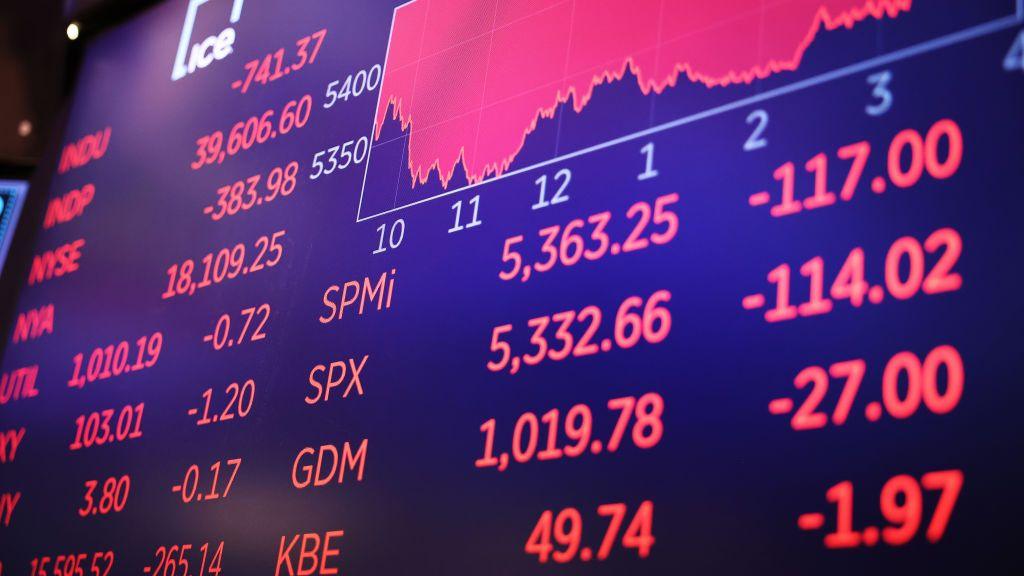
The macroeconomic ramifications of this political pivot extend far beyond the technology sector, triggering a complex reallocation of global portfolios.
The Vulnerable: High-Multiple AI Enablers and Hyperscalers
Semiconductor manufacturers heavily reliant on leading-edge foundry nodes saw their market capitalization erode rapidly. Companies supplying optical transceivers, liquid-cooling systems, and advanced server racks experienced outsized volatility. The core fear is that heightened regulatory friction will delay enterprise deployment timelines, extending the payback period for capital-intensive data center builds and stalling revenue growth.
The Defensive Safe Havens: Infrastructure, Energy, and Value
Conversely, institutional capital fleeing high-beta tech found refuge in defensive sectors. Traditional energy utilities—particularly those contracted to supply baseload power to the next generation of data centers—retained relative resilience, supported by regulated rate structures. Meanwhile, healthcare, consumer staples, and aerospace contractors absorbed substantial inflows as portfolio managers executed defensive risk mitigation strategies.
Global Market Metrics & Performance Shift
| Global Index / Asset Class | Pre-Election Valuation Multiple (P/E) | Post-Sell-Off Weekly Change (%) | Primary Market Driver |
|---|---|---|---|
| S&P 500 Information Technology | 31.4x | -4.8% | Antitrust and regulatory compliance fears |
| NASDAQ Composite | 29.8x | -5.3% | Liquidation of high-growth AI software plays |
| Stoxx Europe 600 Technology | 24.2x | -3.9% | Sympathy sell-off and EU regulatory alignment |
| MSCI Emerging Markets Asia | 15.1x | -2.7% | Export control anxiety and supply chain headwinds |
Frequently Asked Questions (People Also Ask)
Why are Democratic election wins negatively impacting tech and AI stocks?
Democratic platforms traditionally advocate for stricter regulatory compliance, heightened antitrust scrutiny on dominant market platforms, and potential corporate tax increases. Investors fear these policy shifts will increase operational overhead, restrict mergers and acquisitions, and compress the profit margins of major artificial intelligence infrastructure providers.
Are enterprise AI investments slowing down across the corporate landscape?
While gross capital expenditures by hyperscalers remain near historic highs, market participants are increasingly focused on the timeline for enterprise ROI. Lawmakers and institutional analysts are scrutinizing whether massive multi-billion-dollar outlays on cloud compute architecture will yield near-term productivity gains or result in prolonged capital inefficiency.
How should portfolio managers adjust their asset allocation during this volatility?
Many institutional wealth managers are implementing robust risk mitigation strategies, trimming overextended tech positions, and reallocating capital toward defensive sectors such as utilities, healthcare, and dividend-yielding value stocks that are insulated from direct federal legislative intervention.
What role do valuation multiples play in the current market correction?
Prior to the sell-off, many leading technology equities traded at price-to-earnings multiples significantly above their historical ten-year averages. This left little margin for error. When political and regulatory headwinds threatened forward earnings projections, these stretched valuations experienced rapid downward compression.
Future Outlook: Key Milestones and Market Trajectory
As global financial markets digest the political realignment, the trajectory of the AI trade will depend heavily on upcoming legislative maneuvers and corporate earnings disclosures. Chief investment officers will be monitoring several critical signposts over the next two quarters:
- Congressional Hearings: Scheduled committee hearings addressing AI safety, data privacy, and market monopolization will provide clearer signals regarding the severity of prospective federal legislation.
- Corporate Guidance on CapEx: Upcoming quarterly earnings reports from tier-1 cloud providers will reveal whether executive boards are modifying their infrastructure scalability budgets in response to political pressures.
- Regulatory Enforcement Actions: Early legal or administrative actions initiated by federal agencies will test the legal resilience of major tech conglomerates against new enforcement priorities.
- Global Monetary Policy Interplay: Central bank interest rate decisions will continue to interact with equity valuations, as higher borrowing costs amplify the penalty for capital-intensive, long-duration technology investments.
Ultimately, while the secular trend of artificial intelligence innovation remains intact, the era of frictionless, policy-insulated expansion has drawn to a close. Wall Street is entering a more mature, highly scrutinized phase where political risk management is as critical to portfolio performance as technological superiority.




